









최신 글
4,484개정렬
 58:03EN
 Jane Street· 2020년 2월 18일Matt Might on an Algorithm for Precision MedicineMatt Might · University of Alabama at BirminghamA computer scientist describes how genetic data, experimental models and logic programming can help clinicians investigate difficult cases.
 1:33:42EN
 Lex Fridman· 2020년 2월 17일팟캐스트 · 2명Ask One Question of Every Quantum Headline: Is It Faster Than Classical?게스트 Scott Aaronson · 진행자 Lex FridmanScott Aaronson walks Lex Fridman from Turing's method of replacing unanswerable riddles with workable ones to Google's quantum supremacy experiment, and explains why useful chemistry simulation is closer than breaking RSA.
 1:44:55ENLex Fridman· 2020년 2월 14일팟캐스트 · 2명If You Need 60,000 Digits, You Have Not Found Intelligence게스트 Vladimir Vapnik · 진행자 Lex FridmanVladimir Vapnik tells Lex Fridman that intelligence is the art of shrinking a sea of functions with a few good predicates — and that MNIST, solved with sixty examples per class, is the test.
 7:45ENLex Fridman· 2020년 2월 10일팟캐스트 · 2명Jim Keller on Recipes, Understanding and Redesign게스트 Jim Keller · 진행자 Lex FridmanWhy an efficient procedure can become a constraint, and when computer architects may need to rethink the problem.
 26:02ENLex Fridman· 2020년 2월 9일팟캐스트Moore’s Law Is Not Dead—It Is a Cascade of S-Curves진행자 Lex FridmanJim Keller explains why transistor scaling keeps outrunning its obituary, and how exponential hardware changes the mathematics AI can attempt.
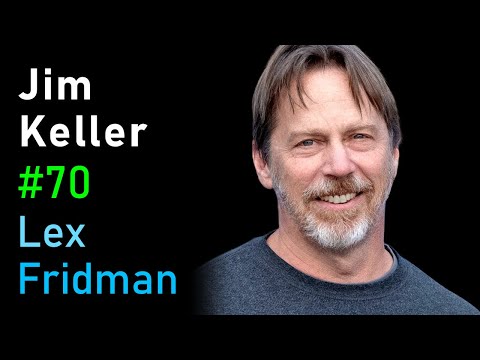 1:34:44ENLex Fridman· 2020년 2월 5일팟캐스트 · 2명Moore's Law Has Been About to Die for Forty Years게스트 Jim Keller · 진행자 Lex FridmanChip architect Jim Keller tells Lex Fridman why a cascade of diminishing-return curves still looks exponential, why you rewrite the CPU every five years, and why driving a car is not a super-hard problem.
 1:23:49ENJane Street· 2020년 1월 31일Steve Lee on PowerShell 7: Compatibility, New Features and the RoadmapSteve Lee · MicrosoftA historical look at the move from Windows PowerShell to cross-platform PowerShell, including demonstrations of the version 7 preview and its compatibility trade-offs.
 1:38:49ENLex Fridman· 2020년 1월 29일팟캐스트 · 2명Even a simulation would still be real게스트 David Chalmers · 진행자 Lex FridmanDavid Chalmers tells Lex Fridman why a simulated world would still count as reality, and why the hard problem of consciousness still will not go away.
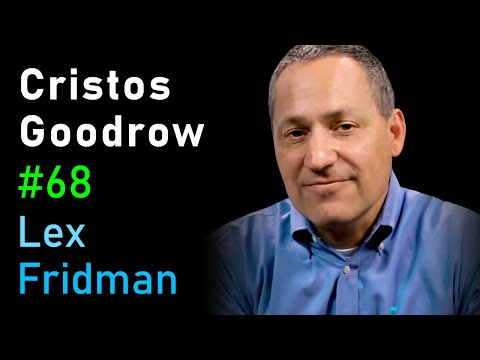 1:30:52ENLex Fridman· 2020년 1월 25일팟캐스트 · 2명Cristos Goodrow: There Is No YouTube Algorithm, Only People Moving Through Video게스트 Cristos Goodrow · 진행자 Lex FridmanYouTube’s head of search and discovery tells Lex Fridman why collaborative filtering learned language on its own, why watch time is not satisfaction, and why nobody can predict a viral hit.
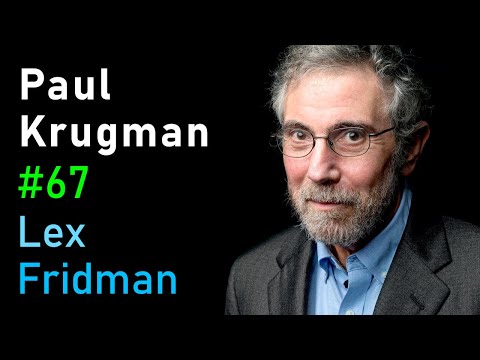 1:03:12ENLex Fridman· 2020년 1월 21일팟캐스트 · 2명Paul Krugman: America's Cruelty Is a Choice, Not a Law of Technology게스트 Paul Krugman · 진행자 Lex FridmanThe Nobel economist tells Lex Fridman why productivity data undercut the robot-job panic, why markets fail in health care, and why universal programs beat a premature basic income.
 1:13:51ENLex Fridman· 2020년 1월 19일팟캐스트Answering Questions Without Seeing the Data: Andrew Trask on the Privacy-Preserving AI Stack진행자 Lex FridmanA tour of remote execution, differential privacy, secure multiparty computation, and the societal consequences of making private data usable.
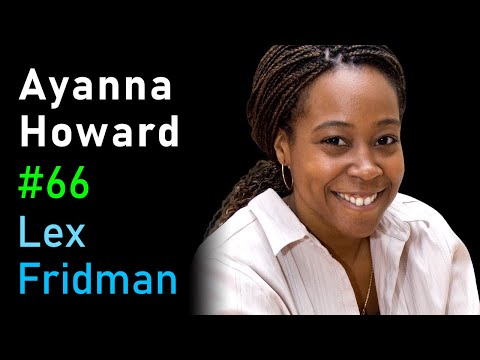 1:39:57ENLex Fridman· 2020년 1월 17일팟캐스트 · 2명People Say They Want Perfect Robots. They Trust the Ones That Push Back게스트 Ayanna Howard · 진행자 Lex FridmanAyanna Howard on human-robot interaction, the ethics of safety-critical code, and why a little imperfection is what actually earns trust.
 1:18:41ENLex Fridman· 2020년 1월 14일팟캐스트 · 2명The SS Soldier Who Hugged a Jewish Boy, and the Systems That Still Fool Us게스트 Daniel Kahneman · 진행자 Lex FridmanDaniel Kahneman on System 1, deep learning that does not know what it is saying, and why a machine that must call a human is almost as hard as a machine that never needs one.
 1:02:45ENLex Fridman· 2020년 1월 7일팟캐스트 · 2명Aliens Would Count. They Probably Wouldn't Write e^x.게스트 Grant Sanderson · 진행자 Lex FridmanGrant Sanderson of 3Blue1Brown talks with Lex Fridman about notation, infinity, and why a visualization has to pick a single arrow.
 20:44ENLex Fridman· 2020년 1월 5일팟캐스트 · 2명The Staff Job That Became a Dictatorship: Stalin's Improbable Road to Power게스트 Stephen Kotkin · 진행자 Lex FridmanStephen Kotkin traces how war, revolution, contingency, and a new administrative post let Stalin build a personal dictatorship inside the Bolshevik regime.
 1:37:22ENLex Fridman· 2020년 1월 3일팟캐스트 · 2명Lenin Wanted an Assistant. Stalin Built a Dictatorship게스트 Stephen Kotkin · 진행자 Lex FridmanPrinceton historian Stephen Kotkin talks with Lex Fridman about Stalin’s rise, Putin’s popularity, and why checks on power are a feature, not a bug.
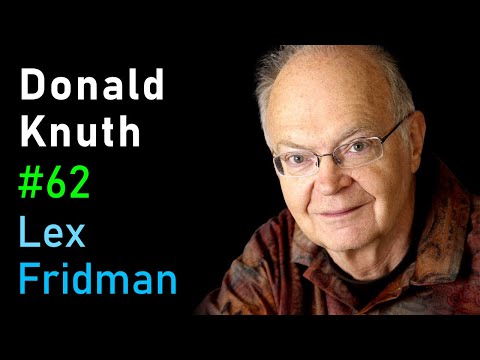 1:45:56ENLex Fridman· 2019년 12월 30일팟캐스트 · 2명Point eight is enough: Donald Knuth on algorithms, TeX, and a life in one chair게스트 Donald Knuth · 진행자 Lex FridmanLex Fridman visits Donald Knuth at home for a conversation about the IBM 650, geek brains, literate programming, The Art of Computer Programming, TeX, P versus NP, and a happiness budget of 80 percent.
 1:52:40ENLex Fridman· 2019년 12월 28일팟캐스트 · 2명Without Analogies, There Can Be No Concepts게스트 Melanie Mitchell · 진행자 Lex FridmanMelanie Mitchell talks with Lex Fridman about why analogy sits at the core of thought, why scaled-up learning still fails at common sense, and why she thinks human-level AI is more than a century away.
 1:35:00ENLex Fridman· 2019년 12월 25일팟캐스트 · 2명NASA Once Spent 5 Percent of the Economy to Go 250,000 Miles. Mars Is a Hundred Times Farther.게스트 Jim Gates · 진행자 Lex FridmanTheorist S. James Gates Jr. talks with Lex Fridman about Mars budgets, supersymmetry, error-correcting codes hiding in equations, and why string theory is not yet a theory.
 2:22ENLex Fridman· 2019년 12월 24일팟캐스트Lex Fridman Reads Charles Bukowski’s “Nirvana”A reading of a poem about a fleeting moment during a bus journey.
 15:11EN
 3Blue1Brown· 2019년 12월 22일Bayes’ Theorem and the Geometry of Updating BeliefsUse counts and areas to understand how evidence changes probability.
 1:18:35ENLex Fridman· 2019년 12월 21일팟캐스트 · 2명The last job Sebastian Thrun wants is one he is already good at게스트 Sebastian Thrun · 진행자 Lex FridmanLex Fridman talks with the roboticist behind Stanley, Google’s self-driving car, Udacity, and Kitty Hawk about learning, safety, and why traffic is a choice.
 3:18ENLex Fridman· 2019년 12월 19일팟캐스트 · 2명Michael Stevens Speculates About Consciousness, Memory and Time게스트 Michael Stevens · 진행자 Lex FridmanA 2019 discussion that explicitly distinguishes conjecture from expertise.
 2:25ENLex Fridman· 2019년 12월 18일팟캐스트 · 2명Michael Stevens on Perception, Reality and Everyday Ethics게스트 Michael Stevens · 진행자 Lex FridmanA Vsauce conversation explores what can be known and how people act.
더 보기4,484개 중 24개 표시