30 秒でわかる
Matthew Berman demonstrates a PDF tool, a YouTube analytics utility and a spreadsheet interface he says he built with AI. He argues that falling model costs favor custom software, while discussing the maintenance and security questions that remain.
- 1A personal PDF readerA frustrating installation prompted Berman to build a lighter tool for his own needs.
- 2Three conditionsHe points to model capability, lower costs and accessible agents.
- 3The spreadsheet claimHe reports a fast, low-cost build and claims full parity, which the video does not independently verify.
- 4Maintenance trade-offsHe discusses security and ongoing maintenance as part of the economics of custom software.
ポイント
- Berman sees model capability, cost and ease of use as the conditions enabling personal software projects.
- Custom applications can focus on a user’s specific workflow and omit unwanted features.
- A working demonstration alone does not establish full feature parity with an established product.
- Maintenance, security and reliability remain part of the build-versus-buy decision.
チャプターごとに整えた全文を読む
Why build personal software?
Berman describes the PDF reader that led to his thesis and the conditions he thinks have changed.
Matthew Berman says a frustrating experience installing a PDF reader on a new PC led him to build his own. He wanted a lightweight way to read and edit documents without features and account prompts he did not need.
That project led him to build other tools and consider a broader possibility: consumers may increasingly make or customize their own software. He also points to other developers creating open-source alternatives to established applications.
In his view, three conditions had to converge: models needed to be capable enough, cheap enough and easy enough to use through autonomous agents. He says recent improvements in both capability and token cost have changed his personal calculation.
The decision, he argues, is the cost of creating and maintaining a custom application versus buying or subscribing to one. A custom tool can also include a feature that matters to its owner even if a commercial vendor would not prioritize it.
Testing models and software economics
He describes spreadsheet experiments and predicts a larger role for open-source software.
Berman describes how his model tests evolved from making Snake to simulating a Rubik’s Cube and then rebuilding more complex software. He says he prompted an agent to create a browser-based spreadsheet application modeled on Excel.
He claims a recent model built his spreadsheet clone in about 90 minutes to two hours for roughly $10 in tokens, and claims complete feature parity. The video shows a sample workbook; it does not independently establish that every Excel feature is present or correct.
He compares that claimed build cost with the price of a standalone license or subscription, and says open-sourcing a base application lets other people adapt it. He predicts software will become much cheaper and increasingly open source; these are his forecasts, not demonstrated universal economics.
Examples and demonstrations
He shows creative tools and his own PDF, analytics and spreadsheet applications.
Berman points to Artcraft as an example of an open-source creative software suite and shows interfaces for image, vector and video work. He presents it as another example of developers using AI to build alternatives to established products.
He revisits an earlier thesis that enterprise software might collapse into agents operating on databases. He says he previously did not expect individual consumers to build their own applications economically, but now thinks the balance has shifted.
He demonstrates Folio, his PDF reader and editor. The interface lets him view a document, draw, add text and signatures, and ask questions. He says he can add functionality as needed and has made the project available for others to use or fork.
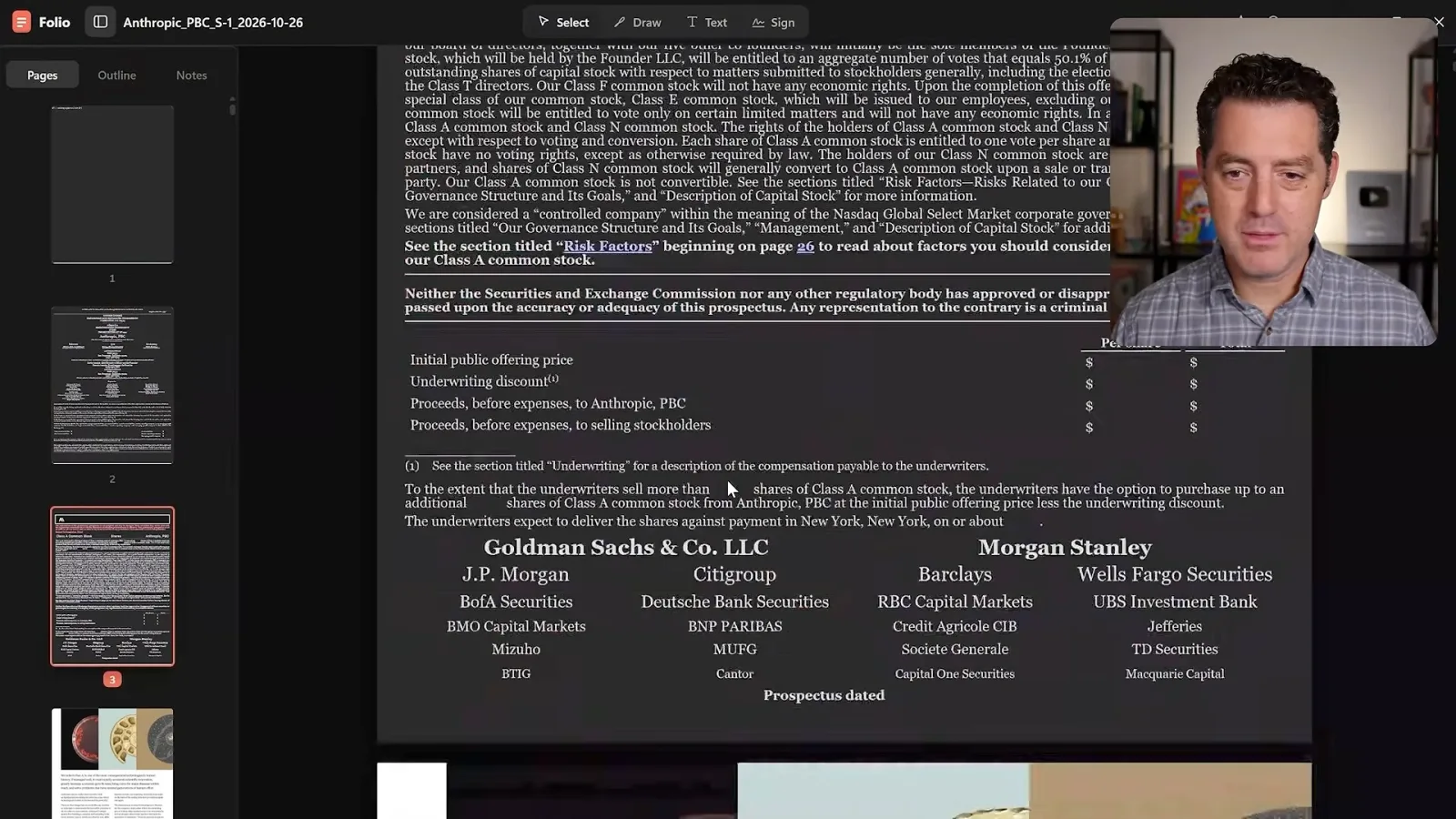
He also describes Outlier Tracker, a tool for inspecting YouTube video and channel statistics. He built it after finding an existing service increasingly cluttered with features he did not need; he says the initial version took about 30 minutes.
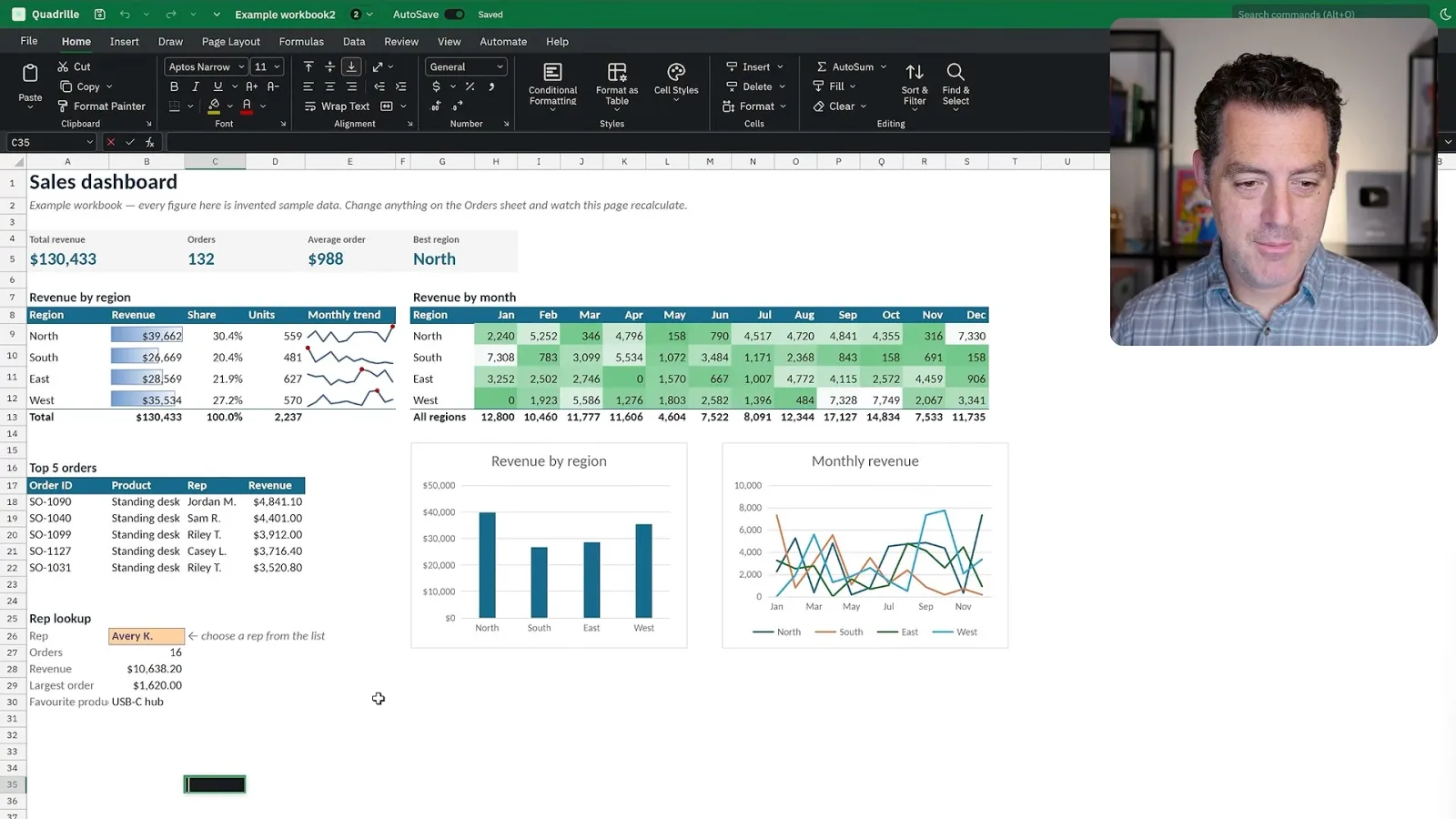
Berman shows a spreadsheet interface with tables and charts and reiterates his claim that it reproduces Excel functionality. The demonstration illustrates a working interface, but does not test all features, compatibility or reliability.
Maintenance and customization
He addresses security and ongoing costs, then discusses a customizable operating system.
A common objection is that building an application is only the beginning: it must be maintained, secured and kept current. Berman acknowledges those concerns, then argues that improving models and cheaper agents could make ongoing maintenance economical.
He suggests users can also adopt open-source projects maintained by others. He expects falling token costs and developers’ interest in building to support a wider ecosystem, although the future cost and quality of maintenance remain uncertain.
Finally, he mentions Omarchy, an operating system project associated with Ruby on Rails creator David Heinemeier Hansson, as an example of customizable computing. He encourages viewers to try open-source tools and build a small application themselves.
同じチャンネルの記事
 14:45EN
 Matthew Berman· 2026年10月29日Matthew Berman Examines Google’s Gemini 4 Carbon AnnouncementMatthew Berman · Forward FutureMatthew Berman reviews Google’s reported benchmark results, staged rollout and pricing for Gemini 4 Carbon, while noting he has not yet used the model.
 21:11ENMatthew Berman· 2026年10月28日Matthew Berman tests DeepSeek V4.1 Flash: coding, vision and local appsMatthew Berman · Forward FutureA hands-on tour of visual coding, image reasoning, local applications and provider economics reveals both impressive results and visible flaws.
 0:37ENMatthew Berman· 2026年10月28日Google Announces Gemini 4 CarbonMatthew Berman · Forward FutureMatthew Berman briefly discusses the model announcement and phased access.
 34:21ENMatthew Berman· 2026年10月27日Matthew Berman Examines Anthropic’s IPO Filing, AI Growth and GovernanceMatthew Berman, Sam Altman · Forward FutureThe presenter reviews the S-1’s financial metrics, compute strategy and voting structure while questioning the tension between rapid AI development and safety.
 0:26ENMatthew Berman· 2026年10月25日Sam Altman on Human Values and Problem-Solving in an AI WorldSam Altman · OpenAIIn a short interview excerpt, Altman considers the enjoyment of solving hard problems and the human role in interpreting results.
 0:36ENMatthew Berman· 2026年10月25日Kimi K3.1 and a Rubik’s Cube Solver DemonstrationMatthew Berman · Forward FutureMatthew Berman shows a scrambled virtual cube being solved and gives the Kimi K3.1 test a favorable assessment.