30 秒でわかる
Bradley and Mike commentate three online Figgie rounds played by Lucas, Haneul, Jackson and Jeff. They explain how starting hands inform guesses about the goal suit, how majority payouts affect a card’s value, and why patient pricing and changing market conditions matter.
- 1Private informationJackson and Haneul each begin with six black cards, making them more inclined to buy black suits than players holding fewer.
- 2A split majorityHaneul and Jackson each finish with five clubs and split the 200-chip pot.
- 3The pivotal diamondBradley estimates a 60-chip payout swing before discounting for uncertainty about the goal suit.
- 4A 45-chip tradeLucas buys a diamond from Jeff for 45; once the market shifts from competing buyers to sellers, offers fall sharply.
- 5Patience and timingJackson keeps a low visible bid but buys immediately when an offer reaches a price he is willing to pay.
ポイント
- Use your starting hand and other players’ trades to update the probability of each goal suit.
- A card can be especially valuable when it secures or splits a majority.
- Making money can come from selling at a good price as well as collecting a winning suit.
- Prices reflect competition among buyers and sellers and can change abruptly when a majority is secured.
- Balance waiting for a favorable price against the risk of missing a majority as the clock runs down.
チャプターごとに整えた全文を読む
First round: reading a hand
The commentators introduce the market interface and the role of private information. Haneul and Jackson build positions and split the goal-suit majority.
Jane Street traders Bradley and Mike commentate three online rounds of Figgie played by Lucas, Haneul, Jackson and Jeff. The focus is strategy; they point unfamiliar viewers to a separate rules introduction.
Bradley introduces the interface: each of the four suits has a market, with bids to buy on the left and offers to sell on the right. Haneul buys a club from Jackson for 9 chips. The observer view shows all four hands, although in a live game each player sees only their own.
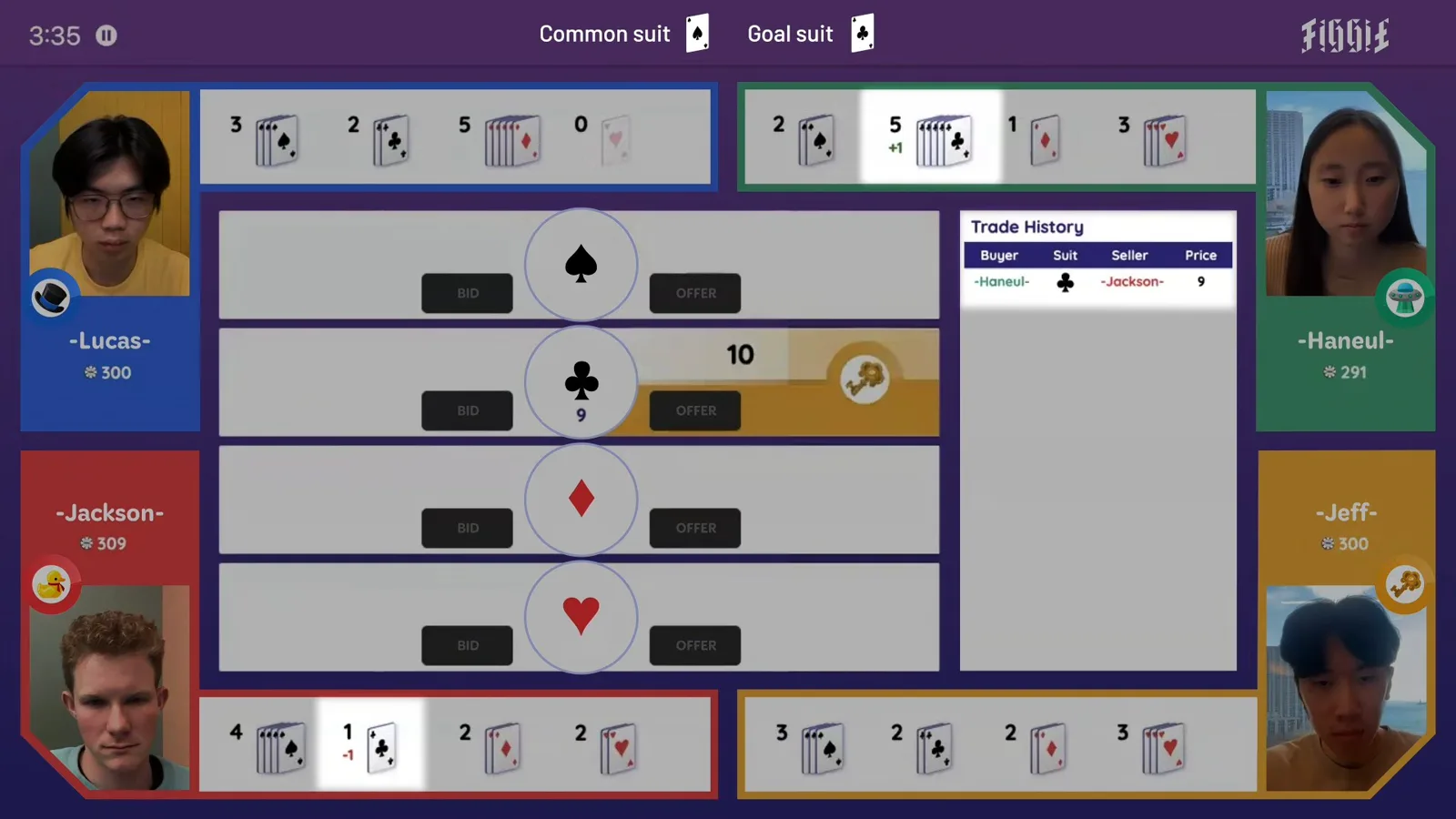
The observers can see 12 spades, making spades the common suit and clubs the goal suit. Mike says players must infer which suit is common and then try to collect the corresponding goal suit. Early clubs trade at 9; Bradley notes that the 200-chip pot divided by 40 cards is only 5 chips per card, but majority bonuses can make individual cards worth more.
Mike expects players to pursue majorities. A goal suit contains either eight or ten cards, so five or six respectively guarantee more than half; six also guarantees a majority without knowing which size it is. Lucas accumulates diamonds, Haneul clubs and Jackson spades.
Bradley points out that Jackson and Haneul began with six black cards each, while Lucas and Jeff each had five. That private information helps explain why the first pair are more eager to buy black cards and the second pair sell them. Players cannot usually know the goal suit with certainty; they make probabilistic deductions from their hands and others’ trades.
Both Jackson and Haneul buy clubs, and the round ends with five clubs each. They split the 200-chip pot, receiving 100 each. Haneul began with two spades and four clubs: even though that makes spades more likely to be the goal suit, she is already close to a club majority and adds a club to secure a tie.
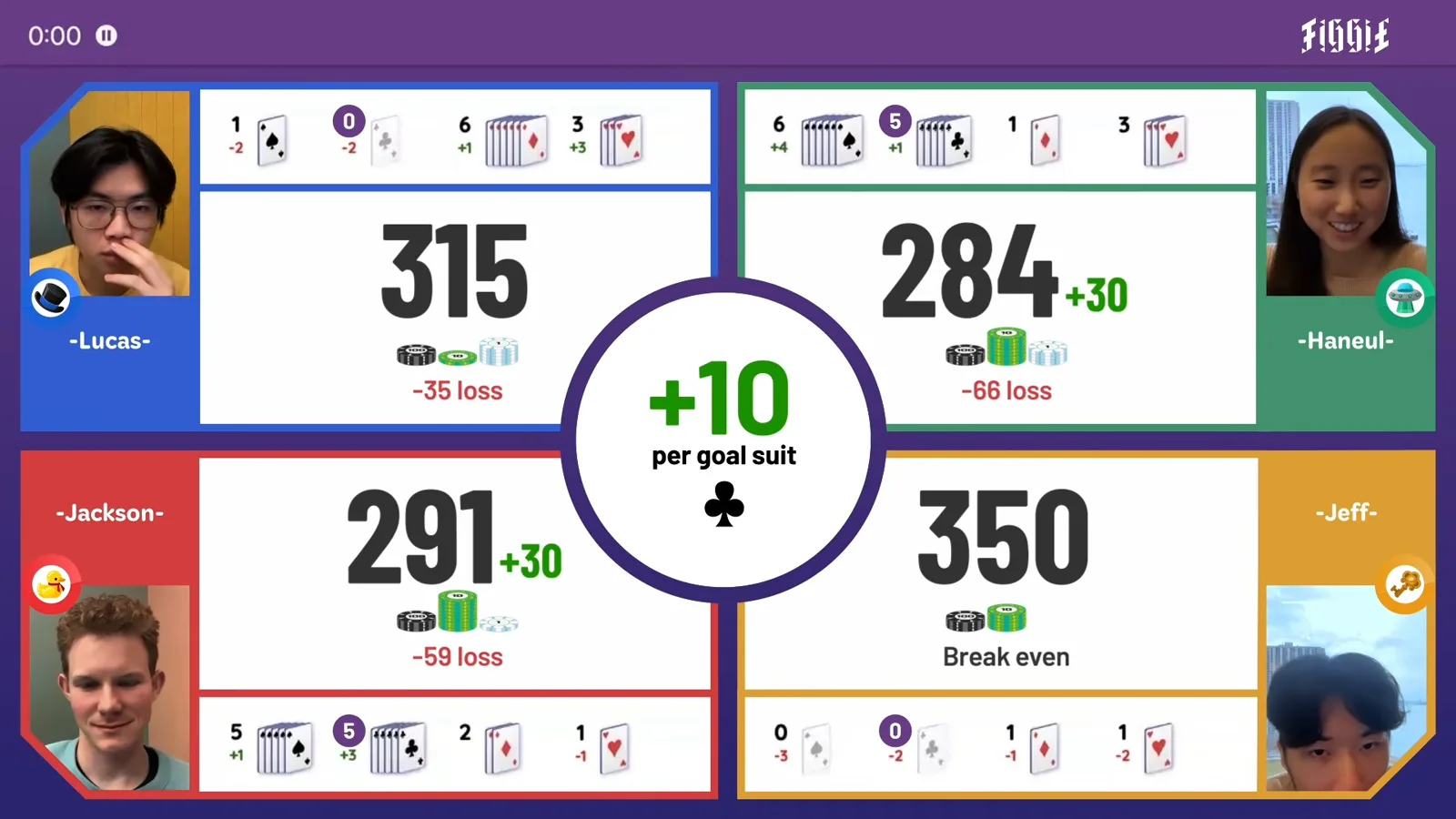
Bradley cautions that holding many clubs does not automatically make them worthless. Mike adds that Jeff ends without black cards but breaks even: the actual goal is to make money, whether by collecting a majority or selling cards profitably.
Second round: a pivotal diamond
Lucas and Jeff compete for diamonds. A 45-chip sale changes the balance between buyers and sellers and the market price collapses.
In the second round the observer sees 12 hearts, making diamonds the goal suit. Lucas and Jeff both begin with many red cards, giving each information in favor of red. Jeff starts with four diamonds, one more than Lucas, but Lucas has a stronger signal from his hearts.
Lucas buys the first diamond, bringing the players level at four each, and another trades at 11. Bradley says a player holding one of the remaining diamonds should avoid selling too cheaply: the card may decide whether Jeff gets the outright majority or Lucas achieves a five-five split.
Bradley estimates the swing in payout for that pivotal card: a split gives each player 100 from the pot, whereas Jeff’s majority would give him 160, a 60-chip difference. The players do not know diamonds are the goal suit, so the swing must be discounted by its probability. A starting offer of 25 or 30 might make sense, he says.
Mike cautions that a seller who immediately offers the final card at 15 might miss a chance to sell for 30. Waiting can let the market reveal how high a buyer will go. Bradley notes that trades can be positive-sum because a card can create extra value by completing a majority.
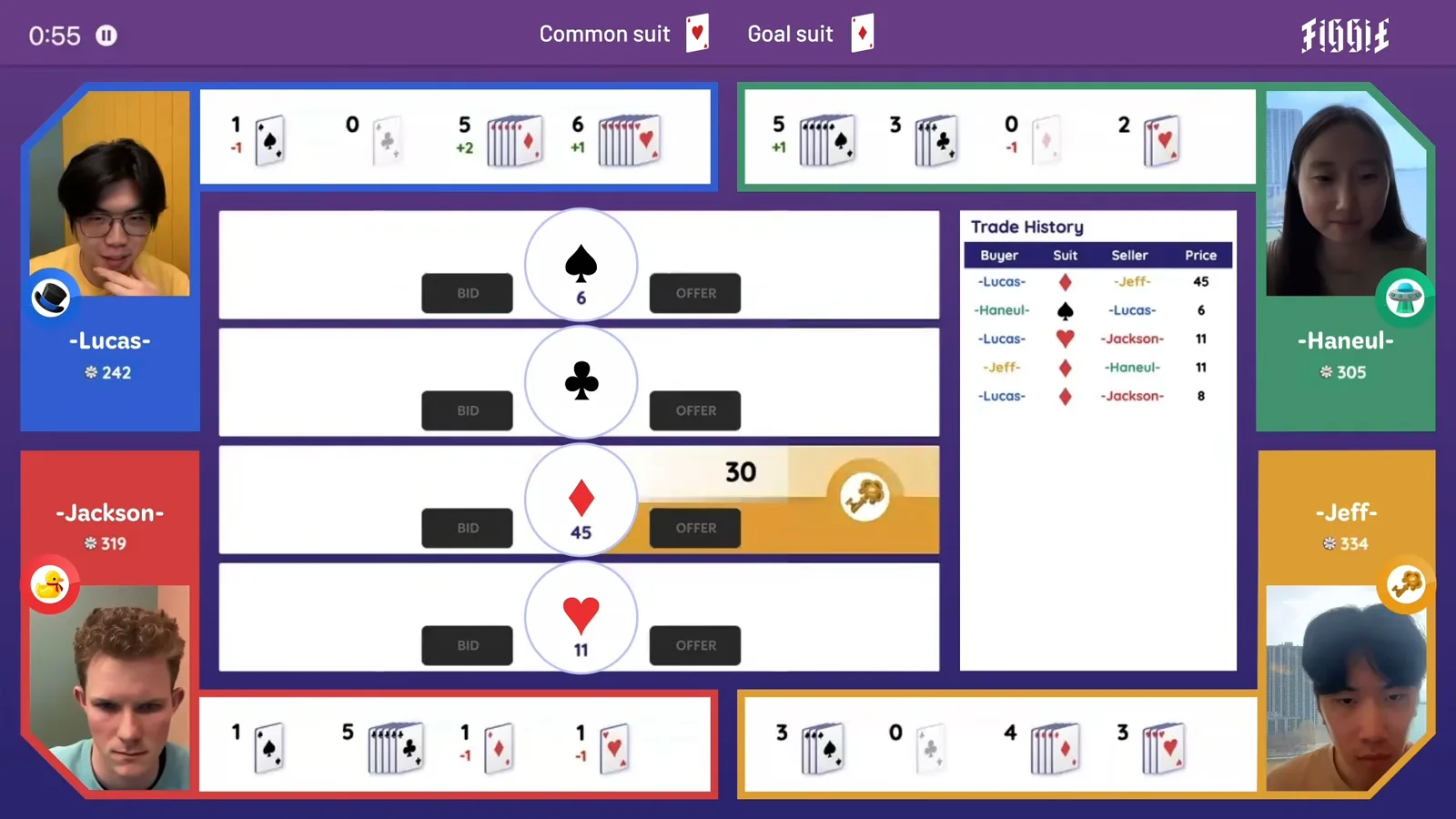
Lucas buys a diamond from Jeff for 45. Mike credits Lucas’s strong information and willingness to pay to secure five diamonds; the sale also means Jeff gives up his attempt to gain the majority. Jackson, still holding a diamond, may have missed the moment to sell at the higher price.
Mike says prices depend on what people are willing to pay. When Lucas and Jeff were both buyers, diamonds rose sharply; after the 45-chip sale, the balance shifted to sellers and offers fell below 10. The value associated with an unsecured majority dissipated once Lucas effectively secured it.
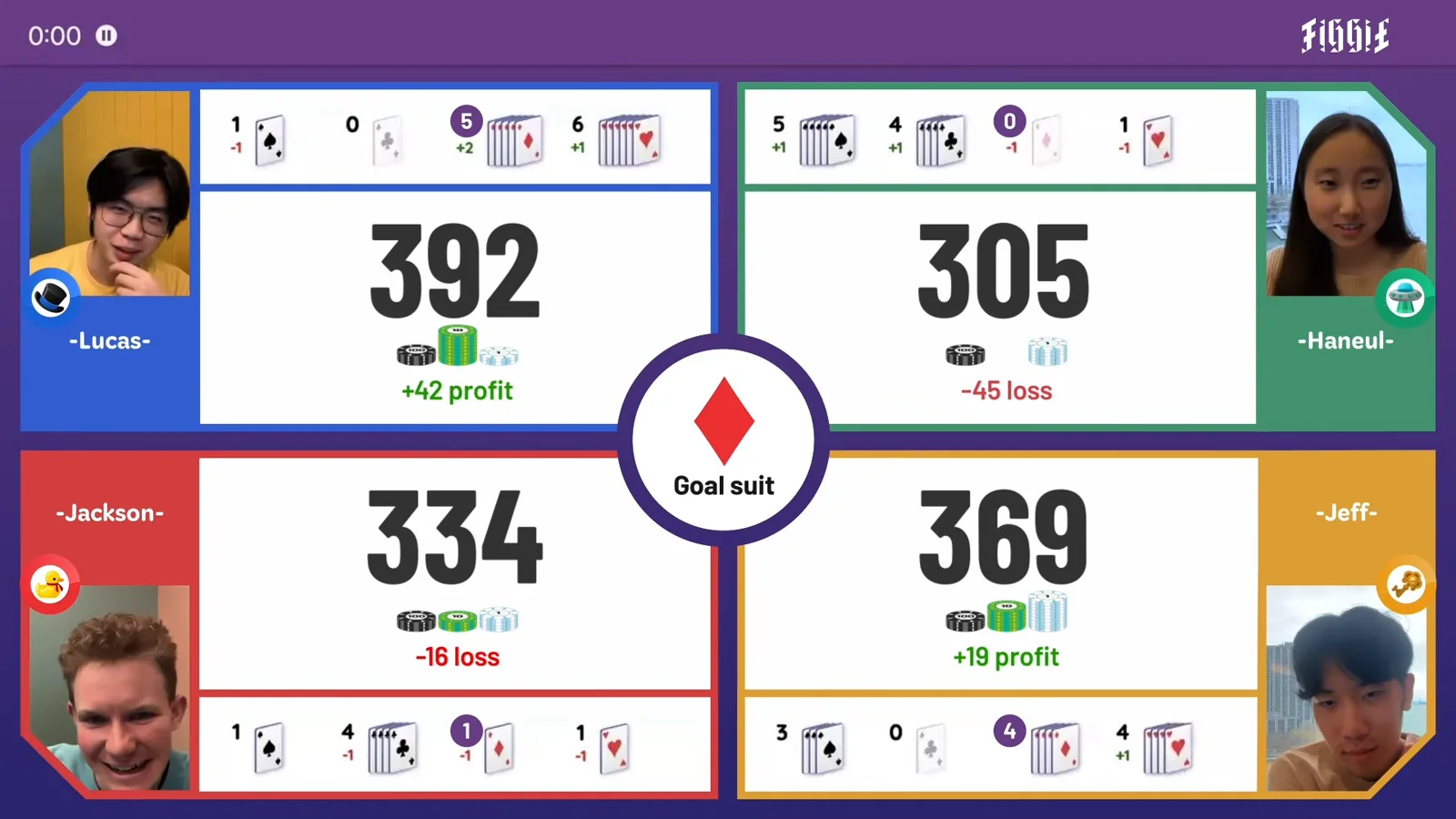
The second round ends with Lucas making 42 chips of profit after gaining the diamond majority. Jeff earns 19 through a combination of the pot payout and his large sale to Lucas. The game illustrates how competition among buyers and sellers changes prices.
Third round: balancing price and time
Jackson starts with strong information and patiently buys the cards he needs. The commentators explain when to wait and when to become aggressive.
In the third round, the common suit is again hearts and the goal suit diamonds. Bradley likes Jackson’s starting hand: five hearts provide a strong signal that diamonds are the goal, while three diamonds give him a head start. Jeff has five red and five black cards, then buys a heart, which may make him a competitor.
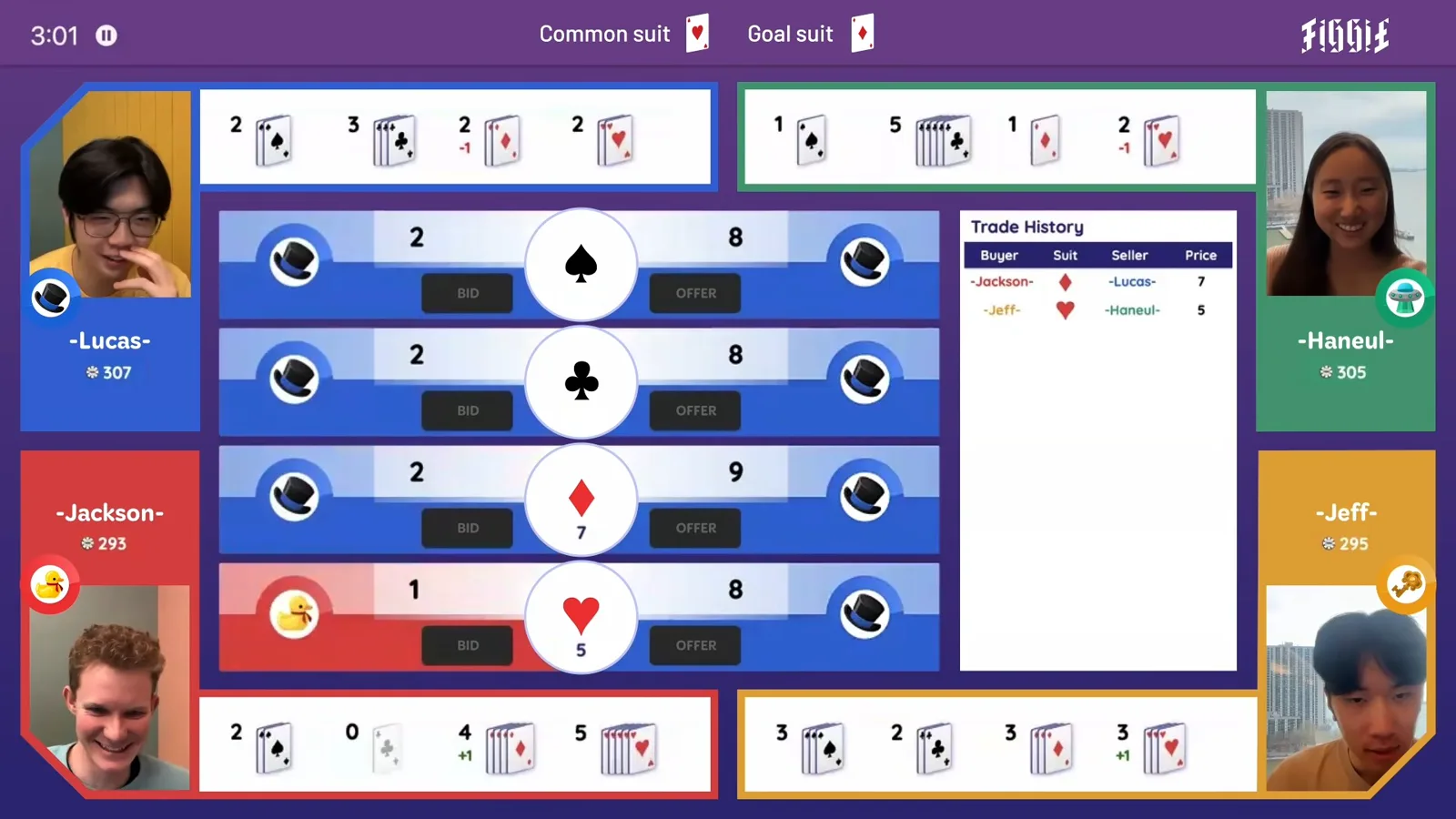
Jackson buys a diamond for 7. Mike asks why he does not immediately buy every available heart and diamond. Bradley answers that a Figgie round lasts four minutes: Jackson has time to seek better prices while staying on pace to secure the cards he needs.
The objective is profit, not simply reaching six cards in a suit. Buying the fifth and sixth diamond more cheaply makes a real difference over many games. Mike describes the balance: wait for better prices, but do not wait so long that someone else takes the majority.
Bradley watches both the clock and whether cards in the suit are trading away from him. Jackson has bought both diamonds traded so far, which suggests he may still obtain the last one cheaply; if another player begins winning diamonds, that should prompt a more aggressive response.
With about 40 seconds left, Jackson secures majorities in both red suits. Bradley observes that Jackson had a bid of 3 but immediately accepted an offer of 6 for a diamond. Knowing in advance that 6 was acceptable allowed him to act quickly, while the lower visible bid left open the possibility of buying for 3.
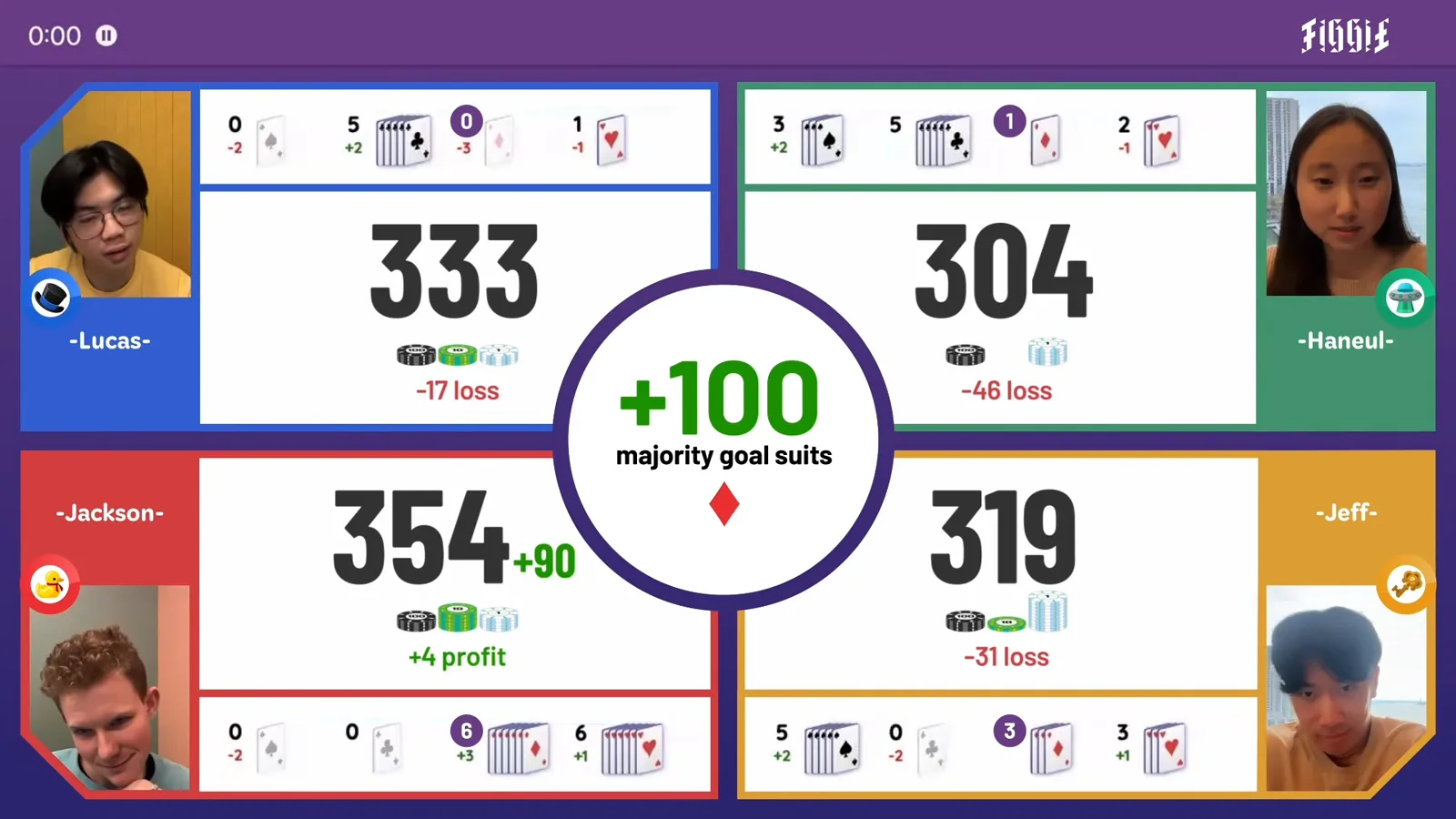
Jackson finishes with six of the ten diamonds and a 94-chip profit. Bradley praises his patience in securing the objective at favorable prices. Mike adds that a concentrated majority in one suit can be much more valuable than holding three cards in each of two suits. The commentators invite viewers to try the game, noting that it is harder when other hands are hidden.
同じチャンネルの記事
 1:48:29EN
 1:36:37EN
 1:05:45EN
 1:25:00EN
 1:16:29EN
 27:39EN