30 秒でわかる
Theo Browne demonstrates rapid iteration with Astra Ultrafast and describes building Slopalytics through continuous feedback. He reports observed speeds, API-equivalent token estimates and the effect on his subscription’s displayed quota. He finds the interaction valuable for design, but considers the price too high for routine use. Counterfactual model costs and future Sol Ultrafast pricing are estimates or hypotheses, not measured results.
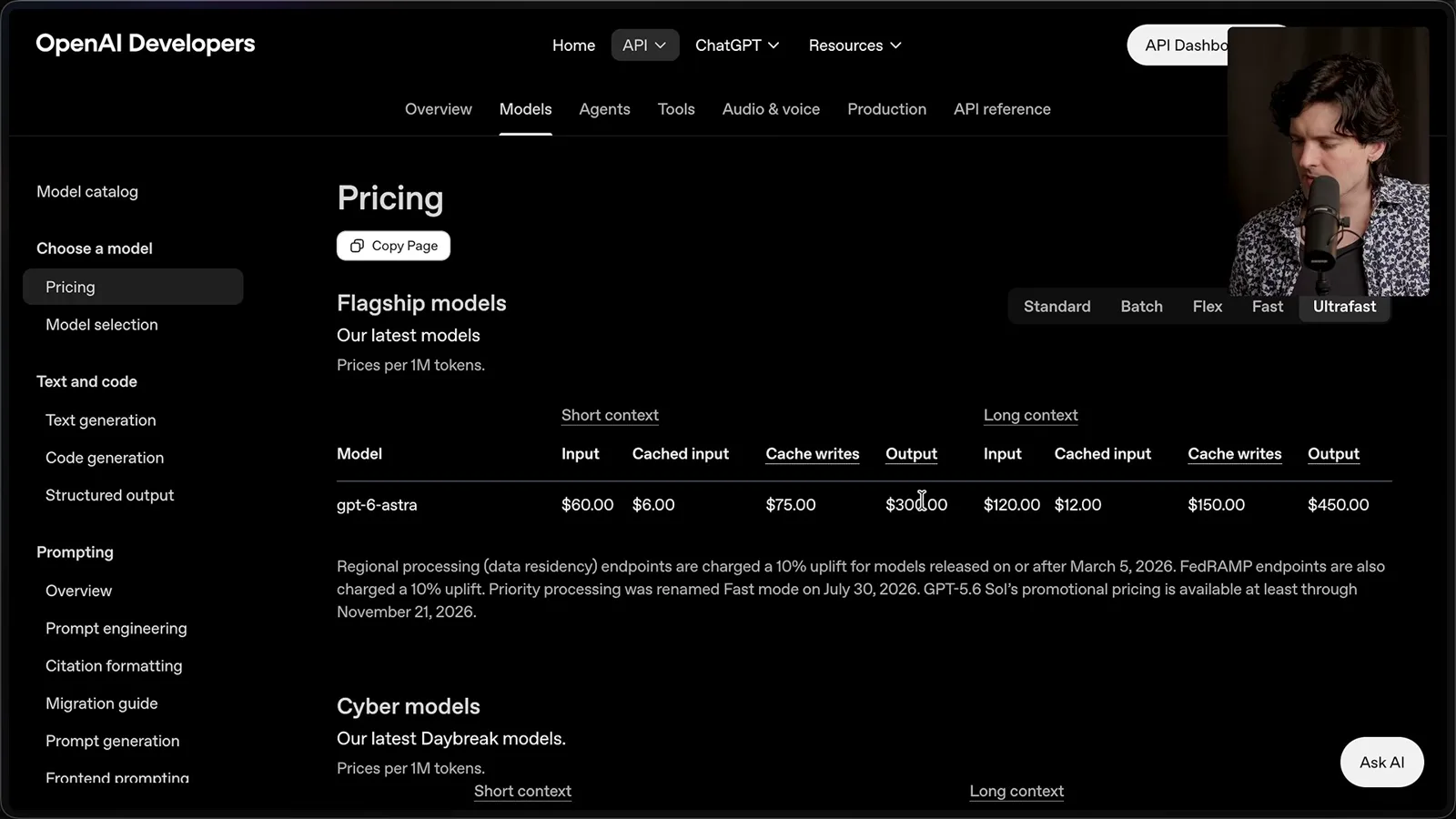
- 1Higher token pricesThe displayed Astra Ultrafast output rate is $300 per million tokens for short context and $450 for long context.
- 2The live demo’s estimated costRecorded tokens reprice to $46.32 at Ultrafast rates versus $7.72 at standard Astra rates; these are API-equivalent estimates.
- 3Rapid design iterationTheo uses fast feedback to build and refine Slopalytics, while acknowledging that his comparison is a single project.
- 4A costly counterfactualThe reported Ultrafast token value is $544.75; alternative rates applied to the same token counts are hypothetical.
- 5Wait before upgradingTheo does not recommend buying the $500 tier solely for Ultrafast at the time of the video.
ポイント
- Fast inference can make iterative design feel immediate, while tool calls become a larger share of elapsed time.
- Astra Ultrafast’s release-time rates and quota consumption make routine use expensive in Theo’s tests.
- Repricing identical token counts under another model’s rates is hypothetical, not a rerun of the same work.
- Theo reports 320–340 output tokens per second in his Ultrafast usage, but actual speed depends on the workload.
- He advises against upgrading to the $500 tier solely for Ultrafast at the time of the video.
チャプターごとに整えた全文を読む
Fast results, high prices
Theo shows a live app-building loop and introduces the high token rates. He relates the cost to subscription quota consumption.
Ultrafast makes Astra feel remarkably immediate: I can ask for changes to a small app and watch them arrive in real time. That could be useful for live prototyping, interactive development and computer use. The problem is that the same speed can consume an account's allowance and API-priced usage extremely quickly.
In the pricing table shown, Astra's standard output is $50 per million tokens, while Ultrafast is $300 for short context and $450 for long context. I had it review two pull requests under 100 lines each and report about $600 of combined usage. These are my examples, not a universal cost per review.
The higher price applies beyond output. The shown short-context Ultrafast table lists $60 per million input tokens, $6 for cached input and $75 for cache writes. Those prices make a long, cache-heavy agent workflow expensive even when the code change itself is small.
I do not think most people should use this mode at these prices, including through the $500 subscription. My estimate of about $1,000 of Ultrafast API-equivalent value per week and 2.1 hours of generation is a projection from my usage and assumptions, not a guaranteed allowance or a measured full-week run.
Before the live demo, my account showed 38% remaining. Two prompts—one to build a starter and one to change its appearance—took 38 and 16 seconds and moved the displayed remaining amount to 37%. Displayed percentages are coarse, so that small observation does not establish an exact price for every minute of work.
Working in the loop
He steers small interface changes as they appear. Faster inference makes tool latency and active feedback more noticeable.
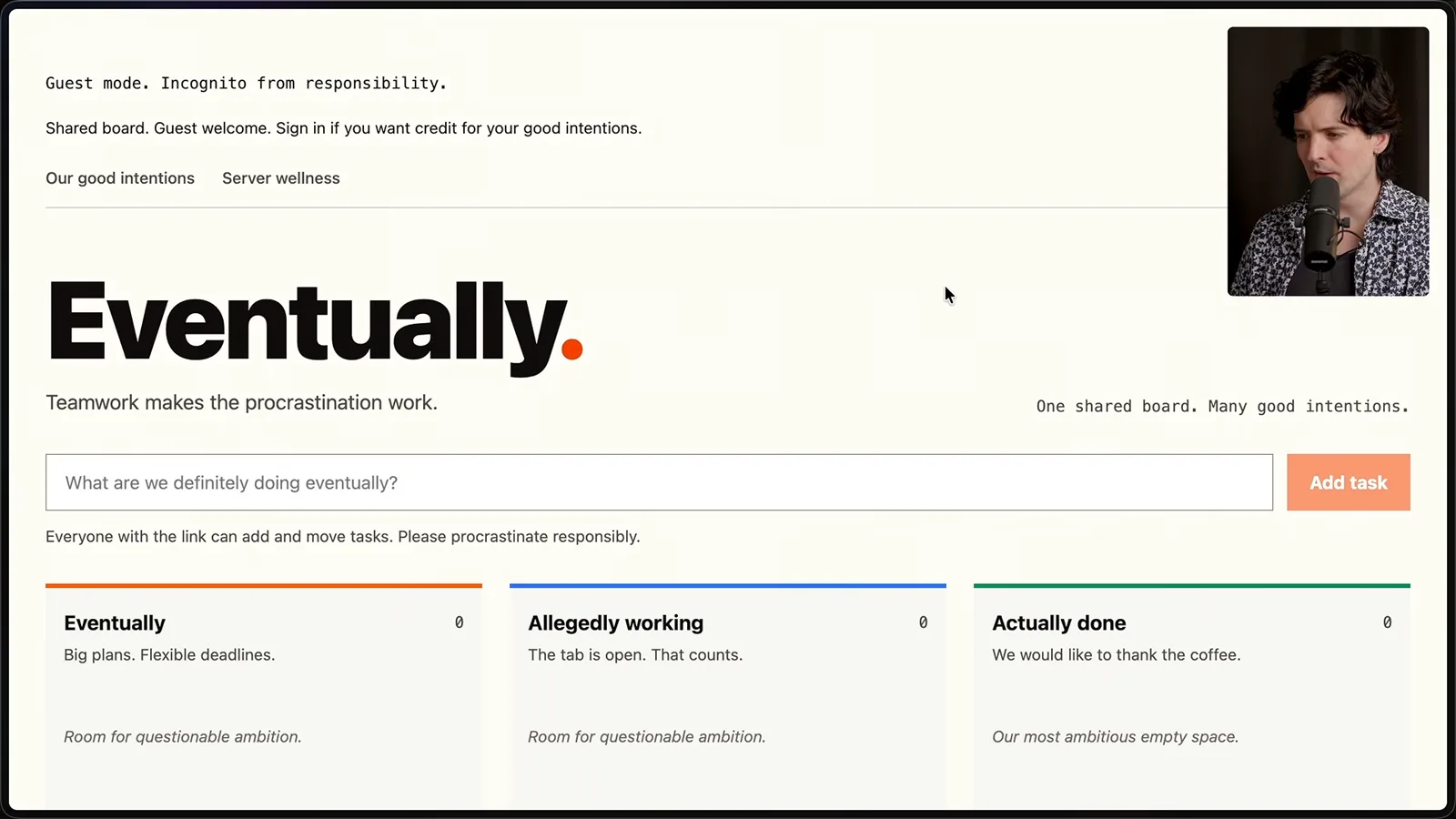
I then ask the agent to turn the app into a kanban board with live chat and make changes one at a time. Watching the development server update lets me notice awkward copy and react while it is still working. It feels different from sending a long request and returning much later.
Once inference becomes much faster, tool calls and builds become a bigger fraction of elapsed time. A 30-second tool step was minor beside ten minutes of generation; it can dominate a much shorter run. For a live design loop, I sometimes steer the agent away from extra preview operations so I can see code changes sooner.
I ask it to remove unnecessary subtitles and navigation space; the change appears in about 11 seconds. Then I request dark mode and changes to chat and ticket permissions while it is still processing. The ability to steer several small changes without leaving the flow is what makes the experience compelling to me.
Repricing a live session
Theo compares the recorded tokens at Ultrafast and standard rates. Repricing them for another model is a hypothetical calculation.
After a handful of changes, the displayed remaining quota moved from 37% to 34% on my $500 plan. I asked another model to calculate the token value: the displayed estimate is $46.32 at Astra Ultrafast API rates versus $7.72 at standard Astra rates for the same recorded token counts. Those are equivalent-rate estimates, not an additional API invoice.
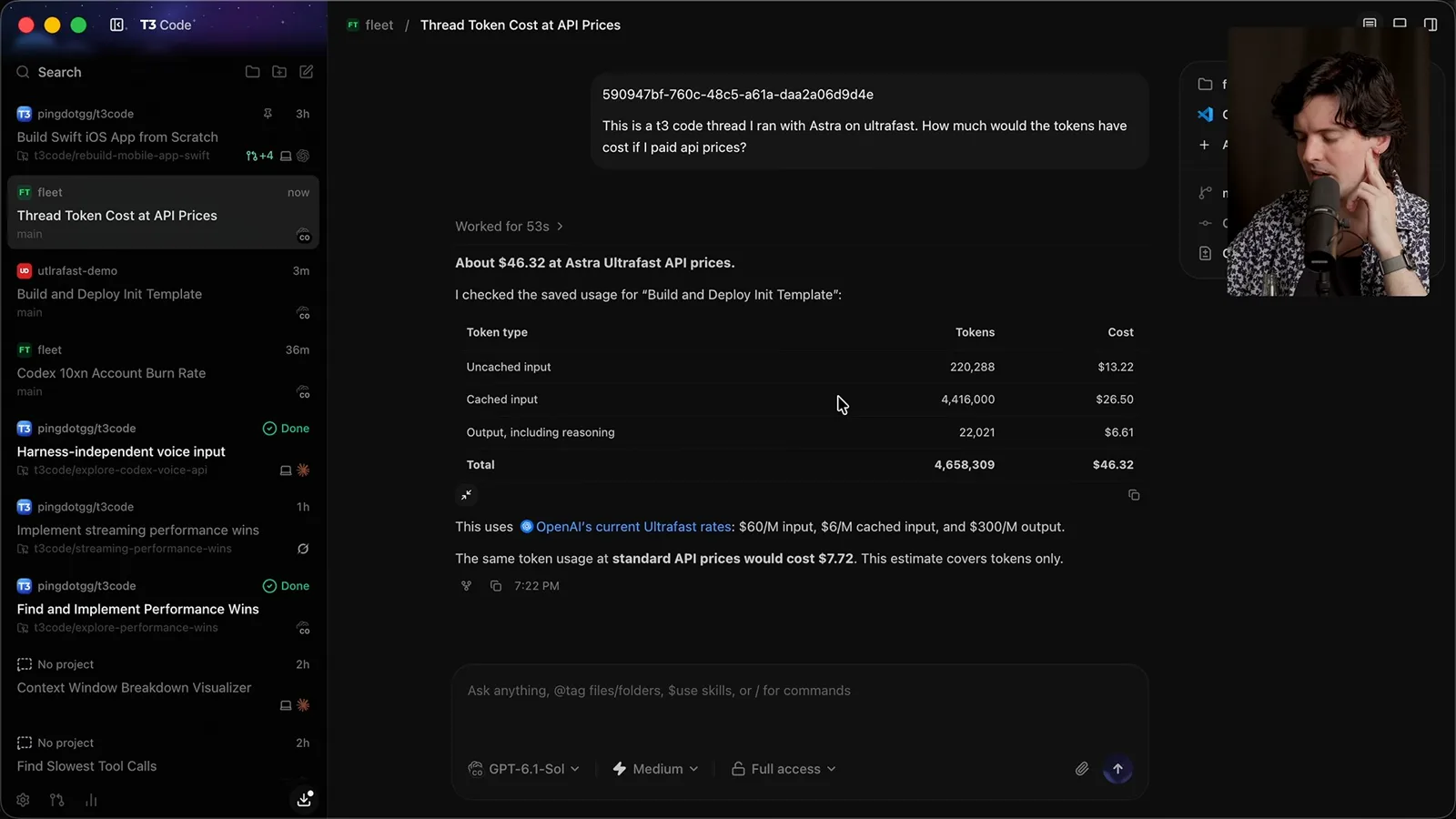
I estimate that repricing the same token quantities at normal GPT-6.1 Sol rates would be about $1.10, more than 40 times less than $46.32. That is a hypothetical reprice, not a separate controlled run: another model could use different token quantities or produce different results.
This is why I worry about presenting a very expensive mode as an easy switch. People naturally turn a control up to its maximum, and some may burn a large fraction of a subscription before they understand the consequences. I do not think the price makes sense for most routine work.
Building Slopalytics
A rapid design loop lets Theo test and revise interface ideas. He compares the experience with a slower first draft from another model.
There is nevertheless a case where the speed changed what I built. I made Slopalytics, a site for exploring model benchmark scores and costs, with Astra Ultrafast. In my comparison, an Opus first draft took roughly 15–20 minutes while the fast Astra draft appeared in around a minute and a half.
The initial Opus design looked better to me, but the fast draft let me immediately point out problems and see revisions. By the time I returned to Opus, I had already iterated repeatedly on the Astra version. This is my experience with one project, not a controlled model-quality benchmark.
Because I stayed in the thread, I caught it trying to use a remote development setup even though I was already on the machine. I corrected it to use localhost. Within roughly two minutes I had a local version with the data and a rough interface, then started changing chart orientation and layout.
I requested lab logos and consistent colors, then changed my mind about sorting and removed averages. The short feedback loop made it easy to notice a problem, issue a small instruction and inspect the result before losing the context. I sent many more messages than I normally would in one thread.
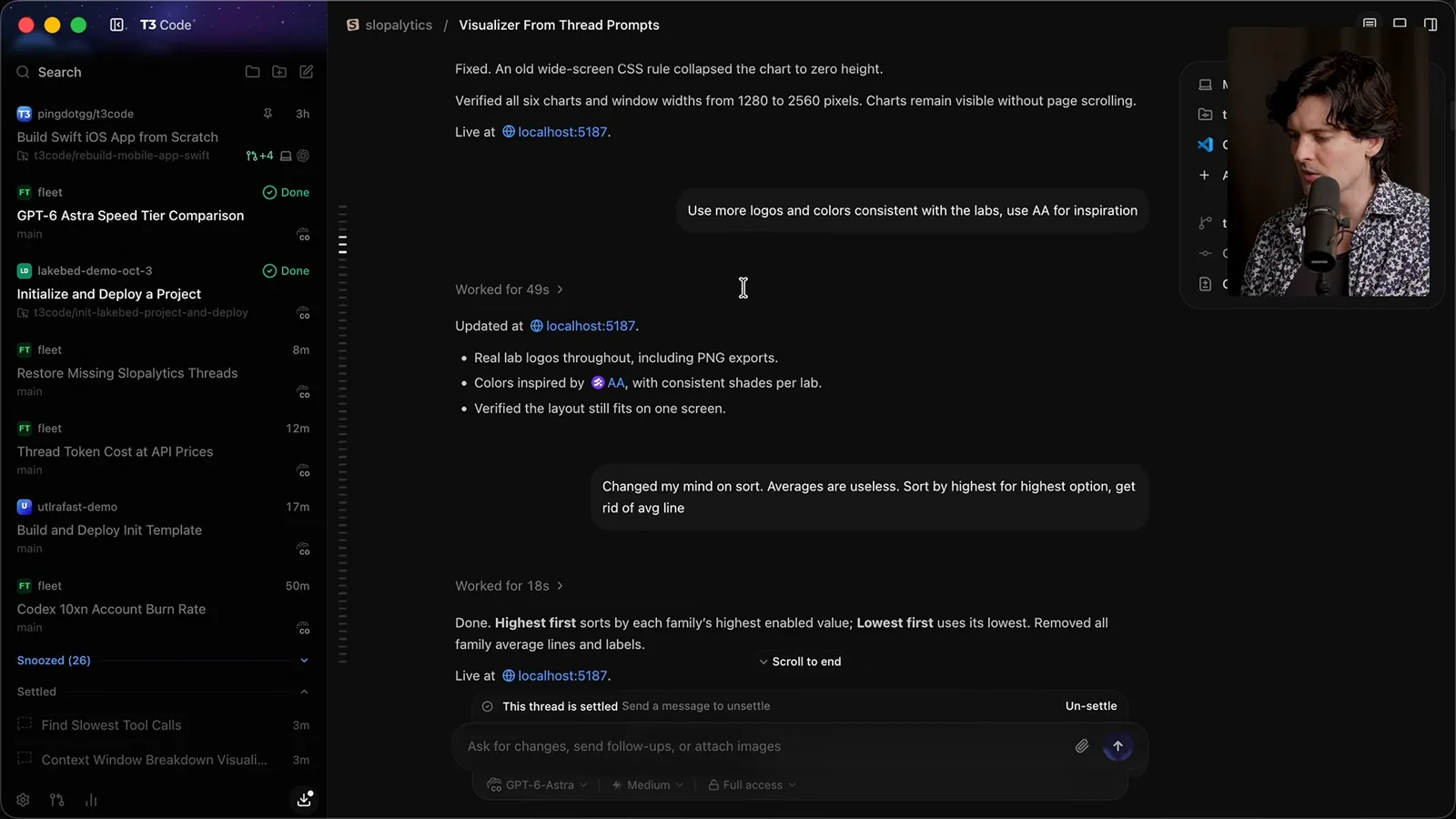
One visualization issue was how to compare reasoning settings within a model family. In Slopalytics I grouped the settings by family and added controls to hide levels such as max. That made it easier for me to see how token usage shifts when comparing high and maximum reasoning.
I even switched temporarily to normal-speed Sol when I needed to take food out of the oven: the slower pace made it easier to step away. Returning to Ultrafast brought me back into the rapid loop. That illustrates a personal preference, not an objective requirement for a good interface.
My prompts became small and frequent: change the sort, remove titles, adjust the share URL and add a comparison line. Some replies came within tens of seconds. I could react to what I saw instead of trying to predict every detail in a single large prompt.
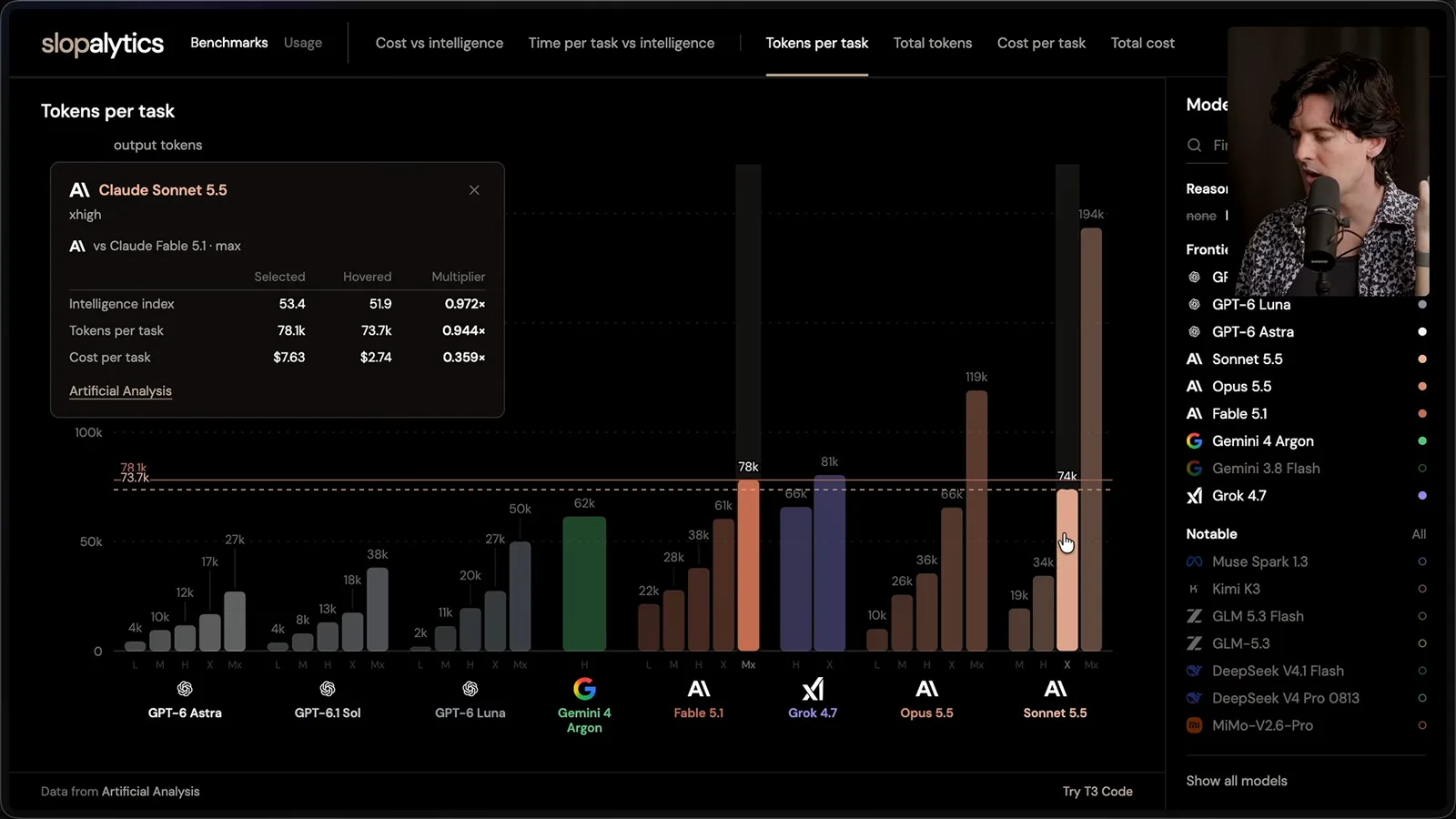
The comparison panel emerged from that back and forth. I moved it several times, tried a delay to reduce flicker, disliked the result and undid it. I also asked for a hover interaction that highlights one model line. These changes were design decisions I made while seeing the working product.
The agent's proposed names were not good, even at high speed, so I chose Slopalytics myself. I sent more than 50 messages in the thread. Speed did not automatically give the model good taste; it made my own feedback and corrections easier to incorporate.
Measured speeds and project costs
Theo reports observed output speeds and API-equivalent costs. He discusses the subjective value of finishing a project he might otherwise have abandoned.
In my measured runs I saw approximately 30 output tokens per second at regular speed, around 60 in fast mode and 320–340 in Ultrafast. These are observed rates for my usage, and tool time, workload and provider conditions can change the end-to-end result.
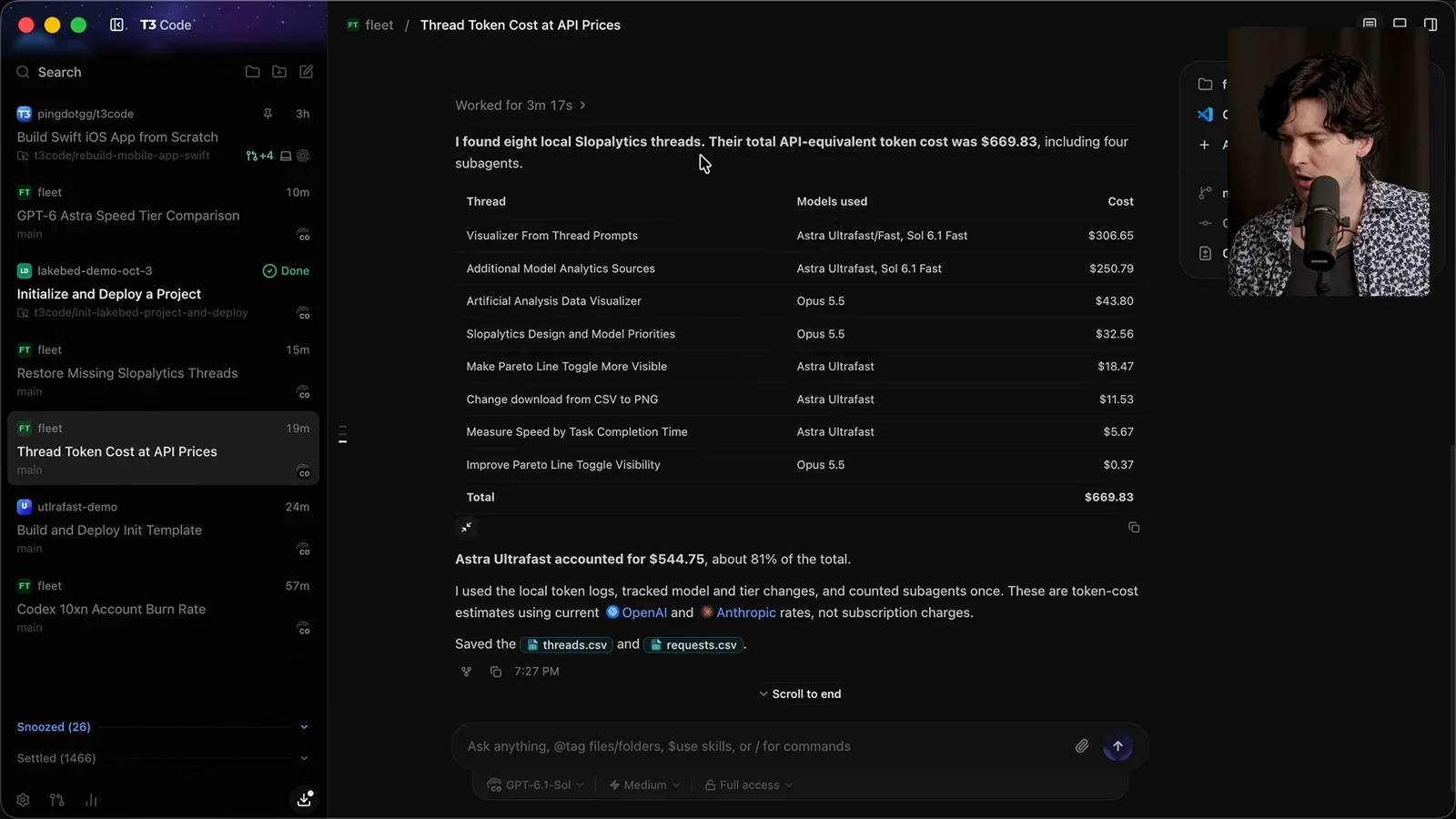
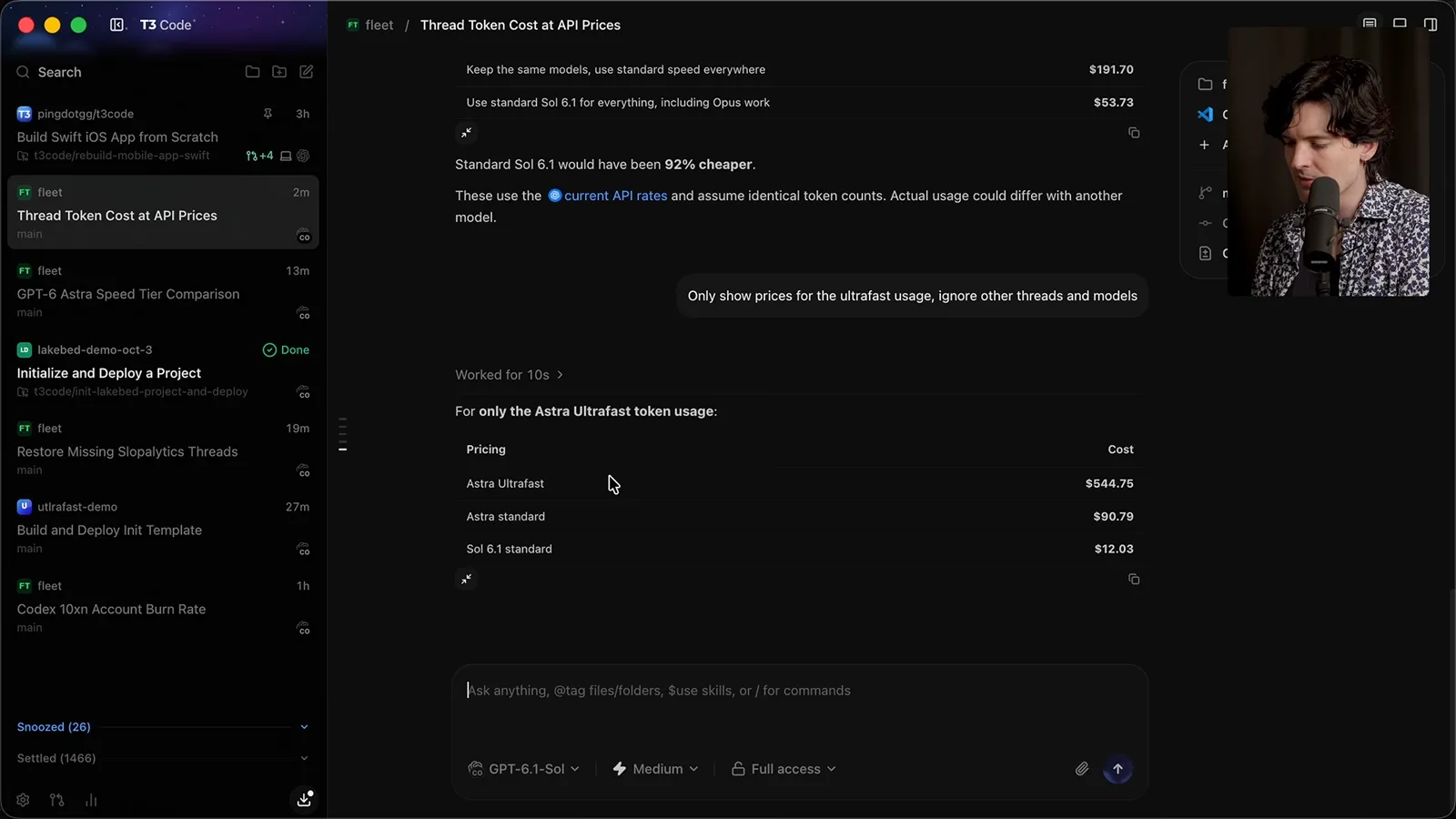
The later accounting found $544.75 of Astra Ultrafast API-equivalent token value across the Slopalytics work. Repricing those same token counts at standard Astra rates gave $90.79, or at standard Sol rates $12.03. A different model might not use the same tokens or make the same choices, so those counterfactual prices are estimates rather than measured reruns.
For most people, spending hundreds more to save time is probably not worth it. My own counterargument is that without the immediate feedback I might not have built the site at all: I lose context while waiting, and the rapid loop helped me refine a UI. That is a personal value judgment, not proof that the premium pays for itself.
Future possibilities and recommendations
Theo considers a hypothetical faster Sol mode and possible urgent uses. He advises against upgrading solely for Ultrafast at the time of recording.
A future Sol Ultrafast could change the calculation if it arrived at a similar speed multiplier and a manageable price. I discuss a hypothetical sixfold pricing multiplier and a public teaser, but at the time of the video the actual future price, speed and infrastructure were not established by this experiment.
I already use Sol fast for some systems-management work because it balances speed and capability for my needs. For Astra Ultrafast, the only plausible uses I can see are unusually urgent situations or using remaining allowance shortly before a reset. Even incident response needs a real assessment of whether the speed justifies the cost.
I had special reset opportunities and used the mode when a reset was near, accepting that my account might be empty until the reset arrived. That timing is particular to my account and is not a general guarantee that everyone will receive or can predict resets.
My recommendation at the time is not to upgrade to the $500 tier just for Ultrafast. The experience is exciting, but the cost and quota burn are too high for me to recommend it broadly. A cheaper future fast mode could change the answer; it had not yet been demonstrated here.
同じチャンネルの記事
 36:07EN
 Theo - t3․gg· 2026年10月27日Theo on Token Costs, Coding Agents, and the Price of AI CapabilityTheo Browne · Ping LabsA viral estimate of Lauren's AI spending prompts a closer look at cache pricing, benchmarks, and the changing work of coding agents.
 30:37ENTheo - t3․gg· 2026年10月26日Theo’s Three Skills for Reviewing and Shipping with Coding AgentsTheo Browne · Ping LabsHow sol-loop, full-send and full-stop encode review, verification and different levels of merge authority.
 0:43ENTheo - t3․gg· 2026年10月23日Theo Distinguishes Security Vulnerabilities from Active AttacksTheo Browne · Ping LabsA short explanation of why disclosed software flaws and reported attacks are different kinds of security news.
 29:22ENTheo - t3․gg· 2026年10月22日Theo on Security Vulnerabilities, Stolen API Keys and AITheo Browne · Ping LabsA look at the gap between vulnerability disclosure and patching, and a speculative account of why stolen inference keys may be valuable.
 31:13ENTheo - t3․gg· 2026年10月20日Theo on Why Smarter Models Help More Than DevelopersTheo Browne · Ping LabsFrom game modifications to compiler experiments, Theo revisits his assumptions about who benefits from more capable AI.
 31:47ENTheo - t3․gg· 2026年10月18日Theo on Asking Agents for Outcomes and Building the Tools They NeedTheo Browne · Ping LabsA tool-call report, a troubleshooting playbook and connected data show how prompting can reshape product engineering.