30 秒でわかる
Greg Anderson's four-person row from Washington to Hawaii lasted 54 days, with broken sleep, a storm and a failed desalination system forcing the crew to use a hand pump. The former Army Ranger also revisits his deployment to Ramadi: he says protecting an American official advising a US-appointed governor made more sense to him at the time than it does now. With Joe Rogan, he connects those experiences to learning through jiu-jitsu, recovering as he ages and questioning political authority.
- 1Watching an ocean crossing inspired Anderson to row the PacificHe contacted an Atlantic rower, assembled a team and bought a boat, despite having no previous rowing experience. He wanted to participate in an adventure rather than only watch others do it.
- 2A backup pump kept the crew supplied after the watermaker failedA storm damaged the solar-powered desalination unit about 1,500 miles offshore. Each crew member then spent roughly an extra hour a day pumping water by hand while maintaining three-hour rowing shifts.
- 3Cold, wet clothing and broken sleep were harder than expectedAnderson says the cramped cabins and continuously wet equipment wore the crew down. On some shifts teammates had to shake one another awake.
- 4Jiu-jitsu improved when training partners helped each otherAnderson describes an academy without elaborate hierarchy, where students expose gaps in each other's techniques and spend time together after class.
- 5A smaller training partner changed Anderson's view of fightingDuring a 2004 deployment in Ramadi, a skilled teammate controlled him despite Anderson's size advantage. Anderson asked to train with him for the rest of the deployment.
- 6Anderson now questions the mission he served in RamadiHis team protected an official advising a US-appointed provincial governor. He says that experience looks different to him now that he considers it from the perspective of people living under an occupation.
- 7Anderson credits his own upbringing when discussing opportunityThe former deputy says a supportive, upper-middle-class upbringing shaped his choices and argues for giving young people access to training and community resources.
ポイント
- Carry a backup for a vital system: Anderson's crew had to pump drinking water by hand after their desalination unit failed.
- Anderson distinguishes a risk that is possible from one he considers probable when deciding which challenges to take on.
- Train with stronger partners to expose gaps in your skills, Anderson says, and leave room for recovery.
- Anderson now questions the purpose of the Iraq mission he once believed was spreading democracy.
チャプターごとに整えた全文を読む
Why Anderson decided to cross the Pacific
Watching other rowers prompted Anderson to organize a crossing without previous rowing experience. He and Rogan also compare their approaches to injuries and physical training.
Watching Jack Jarvis and his team row from New York to London made Greg Anderson want to try an ocean crossing himself. He worried that he was living vicariously through other people's adventures, so he contacted Jarvis, assembled a team and bought a boat for a Pacific crossing. He had no prior rowing experience.
Anderson says his shoulders held up, but his left knee has bothered him for years. Training daily for a 50-kilometer run had made the pain so severe he could barely walk. At 37, he says, an orthopedic surgeon recommended a complete knee replacement; he sought alternatives rather than accept it immediately.
A second surgeon, whom Anderson later met through jiu-jitsu, warned him that a replacement could limit the movements his style requires. Rogan raises other treatments and an eggshell-membrane study; both describe these as possibilities they have been exploring, not a guaranteed restoration of a damaged knee.
Anderson has also begun experimenting with what he calls fascial training. He describes putting his body in unfamiliar positions and holding them briefly, while cautioning that his explanation of the connective tissue involved might be imperfect. Rogan compares the holds with the slow, isometric push-ups and squats he does.
As he gets older, Anderson says, he is looking for ways to move and get stronger without exhausting himself every day. Rogan agrees that carrying objects while walking asks the body to work as a unit. He says he has made loaded carries a regular part of his own routine.
Rogan was inspired by an Australian athlete whose videos show him carrying heavy, awkward objects outdoors. They compare that kind of work with a farmer moving hay bales or a hunter carrying an animal. Rogan says he personally noticed that his back and grip felt stronger after he started carrying weights regularly.
Rogan describes carrying two 70-pound kettlebells for about 20 minutes every other day, walking uphill and downhill. He says even his ring size changed. Both men note that walking downhill places a different demand on the legs because each step requires braking.
Hunting, wildlife and being outdoors
A difficult elk hunt leads to stories about observing wildlife and encounters with bears. Both describe why time outdoors matters to them.
A steep descent on loose dirt during a Utah hunt left Rogan's legs exhausted. Anderson encountered similar loose rock during his first Idaho elk hunt, sometimes questioning whether the terrain was safe. Despite spending ten days in the mountains, he personally did not see an elk.
Their group used a drop camp: an outfitter took them in on horseback and left them to hunt on their own. Anderson says the ground held tracks and droppings, and his companion heard and saw elk, but finding the animals still depended on covering terrain. Rogan notes that maps cannot predict exactly where animals will be on a given day.
Anderson was bowhunting. He usually hunts white-tailed deer in Wisconsin, where he says the season is treated almost like a holiday. Both defend the patience required to sit in a tree stand for hours in cold weather; Anderson likes how animals gradually reappear once the woods settle around him.
Rogan compares the experience with sitting in a ground blind while hunting bears in Alberta. The men discuss the difference they perceive between black bears and grizzlies. Anderson recalls encountering a grizzly on an Alaskan island at 14, despite having been told the animals did not visit the islands; he and his friend ran back to their boat.
The conversation turns to bears' size and behavior and to Grizzly Man, the documentary about Timothy Treadwell. Rogan speculates that staying late in the season placed Treadwell around hungry bears. Both describe wild animals as unpredictable and reject treating them as harmless companions.
Rogan says he enjoys bear meat, while Anderson has not felt drawn to hunting predators. Their food preferences lead to axis deer in Hawaii. Anderson says a friend who joined the row lives on Maui, where local farmers and ranchers have complained about deer damaging irrigation equipment.
They discuss hunting on Maui and Lanai and Rogan recalls a trip with fellow bowhunters. The conversation returns to Maui as a place both find relaxing: Anderson values its ocean and jiu-jitsu, while Rogan jokes about retiring there and leaving his obligations behind.
How the crew managed 54 days at sea
The rowers dealt with changing currents, a damaged watermaker and sleepless shifts. Anderson explains how a backup hand pump supplied drinking water.
Anderson expected abundant wildlife during the crossing, but says the crew caught no fish despite trolling for much of the trip. A large animal snapped one line. In the first days after leaving La Push, Washington, however, they saw whales and sea lions, including one that played around the oars for hours.
Roughly 300 miles offshore, the crew saw enormous sunfish at the edge of the open ocean, Anderson says. One came close enough to inspect the boat. A shark also bit an oar. The early encounters made the trip feel like a nature documentary before the boat reached emptier water.
At night it was so dark that Anderson could not see the boundary between sea and sky. He and teammate Joshua handled navigation with GPS, continually plotting their position and adjusting the route, while accepting that winds and currents could overpower their plans.
Conditions changed from day to day. With wind and current aligned, the boat sometimes traveled around 100 miles in a day; when they opposed each other the oars felt stuck, and on some days the crew made no progress or even moved backwards.
The four planned for 50 to 70 days and finished in 54. Their food supplier sent more freeze-dried meals than requested, giving them a substantial reserve. A solar-powered desalination system supplied drinking water until a storm shifted equipment into a pressure-release valve and water damaged the motor.
The failure occurred roughly 1,500 miles offshore, with perhaps two to two and a half weeks left. Fortunately, Anderson says, the crew had a manual backup pump. It produced water slowly, adding about an hour of pumping per person to days already organized around three-hour rowing shifts.
The crew had made a hard-edged pact before departure that they would finish without requesting rescue, Anderson says. The most wearing part for him was the broken sleep: by the end of the crossing, alarms were no longer enough and teammates sometimes had to shake one another awake for the next shift.
One night Will was so exhausted that his teammates struggled to wake him, briefly frightening them. Anderson says most people in his life supported the expedition, but a few questioned taking the risk with a family at home. About nine days out, a storm off Oregon confronted the crew with enormous waves.
A storm tests the self-righting boat
The crew sheltered through severe weather in cramped cabins and then rode favorable waves south. Anderson says cold and wet were harder than he anticipated.
Their 24-foot ocean-rowing boat had two small enclosed cabins and was designed to right itself after capsizing, provided its doors remained closed. Anderson says it was knocked over repeatedly, sometimes close to 90 degrees, before snapping upright again.
Two crew members shared each tiny cabin during storms. Anderson had assumed the physical work would be the hardest part, but says the cold and wet were worse. Water eventually penetrated their clothing and bags, and without heat or ventilation there was no easy way to dry anything.
Conditions changed as they traveled south, from weeks of cold and wet to strong Hawaiian sun. In the Oregon storm the crew deployed a parachute-like sea anchor to slow the boat's movement and sheltered in the cabins. The forecast suggested the storm might last nine days.
Even with the anchor, the boat circled and drifted backwards. Anderson could still post via satellite internet, and some followers called his wife to tell her the crew was going the wrong way. The weather eventually began pushing the boat in its intended direction; they lifted the anchor and rode the waves for hundreds of miles.
The team had taken the boat into the ocean only once before departing. A fisherman familiar with the ocean urged a longer trial and warned them to reconsider. Anderson says that after the first few days he understood the warning and wondered whether they had taken on too much.
He had treated the prospect somewhat like Ranger school: a long period of discomfort that he expected to endure. To estimate supplies, he studied the routes and daily progress of other ocean rowers and their race from Spain to Antigua. He also enjoys the route planning and paper maps he learned to use in the military.
The planning conversation turns to reliance on technology. Both men remember old phone numbers but say they now know few current numbers by heart. Rogan recalls getting an early mobile phone in 1988, which helped a comedy-club owner reach him for last-minute work.
Rogan says he still relies on navigation even after living in Austin for years. Anderson notes that people often enter familiar destinations to find a faster route or avoid traffic. Rogan objects to an account of police restricting navigation-app traffic on residential streets.
Pandemic enforcement and the academy
Anderson explains his objections to enforcing restrictions and why he kept his gym open. He describes the community that grew around jiu-jitsu practice.
That takes them to the video in which Anderson, then a police officer, criticized enforcing pandemic restrictions. He says his fellow officers also questioned certain enforcement actions, including an incident involving a paddleboarder and restrictions affecting small businesses and jiu-jitsu schools.
Anderson says his objection was about what he regarded as the limits of government power, not a claim to medical expertise. Rogan argues that closures harmed small businesses while larger retailers stayed open. The two question the reasoning behind particular restrictions and describe the effects on businesses they knew.
Rogan recounts hearing that an outdoor-dining closure was justified for appearances. Anderson describes a restaurant near him that kept outdoor tents after restrictions ended and later faced objections under local codes. Both argue that officials should face greater accountability for the consequences of their decisions.
The men criticize what they see as an expanding bureaucracy and discuss their distrust of political leadership. Anderson argues that people who disagree with the system can find it difficult to work within it; Rogan recalls the backlash around his own pandemic-era choices.
Anderson says he kept his jiu-jitsu academy openly operating despite orders to close and received notices demanding compliance. He felt strongly that the business supported his family and community. A licensing office remaining open to renew vehicle registrations reinforced his view that the rules were inconsistent.
For Anderson and Rogan, jiu-jitsu is more than exercise: it is a place to release tension and spend time with a community. Anderson believes the mat brings together people who disagree outside the gym and makes their contribution as training partners more important than labels.
Anderson says he tries not to make his academy a pecking order. Students can call him Greg and do not need permission to get water. Training partners expose gaps in each other's techniques and improve together, he says, which is why the sport cannot really be practiced alone.
They joke about grappling dummies and the prospect of more responsive training devices. Anderson recalls practicing techniques on his wife when he was coming up through the ranks. At his academy, class ends at 7:30, but people often stay another hour to talk or use the sauna and cold plunge.
A neighboring CrossFit gym supplies friendly rivalry. Anderson says combining intense CrossFit and jiu-jitsu left him with too little recovery, so he now favors carrying, mobility and yoga alongside his martial-arts training. He emphasizes that this is what has worked for him personally.
Rogan describes a kettlebell approach he learned from coach Pavel Tsatsouline: stop well before failure, rest and repeat, treating strength as a skill rather than always chasing soreness. He says exhausting a muscle group in the weight room can make subsequent jiu-jitsu practice harder.
The discussion returns to online criticism. Anderson says some commenters attacked the row or compared his four-person team unfavorably with a woman rowing solo. He says that rower contacted the team supportively, offered advice from her own crossings and shared their appreciation of the undertaking.
Handling criticism and choosing risks
Anderson and Rogan discuss online hostility, envy and the work behind athletic achievements. Anderson says challenges should be weighed against their risks.
Rogan thinks social platforms make it easier for strangers to broadcast contempt. They discuss jealousy and the choice between tearing down someone who has achieved something and asking how that person developed the skill. Rogan suggests examining the work behind an achievement instead of only comparing its rewards.
They consider criticism aimed at a hunter's running routine. Anderson asks why another person's preferred way to prepare should bother anyone else; Rogan says endurance and strong legs can matter on a mountain hunt. The discussion is less about a single ideal program than about letting people pursue their own goals.
Anderson shows a clip of an acrobat ascending an inclined apparatus in one-handed handstands. The feat inspires him to practice more handstands, although the men briefly question whether the clip might be AI-generated. They return to how an extraordinary performance can inspire curiosity as easily as resentment.
One goal of the row, Anderson says, was to show that ordinary people can attempt extraordinary things. He does not suggest everyone should cross an ocean; he thinks people can choose challenges outside their comfort zone while considering the difference between possible and probable danger.
Anderson says wartime service made him familiar with the possibility of death at a young age. Now a father of three, he weighs risk differently, although he still values doing difficult things. A helicopter ride with a friend leads them to the friend's rapid progress in jiu-jitsu.
Anderson describes that friend as an excellent black belt despite a comparatively short training history. The two joke about their next match and a coming seminar. Anderson says one unusual thing about jiu-jitsu is that a hobbyist can walk into a gym and train alongside elite competitors.
The lessons of training with better grapplers
Anderson recalls learning jiu-jitsu during a deployment and then training with elite competitors. The men discuss defense, MMA and the years required to develop specialist skills.
The accessibility of elite training surprises Anderson. In many sports a recreational participant could not expect to share a practice with the best in the world; in jiu-jitsu, champions need training partners and academies accept beginners. Rogan compares it to finding a basketball star practicing in the same gym.
Anderson first experienced the gap in skill in Ramadi in 2004. A Navy SEAL on his team who trained jiu-jitsu and Muay Thai controlled him despite being smaller. Instead of dismissing the encounter, Anderson asked to train with him whenever their deployment allowed.
Back home, Anderson joined martial-arts schools and later reached brown belt. When he moved to California, he trained with a young Marcus “Buchecha” Almeida. Anderson says the experience was so humbling that he offered to start again as a white belt; the instructor told him no one could take away his belt and to become the best brown belt he could.
Anderson recalls training around a group of high-level competitors as Almeida's career took off. He did not consider himself their equal, but says experiencing their skill taught him where the levels were. Years of defending against excellent partners also made him difficult to submit.
Rogan points to defense as a foundation of grappling. He recalls stories of Rickson Gracie starting practice from a deeply unfavorable position to test his escapes. Anderson later received his black belt while continuing to train in the same broader team.
Rogan recalls learning from Jean Jacques Machado around the time Machado won in Abu Dhabi. He says he initially chose a gym largely because it was closer to home, before understanding the standing of the people he was training with.
Rogan describes Machado's approach to grips: born without fingers on one hand, he developed techniques relying less on grabbing the uniform. Rogan thinks that helped the transition to grappling without the traditional jacket, when others could no longer use their familiar clothing grips.
Anderson asks why more mixed martial artists do not display highly developed butterfly guards. Rogan says the skills take a long time to build and relatively few elite grapplers move into MMA. Starting a fighting career after years in another discipline can leave an athlete much older by the time they reach the top level.
They discuss criticism of Almeida's MMA results. Rogan says modern mixed martial arts requires striking and wrestling as well as ground skill, and specialists may be competing against people who developed those complementary skills much earlier.
Anderson sees starting on the feet as an important part of practice at his academy. Even someone intending to work from underneath must learn how to manage distance and enter that position, he says. Rogan adds that people should also understand how to react when strikes are coming.
Both describe being humbled by training partners early in their practice. Rogan had considered himself a capable athlete and striker but was easily controlled by a more experienced grappler. Anderson says the lesson does not disappear at black belt: there are always people who can expose another level of skill.
Anderson recounts a recent session with Rafael Lovato Jr. in which Lovato repeatedly controlled him and used a chest-to-face smother. Anderson describes the anxiety of struggling to breathe and being unable to escape. The experience reminded him that there are levels even among skilled black belts.
The conversation moves to Gordon Ryan and coach John Danaher. Rogan describes Ryan's extraordinary commitment to training and says health problems have kept him from competing as he once did. He recalls being surprised that Danaher also coached striking for a fighter whose work he admired.
Rogan met Danaher more closely after being asked to help Georges St-Pierre with a spinning back kick. He describes Danaher as someone deeply absorbed in studying and teaching grappling, continually watching footage, analyzing positions and developing strategies.
Rogan says Danaher demands a demanding schedule and high standards from his students, which not everyone wants to sustain. They note that Ryan sold instructionals explaining his techniques while continuing to develop new ones. Rogan recalls Ryan predicting a triangle submission in a sealed envelope before a match and then securing it.
They discuss sustained dominance in submission grappling and wonder whether Ryan might return if his health improves. Rogan stresses the combination of dedication, physical preparation and technical intelligence he believes separates the very best competitors.
Rogan recounts accounts of Rickson Gracie submitting a succession of black belts after a seminar. They reflect on the early UFC and the Gracie family's role in demonstrating jiu-jitsu to a wider audience. Both enjoy seeing modern fighters successfully apply grappling in MMA.
They praise Bia Mesquita's grappling and discuss her performance against Macy Chiasson. The discussion turns to injuries and artificial spinal discs; Anderson says watching a training partner with neck replacements grapple makes him anxious on that person's behalf.
Recovery, injuries and a late-night encounter
They compare approaches to hard training and recovery. Anderson recounts restraining an intoxicated man who came to his house by mistake.
Anderson says his academy has recovery and strength equipment that students do not always use. He encourages younger trainees to pay attention to recovery early rather than wait until they are already hurting. Rogan and Anderson mention yoga, hanging and strength work among the practices they use themselves.
Rogan thinks a small amount of strength training can complement grappling, although he acknowledges people also train using jiu-jitsu alone. He recalls injuries made worse by refusing to tap when caught. Anderson says that even after 23 years of training he still finds it difficult to judge the balance between conceding early and practicing hard.
Rogan thinks constant gym wars can shorten a training career, while lighter practice can be valuable. At the same time, both value knowing how to handle a fully resisting partner. They compare that with striking sports, where hard contact every day carries different risks.
Anderson says his real-world experiences have shown him how different an untrained person's movements feel from those of a regular training partner. He tells a story about a man who arrived at his house at 2:30 a.m., shortly after Anderson returned from Iraq.
The man had previously rented a room at the address and, intoxicated, apparently gave a taxi an old ID. Anderson initially confronted him with a firearm, then handed it to someone inside and asked her to call police. Anderson says he restrained the man with a grappling hold while waiting for officers.
Anderson says he rendered the man unconscious twice while keeping him from leaving the hold. When police arrived and established what happened, Anderson declined to press charges. According to his account, the man eventually remembered that he had moved to Everett.
What deployments taught Anderson about war
Anderson contrasts his experiences in Afghanistan and Ramadi. He says he has come to question the American mission he once supported.
Asked about Ramadi, Anderson recalls joining the military in 1999 and being in Ranger school during September 11. After graduating, he traveled to Jordan in preparation for an operation in Afghanistan, but his company was removed from that particular mission shortly before it began.
Anderson says he spent about nine months in Afghanistan on subsequent deployments without taking his weapon off safe. He remembers local people feeding and welcoming his unit and says those encounters complicated the stereotypes he had heard about Afghans.
Ramadi, Iraq, felt very different. Anderson says his unit faced attacks almost daily, including improvised explosives and ambushes. Looking back, he connects hostility toward the occupation to the overthrow of Saddam Hussein's government and the local political context.
His team provided security for a State Department official advising a US-appointed provincial governor. Anderson says the mission troubled him in retrospect: Americans were trying to establish a Western style of government in other people's communities. He remains proud of skills and friendships from service while questioning the broader purpose.
Anderson remembers describing fighters from nearby countries as foreign fighters. He now compares their decision to cross a border to fight an outside military with what Americans might do if a neighboring country were invaded. He says that shift in perspective changed how he understands his own presence in Iraq.
At the time, Anderson says, he believed he was advancing American interests and spreading democracy. He now disputes that explanation and sees familiar arguments being used for newer conflicts. His criticism is shaped by years of deployments and conversations with other veterans who, he says, are tired of war.
Rogan argues that wars often begin with narratives that later prove incomplete or misleading. Anderson says the people deciding on war should bear more of its personal risk. He argues that sending service members into combat should depend on a direct threat to the country's security or sovereignty.
Civilian harm and distrust of government
Anderson and Rogan discuss foreign intervention, government accountability and historic covert operations. Their conversation turns to the exercise of government power at home.
Rogan questions longstanding arguments for military action against Iran. Anderson says Americans should be able to criticize a foreign government's policies and US support for them without having their motives assumed. He compares images from Gaza with his own memories of a war-damaged Ramadi.
Anderson says civilian suffering should not be dismissed in arguments about military operations. He describes himself as traditionally conservative but says he no longer wants to identify with either party. Rogan raises the influence he believes money and foreign policy have on American politicians.
They discuss the 1954 Operation Susannah and the Lavon Affair, reading a description of the failed covert operation in Egypt. They then move to Iran Air Flight 655, which was shot down by the US Navy in 1988. Anderson offers his interpretation of the incident and its consequences, while Rogan asks whether the shootdown was a mistake.
They speak about a reported strike on schoolchildren and say they do not know how it happened. Anderson objects to treating civilian deaths as an abstraction, drawing on what he says he witnessed in war. He asks listeners to imagine how they would react if their own families were caught in such an incident.
Rogan thinks military action can generate further resistance to the United States. The men speculate about equipment left behind in Afghanistan. Anderson contrasts that with the strict accountability he remembers for losing sensitive military equipment on an individual deployment.
Anderson shifts from foreign policy to domestic regulation and corporate influence. He believes officials protect harmful products for financial reasons and uses angry, violent language about what he thinks should happen to those responsible. Rogan and Anderson then argue that government power ultimately depends on coercion.
Anderson says many veterans he knows share his frustration with corruption and war. He returns to his view that police should have refused to enforce certain pandemic restrictions. Rogan argues that powerful people rarely face consequences for wrongdoing.
Rogan mentions Smedley Butler's War Is a Racket and recounts Butler's criticism of military interventions undertaken for private interests. Anderson argues that corruption and disputes over government power go back to the early United States.
Anderson brings up Shays' Rebellion, the Constitution and the Declaration of Independence as examples in his argument about taxation and the power to resist government. He wonders whether a country with hundreds of millions of people can be governed effectively under one national leader.
The men acknowledge how consuming politics can become. Anderson says he would often rather teach jiu-jitsu and live his life. Both argue that partisan division obscures issues on which neighbors with different social views might otherwise find common ground.
Taxes, inequality and opportunity
Both criticize taxation and government spending, while acknowledging uncertainty about one reported proposal. Anderson argues for giving disadvantaged young people access to useful skills and community.
Rogan criticizes proposals to tax extreme wealth, arguing that officials should first account for waste and fraud. Anderson compares a government agency failing an audit with the consequences an individual might face over taxes. They also question enforcement of tax law and the concentration of government power.
Anderson complains about a Washington tax on high earners and worries that thresholds can change over time. Rogan says he had read about a proposed five-percent tax on savings, then asks for the details. They are unable to establish the claim clearly in the conversation and acknowledge uncertainty about what was actually proposed.
Anderson suggests a hypothetical flat tax and says people would be more willing to contribute if schools, roads and public safety worked well. He contrasts that aspiration with communities he saw while working in law enforcement in California.
He says some young people he encountered grew up surrounded by generations of limited opportunity. He would rather see resources put into trade schools and activities such as jiu-jitsu. Rogan wonders whether those interventions would also require broader changes in safety, education and local conditions.
The team reads a description of a California ballot measure concerning taxes on personal property. Rogan continues asking about the supposed savings tax, but the discussion does not resolve its origin. They move on to whether wealth inequality is better addressed through taxes or through more opportunity.
Rogan argues that people begin from unequal starting points and that improving opportunity matters. Anderson agrees and rejects the idea that his own background played no part in his life: he says he grew up upper-middle-class with a hardworking father who taught him useful lessons.
Anderson says some people he met as a deputy were young people with few visible alternatives to the environment around them. He favors programs that give them a real chance to acquire skills and choose a different path. Rogan says improving neighborhoods requires sustained effort, not just telling people to work harder.
Anderson asks about opening jiu-jitsu academies in severely disadvantaged neighborhoods. Rogan thinks a community center could help some people but says safety, schools and the local drug economy would also need attention. Both want more effort directed toward opportunities for children.
Anderson contrasts those unmet needs with money he saw moved in Iraq. He recalls escorting large bundles of US cash to a provincial governor and says a bank deposit was taken by insurgents soon afterward. The story reinforces his skepticism about the way resources were used during the war.
The conversation closes with Anderson inviting people to Electric North Jiu-Jitsu in Lake Stevens, Washington. He also points to his podcast, The Endless Endeavor, and says visitors to the Pacific Northwest will find a welcoming training community at the academy.
同じチャンネルの記事
 2:22:43EN
 PowerfulJRE· 2026年11月17日ポッドキャスト · 2 人Tommy McMillen on Fighting, Setbacks and Finding Disciplineゲスト Tommy McMillen · ホスト Joe RoganThe UFC featherweight traces his path from Montana to Arizona and reflects on the risks behind his rapid rise.
 2:21:10ENPowerfulJRE· 2026年11月12日ポッドキャスト · 2 人Kenneth Lacovara on Dinosaur Evidence—and What Fossils Cannot Tell Usゲスト Kenneth Lacovara · ホスト Joe RoganA paleontologist explains how fossils are found, why displays use replicas, and where reconstructions and extinction theories remain uncertain.
 2:55:43ENPowerfulJRE· 2026年11月11日ポッドキャスト · 3 人Paddy Pimblett on fighting, weight cuts and the lightweight divisionゲスト Paddy Pimblett · ホスト Joe RoganPimblett explains his Saint Denis finish, his difficult recovery from ankle surgery, and why he refuses to fight teammates.
 2:10:00ENPowerfulJRE· 2026年11月10日ポッドキャスト · 2 人Gary Sinise on supporting veterans and remembering his son Macゲスト Gary Sinise · ホスト Joe RoganThe actor traces his foundation work, his path into theater and the family story behind Graceful Warrior.
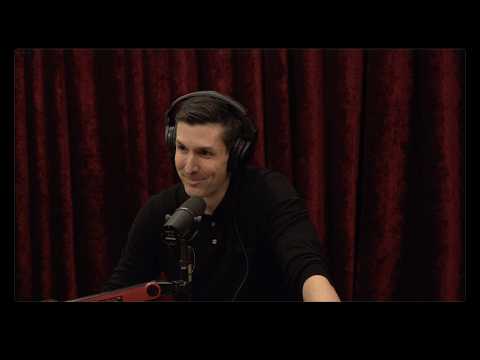 2:18:31ENPowerfulJRE· 2026年11月6日ポッドキャスト · 2 人Calley Means on Leaving the White House and Lobbying in Health Policyゲスト Calley Means · ホスト Joe RoganThe former adviser describes internal health-policy disputes and calls for campaign-finance reform; the interview contains contested medical and political claims.
 2:16:39ENPowerfulJRE· 2026年11月5日ポッドキャスト · 2 人Gregory Forth on Flores Fossils and Reports of Humanlike Beingsゲスト Gregory Forth · ホスト Joe RoganThe anthropologist discusses fieldwork, local traditions and a disputed hypothesis about a surviving hominin.