30 秒でわかる
In February 2025, Matthew Berman tests DeepSeek Janus-Pro-7B, which supports image understanding and text-to-image generation. He demonstrates a diagram-to-code task, a spreadsheet transcription, meme interpretation and two generated images, with one meme interpretation failing. Vultr partnered on the video and supplied the cloud-compute context; the results are examples rather than a controlled benchmark.
- 1Unified multimodal modelJanus-Pro-7B can interpret image inputs and generate images. It is not the first research system to combine these modalities.
- 2Benchmark scopeDeepSeek’s reported GenEval and DPG-Bench results compare specific models and settings, not every measure of visual quality.
- 3Sponsored cloud demonstrationVultr partnered on the video; Berman runs a Gradio interface on AMD MI300X cloud hardware.
- 4Vision tasksThe model generates Python from a flowchart and transcribes a spreadsheet, but misreads a workplace meme.
- 5Image generationBerman produces astronaut and wine-glass examples and considers them good but not exceptional.
ポイント
- Janus-Pro combines multimodal understanding and image generation in one model family; earlier research had already explored unified models.
- DeepSeek reported higher GenEval scores than specific DALL-E 3 and Stable Diffusion 3 Medium versions, which does not prove superiority on every image task.
- Berman’s diagram-to-code and spreadsheet examples appeared successful, while a second meme was misinterpreted.
- The demonstration ran on a Vultr-hosted AMD Instinct MI300X, so its apparent speed does not establish local performance on every computer.
- The Janus repository and model have separate license terms; review the model license before deployment or commercial use.
- The cloud promotion and pricing described in the video were historical and subject to their original terms.
チャプターごとに整えた全文を読む
Janus-Pro and the cloud setup
Berman introduces the model and reviews DeepSeek’s reported image benchmarks. He discloses the Vultr partnership and uses an AMD cloud GPU.
DeepSeek has released Janus-Pro, a multimodal model that can both answer questions about images and generate images. I test the 7-billion-parameter version in February 2025. Its weights are available, but whether it runs conveniently on a particular local computer depends on memory, software and hardware.
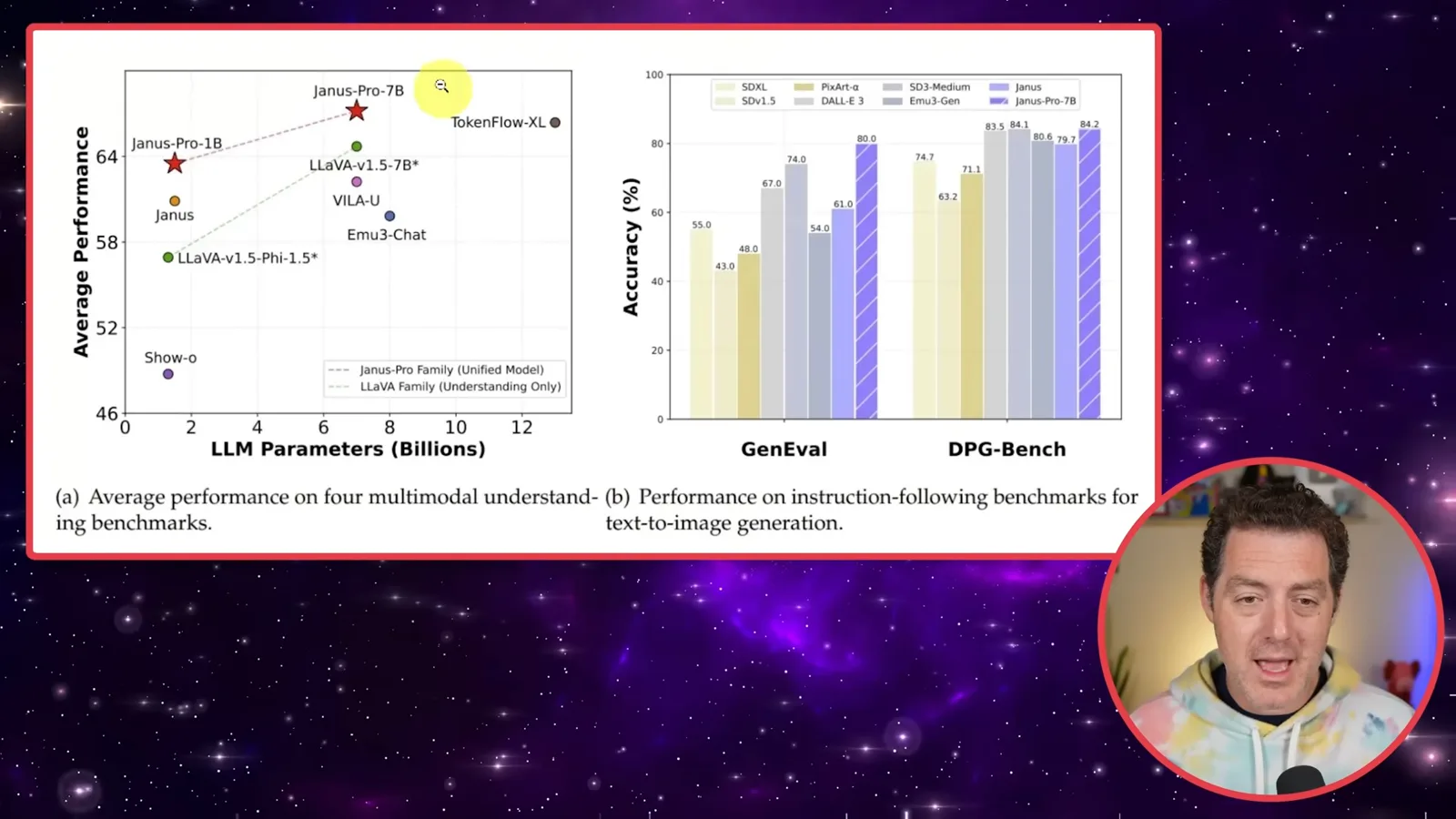
DeepSeek reports that Janus-Pro-7B scored 80% on GenEval, compared with 67% for DALL-E 3 and 74% for Stable Diffusion 3 Medium in its reported evaluation. That is a result on one benchmark under the paper’s conditions, not proof that Janus-Pro creates better images in every setting ([technical report](https://arxiv.org/abs/2501.17811)). Its authors also report a DPG-Bench result.
I am excited to see understanding and generation in a single model, but this was not the first research system to attempt both: prior unified systems included Chameleon and Emu3, as discussed in the [Janus paper](https://arxiv.org/abs/2410.13848). The [Janus repository](https://github.com/deepseek-ai/Janus) makes code available, while use of the model is subject to the separate DeepSeek model license; inspect the applicable terms.
Vultr is a partner on this video. I run Janus-Pro in a Gradio interface on a Vultr-hosted AMD Instinct MI300X and point out that the server can also expose an API. This is a cloud demonstration rather than a local-computer speed test, and it does not isolate how much the model or the hardware contributes to performance.
Testing image understanding
The model interprets memes, converts a flowchart to Python and transcribes a spreadsheet. One meme explanation fails.
First I upload a meme depicting competition between DeepSeek and OpenAI and ask for an explanation. The model recognizes the visual joke as a competitive interaction, though parts of its description are imperfect. There is no web search enabled in the setup I show.
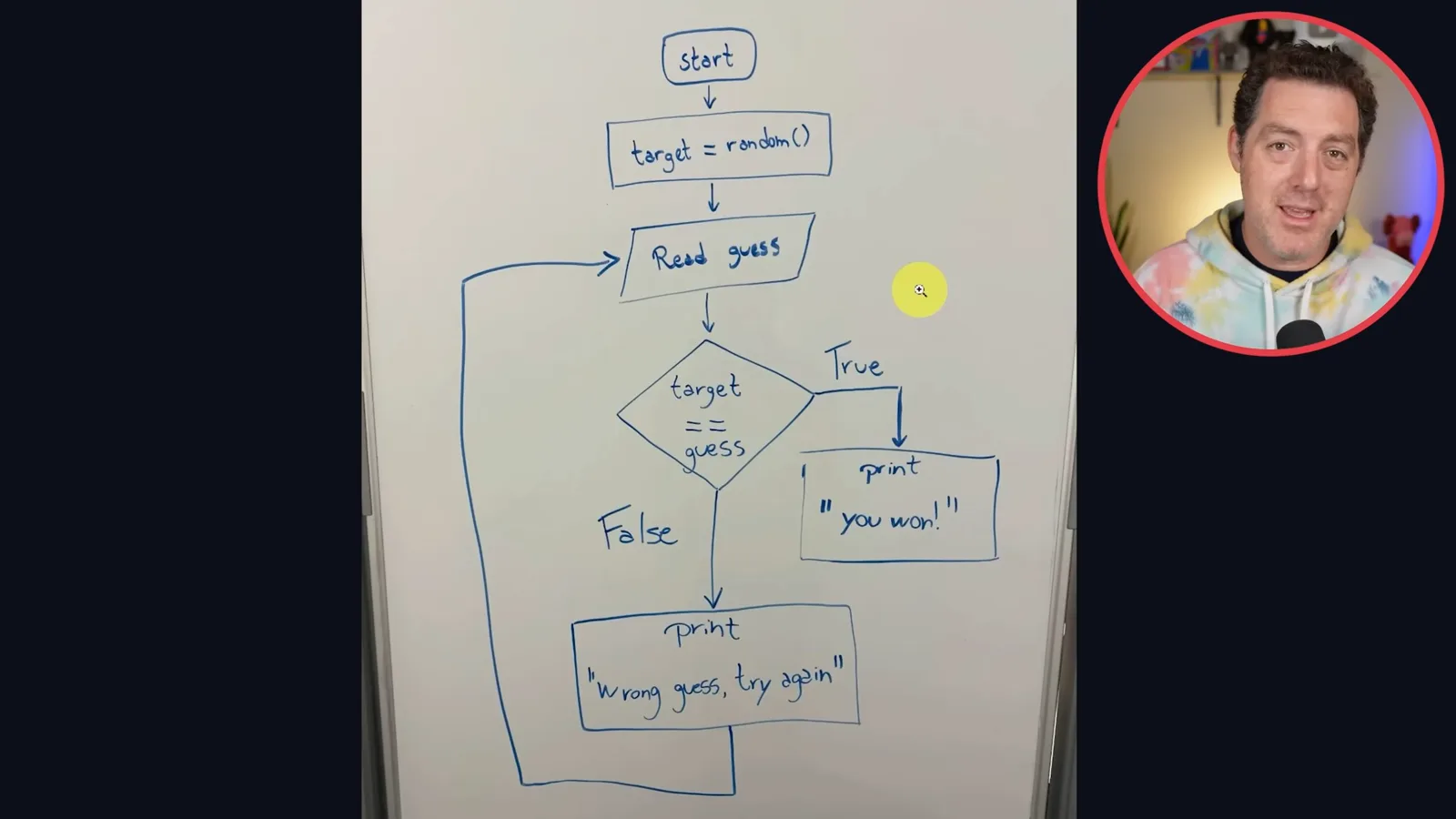
Next I ask the model to convert a number-guessing flowchart into runnable Python. I paste and run its generated code, then make several guesses until it reports a win. That is a successful demonstration for this simple example, not proof that generated programs will always match arbitrary diagrams.
I then provide a spreadsheet screenshot and ask for CSV. The output looks correct to me on a visual inspection, but I do not show a cell-by-cell independent audit. On a second meme contrasting startups and large companies, the model misses the joke and describes the large-company side in terms of efficiency and coordination rather than the intended criticism.
Generating images
Berman generates two images in the same interface and discusses his impression. He closes with a historical Vultr promotion.
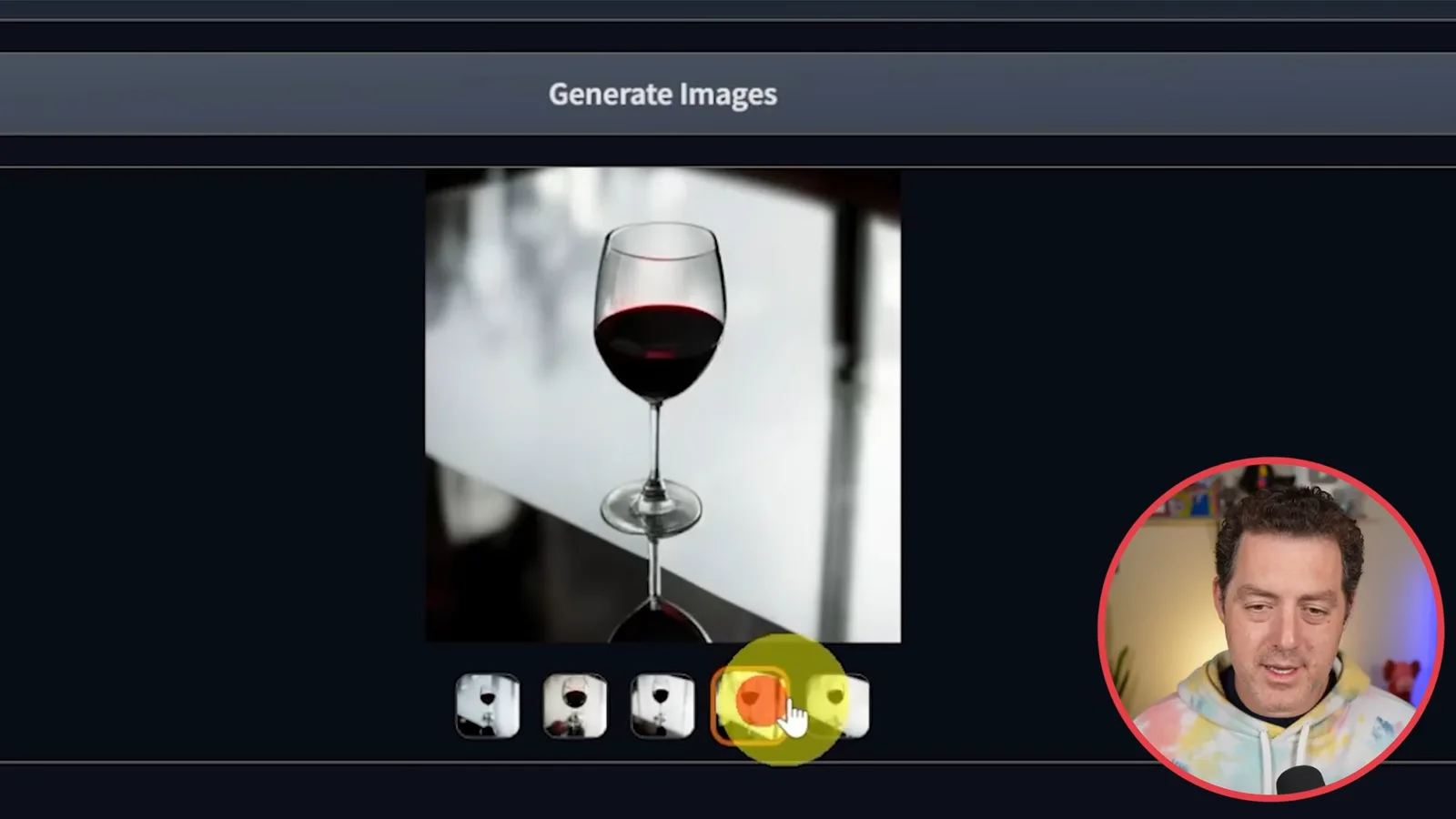
Without loading a different model in the displayed interface, I switch to image generation and request an astronaut in a jungle with muted colors, then a glass of red wine on a reflective surface. I find the pictures reasonably good rather than extraordinary. These two examples are subjective demonstrations, not a full image-quality evaluation.
I conclude that the small model is promising and again promote Vultr’s hosted AMD hardware. I mention a $300 promotional credit for the first 30 days; that offer was part of the 2025 partnership and its current availability and conditions should be checked with the provider.
同じチャンネルの記事
 14:45EN
 Matthew Berman· 2026年10月29日Matthew Berman Examines Google’s Gemini 4 Carbon AnnouncementMatthew Berman · Forward FutureMatthew Berman reviews Google’s reported benchmark results, staged rollout and pricing for Gemini 4 Carbon, while noting he has not yet used the model.
 21:11ENMatthew Berman· 2026年10月28日Matthew Berman tests DeepSeek V4.1 Flash: coding, vision and local appsMatthew Berman · Forward FutureA hands-on tour of visual coding, image reasoning, local applications and provider economics reveals both impressive results and visible flaws.
 34:21ENMatthew Berman· 2026年10月27日Matthew Berman Examines Anthropic’s IPO Filing, AI Growth and GovernanceMatthew Berman, Sam Altman · Forward FutureThe presenter reviews the S-1’s financial metrics, compute strategy and voting structure while questioning the tension between rapid AI development and safety.
 0:26ENMatthew Berman· 2026年10月25日Sam Altman on Human Values and Problem-Solving in an AI WorldSam Altman · OpenAIIn a short interview excerpt, Altman considers the enjoyment of solving hard problems and the human role in interpreting results.
 0:36ENMatthew Berman· 2026年10月25日Kimi K3.1 and a Rubik’s Cube Solver DemonstrationMatthew Berman · Forward FutureMatthew Berman shows a scrambled virtual cube being solved and gives the Kimi K3.1 test a favorable assessment.
 0:21ENMatthew Berman· 2026年10月24日An AI-Generated Kimi Benchmark Chart Used Invented ScoresMatthew Berman · Forward FutureMatthew Berman asks for a graph of Kimi K3.1 Pro benchmarks, then discovers that the displayed figures are illustrative placeholders.