30 秒でわかる
Elon Musk positioned Starlink in 2021 as a complement to fiber and mobile networks for hard-to-reach areas. He said phased-array antennas enabled handoffs between moving satellites, but the user terminal cost SpaceX more to make than the roughly $500 customers paid. He also described potential operator partnerships and Starship capabilities as plans and projections.
- 1Starlink was aimed at hard-to-reach customersMusk positioned the service as a complement to fiber and mobile networks.
- 2Phased arrays help terminals follow moving satellitesMusk says electronically steered beams enable satellite handoffs.
- 3The terminal cost more to make than customers paid in 2021Musk says SpaceX subsidized the hardware and was working to reduce its cost.
- 4Orbital refueling was part of the proposed Moon and Mars planMusk described it as a way to deliver more payload beyond Earth orbit.
ポイント
- Starlink’s 2021 target included remote areas that are costly to serve.
- Phased-array antennas steer beams electronically to follow satellites.
- Musk said the company subsidized user terminals in 2021.
- Satellite backhaul can connect remote mobile sites to an operator’s network.
- Starship performance and launch timing were 2021 projections.
チャプターごとに整えた全文を読む
Where satellite internet fits
Musk describes rural coverage, latency and network backhaul in 2021.
Mobile World Live publisher Justin Springham introduces Elon Musk at Mobile World Congress 2021. He asks why SpaceX is building the Starlink satellite internet system.
Musk says Starlink is intended for places with poor, expensive or unavailable connectivity. He describes it as a complement to fiber and mobile networks, especially in sparsely populated areas.
He says more than 1,500 satellites were active at the time and expects coverage outside the polar regions later in 2021. These figures and timing reflect his June 2021 account.
Musk says the system is better suited to low- and medium-density areas because each satellite beam covers a relatively large area. In dense cities, capacity limits the number of customers it can serve.
He reports about 69,420 active users and operations in roughly twelve countries at the time. He predicts substantial subscriber growth over the following year.
Musk suggests satellite links could provide backhaul: carrying traffic from a remote mobile base station to the rest of the operator’s network. He says partnerships were being discussed but could not yet be announced.
He contrasts Starlink’s low-Earth orbit, around 500 kilometers in his account, with much higher geostationary satellites. He says the shorter distance can reduce delay and states an ambition to bring latency below 20 milliseconds.
The technology and the business risk
He discusses earlier bankruptcies, phased arrays, launches and planned satellite links.
Springham notes the history of failed satellite broadband ventures and asks about competition. Musk says Starlink’s first business objective is to avoid bankruptcy, noting that earlier satellite operators had entered bankruptcy.
Musk says space systems have often used mature components because equipment must survive vacuum and radiation. He describes SpaceX as taking more risk with newer technology.
He describes phased-array antennas on satellites and user terminals, which electronically steer radio beams. He says this helps a terminal switch between satellites moving across the sky.
Musk says satellites can serve multiple ground cells and that software can improve the system. He also cites Falcon 9’s launch capacity and reusable components as advantages for deploying a large constellation.
He discusses satellite propulsion and says later satellite versions were planned to use laser links between spacecraft, particularly to support high-latitude coverage. Those were plans described in 2021.
Musk describes connecting gateways and network points more directly to major data centers to shorten routes and reduce latency. He says the network should complement rather than replace fiber and 5G.
Investment, user terminals and operators
Musk gives 2021 cost estimates and discusses installation and partnerships.
Asked about financing, he says the total depends on what costs are counted, including whether rocket development is included. He estimates several billion dollars would be invested before positive cash flow.
He says continued investment would be needed even after that point because mobile networks and other satellite services would keep improving. He suggests cumulative investment could eventually reach tens of billions of dollars.
Springham asks about the price to get started. Musk says that in 2021 a terminal cost customers about $500 and service about $100 a month, with taxes and import costs varying by location.
Musk says the terminal then cost SpaceX more than $1,000 to make, so the company subsidized it. He describes work on a less expensive terminal and a longer-term hope of reducing customer hardware prices.
He says the terminal was designed for customers to install themselves because many would be in remote areas where sending a technician would be difficult.
Springham asks whether mobile operators should view Starlink as a partner. Musk says SpaceX was discussing backhaul and serving difficult rural areas with operators, including where licenses imposed rural coverage requirements.
Reusable rockets and the Mars goal
He explains Falcon 9 reuse and makes Starship projections.
The discussion turns to SpaceX’s wider goal. Musk says making life multiplanetary requires reliable rockets that can be reused rapidly, and describes Falcon 9’s booster and fairing reuse.
He estimates how much of a Falcon 9’s cost lies in recoverable components and contrasts that with the upper stage, which was discarded. He presents Starship as an effort to make the entire vehicle reusable.
Musk describes Starship’s planned payload, fuel and rapid reuse, including an aspirational low marginal launch cost. These are design goals and projections he gave in 2021.
He says transferring propellant between spacecraft in orbit could increase what Starship might deliver to the Moon or Mars. He connects that proposed capability to building a lunar base or a Martian settlement.
Asked when an orbital attempt would occur, Musk hopes for one within months. It was a 2021 expectation, not an accomplished flight at the time of the interview.
He mentions an upcoming Falcon 9 rideshare mission carrying small satellites for other customers, comparing it to a bus serving many passengers.
Asked what motivates his projects, Musk links SpaceX to extending life beyond Earth, Tesla to sustainable energy and Neuralink to a possible human-AI relationship. He says he wants actions that improve the odds of a good future.
Springham thanks Musk and closes the session.
同じチャンネルの記事
 3:35:00EN
 CNET Highlights· 2023年3月2日Tesla’s 2023 Investor Day: the plan to scale clean energy and carsElon Musk, Zach Kirkhorn, Drew Baglino, Franz von Holzhausen, Lars Moravy, Colin Campbell, Pete Bannon, David Lau, Ashok Elluswamy, Rebecca Tinucci, Karn Budhiraj, Roshan Thomas, Tom Zhu, Mike Snyder, Laurie Shelby, Brandon Ehrhart · TeslaTesla leaders outline a global electrification scenario, a lower-cost vehicle platform and the factories and supply chains needed to scale.
 41:04ENCNET Highlights· 2023年3月2日Tesla’s 2023 investor Q&A puts battery supply and costs in focusElon Musk · TeslaExecutives explain refining, factory localization and dry-electrode scaling, while Musk discusses affordability and a future autonomous fleet.
 8:15ENCNET Highlights· 2023年3月1日Tesla’s 2023 plan estimates the scale of a fully electrified energy systemElon Musk, Drew Baglino · TeslaMusk and Drew Baglino describe a proposed energy transition requiring batteries, renewable generation and manufacturing investment.
 53:25ENCNET Highlights· 2022年12月1日Neuralink researchers on implant durability, safety and wireless dataElon Musk · NeuralinkAt a 2022 Q&A, the team explained animal results, device-removal concerns and ways to compress brain signals.
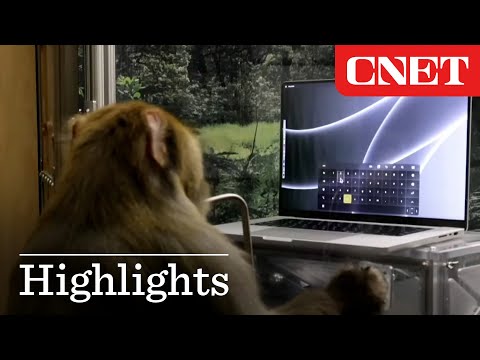 7:20ENCNET Highlights· 2022年12月1日Neuralink’s 2022 monkey demo selected highlighted keysElon Musk · NeuralinkMusk showed cursor control with an implant, while stressing the monkey was following prompts rather than spelling independently.
 3:39:05ENCNET Highlights· 2022年12月1日Neuralink’s 2022 update: from neural signals to a working interfaceElon Musk, DJ Seo · NeuralinkEngineers explain cursor decoding, implants and robot-assisted insertion, while separating animal demonstrations from clinical ambitions.