30 秒でわかる
Matthew Berman surveys AI news from March 2023, including Adobe Firefly concepts, Runway Gen-2 demonstrations, reported Apple research and Google Bard. He reviews an OpenAI-led study of task exposure and tries ModelScope and Zero-1-to-3 demos. The article distinguishes previews and speculation from confirmed features, and task exposure from job loss.
- 1Firefly previewsAdobe presented image editing and other generative media concepts, some for future development.
- 2Runway Gen-2Runway showed text, image and video-conditioned modes; Berman had not independently tested them.
- 3Task exposure versus job lossThe 80% and 19% estimates concern shares of workers and their potentially affected tasks, not predicted layoffs.
- 4Single-image view synthesisZero-1-to-3 generates new views from one image and also supports 3D reconstruction research.
ポイント
- Firefly and Gen-2 examples included company demonstrations and future concepts, not independently verified production features.
- The Apple language-model story was a report, not an announced Siri integration at the time.
- The labor study estimated potential task exposure, not the number of jobs that would be eliminated.
- Watermark-like artifacts do not independently establish training data provenance or legal liability.
- Zero-1-to-3 synthesizes novel views and can support reconstruction; unseen details are inferred.
チャプターごとに整えた全文を読む
Adobe Firefly and Runway Gen-2
Berman reviews company previews of image editing and video generation. He has not yet independently tested the announced products.
In March 2023 I review a rapid series of AI announcements: Adobe Firefly, Runway Gen-2, reports about Apple's language-model work, Google's Bard and research into potential effects on jobs. I also try text-to-video and single-image view-synthesis demos. Availability, names and capabilities described here reflect that moment, not necessarily current products.
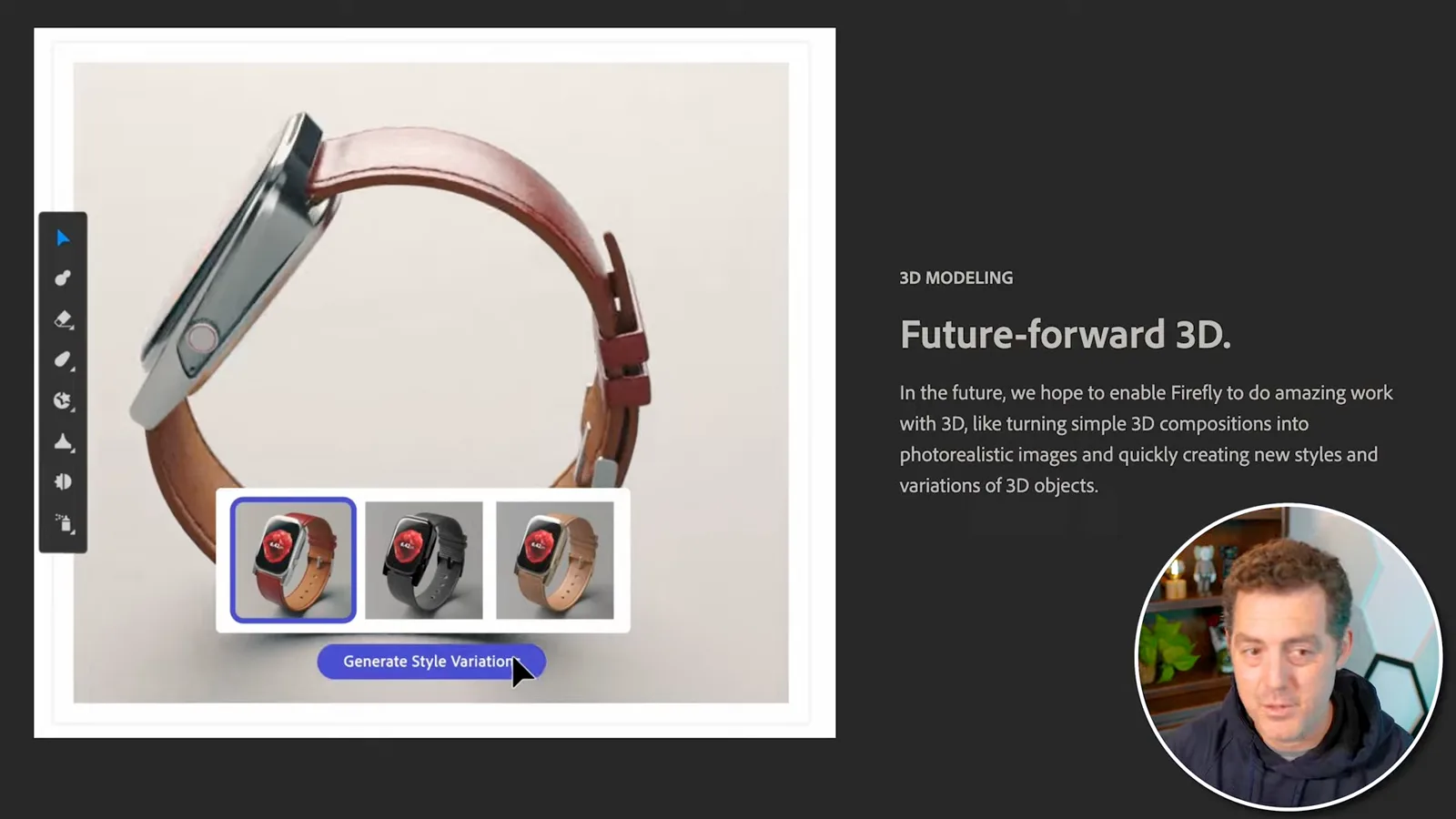
Adobe's Firefly announcement shows context-aware image generation: select a region and describe a replacement or expand the image. Its demonstrations also suggest generating vectors, brushes and textures, stylized text, video changes and images from 3D compositions. Several examples were presented as future possibilities, and I had joined the beta waitlist without testing the product myself.
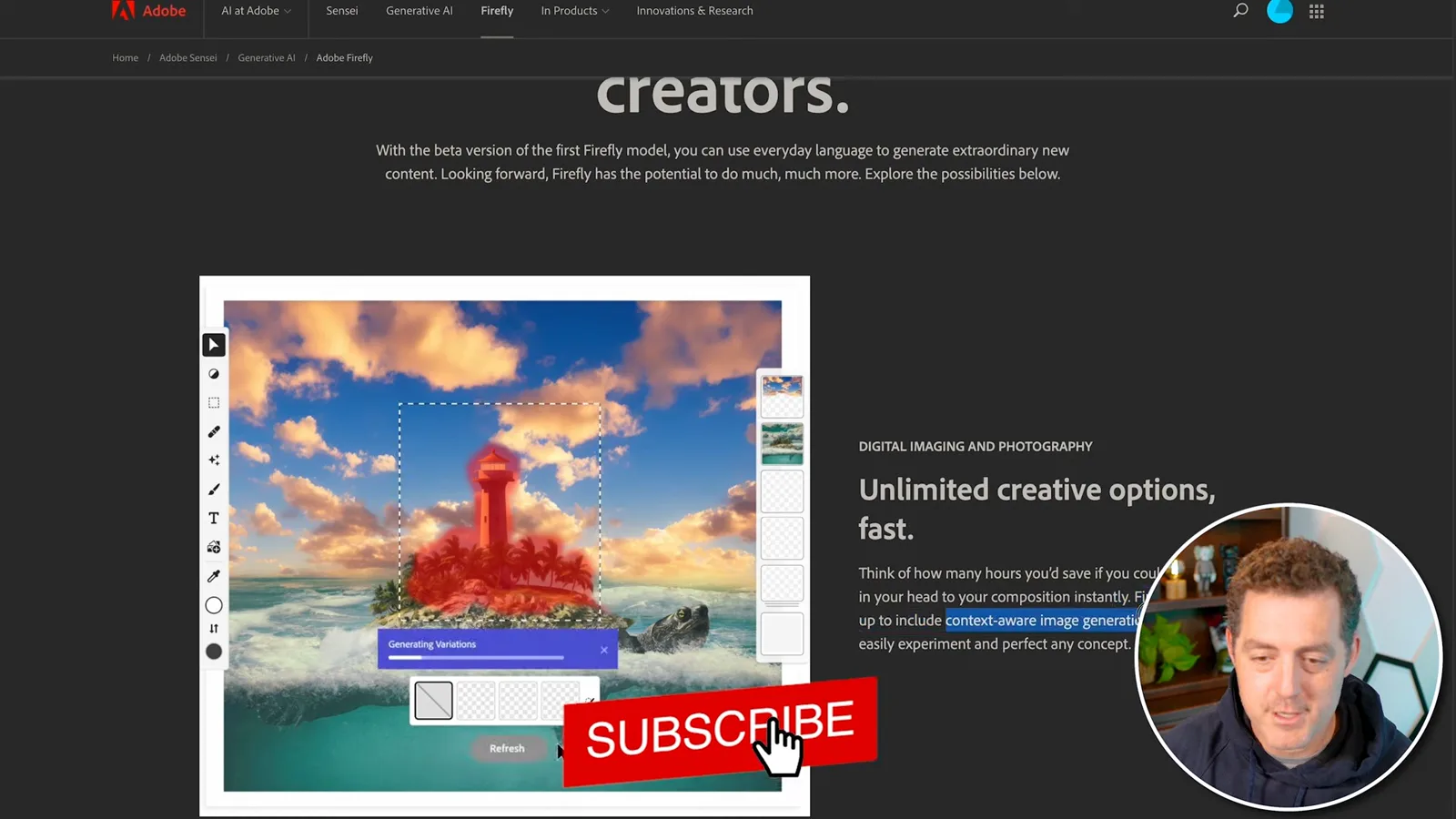
Adobe's examples include changing the season of a video, creating legible text effects and turning simple 3D arrangements into photorealistic images. I find the demonstrations exciting, particularly given how earlier image generators struggled with text. These are company demonstrations and proposed features, not independent proof that every workflow was available or performed as shown.
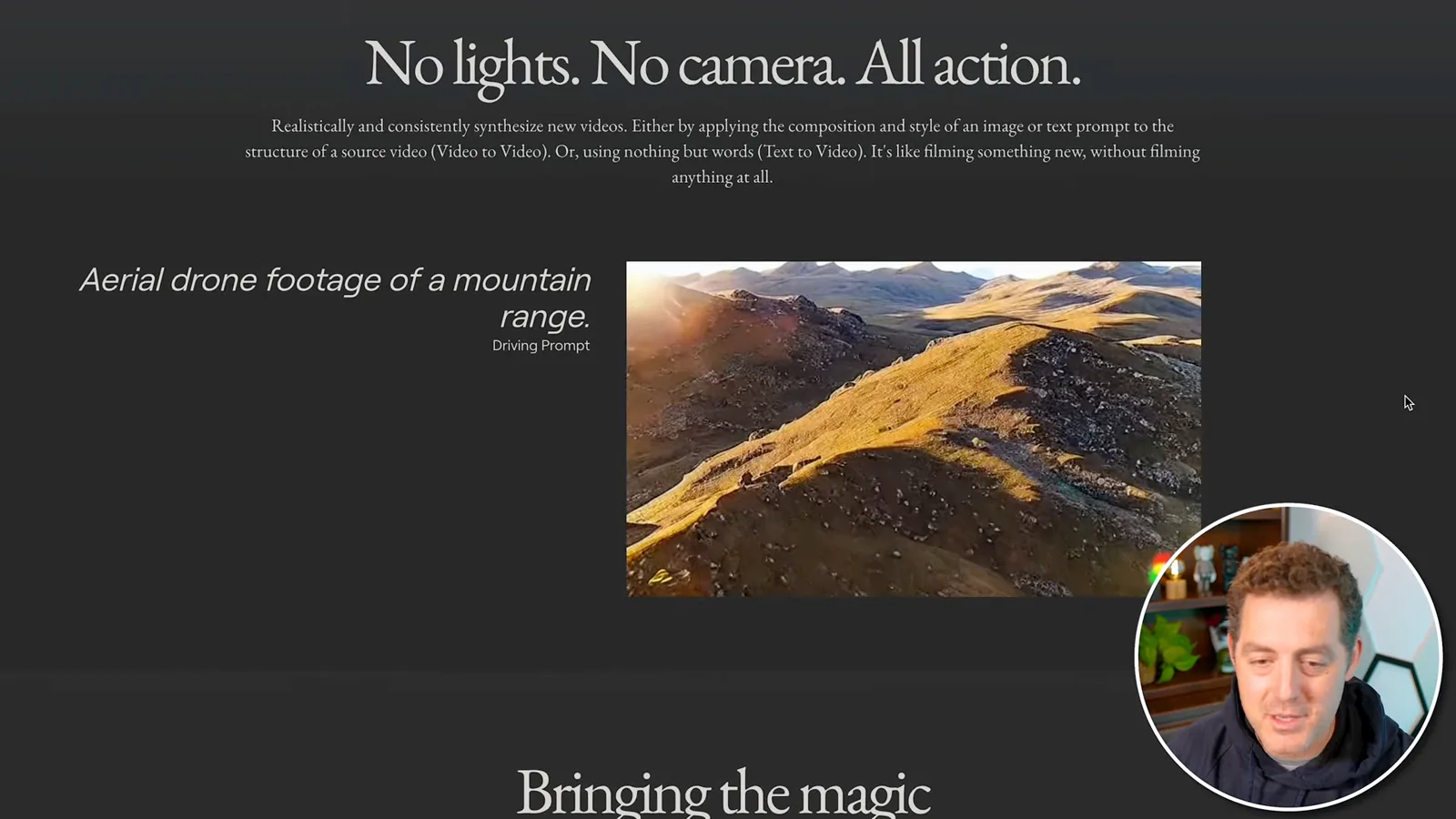
Runway's newly announced Gen-2 demonstrates text-to-video clips, such as aerial mountains and sunlight in a New York loft. At the time access was limited and I had not tested it directly. The examples are generated outputs, but that does not establish that the model's learned training influences are absent.
Other illustrated Gen-2 modes take an image plus a prompt or an image alone to produce video. I notice artifacts such as changes in faces, even while finding the motion impressive for early technology. Runway also shows stylization, transferring a reference look onto an existing source video.
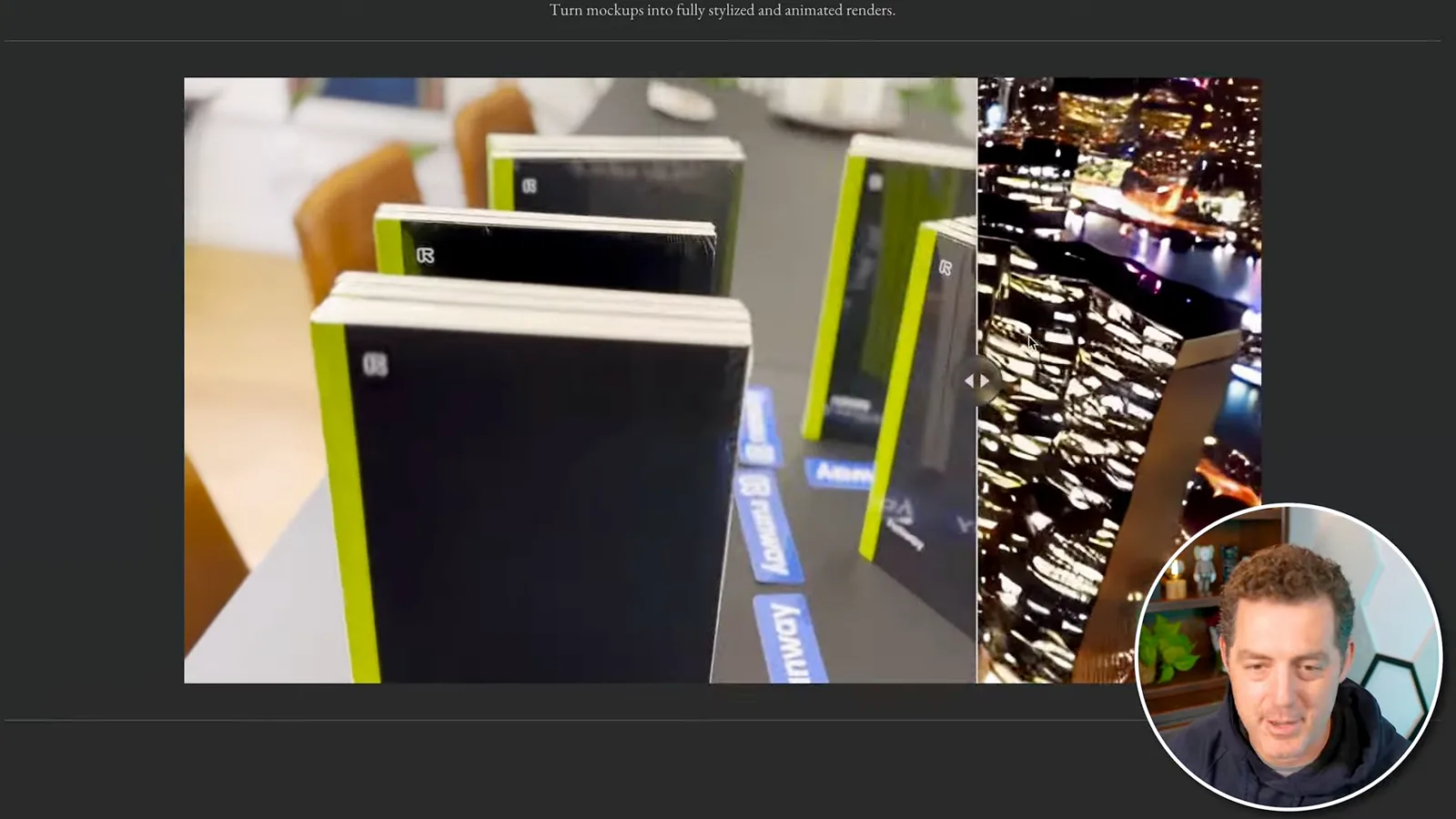
The storyboard example transforms a mock-up made from notebooks into a stylized city scene. Further examples show applying changes to selected regions and turning untextured renders into more realistic imagery. These are Runway's demonstrations of proposed modes; access and production performance were not established by my review.
Apple reports and Google Bard
He discusses reported language-model work at Apple and Google’s early Bard waitlist. Hardware performance claims are presented as speculation.
I discuss reports that Apple engineers were examining language-generating AI and a project called Bobcat, reportedly tested in a tvOS beta. I speculate about a more conversational Siri and say I would be interested in testing it. This is a report and a possible product direction as of March 2023, not an announced ChatGPT-powered Siri feature.
Google had opened a waitlist for Bard, its conversational model based on a lightweight optimized version of LaMDA. The example interface generates reading suggestions, offers a 'Google it' link and warns that answers may be inaccurate. I appreciate the early feedback approach and the ability to choose among response drafts.
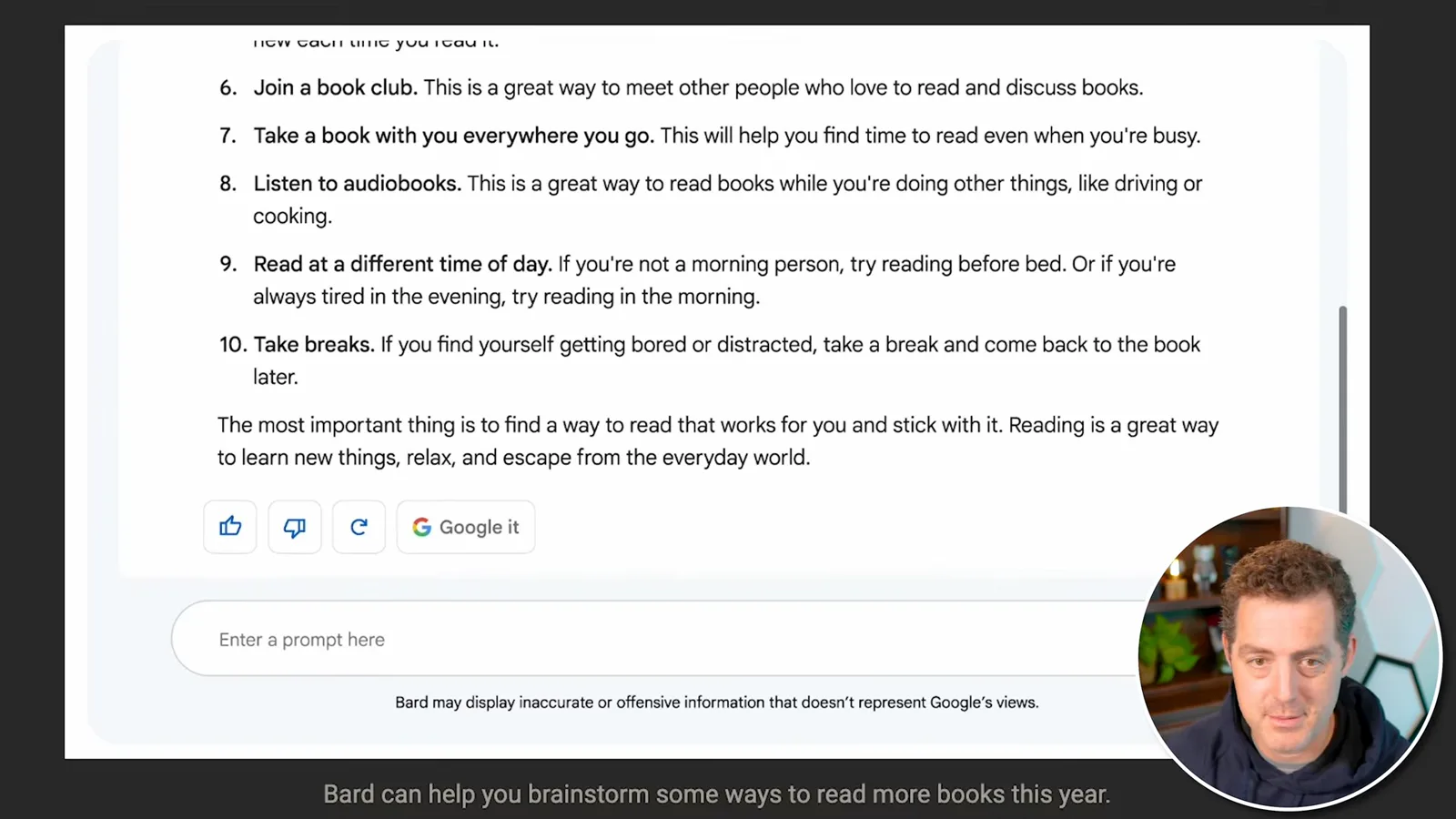
I speculate that Google's own cloud and hardware could affect its performance compared with competitors relying on partners. That is a hypothesis, not a demonstrated performance advantage. At the time I had joined Bard's waitlist and had not yet evaluated it myself.
What the labor study measured
The OpenAI-led study estimates potential exposure of tasks to language models and tools. It does not predict job losses or adoption timing.
Sam Altman said in an interview that AI could eliminate some existing jobs while enabling new ones. I also examine a research paper by OpenAI and collaborators that estimates how language models might affect tasks across US occupations. The paper evaluates potential exposure, not a count of jobs that will disappear.
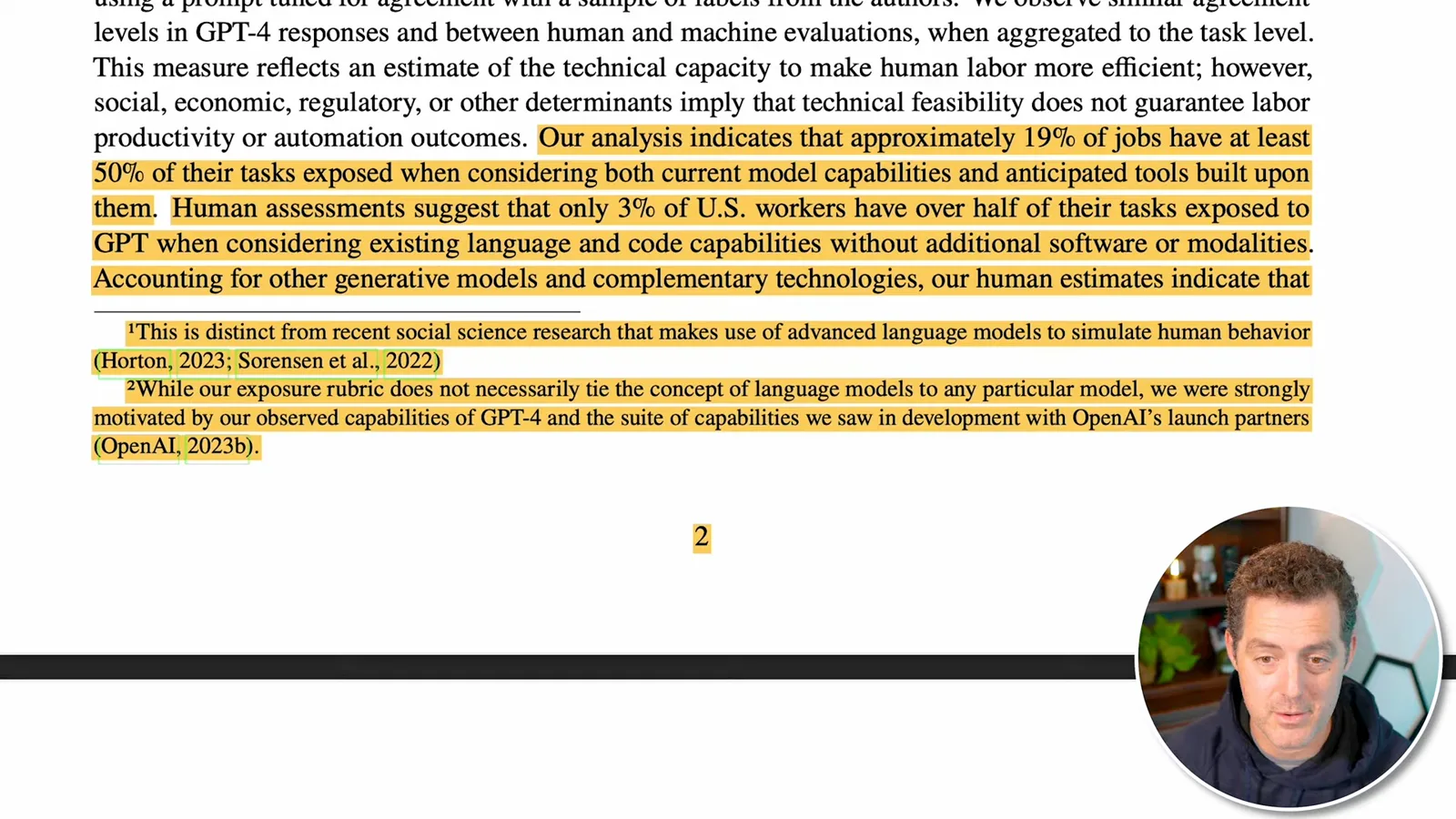
The authors estimated that roughly 80% of US workers could have at least 10% of their tasks affected, and about 19% could have at least half their tasks exposed when considering model capabilities and complementary tools. Exposure concerns the potential to perform tasks faster at comparable quality; it is not a forecast that those workers will be replaced. The paper did not predict an adoption timeline.
The exposure rubric distinguishes direct model use, exposure through applications built around a model, possible image-enabled tasks and tasks without identified exposure. Human interaction, physical work and detailed visual assessment can change which activities are exposed. Technical feasibility alone does not determine adoption, wages or employment outcomes.
Text-to-video and new object views
Berman tries ModelScope outputs and shows Zero-1-to-3 novel views and reconstruction examples.
The first tool I try is ModelScope's text-to-video demo on Hugging Face. It produces short clips for prompts such as an astronaut riding a horse and a panda eating bamboo. I notice watermark-like artifacts resembling a stock-image logo and speculate about the training source; the artifact alone does not establish the training dataset or a legal violation.
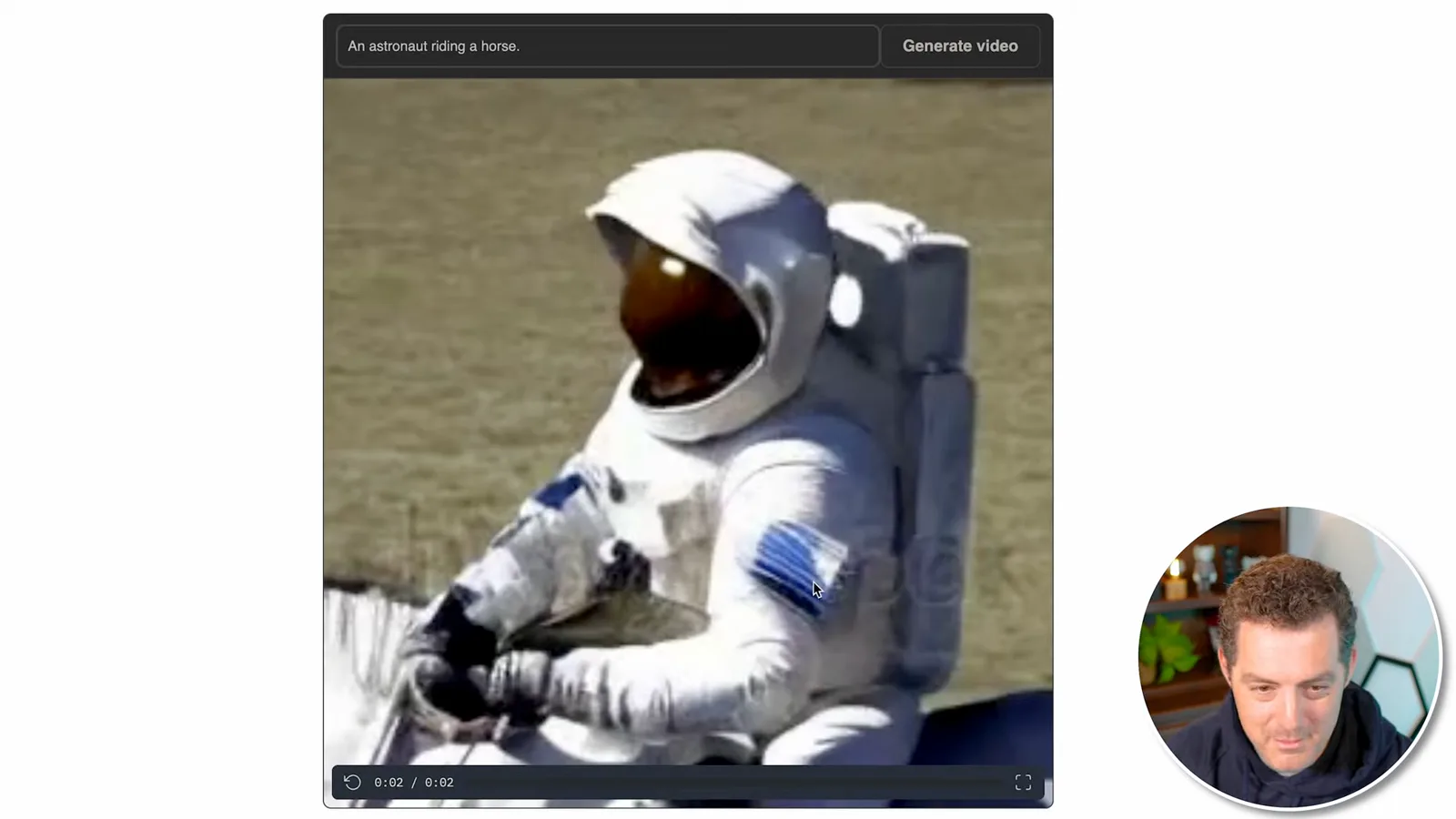
The public demo sometimes reports that it is busy when I submit another prompt. I had managed to run several examples, but availability at the time depended on the service's load; the clip does not establish that the same service remains available or free today.
The second project is Zero-1-to-3, from researchers including a Columbia University team. From a single image it synthesizes new views as the user changes camera angle or zoom. I try a car and a shoe, exploring different angles. These generated views infer unseen details and should not be treated as measured images of the object's hidden sides.
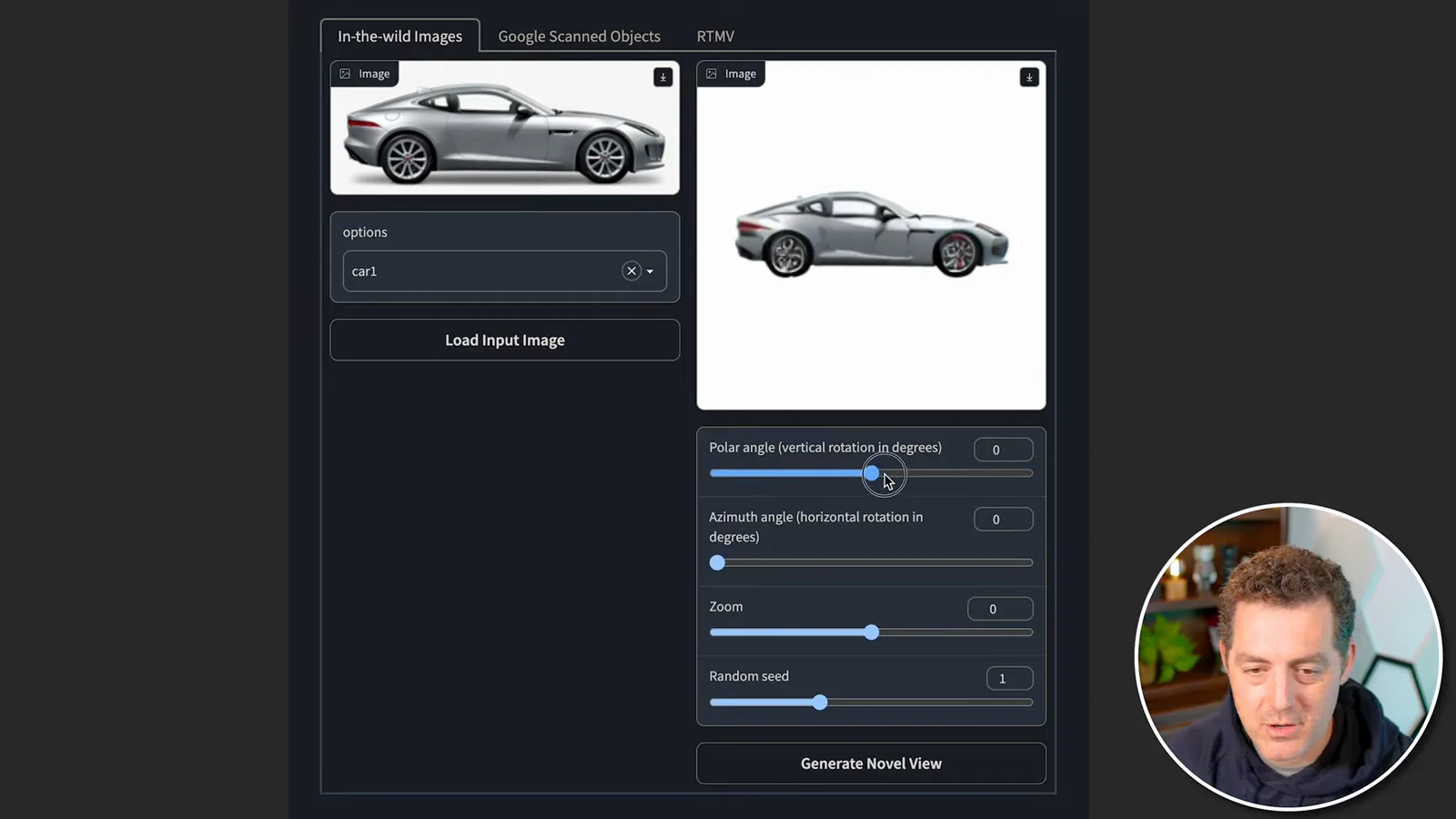
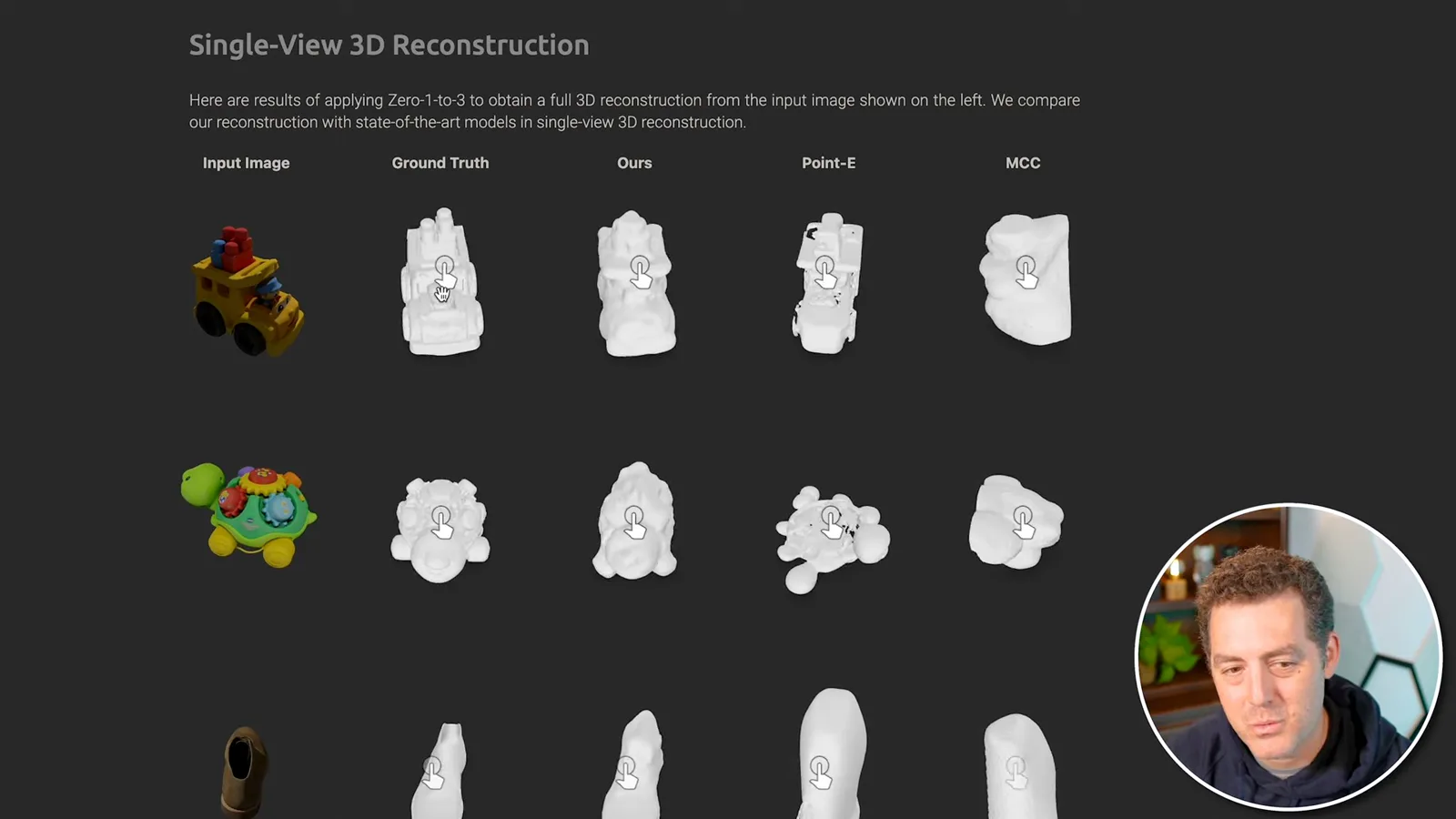
The project also presents single-view 3D reconstruction results alongside ground truth and other methods. I note that its reconstruction is less crisp than the reference in the example. Novel-view synthesis and 3D reconstruction are related but distinct outputs, and the demo's generated images do not automatically prove an exact 3D model has been recovered.
同じチャンネルの記事
 34:21EN
 Matthew Berman· 2026年10月27日Matthew Berman Examines Anthropic’s IPO Filing, AI Growth and GovernanceMatthew Berman, Sam Altman · Forward FutureThe presenter reviews the S-1’s financial metrics, compute strategy and voting structure while questioning the tension between rapid AI development and safety.
 0:26ENMatthew Berman· 2026年10月25日Sam Altman on Human Values and Problem-Solving in an AI WorldSam Altman · OpenAIIn a short interview excerpt, Altman considers the enjoyment of solving hard problems and the human role in interpreting results.
 0:36ENMatthew Berman· 2026年10月25日Kimi K3.1 and a Rubik’s Cube Solver DemonstrationMatthew Berman · Forward FutureMatthew Berman shows a scrambled virtual cube being solved and gives the Kimi K3.1 test a favorable assessment.
 0:21ENMatthew Berman· 2026年10月24日An AI-Generated Kimi Benchmark Chart Used Invented ScoresMatthew Berman · Forward FutureMatthew Berman asks for a graph of Kimi K3.1 Pro benchmarks, then discovers that the displayed figures are illustrative placeholders.
 25:50ENMatthew Berman· 2026年10月24日Kimi K3.1 Pro Tested: Strong 3D Demos, Uneven Results and Competitive PricingMatthew Berman · Forward FutureMatthew Berman tests the open-weight model on coding, 3D rendering and visual explanations, then compares benchmark results and prices.
 32:20ENMatthew Berman· 2026年10月23日Who Is Local AI For? The Costs, Trade-offs and a Hybrid FutureMatthew Berman · Forward FutureMatthew Berman weighs data control and independence against hardware cost, setup complexity and inference speed.