30 秒でわかる
At Code with Claude Tokyo, Anthropic introduced Fable 5 for general access and Mythos 5 for selected partners. Research product lead Diane Penn said requests to Fable involving cybersecurity, biology or chemistry are routed to Opus 4.8, with the response labeled and billed at Opus rates. The platform team demonstrated agents with scheduled runs, memory and outcome checks using a fictional racing dashboard. Claude Code product lead Cat Wu then showed a workflow that translated a website into 12 languages in parallel and launched separate agents to verify the work.
- 1Anthropic announced Fable 5 and Mythos 5 hours before the keynoteKatelyn Lesse introduced the fifth-generation models and said the platform aims to close the gap between model capability and useful applications.
- 2Fable 5 emphasizes first-pass correctness and longer tasksDiane Penn says the model performs especially well on complex coding work and can pursue a goal for days. The keynote’s slide reports 80.0% on SWE-bench Pro.
- 3Some Fable requests route to an older modelPenn says requests touching cybersecurity, biology or chemistry route to Opus 4.8, with a label and Opus pricing. Mythos 5, with those safeguards lifted, was restricted to Glasswing partners.
- 4Prepare evaluations for capabilities that are not reliable yetPenn urges developers to test harder prototypes, keep upgrades easy and watch for tasks that become feasible as models improve.
- 5A fictional racing team demonstrates managed agentsThe dashboard assigns research agents to aerodynamics, tire temperature, power and driver safety. Lesse shows scheduled runs, an outcome rubric and a review of prior sessions.
- 6Agents view puts parallel sessions in the terminalCat Wu shows a control view separating sessions awaiting input, working and completed. She says developers can reply inline or enter a session without losing their place.
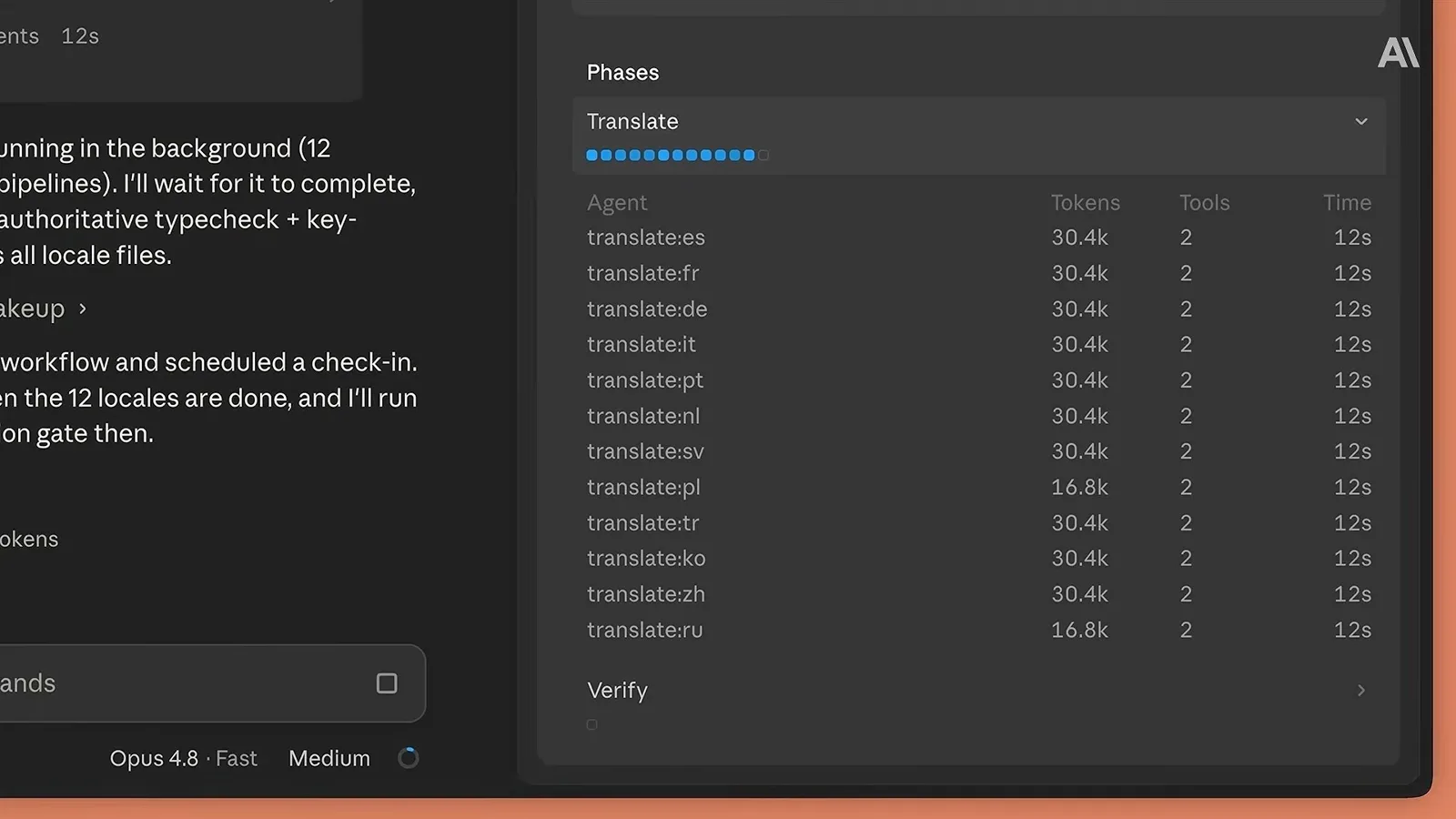
- 7A workflow translates 12 languages in parallel and then verifies themWu contrasts sequential translation with a reusable dynamic workflow that starts 12 translation agents and then 12 verification agents.
ポイント
- Fable 5 and Mythos 5 share an underlying model, Penn says; Mythos access was limited to Project Glasswing partners at the announcement.
- Fable requests touching cybersecurity, biology or chemistry were described as routed to Opus 4.8 with labeling and Opus pricing.
- Scheduled deployments, outcome rubrics and memory let developers define, run and review recurring managed-agent work.
- Dynamic workflows can split a repeatable task across parallel agents and run a separate verification phase.
- Penn advises building evaluations and upgrade processes for capabilities that may become reliable in future models.
チャプターごとに整えた全文を読む
New models and the platform gap
Lesse introduces Fable 5 and Mythos 5 and describes the platform as a way to turn improving models into applications. She previews scheduled agent runs and secure storage for credentials.
Katelyn Lesse, Anthropic’s head of engineering for the Claude Platform, opens Code with Claude in Tokyo and says the company released Claude Mythos 5 and Claude Fable 5 hours earlier. She frames the event around models, the developer platform and products built on top of them.
Lesse says the platform gives developers tools to build systems using Claude. She describes Rakuten moving from Claude Code for development to managed internal agents across functions; she says major releases now ship every two weeks rather than quarterly. She also points to Canva’s use of Claude to build interactive mini-apps inside designs.
She traces recent changes from drafting commit messages to completing features, running overnight tasks and finding an old OpenBSD vulnerability. Anthropic says its platform API volume rose nearly 17-fold year over year. Lesse argues that models are improving faster than organizations’ ability to put them to work, leaving a gap for developers to address.
The platform preview includes scheduled deployments so managed agents can run on a chosen cadence, plus vaults for environment variables that let agents make authenticated API requests without directly accessing keys. Lesse also previews Claude Code’s agents view and dynamic workflows, and says the average developer spends 20 hours a week with Claude Code.
Most people, Lesse says, will experience AI through applications built by developers rather than by directly calling an API or typing in a terminal. She gives examples in sales, legal work and coding, and introduces Diane Penn for the model presentation.
Fable 5 capabilities and access safeguards
Penn describes coding, longer-running tasks and knowledge work, then explains how some sensitive requests are routed to Opus 4.8. Mythos 5 access was limited to Project Glasswing partners.
Penn, Anthropic’s research product management lead, says she joined in 2023 and has worked on versions of Claude since Claude 2. At the keynote, Fable 5 is the company’s most capable generally available model, she says, while Mythos 5 shares the same foundations.
Penn argues that as model intelligence improves, it can unlock use cases more valuable than earlier autocomplete. For coding, she highlights first-pass correctness on well-specified problems and the ability to stay on a goal for days. She says early testers described single prompts producing work that otherwise might have taken teams days or weeks.
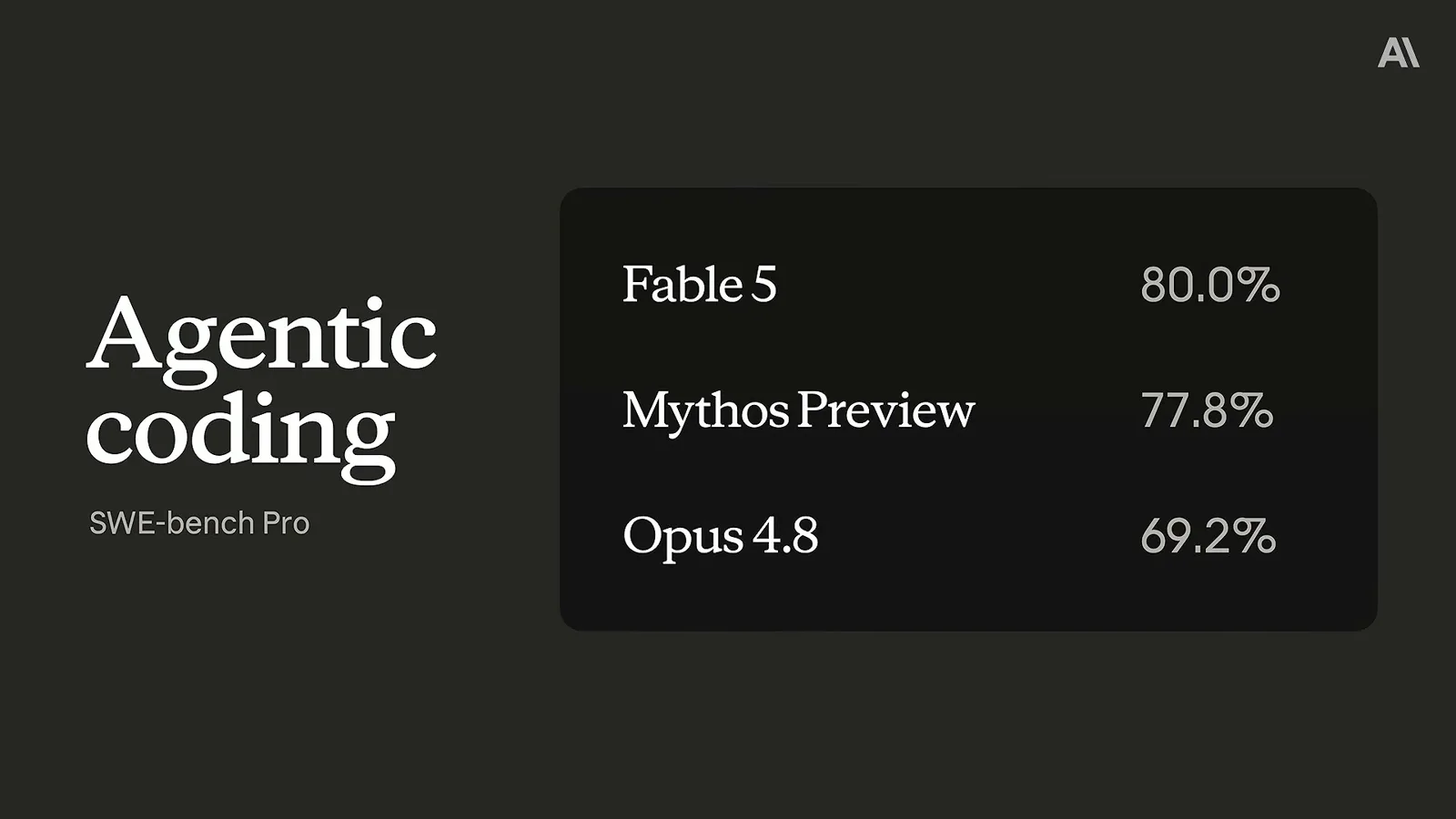
She says Fable 5 can retain specifications across long tasks, coordinate subagents and investigate code, outages and repository history. Penn also describes improvements in documents, spreadsheets, financial analysis and interpreting technical images. These are Anthropic’s descriptions of the model’s capabilities at launch.
Penn turns to the risks of highly capable models. She says Fable 5 routes requests touching cybersecurity, biology or chemistry to Opus 4.8; the response is labeled and billed at Opus rates. She acknowledges that legitimate researchers may encounter a block or reroute while the safeguards continue to be refined.
Penn cites customer evaluations from Rakuten, Cognition and Genspark as examples of early use. She says Mythos 5 is the same underlying model with the cyber and biological safeguards lifted, and was available to Project Glasswing partners. Anthropic planned to begin enrolling more life-sciences researchers later that month.
Build for future model capabilities
Penn asks developers to make model upgrades easy and test ambitious prototypes before they reliably work. She discusses longer autonomous tasks as a way to think about emerging capabilities.
Penn uses “time horizon” to describe how long a model can work autonomously before losing coherence. She suggests that longer horizons could support responsibility for keeping a project on track or updating a financial forecast, rather than only writing a single update or producing a one-time forecast.
For developers, Penn recommends designing for the next model as well as the current one. She expects more intelligent models to make greater use of basic tools such as a file system or sandbox, reducing the need for overly elaborate frameworks. She also recommends trying harder evaluations and prototypes that may not work reliably yet.
When a previously unreliable task begins to work, Penn says, that can signal an opportunity for a new product experience. Automated evaluations, testing processes and hands-on experiments can make model upgrades easier to assess and adopt. She then hands over to Angela Jiang and Lesse for the platform demonstration.
Managed agents combine a framework, context and infrastructure
Angela Jiang describes the tools, memory, skills and sandbox infrastructure that surround a model. She gives examples of companies building agent products on the platform.
Jiang describes an AI-native company as one where work runs on AI infrastructure and people define the desired outcomes. She organizes the necessary ingredients into three areas: the framework that gives a model tools and permission to act, the context it receives, and the infrastructure that runs it reliably.
In Claude Managed Agents, Jiang describes the model as the “brain” and isolated sandboxes as the “hands” used to execute work. Developers can specify an outcome and let an agent iterate toward it. The platform also supplies a large context window, memory, skills and “dreaming,” a process in which agents review prior work to update memory and skills.
Jiang says the infrastructure starts and stops sandboxes and supports fleets of agents for long-running work. She gives Notion’s agent orchestration and Asana’s AI teammates as customer examples, then invites Lesse back to demonstrate a fictional racing team’s dashboard.
A racing dashboard demonstrates scheduled agents
Lesse walks through a fictional racing team’s research dashboard and the developer console. She demonstrates scheduled deployments, memory and a review of past agent sessions.
The fictional Shinkiro Racing dashboard has four research projects— aerodynamics, tire temperature, power and driver safety—each backed by a managed agent. Lesse says the team uses outcome rubrics to define good work and let an agent iterate. She starts a safety run and asks the dashboard about the car’s weight and distribution.
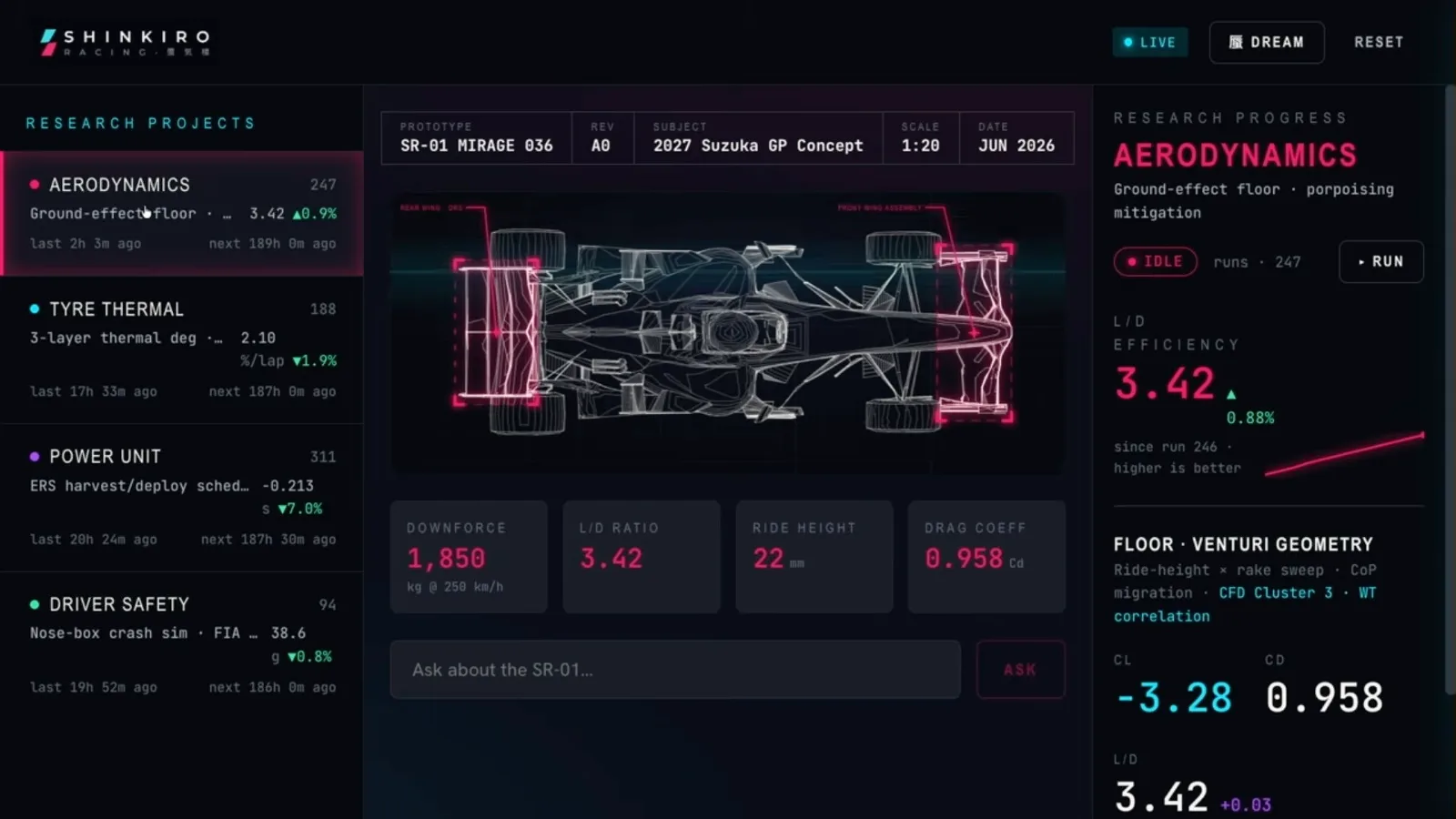
Lesse switches to the developer console, where earlier sessions show agent responses, tool calls and completion. She demonstrates creating a scheduled safety deployment and choosing a recurring time. Scheduled deployments were announced as available that day.
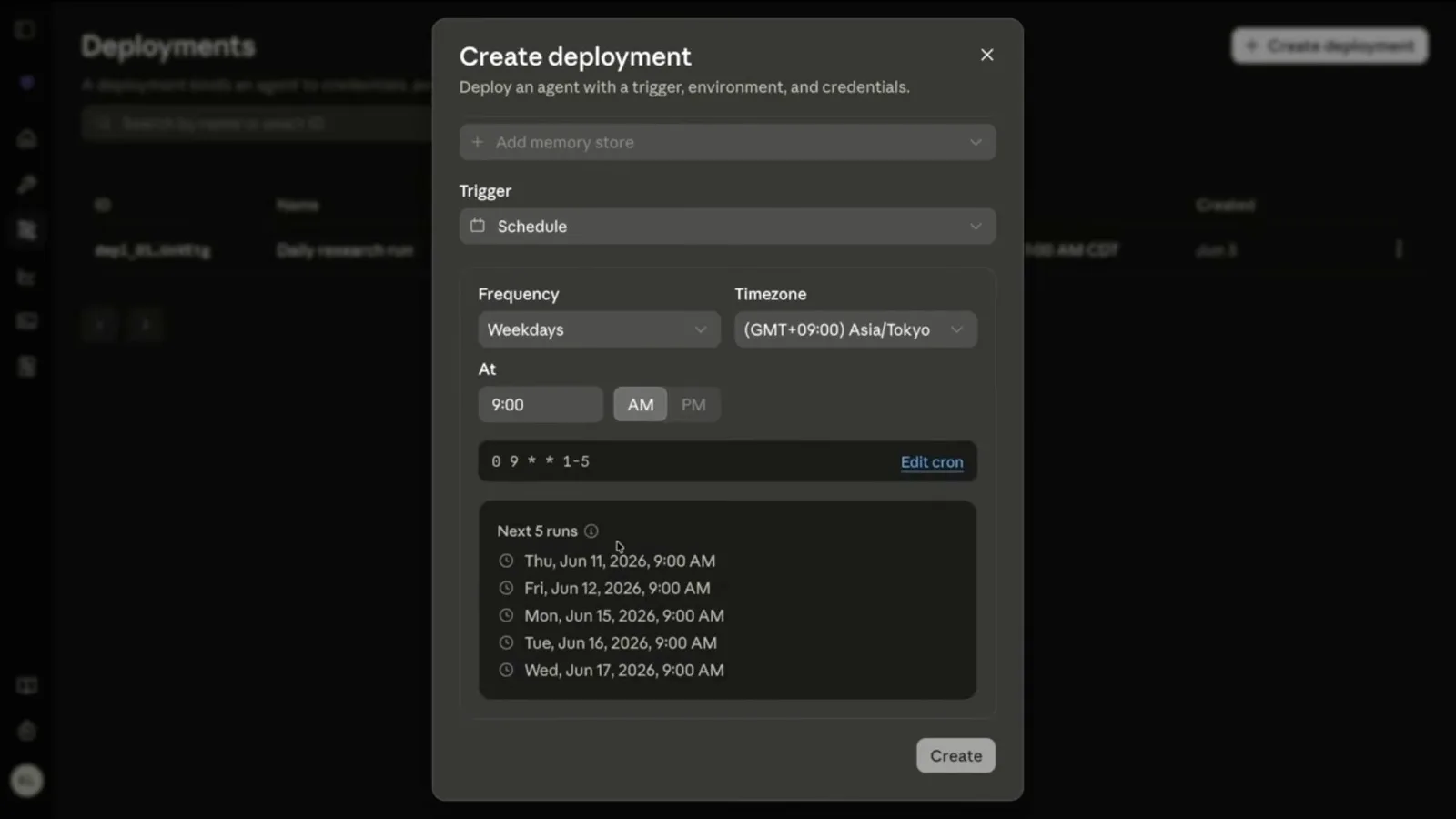
Memory allows an agent to save decisions or findings to a file system and consult them on later runs. In the demonstration, the “dream” action starts another agent that reviews past sessions and updates memories and skills. Lesse says outcomes, scheduled deployments and dreaming are available on the platform.
Claude Code interfaces and recurring work
Wu describes CLI, IDE and desktop interfaces for parallel sessions. She covers code review, mobile access, routines, security and dynamic workflows.
Cat Wu, head of product for Claude Code, says its goal is to shorten the distance between an idea and a shipped product. She recalls formerly reviewing every edit and giving detailed instructions; she says many developers now use auto mode to delegate permissions and review after Claude has tested changes and prepared a pull request.
Wu reviews the interfaces: the CLI offers a minimal text interface and control, while the IDE lets people follow code changes. Claude Desktop provides a graphical view across local and cloud sessions, with previews and indicators for agents that are working or need input.
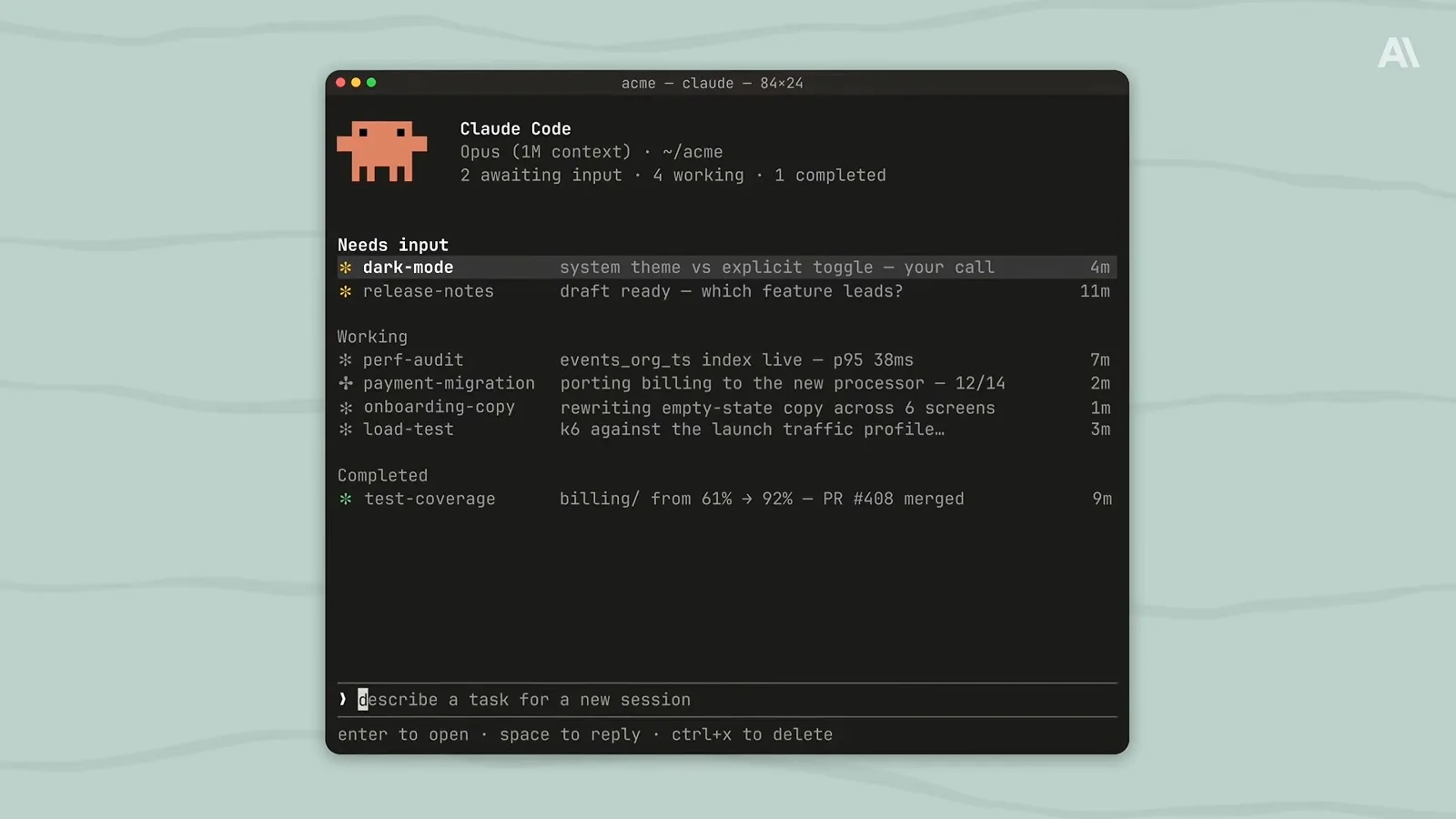
The terminal’s agents view offers a similar control point without leaving the CLI. It shows what is waiting for input, running or completed, and lets a developer reply inline or enter a session. Wu says the VS Code extension and Claude Code in Claude Desktop are built on the Claude Agent SDK.
Wu says Anthropic engineers ship eight times as much code on average as in past years, even as the engineering team has grown. She then lists products built in response to developer feedback: agent-based code review, remote access on mobile, and routines triggered by a schedule, webhook or API call.
She also describes Claude Security scanning code for vulnerabilities and allowing a Claude Code session to address a finding. Dynamic workflows, she says, run large tasks such as migrations or refactors across tens or hundreds of agents within a defined structure.
Wu cites Spotify’s migration agent, which reads a plain-English plan and opens pull requests, reporting more than 1,000 merges per month and a 90% reduction in migration time. She says Mercari measured a 90% year-over-year increase in engineering output while its engineering team used Claude Code.
Translate a website with a parallel workflow
Wu compares a single translation with a workflow for 12 additional languages. The workflow runs translation and verification agents and can be saved for reuse.
For a demonstration, Wu uses a fictional company, Kaizen Operations, whose English marketing site needs 13 additional markets. A single Claude Code agent translates the site into Japanese in about three minutes. Doing the remaining languages one at a time would require repeated prompts and much more elapsed time.
Instead, Wu asks Claude to create a dynamic workflow for the other 12 languages. A side panel shows the translation agents running in parallel. Once they finish, the workflow creates 12 more agents to verify the work; Wu says the workflow can be saved as JavaScript and reused.
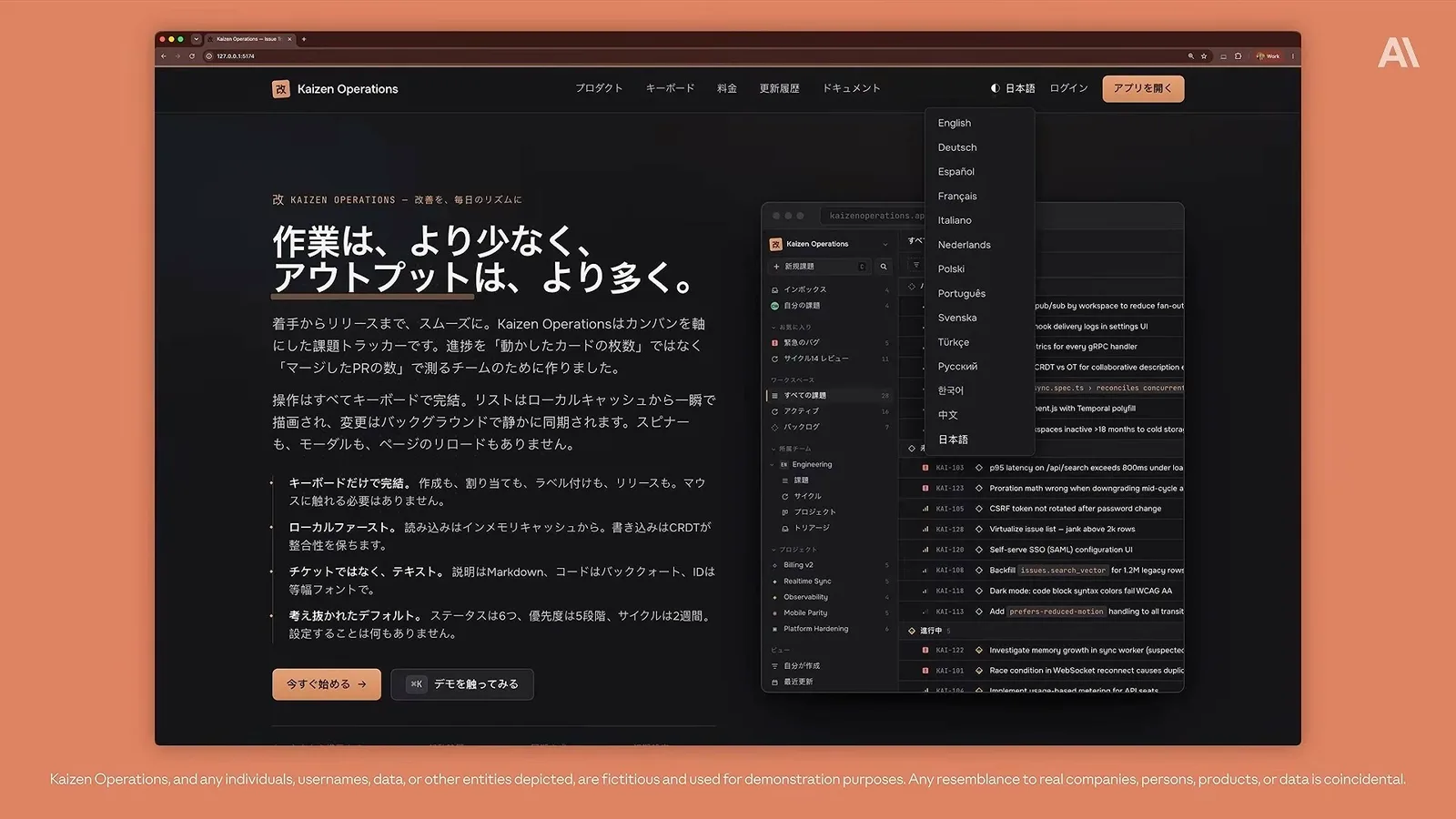
The demonstration shows the localized website versions in a language selector. Wu says the same pattern could apply to large migrations, codebase audits or performance work. She closes by encouraging developers to explore the models, platform and Claude Code tools presented at the event.
同じチャンネルの記事
 16:17EN
 Claude· 2026年11月6日How Salesforce doubled effective coding output with Claude CodeBoris Cherny, Muralidhar Krishnaprasad, Richard Pack · AnthropicSalesforce describes how it measures AI-assisted work, trains engineers to use agents, and checks the resulting code for defects.
 10:38ENClaude· 2026年10月23日Factory’s Matan Grinberg on building software agents people can trustKai Gill, Matan Grinberg · AnthropicFactory’s CEO says an agent learned from one bank’s COBOL migration, reducing human involvement in the next by 90%.
 12:19ENClaude· 2026年10月8日Shopify’s Mikhail Parakhin: Spend on AI to do what was once impossibleBoris Cherny, Mikhail Parakhin · AnthropicShopify’s CTO describes a merchant prediction system and argues for using the largest models in development, then cheaper ones in production.
 33:46ENClaude· 2026年10月6日How Every builds a shared AI coworker that learns a team’s styleKatelyn Lesse, Dan Shipper, Willie Williams · AnthropicEvery’s Slack agent shares workflows, learns from an editor’s past changes and uses isolated sessions to respect access boundaries.
 17:50ENClaude· 2026年9月24日Patrick Collison on shipping faster with AI without losing reliabilityBoris Cherny, Patrick Collison · AnthropicStripe’s CEO describes isolated development, hard security boundaries and an AI-assisted project built by two to three engineers in two months.
 34:42ENClaude· 2026年9月8日Three founders on verifying, scaling and paying for AI agentsLance Martin, Sahaj Garg, Mihir Garimella, Todd Olson · AnthropicWispr, Actively and Pendo explain how they build agent products, test their work and decide what infrastructure to manage themselves.