30 秒でわかる
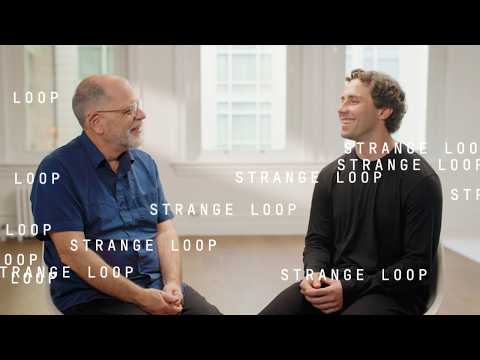
David Deutsch discusses his theory of the origins of creativity and argues that knowledge grows through conjecture and criticism. With Joel Hellermark and Gustav Söderström, he explores his distinction between language models and AGI, rights for hypothetical artificial people, quantum computing, and the long-term reach of knowledge.
- 1Creativity and cultureDeutsch proposes that creativity evolved to receive cultural knowledge before being widely used to invent.
- 2AI tools versus AGIHe regards LLMs as valuable tools but argues that an explanatory theory of general intelligence is still missing.
- 3Rights for artificial peopleIn his view, a genuine AGI would be a person with rights and ownership, making unrestricted copying ethically and economically problematic.
- 4Long-lived secretsQuantum algorithms create a reason to migrate vulnerable long-term secrets to quantum-resistant cryptography.
- 5Knowledge changes the hierarchyTools let comparatively small people shape a much larger physical environment, he argues.
- 6Research and discoveryDeutsch recalls his quantum computing insight and distinguishes the enjoyment and quality of research from eventual recognition.
ポイント
- Deutsch hypothesizes that creativity evolved to receive cultural knowledge, and that progress is never inevitable.
- He values LLMs as tools but argues that a theory of general intelligence remains missing.
- His view of hypothetical AGIs as people leads him to emphasize rights, consent and resources.
- Quantum computing’s algorithmic possibilities remain incompletely understood, while some long-lived secrets already need protection.
- Knowledge and tools let people affect a physical world far larger than themselves.
- Good research and recognition can diverge; curiosity and enjoyment matter in their own right.
チャプターごとに整えた全文を読む
Creativity and cultural knowledge
Deutsch proposes a theory for the origins of creativity and explains why progress can stall.
David Deutsch argues that people are economically valuable partly because they differ. A billion identical copies pursuing the same dream job would not automatically multiply their contribution; society already fails to use much of the creativity of its existing people.
Asked how humans began generating knowledge, Deutsch notes that earlier human species apparently created technologies that required explanatory knowledge. In his view, the puzzle is why creativity existed for hundreds of thousands of years before knowledge began advancing rapidly.
His unconventional hypothesis is that creativity evolved first to receive cultural knowledge. Animals can imitate some actions, but copying a complex purposeful behavior requires working out what someone else is trying to do.
This ability made it possible to pass on much more culture. Deutsch suggests that early people mostly used their explanatory capacities to understand others, only rarely applying them to improving a tool or a campfire; improvements therefore accumulated very slowly.
The hosts restate the theory: understanding an explanation lets a learner extrapolate from a few examples. Deutsch agrees but stresses the receiver's active role; knowledge is not simply poured into a passive mind.
The learner conjectures what another person's behavior or words mean. Even people who acquire the same native language each end up with a somewhat different version of it.
Is progress inevitable? Deutsch says no: explanation is fallible, and cultures can make enormous mistakes or destroy their capacity to solve problems. He speculates that earlier creative societies, including prehuman ones, repeatedly did so.
Tools can improve the efficiency of thought by far more than a modest percentage, he says. Language helps people communicate and formulate problems; writing, arithmetic, science, computers and the internet expanded those possibilities further.
Tools, AI and AGI
The participants debate knowledge growth, copies of artificial people and the value of faster computation.
Deutsch uses large language models and estimates they have roughly doubled his writing speed. He values their future potential while arguing that their development does not amount to a path to artificial general intelligence.
A host asks whether millions of AI instances, able to build rapidly on one another's ideas, could accelerate discovery far beyond slow human knowledge transfer. Deutsch separates his answer for present AI tools from his answer for hypothetical AGI.
Used sensibly, AI could greatly accelerate progress as printing and the web did, Deutsch says. But he doubts that adding AGIs alone guarantees a comparable increase in new ideas: billions of humans already possess creativity that society often leaves unused.
He distinguishes the computer's hardware from the program that would constitute an AGI. In his view, a genuine AGI would be a person, so copying it would raise questions of rights, property and consent rather than merely the cost of downloading software.
Deutsch argues that an AGI should own the computer on which it runs and be entitled to employee rights if it works for someone. Additional computing resources would have to come from somewhere and be paid for; treating such a being as a slave would be a grave social error, he believes.
When asked whether a billion copies of himself would help humanity, Deutsch invokes comparative advantage. Near-identical copies would compete for similar work, whereas people contribute different ideas and abilities; he would prefer more time in series to identical lives in parallel.
A host suggests AGIs might think decades' worth in seconds. Deutsch accepts that faster hardware could speed some reasoning, but physical experiments may still take years; faster computers can also help humans.
Asked whether reducing suffering creates a duty to speed up knowledge, Deutsch says that discussion and criticism already contribute. A society conducive to knowledge needs many forms of explicit and tacit knowledge, not only professional scientists.
What would explain intelligence?
The hosts challenge Deutsch on human-like LLM output; he calls for an explanatory theory of general intelligence.
A host challenges Deutsch: if an LLM's output can be mistaken for human work, perhaps it performs a similar process. Deutsch replies that convincing output does not settle the question of whether a system creates explanatory knowledge.
He says Turing's imitation game was an argument against dismissing machine intelligence, not a definitive AGI test. A system could succeed or fail at the game independently of whether it has general intelligence.
The host asks whether copying biological neurons gives the simpler explanation for human-like outputs. Deutsch counters that people also apply stored knowledge and perform mechanical arithmetic; a gardener, by contrast, can rethink what the garden should become while working.
At the level of computational universality, Deutsch says, brains, chess engines and language models share the same fundamental capability; their programs differ. He believes the program or explanatory theory that would account for general intelligence remains unknown.
The sign of a breakthrough, for him, would be an explanatory theory showing what characterizes general intelligence and why a program with those properties would have it—not simply a machine that looks impressive.
Quantum computing and security
They examine the unknown range of quantum algorithms, cryptography and practical hardware.
A host recalls how The Fabric of Reality shaped his outlook and asks which problems truly require quantum computers, given AI's success at approximate optimization. Deutsch says the theoretical landscape is not understood well enough to give a complete answer.
Deutsch expects more quantum algorithms to be discovered. Some fall into families related to quantum parallelism, but Grover's algorithm works differently enough that he can follow its proof without having an intuition for why it works.
Shor's and Grover's algorithms are different in kind, the participants agree, leaving room for other families. Deutsch cannot say whether there are infinitely many; he regards quantum computation as more fundamental because it reflects the laws of physics.
The host distinguishes optimization, simulation of quantum systems and unexpected algorithmic speedups. Deutsch adds quantum cryptography, already demonstrated with individual qubits, as an early application.
Deutsch argues that Shor's algorithm makes some classical cryptography unsuitable for secrets that must remain confidential for many years, even before a large quantum computer exists. He expects quantum-resistant classical cryptography to become increasingly important.
Quantum cryptography still needs practical improvements in speed and robustness. More broadly, he notes, no cryptography protects against someone looking over your shoulder: many security problems require solutions beyond the cipher itself.
The hosts raise the possibility that agencies are collecting encrypted data to decrypt later. Deutsch says the risk depends on future computing capacity. He is impressed by hardware advances but declines to predict timelines, noting that scaling remains difficult and he is not an experimentalist.
A computational universe
Deutsch contrasts physical universality with simulation and cellular-automaton accounts.
A host asks whether the universe could be a cellular automaton, as in proposals associated with Stephen Wolfram. Deutsch says the universe is computational in a different sense: its physical laws permit universal computers within it.
Universality means a part of the universe can simulate the behavior of other systems, a remarkable property made richer by quantum computation. Deutsch rejects the idea that an external computer simulates our universe as an explanatory regress rather than an explanation of that property.
He argues that a cellular-automaton account must itself have universal computational capacity, so the choice of substrate does not by itself explain the physics. If computation is the starting point, he says, quantum rather than purely classical computation should be considered.
A host asks how finite human brains could understand everything, especially if some processes cannot be reduced to simple predictions. Deutsch replies that people extend their abilities with tools, as simple as pencil and paper.
Knowledge and human reach
Tools overturn a simple hierarchy of physical power, he argues, opening possibilities beyond our present niche.
In much of the universe, larger and more energetic things dominate smaller ones; Deutsch calls this the hierarchy rule. Knowledge can reverse that relationship: a person using a stone axe can fell and use a tree much heavier than themselves.
Deutsch argues that physically mighty systems can still be simple to understand: the sun's behavior can be predicted far into the past and future. Humans currently occupy a narrow niche, but knowledge and technology allow them to change their environment.
Even Oxford would not sustain people without clothing, sanitation and other technologies, he says. He imagines humanity's potential niche as the universe, provided knowledge can continue to grow quickly and stably.
Deutsch views claims that whole realms must forever remain beyond explanation as supernatural assumptions. He presents this as part of his optimistic philosophy of knowledge, not as a prediction that any particular problem is easy.
Open questions and the future
The discussion moves through constructor theory, consciousness, long-term civilization and Popper.
Asked what he most wants to understand, he returns to an explanatory theory of AGI. He also wants faster progress in constructor theory, which seeks to express physics in terms of which transformations are possible and impossible.
Deutsch worries about social and political attitudes that slow problem-solving, even though he does not see civilization itself as imminently endangered. For him, a loss of the confidence to tackle obstacles is itself costly.
He sees people—eventually including artificial or extraterrestrial people, if they exist—as the carriers of knowledge. A host connects this to his rejection of the idea that humans are insignificant merely because the universe is vast.
Deutsch says he judges competing ideas by whether they offer a better explanation and identify an error. Bare possibilities, such as an arbitrary imaginary world, supply no criterion for choosing among countless alternatives.
Are consciousness and AGI the same problem? Deutsch cannot know without a theory. He suspects consciousness, creativity, subjective experience and free will are connected because their apparent co-occurrence would otherwise be a striking coincidence, while conceding that coincidences happen.
He will not predict humanity's near future. Over a million years, he speculates that if an open, knowledge-growing civilization survives, it could spread across the galaxy and include biological and artificial intelligences; failure to sustain it could instead lead to extinction.
Asked what everyone should read, Deutsch resists compulsory curricula but recommends Karl Popper, especially the essay The Myth of the Framework. He returns to it periodically and says he finds something new each time.
The joy of research
Deutsch recalls a quantum computing insight and explains why curiosity matters more to him than reward.
The conversation turns to the joy of research. Deutsch recalls the amazement of realizing that a quantum algorithm could learn two things with one query in a simple problem—a different mode of computation from the classical one.
The realization of a new form of universality came more gradually, beginning with a conversation with Charlie Bennett. Deutsch initially thought he was merely tidying up a few details rather than starting something momentous.
Asked what it felt like to know something before anyone else, he says he pursued the idea because it was interesting, not because he was focused on its eventual impact or afraid someone would publish first. Fun itself makes an activity worth doing, he says.
Success and skill are imperfectly related: excellent, creative research can fail, while an accidental discovery can be rewarded. Deutsch illustrates this with villagers searching for lost children: the person who finds them may receive the prize even though many others searched well.
A host compares the story to survivorship bias on Wall Street. Deutsch calls that comparison too cynical if it ignores real competence: economic growth also requires people who are right for a reason.
Deutsch says people who enjoy their work are more likely to do good research. He seeks fun and tries to finish unavoidable boring work quickly. Asked whether this conversation was fun, he says it certainly was.
同じチャンネルの記事
 1:16EN
 Sana· 2026年10月14日ポッドキャストHow Volkswagen Group Middle East Uses Sana to Prepare Technicians for TrainingThierry Rochat describes using technical documents to create online courses before hands-on academy sessions.
 0:41ENSana· 2026年9月8日ポッドキャストSana Learn Customers Describe Bringing Training Resources TogetherA short customer montage contrasts fragmented learning resources with keeping company knowledge in one place.
 0:40ENSana· 2026年8月31日ポッドキャストSana Learn Customers Describe Their Partnership ExperienceIn a short montage, customers discuss implementation and the ongoing relationship with Sana.
 48:34ENSana· 2026年8月12日ポッドキャスト · 2 人Tyler Cowen on AI Adoption, Human Agency, and the Search for Beautyゲスト Tyler Cowen · ホスト Joel HellermarkThe economist explains why AI's economic impact may arrive slowly, what people may still contribute, and why he is calling for a new aesthetic.
 0:16ENSana· 2026年7月21日ポッドキャストTyler Cowen on Human Presence in an AI WorldTyler Cowen predicts that charisma, physical presence and human interaction will gain importance as AI advances.
 0:23ENSana· 2026年7月9日ポッドキャストEthan Mollick on Measuring AI’s ImpactEthan Mollick argues that companies should allow room for new opportunities rather than relying only on old metrics.