30 秒でわかる
Demis Hassabis discusses AI recruitment, compensation, research motivation and the possibility that advanced AI could raise broader economic questions. His competitive assessment and future scenario reflect the 2025 interview.
- 1Research motivationHassabis emphasizes frontier work and responsible development.
- 2Pay and purposeHe says market-rate pay matters alongside other motivations.
- 3Future economic questionsHe speculates about how advanced AI could change economic organization.
ポイント
- Researchers may value the chance to work at the frontier.
- Hassabis says compensation should reflect market rates.
- He sees research purpose as another important motivation.
- His discussion of a post-AGI economy is speculative.
チャプターごとに整えた全文を読む
Research talent and motivation
Lex Fridman asks Demis Hassabis about competition for AI researchers and reports of very high salaries at Meta.
Lex Fridman asks Demis Hassabis about competition for AI researchers and reports of very high salaries at Meta.
Hassabis says many researchers who care deeply about AGI want to work at the research frontier and influence how the technology is developed and deployed.
He offers his 2025 assessment of Meta’s position and says its recruitment strategy may be rational from the company’s perspective. That assessment is his opinion at the time.
He adds that compensation matters and researchers should be paid market rates, but argues that money is not the only motivation for choosing research work.
From scarce funding to high salaries
Hassabis recalls the early days of his company, when funding was scarce, and contrasts them with the much higher pay available in the AI field in 2025.
Hassabis recalls the early days of his company, when funding was scarce, and contrasts them with the much higher pay available in the AI field in 2025.
He speculates that highly capable AI could eventually raise broader questions about economic organization and the role of money. This is a future scenario rather than a demonstrated outcome.
同じチャンネルの記事
 3:34:27EN
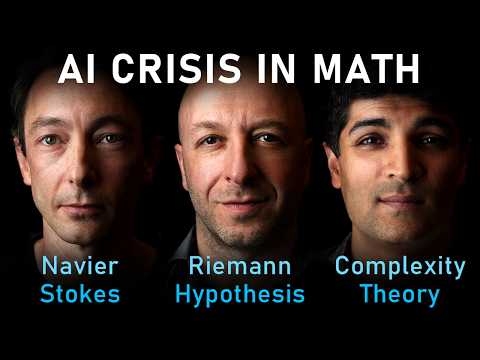
 Lex Fridman· 2026年10月26日ポッドキャスト · 4 人AI, Mathematics, and the Meaning of a Proofゲスト Steven Brunton, Ankur Moitra, Alex Kontorovich · ホスト Lex FridmanLex Fridman and three mathematicians discuss recent AI-generated research, hard open problems and what human understanding contributes.
 3:36:56ENLex Fridman· 2026年9月16日ポッドキャストPsychiatry Has Never Found Its Penicillinホスト Lex FridmanHistorian Andrew Scull tells Lex Fridman why the field can ease symptoms, has never cured a major mental illness, and keeps paying for overconfidence with patients' lives.
 5:15:51ENLex Fridman· 2026年8月26日ポッドキャスト · 2 人DHH Did Not Write a Line of Omarchy Quattroゲスト DHH · ホスト Lex FridmanThirteen months after a skeptical conversation with Lex Fridman, the Rails creator describes how Opus 4.5, a swarm of coding agents, and a one-minute Linux installer ended his era of hand-chiseled Ruby.
 3:12:58ENLex Fridman· 2026年8月12日ポッドキャスト · 2 人One Cold Shower, Twenty Champions: How Khabib Nurmagomedov Was Forgedゲスト Khabib Nurmagomedov · ホスト Lex FridmanIn a Makhachkala school gym, seventy men shared one shower, and the water was only cold.
 3:46:18ENLex Fridman· 2026年7月28日ポッドキャスト · 2 人If You Take Slavery Out of the Picture, There Is No Civil Warゲスト Gary Gallagher · ホスト Lex FridmanIn 1860, enslaved people were worth more than every railroad and factory in the United States combined.
 3:51:47ENLex Fridman· 2026年6月30日ポッドキャスト · 2 人Forty-Six Percent of Emperors Were Overthrown. The Empire Lasted Anywayゲスト Anthony Kaldellis · ホスト Lex FridmanHistorian Anthony Kaldellis walks Lex Fridman through 2,200 years of Roman history and argues that what we call Byzantium was Rome itself.