







絞り込み結果
33 件並び順
 0:32EN
Sam Altman on the Continuing Demand for Software WorkSam Altman, Matthew Berman · OpenAIIn a short interview excerpt, Altman says demand for software may be larger than expected even as AI changes how it is made.
 12:49EN
 OpenAI· 2026年10月7日Alex Mashrabov: Higgsfield agents that choose models and launch their own GPUsAlex Mashrabov · HiggsfieldAt OpenAI DevDay 2026, Higgsfield's CEO walks through why a continuous media experience needs an agent that picks models, scores its own output, and provisions GPUs — including a live 10-hour AI stream small teams can now ship.
 13:12ENOpenAI· 2026年10月7日Alexandra Lato on Building Stack Overflow for Agents and Stack Internal with CodexAarti Bagul, Alexandra Lato · OpenAIStack Overflow’s VP of Product explains how a small team used Codex with opposite constraints on two products—and why agent-native design means letting agents contribute knowledge, not just read it.
 0:33EN
Anthropic's IPO and AI Safety: A Question of ConsistencyMatthew Berman, Christian Catalini · Forward FutureIn a short interview excerpt, Matthew Berman and economist Christian Catalini question how a planned public offering relates to warnings about advanced AI risk.
 4:41EN
Inside Jane Street’s Internship: Projects, Mentorship and LearningCody · Jane StreetInterns and employees describe collaborative interviews, learning finance from the basics, and working on projects used by the firm.
 10:36EN
Forward Future Live: An Opera Visit and NVIDIA EarningsMatthew Berman, Nick Wentz · Forward FutureMatthew Berman and Nick Wentz open their November 21, 2025 show with an opera story and a brief look at NVIDIA.
 13:30EN
 3Blue1Brown· 2025年8月17日How AlphaGeometry Combines Logical Proof with Creative ConstructionAleph0Aleph0 explains how a symbolic geometry solver gets surprisingly far without AI, and how a language model supplies the auxiliary constructions that take it to Olympiad level.
 1:09EN
A Discussion of GPT-4.5’s Scaling and TrainingA speaker offers an assessment of GPT-4.5’s cost, speed and alleged training challenges.
 2:53EN
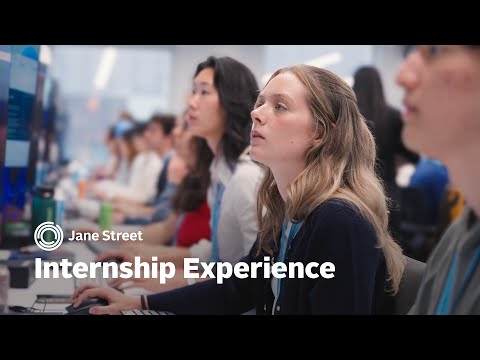
Jane Street Interns on Projects, Mentorship and LearningDylan · Jane StreetFormer interns and staff describe the learning, open-ended projects and relationships that shaped their internship experience.
 0:57EN
Sundar Pichai on Preparing for AI in Knowledge WorkMatthew Berman, Sundar Pichai · Forward FutureIn a short interview clip, Google's CEO suggests learning to use AI as an everyday assistant while work changes.
 0:49EN
Sundar Pichai on AI Glasses and Project Astra’s MemorySundar Pichai · GoogleGoogle’s CEO discusses why glasses fit everyday AI interaction and describes testing Astra’s memory of an object.
 0:54EN
Satya Nadella on Separating Personal and Work AI AgentsMatthew Berman, Satya Nadella · Forward FutureIn an interview excerpt, Microsoft CEO Satya Nadella discusses identity boundaries and the risk of data leakage between personal and corporate agents.
 1:05EN
Satya Nadella on AI, Productivity, and Cancer CareMatthew Berman, Satya Nadella · Forward FutureIn a short interview excerpt, the Microsoft CEO discusses the potential of cheaper AI to help coordinate healthcare work.
 7:17EN
Erik and Martin Demaine on the Mathematics of Curved-Crease SculptureErik Demaine, Martin Demaine · MITThe MIT father-and-son collaborators turn paper folding into art and research, embedding puzzles and mathematical fonts in their sculpture Solve Me.
 5:42EN
Jane Street’s Trading Interview: What to ExpectMichael, Megan · Jane StreetA trader and a recruiter explain the interview stages, how to approach open-ended questions and what the firm says it looks for.
 11:26EN
 Lex Fridman· 2020年4月11日ポッドキャスト · 2 人Richard Dawkins on Memes, the Internet and Why Wrong Ideas Spreadゲスト Richard Dawkins · ホスト Lex FridmanThe man who coined the word explains to Lex Fridman what makes a meme more than a metaphor, why the internet is a step change for ideas, and why an idea, like a peacock's tail, doesn't need to be true or useful to spread.
 12:42ENLex Fridman· 2020年3月28日ポッドキャスト · 2 人The Experience Machine: What Our Refusal to Plug In Says About What We Valueゲスト Nick Bostrom · ホスト Lex FridmanNick Bostrom unpacks Robert Nozick's experience machine, the status quo effect behind our answers, and whether a simulation convincing enough to feel real would have to contain real minds.
 14:55ENLex Fridman· 2019年10月29日ポッドキャスト · 2 人Kasparov on Deep Blue, AlphaZero, and Why Machines Win Closed Systems but Humans Still Choose the Questionsゲスト Garry Kasparov · ホスト Lex FridmanGarry Kasparov revisits the 1997 loss to Deep Blue, explains why machines beat humans in closed systems, and argues that the human role is to pick the right questions and not interfere with superior machine knowledge.
 10:20ENLex Fridmanポッドキャスト · 2 人How C++ Is Standardized: Votes, Consensus and the Move to a Three-Year Release Cycleゲスト Bjarne Stroustrup · ホスト Lex FridmanBjarne Stroustrup explains how the ISO committee works, why C++0x slipped to C++11, and how shorter cycles made C++14, C++17 and C++20 arrive on time.
 11:11ENLex Fridmanポッドキャスト · 2 人Yann LeCun on Benchmarks, Interactive Environments, and Why Human Intelligence Is Not Generalゲスト Yann Lecun · ホスト Lex FridmanIn a 2019 clip, LeCun defends benchmarks as a test of AI claims, explains why interactive environments break the usual train-test protocol, and argues that "general intelligence" is a misnomer.
 14:41ENLex Fridmanポッドキャスト · 2 人Talking for 20 Minutes: How the Alexa Prize Turns Real Customers into a Testbed for Conversational AIゲスト Rohit Prasad · ホスト Lex FridmanRohit Prasad, head scientist of Amazon Alexa, explains the Alexa Prize grand challenge, how it is judged and why true conversation still needs reasoning.
 11:41ENLex Fridmanポッドキャスト · 2 人Teaching Machines Humility: Stuart Russell on Escaping the King Midas Problemゲスト Stuart Russell · ホスト Lex FridmanIn a short clip from a 2018 conversation, Berkeley's Stuart Russell explains why fixed objectives make superintelligent AI dangerous and why uncertainty about our goals is the fix.
 10:16ENLex Fridmanポッドキャスト · 2 人Reasoning Without Logic: Yann LeCun on Teaching Neural Networks to Thinkゲスト Yann Lecun · ホスト Lex FridmanYann LeCun explains why he believes neural networks can reason, and what memory, recurrence and continuous representations would need to look like.
 11:19ENLex Fridmanポッドキャスト · 2 人Why Donald Knuth Thinks P = NP and Why It Might Not Matterゲスト Donald Knuth · ホスト Lex FridmanKnuth explains how an algorithm can provably exist without anyone being able to write it down, and why that shapes his view of P versus NP.
もっと見る33 件中 24 件を表示