En 30 secondes
In the presentation portion of Tesla’s August 2022 shareholder meeting, Elon Musk said the company had produced its three-millionth car and targeted a higher year-end production rate. He discussed large castings, energy, battery recycling and charging, and made forecasts about autonomous driving and robots. Those forecasts were made in 2022; Tesla’s supervised driving system requires an attentive driver.
- 1Musk targeted a two-million vehicle annualized run rateHe distinguished the year-end production pace from vehicles produced during the year.
- 2Tesla reported recycling battery packs in NevadaMusk said the amount would grow as more packs reached the end of useful life.
- 3Large castings simplified highlighted body partsA company slide compared 171 Model 3 pieces with two Model Y castings.
- 4FSD beta availability was expected to expandMusk cited accumulated beta miles and forecast broader North American availability.
À retenir
- Musk reported three million cars produced and targeted a higher annualized production rate.
- Tesla highlighted large castings and simpler factory flow.
- Musk reported battery recycling and described solar, storage and transport as energy priorities.
- His autonomy and robot remarks were 2022 forecasts.
Lire le texte remanié, chapitre par chapitre
Production, cash flow and driving software
Musk reviews growth and discusses future autonomy.
At Tesla’s 2022 annual shareholder meeting in Texas, Elon Musk thanks the team and reviews production growth.
Musk says Tesla had reached a 1.5 million vehicle annualized production rate and aimed for a two-million rate by year-end. A run rate is a pace, not the number of vehicles already produced during a calendar year.
He says the company recently made its three-millionth car, compared with fewer than 3,000 vehicles produced a decade earlier.
Musk points to positive retained earnings and free cash flow, describing profitability as a difficult milestone after years of investment.
He predicts that autonomy could increase future cash flow and discusses improvements being developed for FSD beta, including complex left turns. His comments about timing and future capability are forecasts from 2022.
Musk describes driving as a real-world AI problem using cameras and neural networks. He argues that improved safety could eventually reduce injuries, but does not establish a comparative safety result at the meeting.
Electrification and factories
He describes scaling, energy, recycling and manufacturing.
He recalls skepticism about electric vehicles and says Tesla’s mission was to demonstrate that people would buy compelling electric cars. He welcomes other automakers’ shift toward electrification.
Musk describes Tesla as both a software and hardware company and portrays a factory as a coordinated system of people, machines and software.
He predicts Model Y could become the highest-selling vehicle by revenue in 2022 and by units in 2023. He adds that ramping Berlin and Texas still involves thousands of manufacturing and supply-chain problems.
Musk says a future factory location might be announced later in 2022 and speculates about eventually operating at least ten to twelve large factories. The numbers describe ambitions, not commitments or completed facilities.
He argues that electric vehicles generally have lower lifetime carbon emissions than gasoline cars and emphasizes the combined roles of clean generation, stationary storage and electric transport.
Musk claims that energy produced by Tesla solar installations over a decade exceeded energy used to manufacture and charge its cars. The figure is a company claim from the presentation, not an independently audited calculation in the video.
He says battery packs can be recycled and reports that Tesla was recycling more than 50 packs per week in Nevada. He expects the amount to grow as more vehicles and packs reach the end of useful life.
Musk says a future Master Plan Part 3 will examine the materials and infrastructure required for a sustainable global economy. At this meeting it was still a forthcoming plan.
He presents a comparison between Model 3 body components and large castings in an Austin-made Model Y, saying the highlighted metal pieces were reduced from 171 to two.
Musk says simpler castings and a more direct factory flow can reduce manufacturing complexity. He identifies manufacturing capability as a potential long-term competitive advantage.
He discusses recruiting engineers and claims factory safety has improved, citing employee suggestions as part of the process. The meeting does not independently compare safety performance across manufacturers.
Charging, safety and FSD
Musk discusses charging and driver-assistance plans.
On Superchargers, Musk describes connected monitoring, continued network expansion and a possible next-generation rollout. He notes that permits can delay particular locations.
He discusses vehicle safety and says software updates can improve how systems respond to crashes. His broad comparative safety claims are presented as his statements at the time.
Musk reports more than 40 million FSD beta miles and forecasts wider North American availability. Tesla’s supervised driving features require an attentive driver; the name does not make the vehicle autonomous.
Musk previews AI Day and predicts that the Optimus robot could eventually be valuable. He thanks shareholders for voting.
Musk speculates that Tesla could produce over 100 million vehicles within a decade, then begins introducing questions as the excerpt ends. The vehicle figure is his 2022 projection.
Sur la même chaîne
 3:35:00EN
 CNET Highlights· 2 mars 2023Tesla’s 2023 Investor Day: the plan to scale clean energy and carsElon Musk, Zach Kirkhorn, Drew Baglino, Franz von Holzhausen, Lars Moravy, Colin Campbell, Pete Bannon, David Lau, Ashok Elluswamy, Rebecca Tinucci, Karn Budhiraj, Roshan Thomas, Tom Zhu, Mike Snyder, Laurie Shelby, Brandon Ehrhart · TeslaTesla leaders outline a global electrification scenario, a lower-cost vehicle platform and the factories and supply chains needed to scale.
 41:04ENCNET Highlights· 2 mars 2023Tesla’s 2023 investor Q&A puts battery supply and costs in focusElon Musk · TeslaExecutives explain refining, factory localization and dry-electrode scaling, while Musk discusses affordability and a future autonomous fleet.
 8:15ENCNET Highlights· 1 mars 2023Tesla’s 2023 plan estimates the scale of a fully electrified energy systemElon Musk, Drew Baglino · TeslaMusk and Drew Baglino describe a proposed energy transition requiring batteries, renewable generation and manufacturing investment.
 53:25ENCNET Highlights· 1 déc. 2022Neuralink researchers on implant durability, safety and wireless dataElon Musk · NeuralinkAt a 2022 Q&A, the team explained animal results, device-removal concerns and ways to compress brain signals.
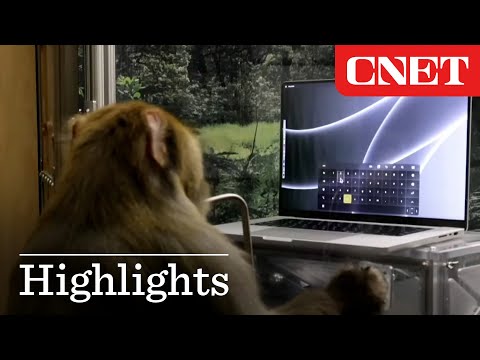 7:20ENCNET Highlights· 1 déc. 2022Neuralink’s 2022 monkey demo selected highlighted keysElon Musk · NeuralinkMusk showed cursor control with an implant, while stressing the monkey was following prompts rather than spelling independently.
 3:39:05ENCNET Highlights· 1 déc. 2022Neuralink’s 2022 update: from neural signals to a working interfaceElon Musk, DJ Seo · NeuralinkEngineers explain cursor decoding, implants and robot-assisted insertion, while separating animal demonstrations from clinical ambitions.