En 30 secondes
In an August 2024 news roundup, Matthew Berman examines GameNGen’s Doom simulation, Cursor and a range of robotics, AI product and policy stories. He distinguishes his forecasts from the research and demonstrations, while later context clarifies the status of SB 1047 and Windows Recall.
- 1Doom as a neural simulationGameNGen generates playable frames from previous frames and actions after training on existing Doom gameplay.
- 2AI inside the editorCursor combines AI-assisted edits and codebase context with a VS Code-based editor.
- 3Orbital light remains a proposalThe shown clip is presented as simulated; continuous full-power solar generation is hypothetical.
- 4Safety and whistleblowingFormer employees allege safety concerns and support SB 1047, which California’s governor later vetoed.
- 5Recall and privacyMicrosoft postponed the feature and described opt-in and security changes; the preview timeline changed.
- 6Codenames and synthetic dataContemporary reports about Strawberry and Orion are not proof of a specific GPT-5 training process.
À retenir
- GameNGen simulates Doom from gameplay data and player actions; it does not prove arbitrary games can be generated reliably.
- Cursor combines a code editor with AI assistance, but generated changes still require review.
- Reflect Orbital’s concept and the video shown did not establish a working orbital sunlight service.
- Former OpenAI employees’ safety allegations and OpenAI’s policy position are distinct from proven findings; SB 1047 was later vetoed.
- Recall’s planned opt-in and security controls addressed concerns without eliminating all risk.
- Claims about unreleased model projects and inference performance need attribution and specific test conditions.
Lire le texte remanié, chapitre par chapitre
A neural Doom simulation
GameNGen generates interactive frames after training on Doom gameplay. Berman imagines future personalized worlds.
This August 2024 roundup begins with a neural model simulating Doom, then moves through coding tools, robotics, computer vision, AI regulation, product announcements and inference hardware. The developments and predictions are discussed as they appeared at the time.
Google Research, Tel Aviv University and Google DeepMind researchers present GameNGen, a model that generates interactive Doom-like gameplay in response to player actions. In the [paper](https://arxiv.org/abs/2408.14837), the researchers report more than 20 frames per second on a single TPU for their setup.
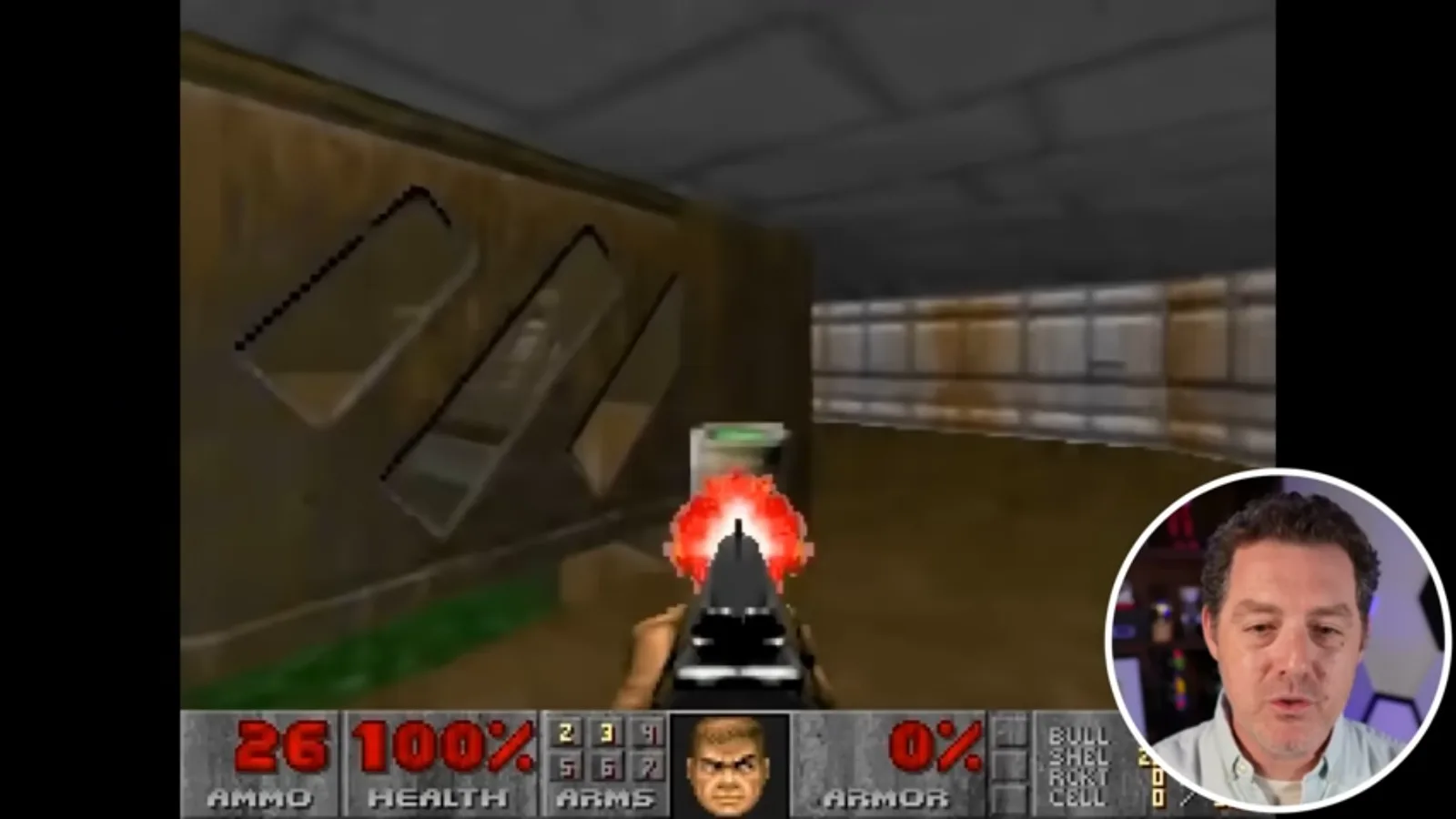
The generated frames include apparent game elements such as the weapon, health and environment. I notice enemies disappearing and interface numbers changing inconsistently. These artifacts show the simulation is imperfect; it does not demonstrate reliably correct game logic in all circumstances.
The original Doom was conventionally programmed, and the researchers trained their model on gameplay data generated using that existing game. The neural simulation produces frames rather than running the original game engine at inference; it was not created without software or prior game data.
I imagine a future of games and films tailored to a single person, with worlds created from descriptions. That is my prediction, not a capability established by this demonstration. The model simulates one trained game and does not prove it can construct any requested world or maintain arbitrary long-term consistency.
Elon Musk replied that Tesla could do something similar with real-world video. I speculate about vehicle data and a world simulator, but the brief statement does not establish the system's design or capabilities.
Cursor and the coding workflow
Berman discusses AI editing and an investment in Cursor. He considers the challenges of understanding existing code.
Cursor is an AI-oriented code editor where users can ask for code, edit it in natural language and iterate. I expect such tools to make creating software accessible to more people; my further prediction that developers will eventually be unnecessary is speculation, not a finding from a controlled study.
The venture firm Andreessen Horowitz announced a Series A investment in Cursor. Its investment post claims major models exceed 90% accuracy on basic programming tasks, but that figure depends on the benchmark and conditions and should not be applied to all software engineering work.
Maintenance, debugging and understanding an existing system remain difficult. Larger context windows, retrieval and ways of mapping repositories may help an assistant find relevant code, but users still need to evaluate the changes and understand their consequences.
Cursor builds on the open-source VS Code codebase and emphasizes features such as predictive edits, natural-language changes and codebase chat. I see the interface between developers and models as increasingly important, while claims that anyone can build anything are my enthusiasm rather than a guarantee.
Robots, reflected sunlight and vision
The roundup covers an Atlas demonstration, Reflect Orbital’s proposal and Meta Sapiens research.
Boston Dynamics shows its electric Atlas robot lowering itself, doing push-ups and standing up. The short video illustrates those movements, not a general demonstration of household autonomy; my hope of seeing humanoid robots in homes is a future expectation.
Reflect Orbital proposes redirecting sunlight with orbiting reflectors. The video shown is presented with a warning that it is simulated; it is not proof that an orbital service is operating. The company idea is interesting, but the practical performance and economics remain to be demonstrated.
I imagine using redirected light to help solar farms after sunset and also raise potential misuse. The claim that panels could run at full efficiency around the clock is a hypothetical, not a demonstrated result: geometry, satellite passes, weather and system losses would matter.
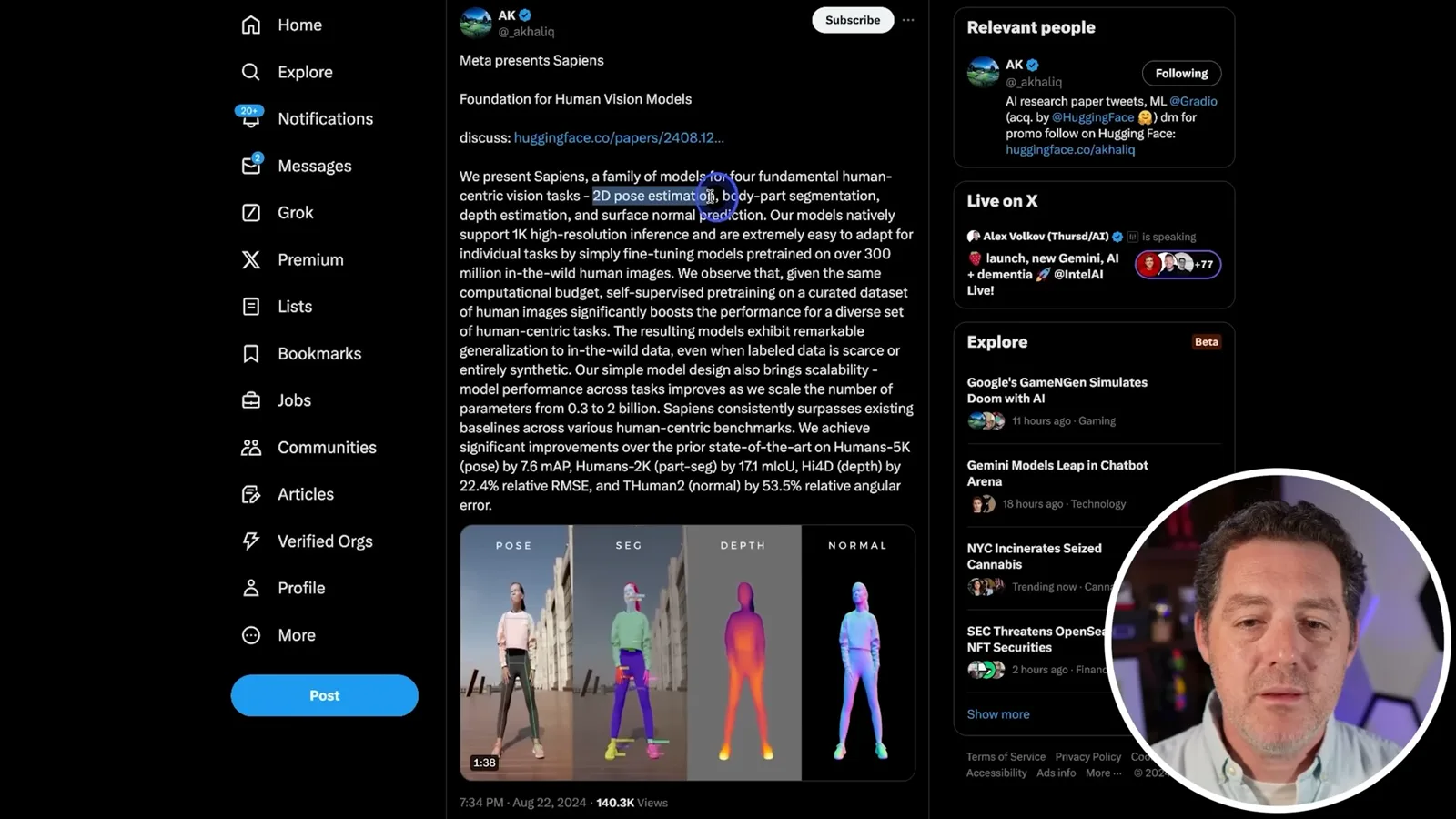
Meta's Sapiens research presents models for human-centric vision: 2D pose, body-part segmentation, depth and surface normals. The researchers describe pretraining on more than 300 million human images and adapting the models to these tasks; the examples do not establish reliable performance in every real-world setting.
OpenAI safety and California legislation
Former employees allege safety concerns and support SB 1047. Berman discusses regulation and trust.
Former OpenAI employees published a [letter](https://static.politico.com/ed/a3/b49946554f5ead081a5df2063048/letter-from-openai-whistleblowers-on-sb-1047-2024-08-22-2.pdf) supporting California's SB 1047 and whistleblower protections. They argue that advanced systems may pose serious risks and criticize OpenAI's opposition to the bill.
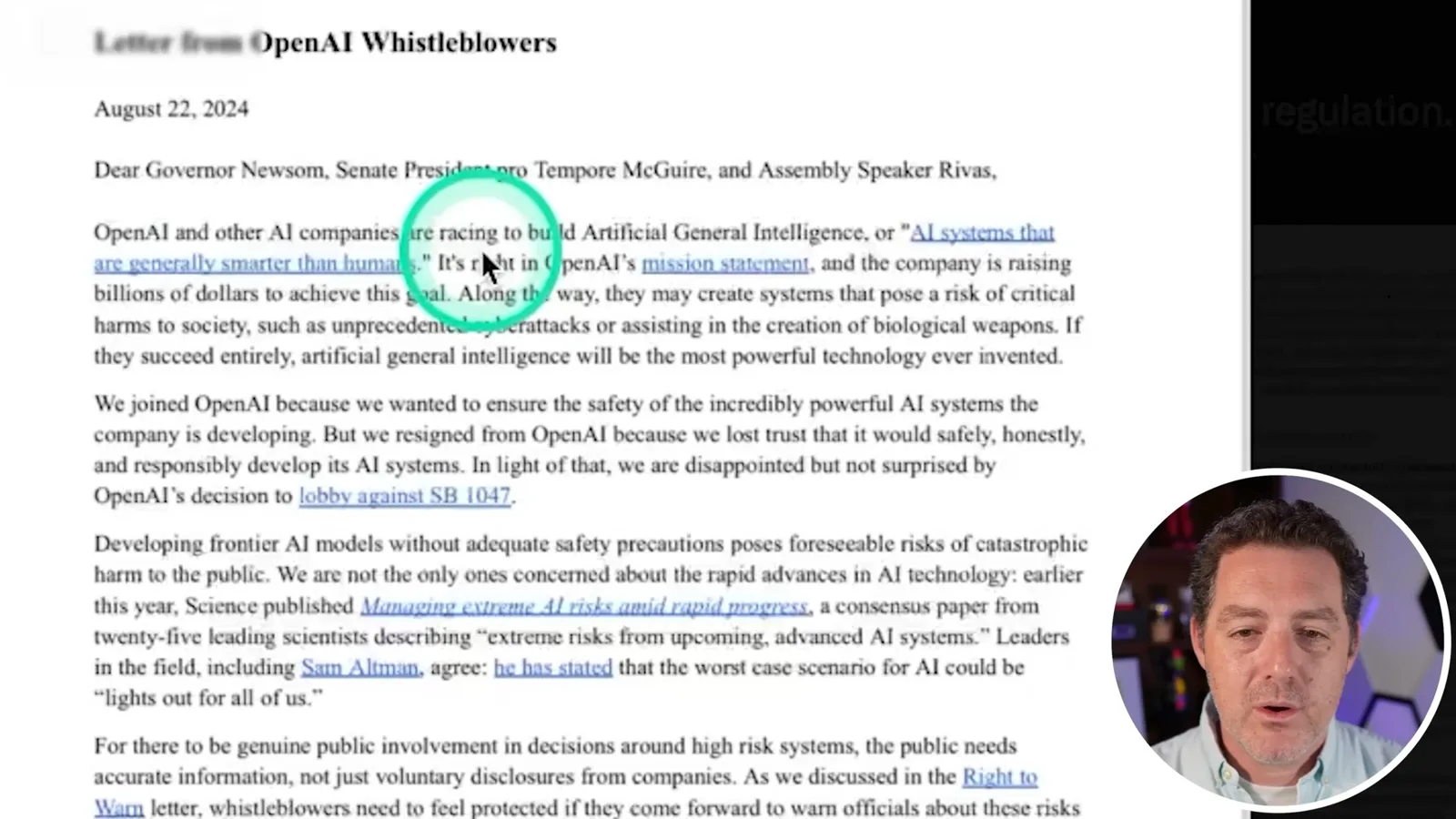
The letter alleges that restrictions on criticism and a premature GPT-4 deployment in India contradicted the company's stated caution. These are the authors' allegations, not findings independently established by the video. The former employees also cite incidents and safety staff departures as reasons for concern.
I am concerned about the gap I see between calls for safety regulation and opposition to this particular California bill, although I do not necessarily agree with the bill myself. OpenAI's policy disagreement should not be treated as proof that it opposed all regulation. Governor Gavin Newsom later [vetoed SB 1047](https://www.gov.ca.gov/wp-content/uploads/2024/09/SB-1047-Veto-Message.pdf) on September 29, 2024.
Recall and sales agents
Microsoft’s planned Recall feature raises privacy questions; Salesforce demonstrates automated sales workflows.
Microsoft's Recall was intended to save screen snapshots on eligible Copilot+ PCs so users could search their activity. After privacy and security objections Microsoft postponed its preview and said users would need to opt in; the video discusses an October target, not a completed release at that time.
I am excited about local search over my own activity, but researchers' concerns about sensitive information and access to stored data matter. Microsoft described security changes, including opt-in and additional protection; encryption does not eliminate every privacy or security risk. The Windows Insider preview eventually began in November 2024.
Salesforce announced Einstein SDR and Sales Coach agents for sales workflows. A demonstration configures an agent's rules and assigns leads, then shows it sending and responding to messages. The demonstration illustrates intended behavior, not verified results for all customers.
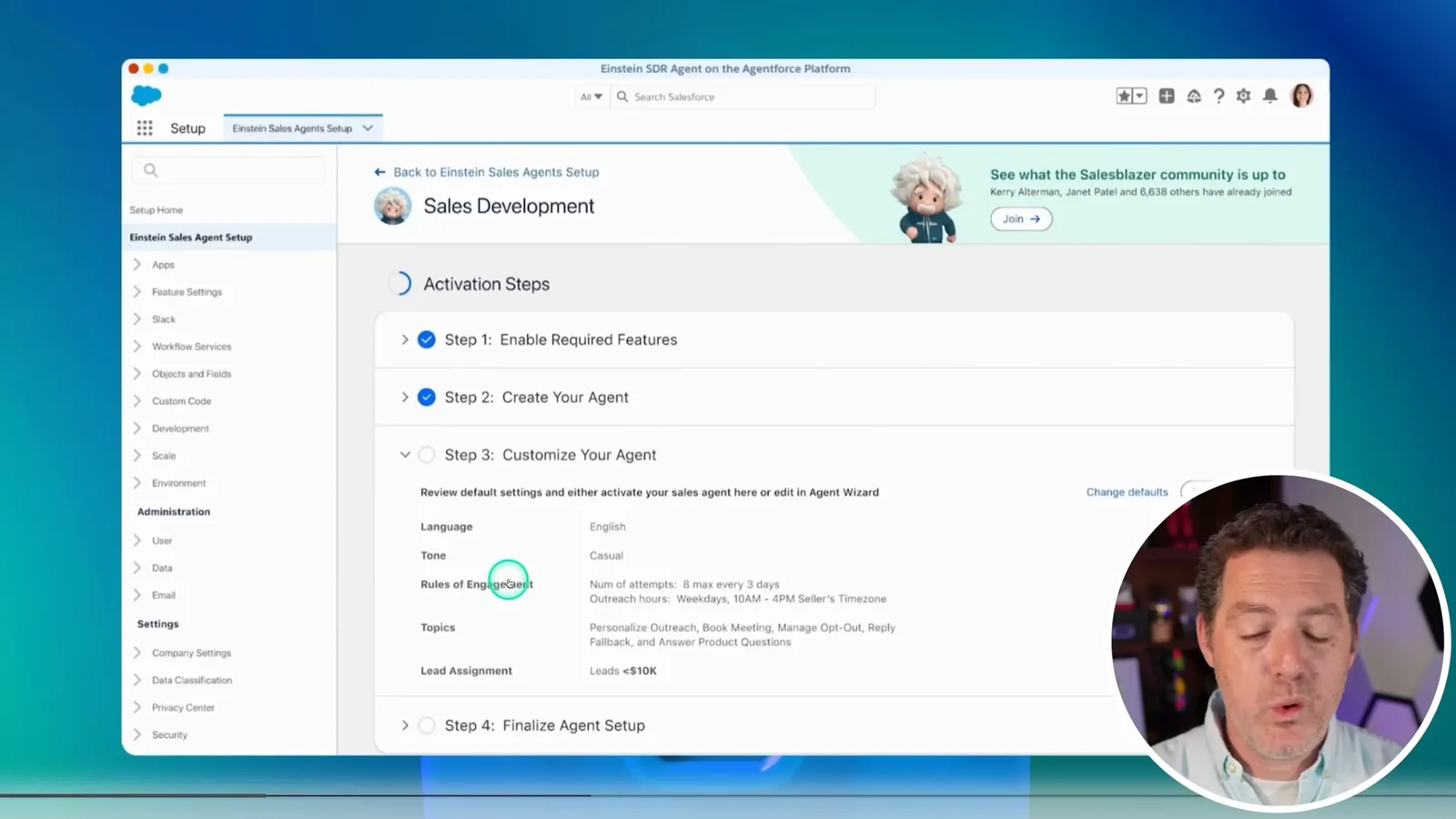
Having run sales teams, I can see why an organization might want to automate repetitive outreach. As a recipient, however, I worry that more automated cold emails could increase noise and make people even less inclined to respond.
Models, infrastructure and inference
Berman covers experimental Gemini models, Tesla infrastructure, reports about OpenAI projects and Cerebras performance claims.
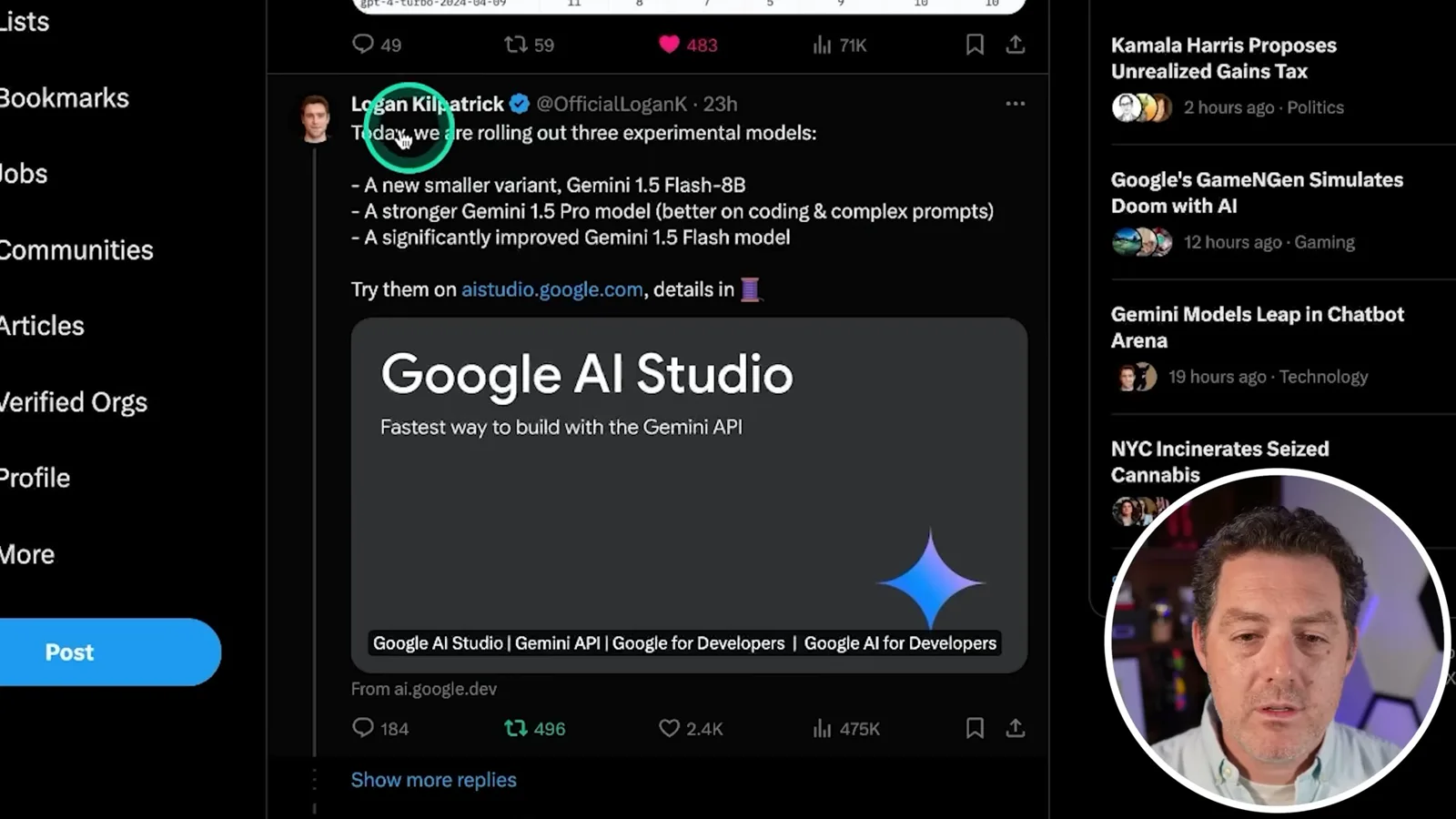
A viewer points to experimental models in Chatbot Arena, and Google announces three experimental Gemini variants: a smaller 1.5 Flash-8B, a stronger 1.5 Pro and an improved 1.5 Flash. I found my own tests less impressive than a high leaderboard position suggested; neither a single puzzle nor one ranking measures every capability.
Musk posts a video of Tesla's Cortex AI training cluster under construction in Austin. I speculate that it could support autonomous driving or other AI work, but the video itself does not establish the precise model being trained or its energy consumption.
I revisit reporting about OpenAI projects called Strawberry and Orion, including claims that a model was shown to the federal government and could generate synthetic data for a later model. These are contemporary reports about undisclosed projects, not confirmed facts about GPT-5's training or a verified relationship between the codenames.
Synthetic data is a possible way to produce additional training examples when high-quality human-created data is limited. Whether it improves a model depends on the data, process and evaluation; the reported project does not prove a frontier model was trained predominantly on synthetic material.
I favor making models and code more open and question OpenAI's approach to private development and government engagement. That is my policy preference; a social-media account's prediction of a codename does not independently verify the reported project.
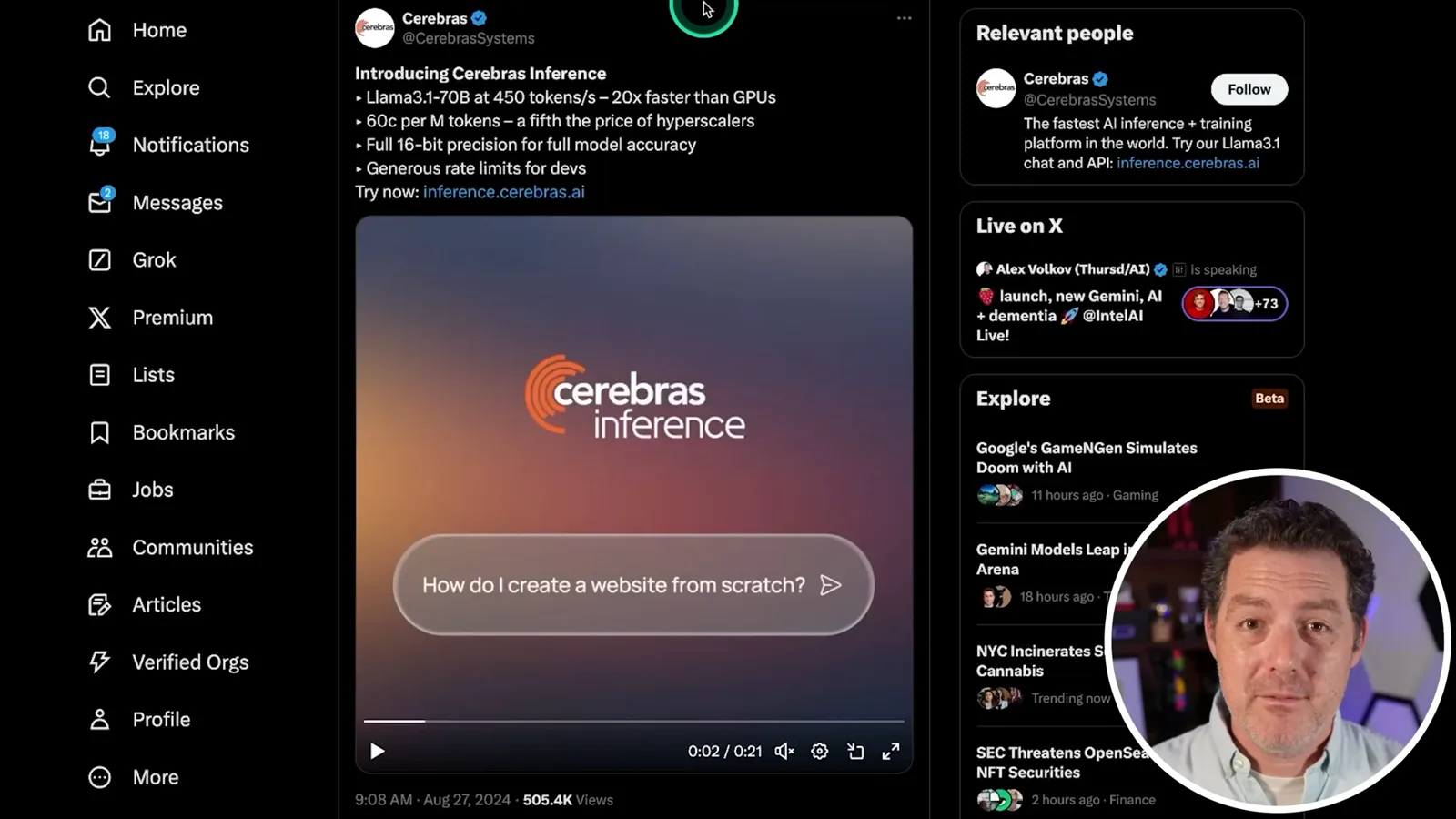
Cerebras introduces an inference service using its own chips. Its 2024 announcement claims about 450 tokens per second for Llama 3.1 70B, 16-bit precision and a price of $0.60 per million tokens, with higher throughput for the smaller 8B model. Speed and price comparisons with GPUs are vendor claims tied to particular configurations, and historical prices can change.
I invite viewers to consider the range of developments, from generative game simulation to enterprise tools and fast inference, and close the roundup.
Sur la même chaîne
 34:21EN
 Matthew Berman· 27 oct. 2026Matthew Berman Examines Anthropic’s IPO Filing, AI Growth and GovernanceMatthew Berman, Sam Altman · Forward FutureThe presenter reviews the S-1’s financial metrics, compute strategy and voting structure while questioning the tension between rapid AI development and safety.
 0:26ENMatthew Berman· 25 oct. 2026Sam Altman on Human Values and Problem-Solving in an AI WorldSam Altman · OpenAIIn a short interview excerpt, Altman considers the enjoyment of solving hard problems and the human role in interpreting results.
 0:36ENMatthew Berman· 25 oct. 2026Kimi K3.1 and a Rubik’s Cube Solver DemonstrationMatthew Berman · Forward FutureMatthew Berman shows a scrambled virtual cube being solved and gives the Kimi K3.1 test a favorable assessment.
 0:21ENMatthew Berman· 24 oct. 2026An AI-Generated Kimi Benchmark Chart Used Invented ScoresMatthew Berman · Forward FutureMatthew Berman asks for a graph of Kimi K3.1 Pro benchmarks, then discovers that the displayed figures are illustrative placeholders.
 25:50ENMatthew Berman· 24 oct. 2026Kimi K3.1 Pro Tested: Strong 3D Demos, Uneven Results and Competitive PricingMatthew Berman · Forward FutureMatthew Berman tests the open-weight model on coding, 3D rendering and visual explanations, then compares benchmark results and prices.
 32:20ENMatthew Berman· 23 oct. 2026Who Is Local AI For? The Costs, Trade-offs and a Hybrid FutureMatthew Berman · Forward FutureMatthew Berman weighs data control and independence against hardware cost, setup complexity and inference speed.