En 30 secondes
In this April 2025 video, Matthew Berman watches Runway Gen-4 launch and user examples, ranging from cinematic scenes to felt animals and stylized shorts. He praises consistency and lighting but identifies errors in arms, wheels, water and human interaction. He says he has not tested the service himself; the clips are selected demonstrations, and longer films remain a prediction.
- 1Strong imagery with flawsBerman praises a creator’s sequence but points out misplaced arms and inconsistent wheels.
- 2What Gen-4 takes as inputRunway specifies an input image plus text, with 5- or 10-second video generations; this differs from the video title’s text-only framing.
- 3A multi-shot shortThe Herd uses image references, Gen-4 and Act-One, according to its creator.
- 4Motion and physics errorsBerman spots water reacting incorrectly and later criticizes a human argument scene for awkward gaze and action.
- 5A review of selected examplesBerman says he has no Runway account and does not run an independent test in the video.
À retenir
- The Gen-4 examples show striking visual styles, lighting and apparent continuity, but selected clips do not establish average performance.
- Runway’s Gen-4 video workflow uses a required input image and a text prompt, with 5- or 10-second generations.
- Some examples contain visible errors in anatomy, object motion, gaze and water behavior.
- A finished short may combine multiple generated shots with references, editing, sound or other tools.
- Berman’s forecast of hour-long generated films is speculation, not an established Gen-4 capability.
Lire le texte remanié, chapitre par chapitre
Launch examples and visual consistency
Berman watches surreal and cinematic examples, including an occluded forest scene. He notes both convincing lighting and visible motion errors.
Runway Gen-4 has arrived, and I want to look through the examples. A pedestrian symbol steps out of a crosswalk sign into a street scene; the lighting and cars make the surreal idea look convincing. These are selected demonstrations, so they show possible outputs rather than a representative success rate.
Another montage turns people into unsettling bird-like characters: chickens, flamingos and long-necked turkeys. The images are disturbing, but they show how far the tool can push stylized designs. A separate set of cinematic clips evokes science-fiction and fantasy films.
In one forest shot, branches pass between a woman and the camera, and her motion appears coherent when she reemerges. Other examples include cars, foggy water, a rocket, asteroids, fire and jellyfish. I find many visually impressive, although a car and a collapsing bridge show odd details.
Creator clips and Gen-4 release
A creator’s sequence shows strong faces alongside anatomical and wheel errors. Berman reviews Runway’s product claims and short animated examples.
A creator named Ellenor says she made a short sequence in 20 minutes using images generated with Reve and then animated with Runway. I like the faces and hands, but notice an arm appears to emerge from the wrong person and another shot has wheels that spin or change direction awkwardly. The reported production time is the creator’s claim, not a benchmark.
Runway describes Gen-4 as a step forward in motion, controllability and consistency, with image-to-video initially rolling out to paid and enterprise users. Those are the company’s claims. Despite the video title’s text-to-video wording, Runway’s Gen-4 documentation specifies an input image with a text prompt and 5- or 10-second generations; availability and product details are version-specific.
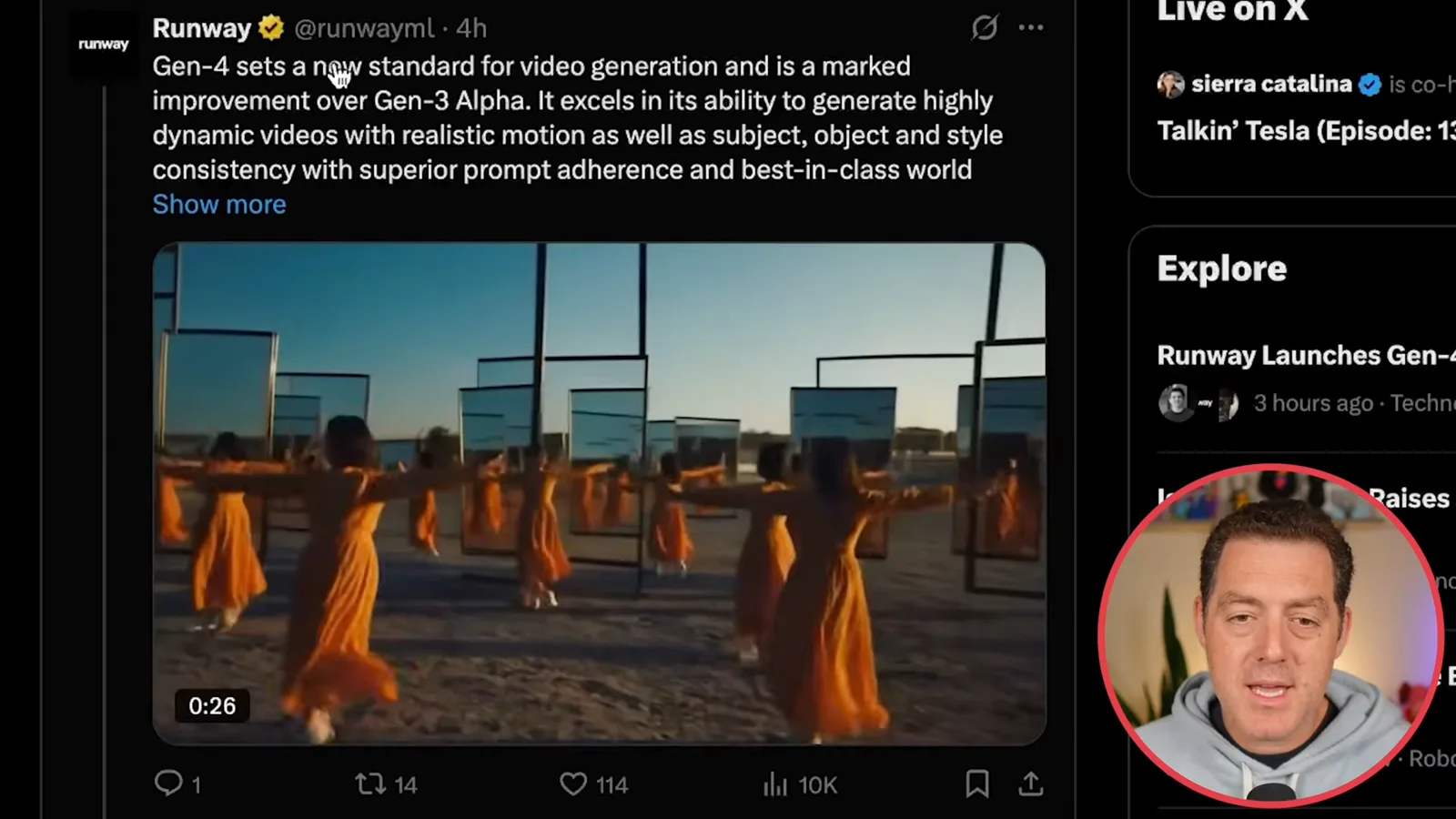
I watch animated examples, including a polar bear, and say that current short clips are the starting point for further improvements. That is my optimism, not a guarantee that every future output will improve or that longer films can already be generated in one shot.
The short The Lonely Little Flame uses a clay-like style: a flame meets a skunk and a rock. The relatively low-frame-rate motion resembles stop motion to me, and I like how the characters and materials look. A polished edited short is not necessarily a single continuous generation.
Animal scenes and The Herd
City animals and a cow-themed short demonstrate the model’s range in selected footage. A prediction about longer films remains speculative.
In New York Is a Zoo, a rhinoceros, giraffe, elephant, bear, zebras, lion and monkeys appear around the city. Some movement looks awkward, but I find the overall imagery strong. These clips illustrate a range of scenes rather than a controlled comparison with other models.
The Herd follows a young man pursued by cows in a misty nighttime field. Its creator describes using Gen-4 and a few image references to build shots, then combining them with Act-One. I am impressed by the cows, the fire and the silhouettes in smoke, while finding the sequence slightly uncanny.
With music and dialogue added, I can imagine much longer generated movies in a year or two. That is a forecast, not a demonstrated capability of Gen-4. The illustrated short uses multiple shots and other production steps, so it does not establish one-prompt feature-film generation.
User examples and physical limits
Berman examines occlusion, water, lighting and human interactions. He praises some clips while identifying obvious inconsistencies.
Among more user examples, a man stands on a subway while a pole passes between him and the camera. I replay the moment and notice that a fold in his shirt appears to remain consistent after the occlusion. This is a useful visual example, but one selected clip cannot establish general physical understanding.
A running figure, splashing paint and a car on a snowy mountain road also look good to me. In a scene with a woman carrying an umbrella, however, water on the ground appears to react to her movement even when she is not touching it. The shot is attractive but not physically perfect.
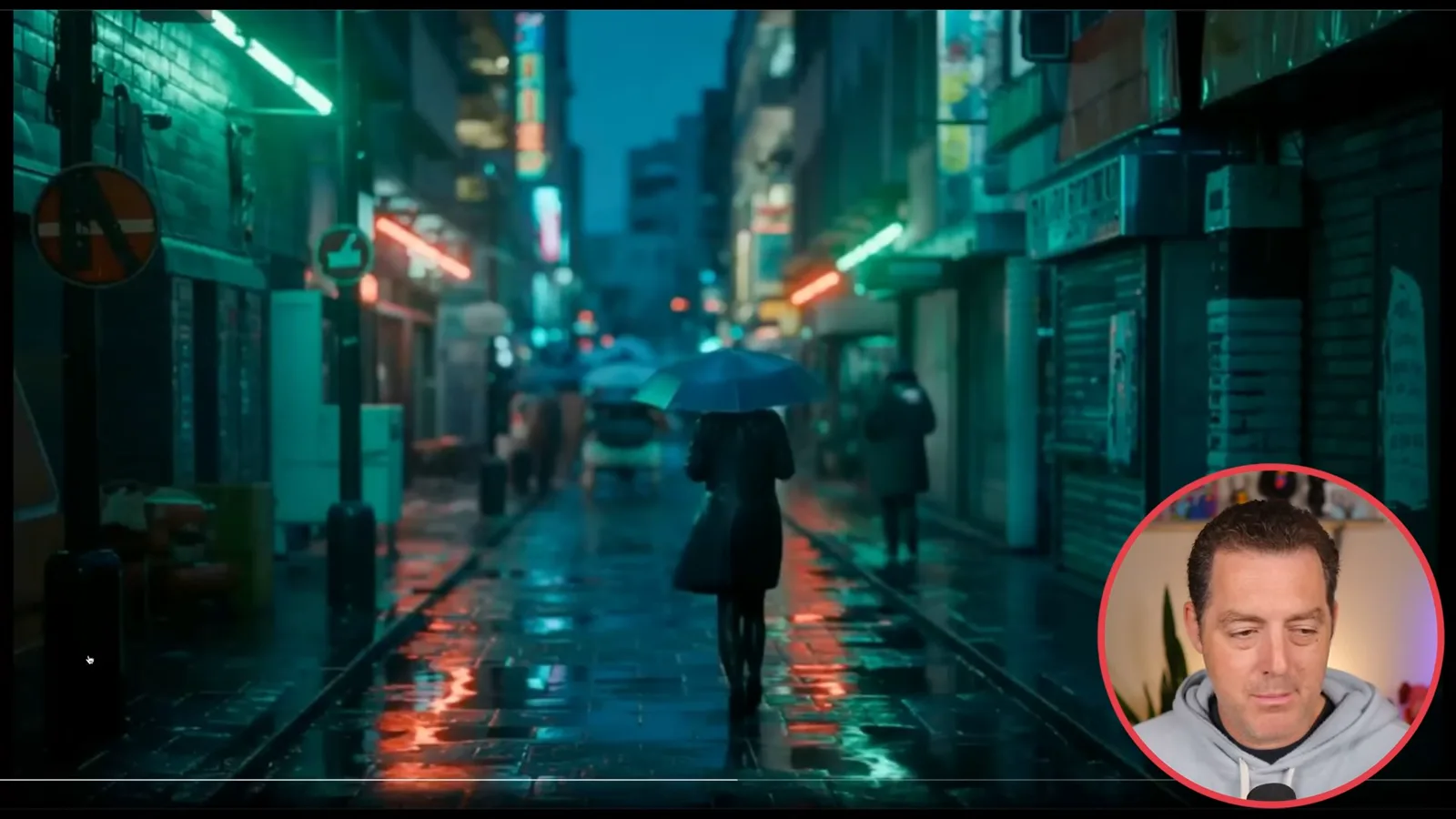
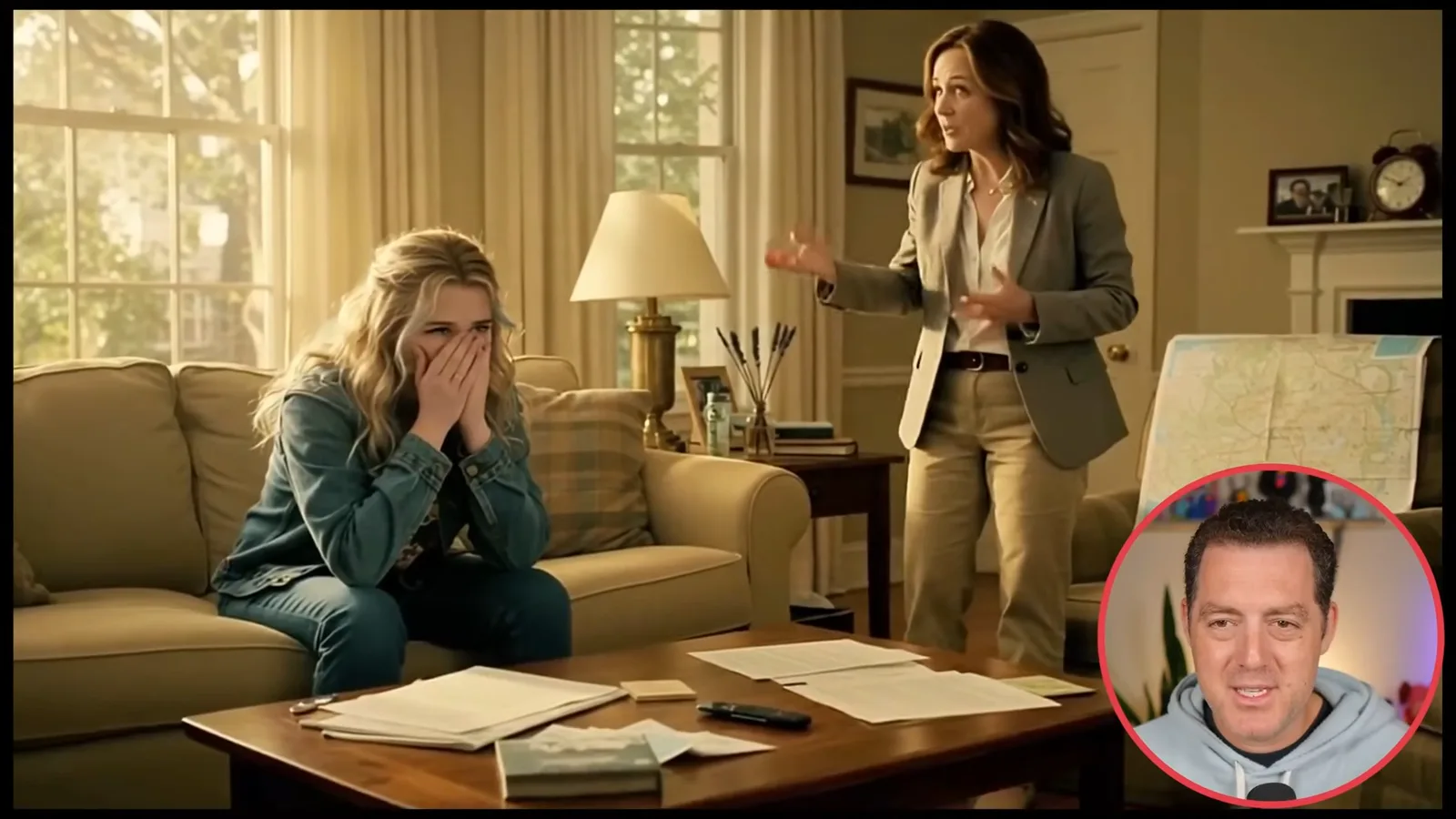
A volcano, lights and a skateboarder with an umbrella follow. In a scene that appears to show a mother and daughter arguing, the interaction is less convincing: their gazes do not meet, pointing seems misdirected, and the daughter fumbles unnaturally with her suitcase.
Fabric worlds and mixed styles
A felt-like animal sequence and a mixed-style subway scene show varied aesthetics. The discussion also notes water and motion errors.
A fabric-styled sequence is one of my favorites. A bird, caterpillar, snake, porcupine, fox, deer and raccoon resemble felt or soft toys. I imagine editing clips like these together with a story and sound effects, though the proposed full-length film would require additional work.

The fabric animals also expose limitations: water dripping from a mouth looks good until it hits the surface, and fabric ducks float without visibly absorbing water. A later rabbit leaves a trail of light. These are observations about individual clips, not tests of a complete physical simulator.
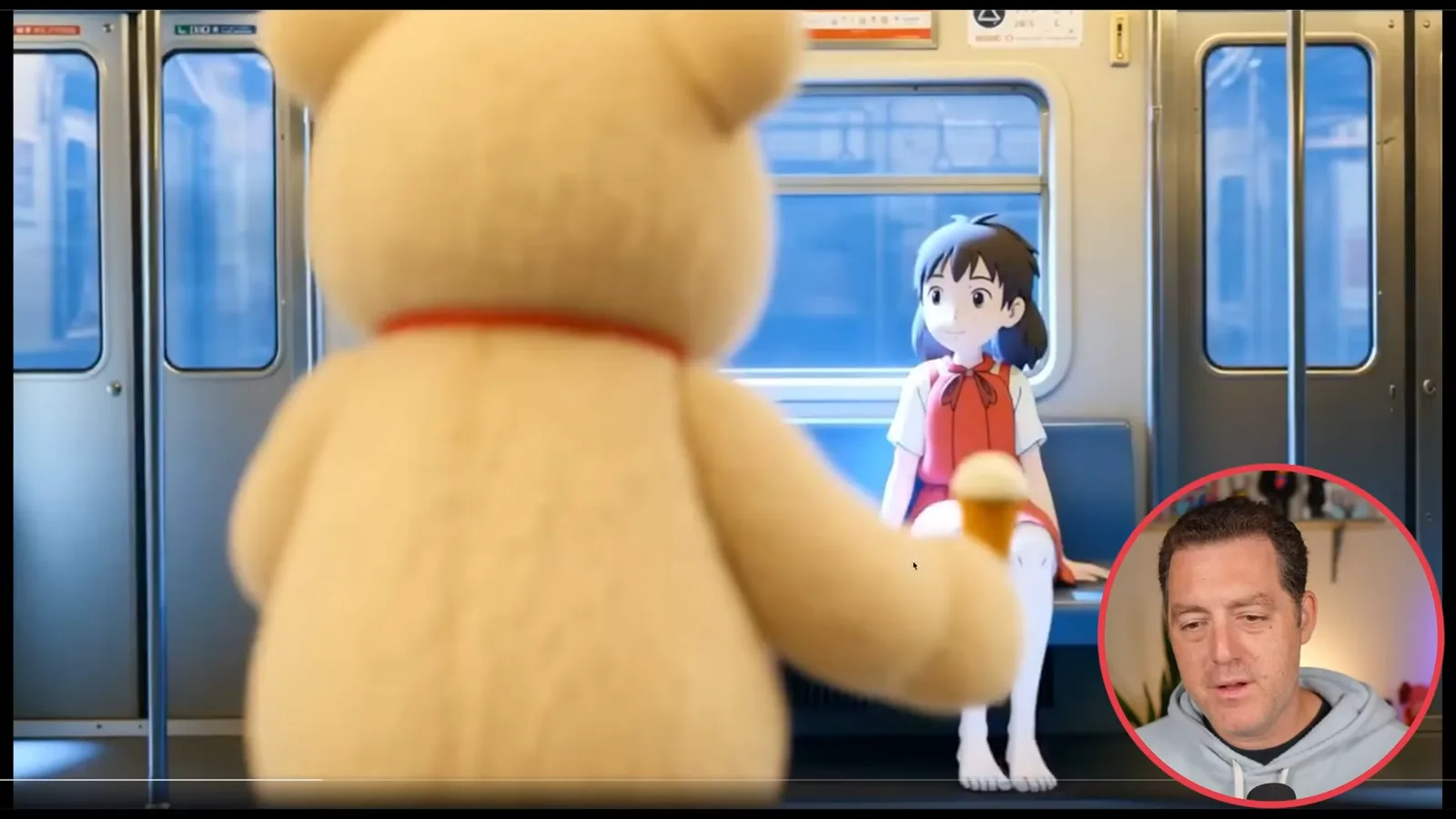
A subway scene mixes a realistic human, a flat cartoon and a fuzzy teddy bear holding ice cream. I especially like the lighting across the three visual styles. Another short animated character scene has a similarly cinematic look, though a longer movie would need additional shots and editing.
Cars, wolves and portraits
He compares vehicle motion, a train view, wolves and close-up faces. He closes by noting he has not tested Runway himself.
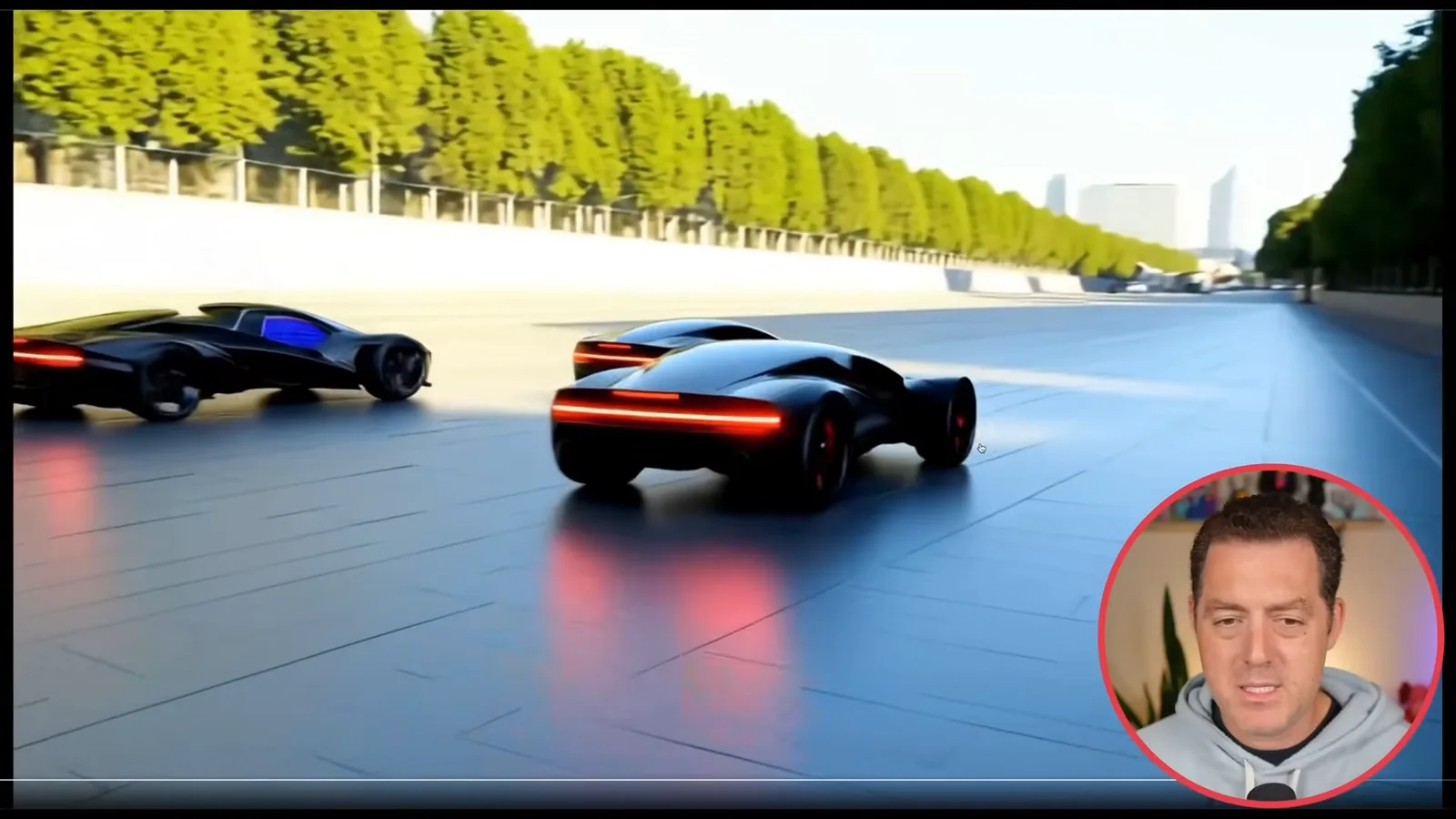
A set of futuristic cars looks detailed, but their wheels spin much faster than the vehicle movement warrants. In a luxury-train shot, the forest passing outside the window seems more consistent to me. The comparison shows both attractive imagery and motion errors in the examples.
Wolves move through water with wet fur, teeth and depth-of-field changes. I examine the details and find them convincing. A close-up of a screaming woman holds her teeth relatively steady, though the tongue visibly morphs; another portrait uses subtle shadows across skin.
Overall I find the Gen-4 launch impressive and competitive with other video generators. I have not personally tested it here: I say I do not have a Runway account and am reviewing published examples. The montage should not be read as an independent evaluation of typical reliability, cost or prompt adherence.
Sur la même chaîne
 34:21EN
 Matthew Berman· 27 oct. 2026Matthew Berman Examines Anthropic’s IPO Filing, AI Growth and GovernanceMatthew Berman, Sam Altman · Forward FutureThe presenter reviews the S-1’s financial metrics, compute strategy and voting structure while questioning the tension between rapid AI development and safety.
 0:26ENMatthew Berman· 25 oct. 2026Sam Altman on Human Values and Problem-Solving in an AI WorldSam Altman · OpenAIIn a short interview excerpt, Altman considers the enjoyment of solving hard problems and the human role in interpreting results.
 0:36ENMatthew Berman· 25 oct. 2026Kimi K3.1 and a Rubik’s Cube Solver DemonstrationMatthew Berman · Forward FutureMatthew Berman shows a scrambled virtual cube being solved and gives the Kimi K3.1 test a favorable assessment.
 0:21ENMatthew Berman· 24 oct. 2026An AI-Generated Kimi Benchmark Chart Used Invented ScoresMatthew Berman · Forward FutureMatthew Berman asks for a graph of Kimi K3.1 Pro benchmarks, then discovers that the displayed figures are illustrative placeholders.
 25:50ENMatthew Berman· 24 oct. 2026Kimi K3.1 Pro Tested: Strong 3D Demos, Uneven Results and Competitive PricingMatthew Berman · Forward FutureMatthew Berman tests the open-weight model on coding, 3D rendering and visual explanations, then compares benchmark results and prices.
 32:20ENMatthew Berman· 23 oct. 2026Who Is Local AI For? The Costs, Trade-offs and a Hybrid FutureMatthew Berman · Forward FutureMatthew Berman weighs data control and independence against hardware cost, setup complexity and inference speed.