En 30 secondes
In May 2025, Matthew Berman and collaborator Alex review their own Veo 3 generations and selected videos from other creators. They are impressed by visual detail, dialogue and native audio but find failures in collisions, object continuity, physical interactions and prompt adherence. Selected clips are illustrative examples rather than a systematic benchmark; the video includes a Hostinger Horizons sponsorship.
- 1Synthetic street interviewsBerman’s generated interviews look convincing to him, although the dialogue does not exactly follow every instruction.
- 2Physical interactions break downTrain clips explode without the requested collision, while the Rubik’s Cube changes shape or fails to solve.
- 3Edited filmmakingA creator’s short scene combines Veo 3 with upscaling, music and editing; its reported production time is the creator’s claim.
- 4Fictional reviewsGenerated product reviewers are persuasive in style, but Berman notices unnatural pauses in speech.
- 5A physics stress testRube Goldberg scenes look elaborate but often lack a coherent chain of motion.
- 6Sound and assembled scenesThe host highlights audio and social-media-style scenes in longer edited films; their construction involves more than a single generated clip.
À retenir
- Veo 3 can generate short video with sound and dialogue, as described in Google’s May 2025 announcement.
- Berman’s train, Rubik’s Cube and Rube Goldberg prompts show that visually persuasive output can fail a requested action or physical sequence.
- The collaborators find strong variation among samples even when prompts are similar.
- Longer films shown in the video are assembled or edited creations, not proof that a single prompt generated the complete film.
- Fictional presenters and interviews can resemble real recordings, making context and disclosure important.
- A generated copyrighted-looking character does not settle copyright or permission questions.
Lire le texte remanié, chapitre par chapitre
Street interviews, trains and a Rubik’s Cube
Berman introduces Veo 3 with his own prompts. His examples mix convincing presentation with failures of dialogue, motion and object consistency.
Matthew Berman opens with a playful generated imitation and asks collaborator Alex not to replace him. He introduces Google’s Veo 3, released in May 2025 with native sound and dialogue generation. The clips in this video are examples, not a controlled measure of all model outputs.
Berman begins with generated street interviews featuring people leaving a bar. He finds the scenes persuasive, but says the dialogue does not match every part of his prompt. Two samples respond to the idea that their characters are not real with overlapping dialogue.

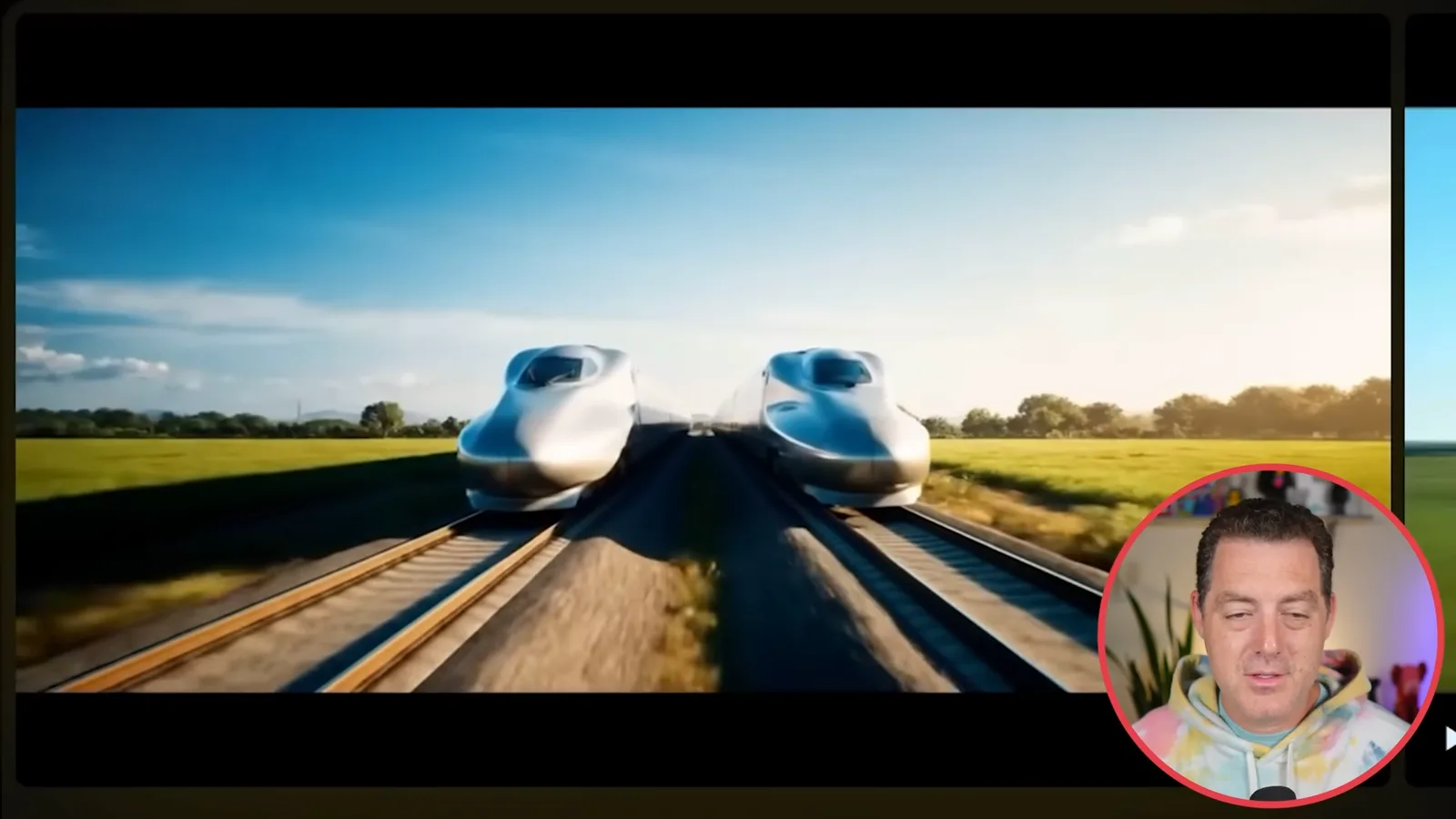
He tries to generate two trains racing toward each other on the same track and colliding. The output does not follow the requested setup: in one example the trains are on separate tracks and explode without the specified collision, despite convincing-looking sound and effects.
A Rubik’s Cube prompt produces attractive surfaces and sounds, but the movements are not physically convincing. In another generation a piece appears to change or detach, and a more detailed request still fails to show a consistent solution.
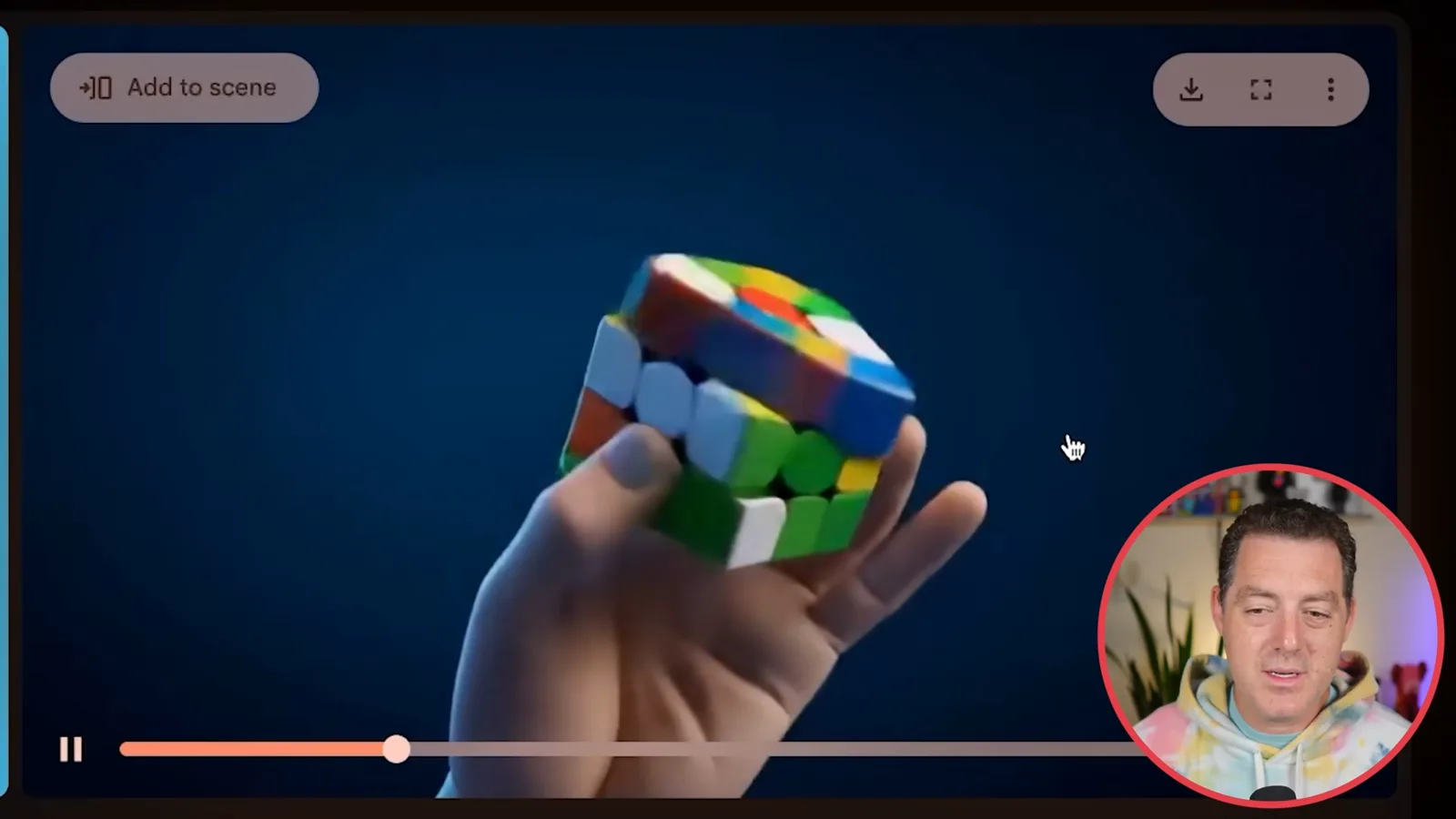
Berman observes odd internal gears and a frame change in later cube attempts. He then shows a generated version of a familiar meme. Visual appeal alone, he notes through these examples, does not mean the system carried out the requested action.
The video includes a paid Hostinger Horizons promotion. Its claims about turning prompts into deployed web apps and the first-month discount are sponsor claims and a historical offer, not an independently verified assessment of production readiness.
Creator films and Alex’s experiments
The hosts examine an edited short scene, horror clips, a cowboy and a motorcycle-horse hybrid. Alex compares selected Veo 2 and Veo 3 samples.
Berman shows a short 1980s-style scene by creator Javi Lopez, who says it took less than two hours using Veo 3, Magnific for upscaling, music tools and CapCut for editing. Berman likes the atmosphere but notices that a book disappears; the time estimate is the creator’s report and the scene uses multiple tools.
Alex introduces his own shrimp fried rice clip, where the character looks more like a lobster and another version appears to toss a wok without touching it. He prefers the first generation, illustrating variation across samples.
For a horror prompt about aliens in a dark alley, Alex likes one clip’s lighting and finds the sound effects stronger in the second. He says he accidentally generated matching prompts with Veo 2 first and prefers the selected Veo 3 results; this is a small anecdotal comparison.

He asks for a cowboy riding a motorcycle-horse hybrid through a ring of fire. Some outputs convey the idea, but others produce an odd ring, a motorcycle with only a horse tail, or a jump without a clear physical cause.
Dinosaurs, reviewers and dialogue
They discuss assembled Jurassic Park-style clips and fictional reviews. Their reactions also highlight audio, accents and artifacts.
Berman discusses Google Flow as a tool for arranging and extending generated clips into scenes. Google described Flow as combining Veo, Imagen and Gemini; assembling longer stories remains a filmmaking process rather than evidence that a whole movie emerged in one generation.
A Jurassic Park-style travel video shows visitors and dinosaurs. Berman likes the people but finds some dinosaurs more like animatronics than realistic animals; another feathered creature looks better to him. Dinosaur appearance varies by species, so this scene is not evidence for a single look across all dinosaurs.
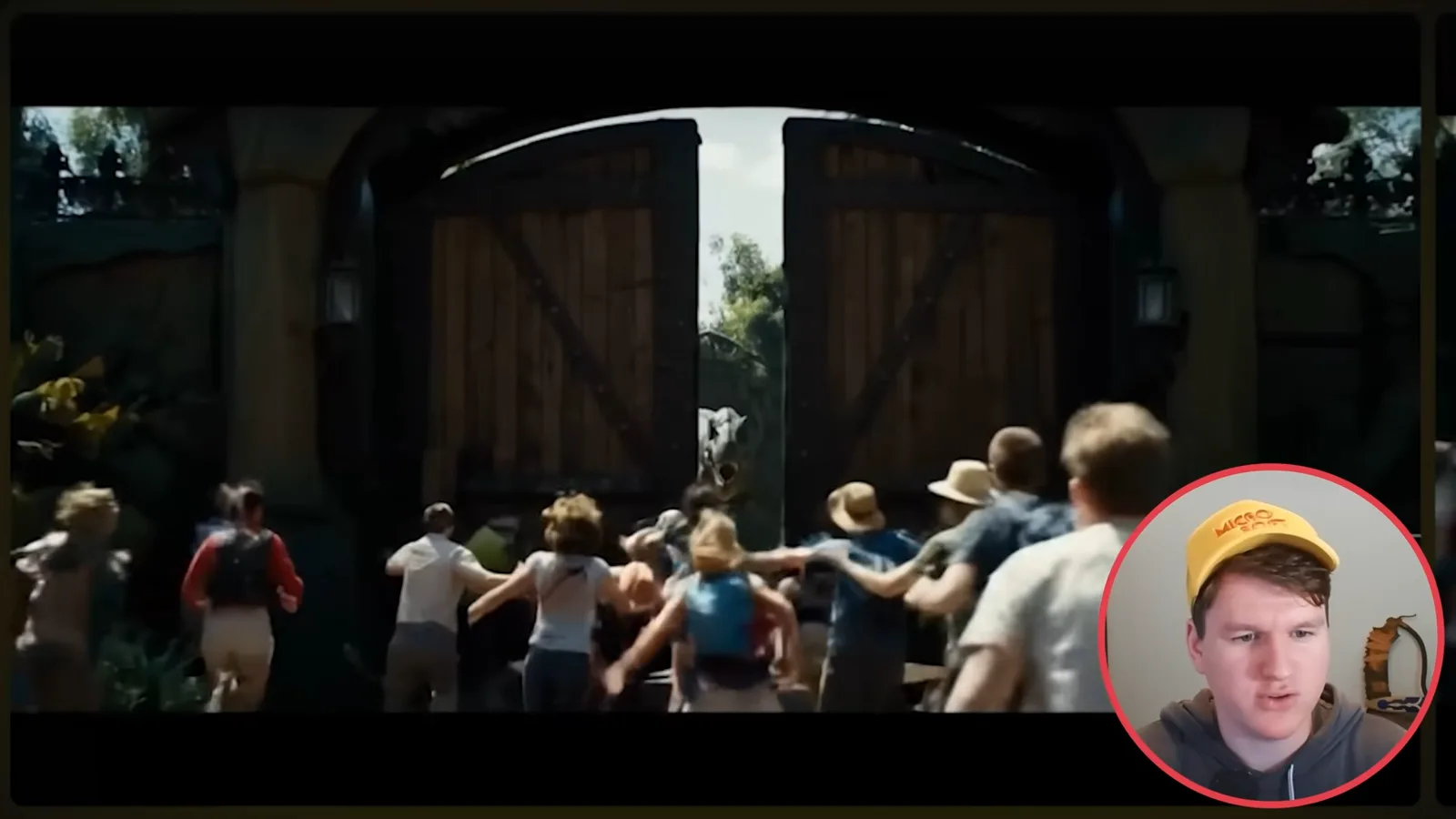
Alex tries a T. rex chasing tourists. In one sample the people run toward the animal and it appears to pass through them; other samples show more coherent movement, dramatic camera work or gates opening. One unusually tall person is another visible inconsistency.
Berman shows Ethan Mollick’s fictional product-review examples and jokes about his own job. The clips imitate familiar YouTube presentation styles and review imaginary products, but he hears speech pauses that feel slightly unnatural.
Berman says he showed the AI-generated opening imitation to his wife without explaining it and she initially thought someone had copied the channel. This is one anecdote about apparent realism, not evidence that generated media is generally undetectable.
The fictional reviews continue with implausible products and a flying experience. Berman also plays an example of generated singing and captions that appear to match the words, while noting the overall performance is not perfect.
A clip depicts Darth Vader, prompting Berman to comment on copyright. The appearance of a recognizable character does not establish that a use is authorized or resolve copyright questions; he then plays additional fictional street interviews with varied accents.
A boy-band prompt produces catchy music and dancing, but a performer suddenly appears in the background. Berman says it is impressive while remaining far from perfect, and shows a second variation.
Physics, stylization and portals
Rube Goldberg machines, LEGO cityscapes, food, comedy and Portal-style scenes expose varying prompt fidelity and visual quality.
He tests physical sequencing with a Rube Goldberg machine. Several elaborate scenes have the look of marbles, dominoes and gears but lack a continuous cause-and-effect chain; in one, motion appears to go in an unexpected direction.
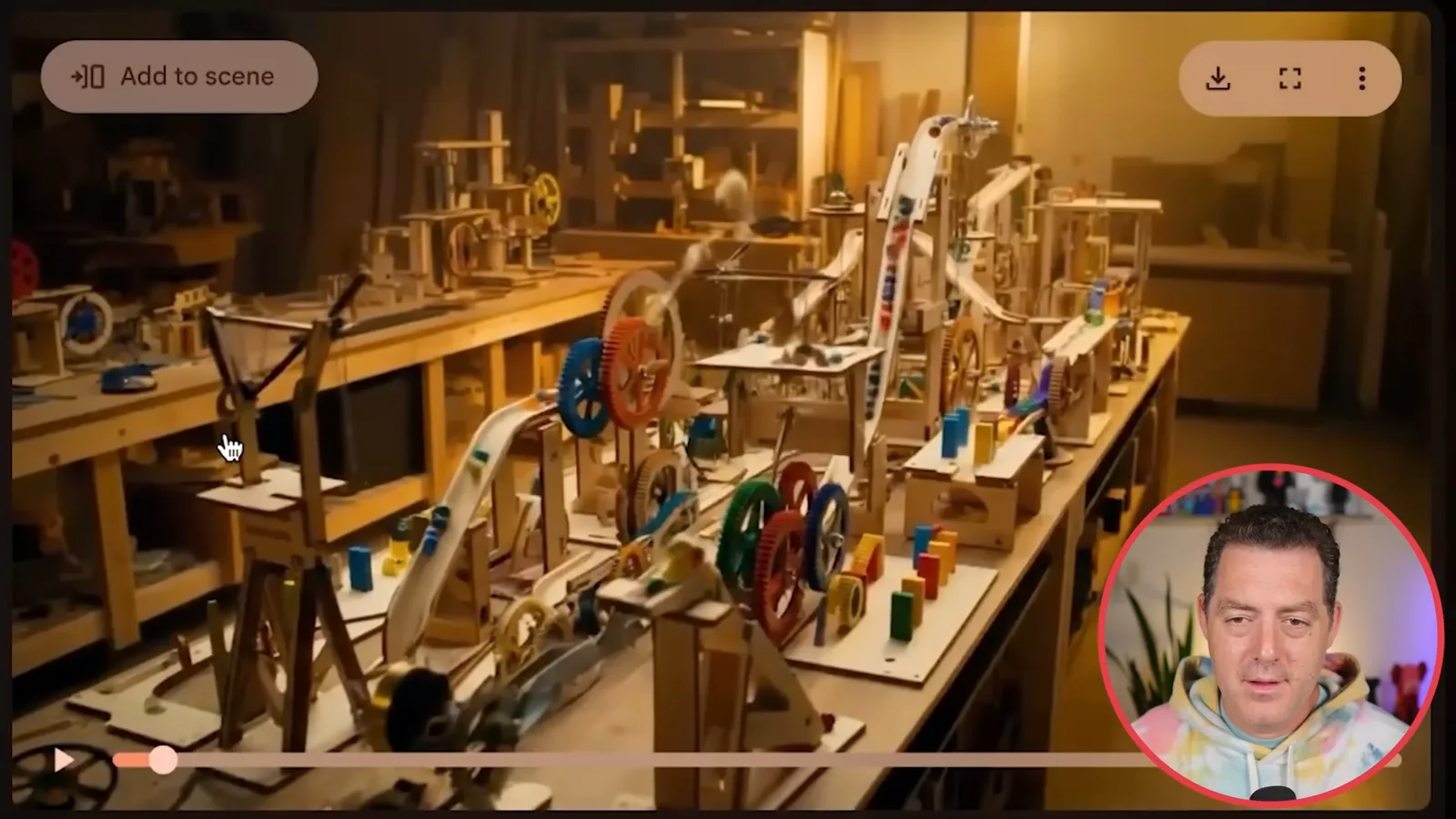
One later Rube Goldberg attempt is his favorite: a marble travels down a wooden slide and a box opens. He still notices color changes. This selected example illustrates a better-looking sequence, not verified physical simulation.
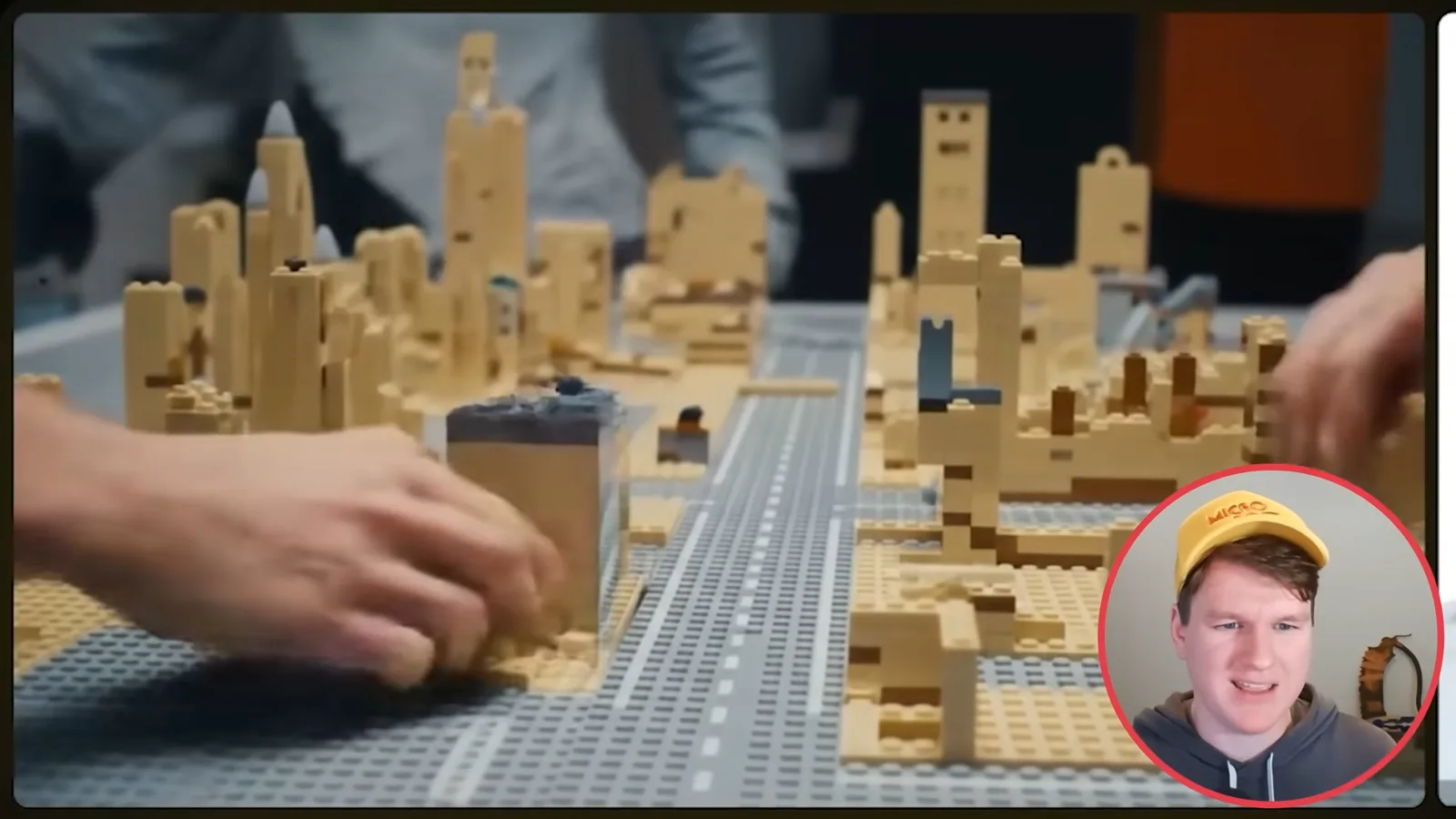
Alex asks for a time-lapse of New York City being built from LEGO. He says bricks appear or fly into place rather than being assembled naturally; the second result is less convincing to him.
A prompt for a visual representation of a fourth dimension yields abstract portals and effects rather than a clear explanation. Alex likes the visual effects but acknowledges the output largely skips the requested concept.
A hamburger assembly prompt produces appetizing ingredients, but pieces appear held in place and the sequence does not finish. A second version looks better yet still omits the top bun and shifts scenes.
Alex tests a cel-shaded realistic person and likes the style, then shows a generated stand-up joke that made him laugh. These short samples demonstrate aesthetic possibilities without establishing consistent performance across prompts.
A solar-system prompt generates striking views, but Alex notices a planet appearing abruptly in front of a moving camera. He considers the result visually appealing despite the continuity problem.
Berman asks for a photorealistic Portal-inspired scene using an expanded prompt. The setting and futuristic portal gun appear, but the character does not travel through as requested and the expected relationship between portals is not convincingly shown.
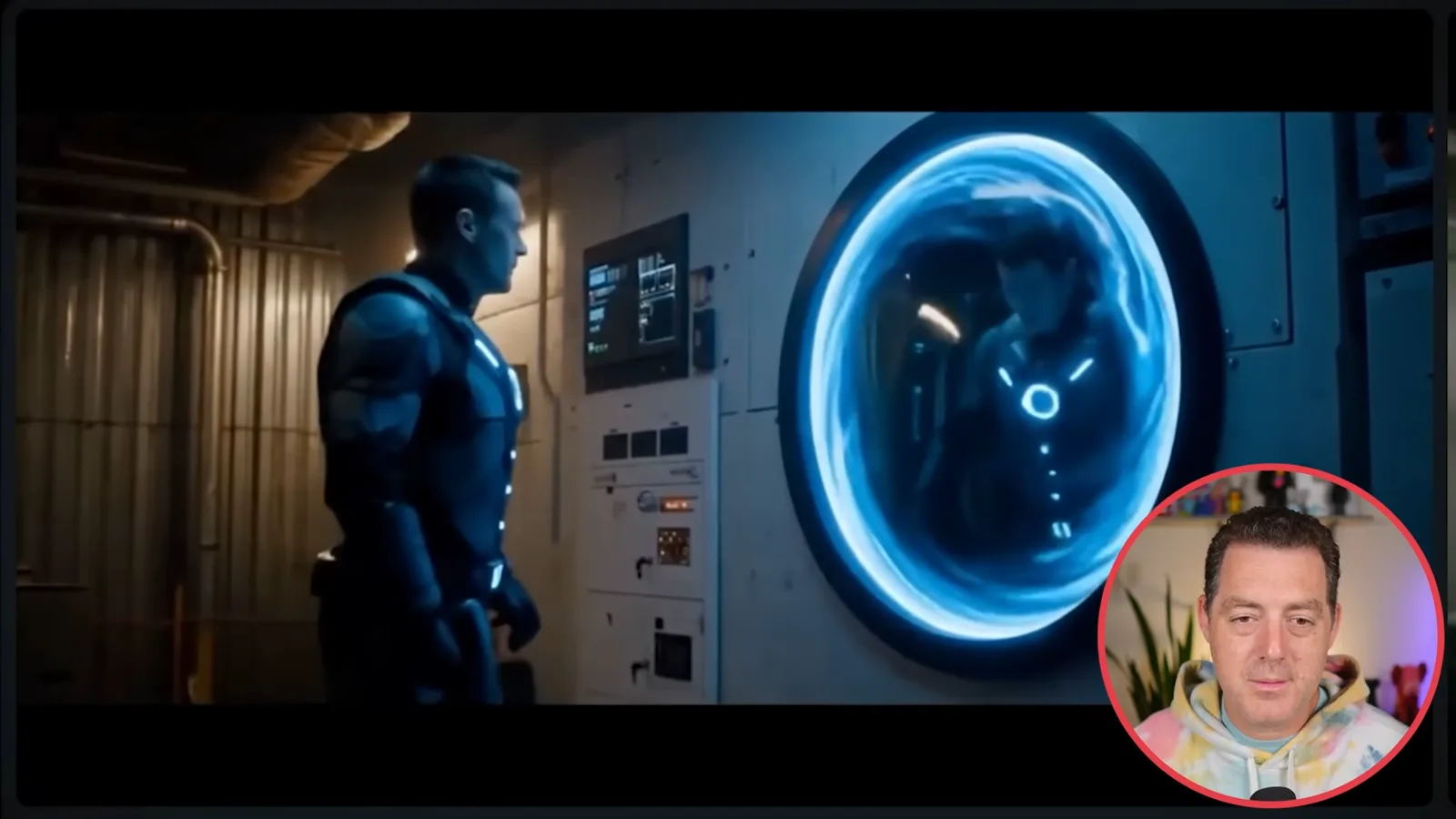
A second portal clip has impressive visual detail but only briefly suggests a reflection. Berman distinguishes the attractive look from adherence to the actual instruction.
Longer generated films and conclusions
Berman samples edited fictional films about plastic and an alien invasion. He praises synchronized audio while acknowledging the examples are curated.
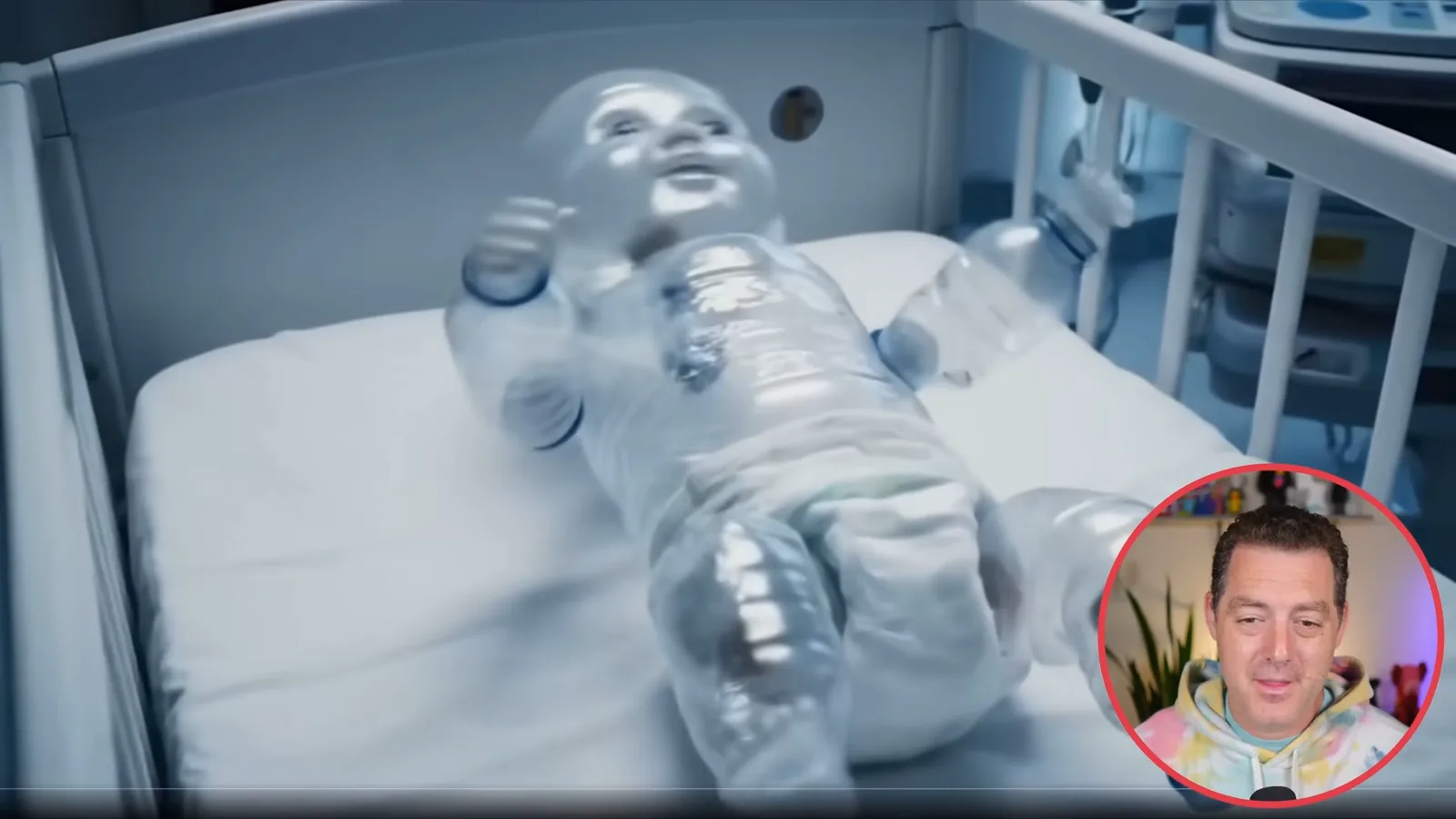
He samples Meta Puppet’s satirical film This Is Plastic, assembled using Flow and Veo 3. The excerpt depicts a fictional plastic baby and a later commercial; its narrative is satire, not evidence for medical claims mentioned by fictional characters.
Berman then shows excerpts of an edited alien-invasion film with fictional broadcasts and personal reactions. He is struck by the integration of multiple situations and social-media conventions; the film is presented as a curated longer creation.
A fictional video call and social-media livestream include visual markers such as viewer counts and floating reactions. Berman praises the familiar interface details, but the scenes and interface are generated fiction rather than real footage of an emergency.
He highlights the interaction of objects and especially the addition of audio as a major strength, then closes with another highly detailed generated clip. His overall impression is enthusiastic, while the earlier failed tests show the limits of these particular samples.
Sur la même chaîne
 34:21EN
 Matthew Berman· 27 oct. 2026Matthew Berman Examines Anthropic’s IPO Filing, AI Growth and GovernanceMatthew Berman, Sam Altman · Forward FutureThe presenter reviews the S-1’s financial metrics, compute strategy and voting structure while questioning the tension between rapid AI development and safety.
 0:26ENMatthew Berman· 25 oct. 2026Sam Altman on Human Values and Problem-Solving in an AI WorldSam Altman · OpenAIIn a short interview excerpt, Altman considers the enjoyment of solving hard problems and the human role in interpreting results.
 0:36ENMatthew Berman· 25 oct. 2026Kimi K3.1 and a Rubik’s Cube Solver DemonstrationMatthew Berman · Forward FutureMatthew Berman shows a scrambled virtual cube being solved and gives the Kimi K3.1 test a favorable assessment.
 0:21ENMatthew Berman· 24 oct. 2026An AI-Generated Kimi Benchmark Chart Used Invented ScoresMatthew Berman · Forward FutureMatthew Berman asks for a graph of Kimi K3.1 Pro benchmarks, then discovers that the displayed figures are illustrative placeholders.
 25:50ENMatthew Berman· 24 oct. 2026Kimi K3.1 Pro Tested: Strong 3D Demos, Uneven Results and Competitive PricingMatthew Berman · Forward FutureMatthew Berman tests the open-weight model on coding, 3D rendering and visual explanations, then compares benchmark results and prices.
 32:20ENMatthew Berman· 23 oct. 2026Who Is Local AI For? The Costs, Trade-offs and a Hybrid FutureMatthew Berman · Forward FutureMatthew Berman weighs data control and independence against hardware cost, setup complexity and inference speed.