En 30 secondes
Matthew Berman shares clips from OpenAI DevDay London, showing a drone interface attributed to o1, a travel assistant that uses tools and a staged phone call, and a voice-driven educational interface. He also discusses new voices, cached-input pricing and the then-pending full o1 release. The video was sponsored by AI Port and Turing Post. The travel demo’s pie shop was fictional, and the Realtime API used a GPT-4o realtime preview model at the time, according to [OpenAI’s announcement](https://openai.com/index/introducing-the-realtime-api/); pricing and availability mentioned here are historical.
- 1A drone interfaceOpenAI demonstrated a web interface whose code was attributed to o1; the presenter started the server and operated the controls.
- 2Voice and toolsThe Wanderlust demonstration used the Realtime API to respond to travel questions and update an interface.
- 3A staged orderThe demo identified Ilan’s Posh Pies as a fictional shop and used Twilio to place a simulated phone order.
- 4Interactive educationA separate voice demonstration answers questions about planets and displays visual material and charts.
- 5Historical API updateOpenAI announced five additional voices and cached-input discounts in October 2024; these are not current pricing guidance.
À retenir
- The o1 coding demo showed a human operating a drone through a generated interface, not a model autonomously piloting it.
- The travel app combined the Realtime API with application-defined tools to update a map and show hotel details.
- A staged call to a fictional pie shop used a Twilio integration to demonstrate an ordering workflow.
- A separate voice lesson illustrated interactive visual responses, though the clip alone does not verify how every visual was produced.
- The 2024 voice and cached-input pricing announcements and o1 availability should be read in their historical context.
Lire le texte remanié, chapitre par chapitre
o1 and drone controls
Berman introduces an OpenAI demonstration of a drone-control application. A presenter starts the app and tries its controls.
OpenAI DevDay London has just taken place, and I want to show you several demonstrations. First, the team presents a full-stack drone-control application whose code is attributed to o1. In the clip, a person starts the server, checks the battery and video stream, then tests takeoff and the interface buttons. The video shows a human operating the interface, not o1 independently flying the drone.
The video includes sponsorship from the AI Port and Turing Post newsletters. I mention their project comparing how image models depict generations and discuss how model outputs can reflect stereotypes; those examples illustrate the project rather than establish a universal finding about every model or generation.
A travel assistant and staged phone call
The Wanderlust demo uses voice, map tools and a phone integration. The pie shop used for the order is explicitly a demo location.
Next is Wanderlust, a voice-enabled travel application. I describe this as o1 using voice, but OpenAI’s contemporary documentation identifies the Realtime API audio model as GPT-4o realtime preview. The demo shows an application integrating that API with its own tools; it does not establish that o1 powered the voice interaction.
The presenter asks about a trip to Singapore, places to visit and hotels. As the conversation proceeds, the app displays a transcript, updates a map and brings up hotel details. The presenter explains that the application can connect the Realtime API to developer-defined functions, APIs and tools.
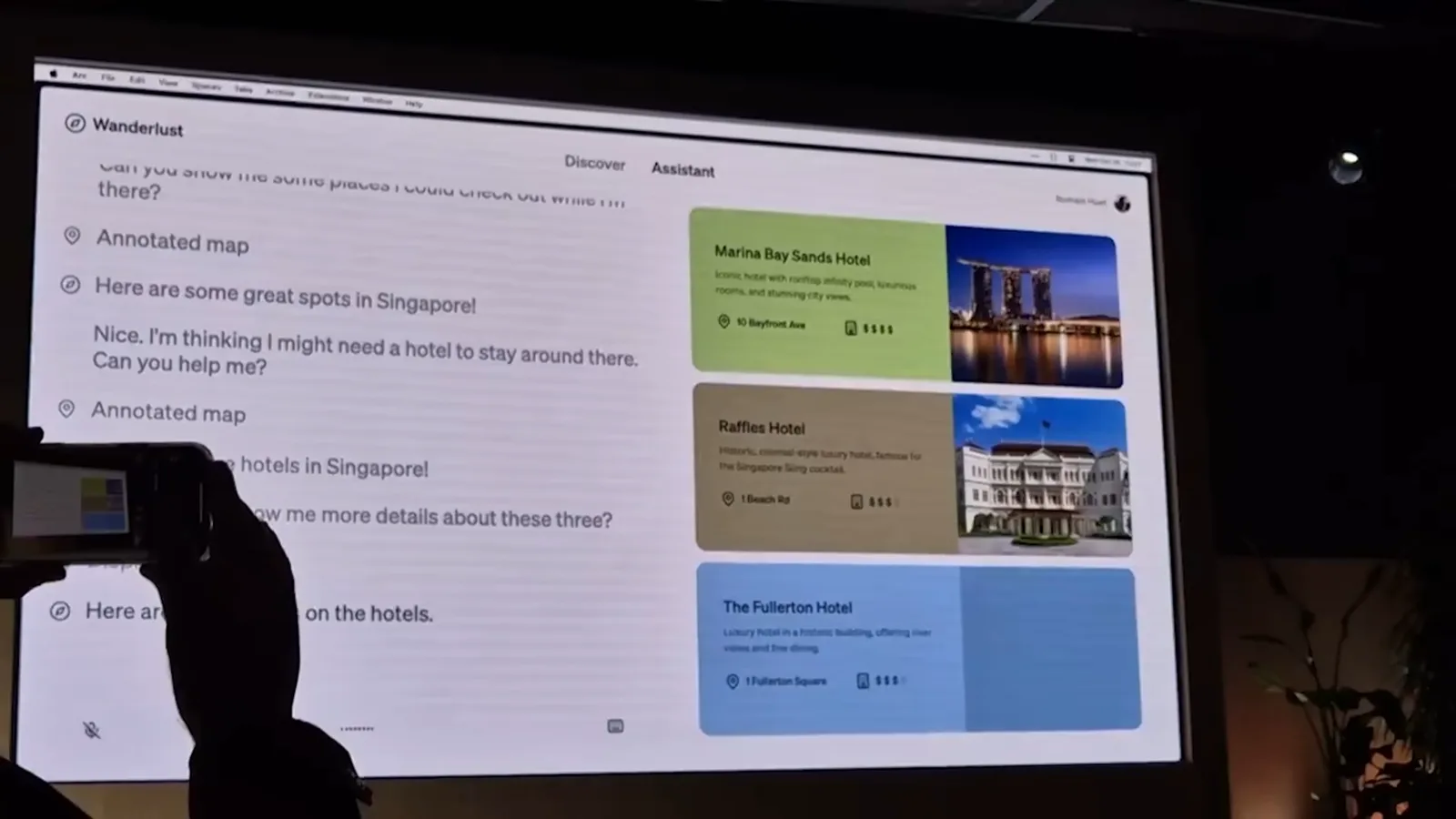
The tool integration lets the app place map pins, change the view and display information. This is a demonstration of an application built around voice and tool calls; its success in this staged setting is not a guarantee that real travel information or every action will be correct.
The presenter changes the setting back to London near The Brewery on Chiswell Street and asks for nearby pie shops for the audience. The app displays three options. The presenter explicitly notes that the second, Ilan’s Posh Pies, is a fictional demo location, even though the other two are real.
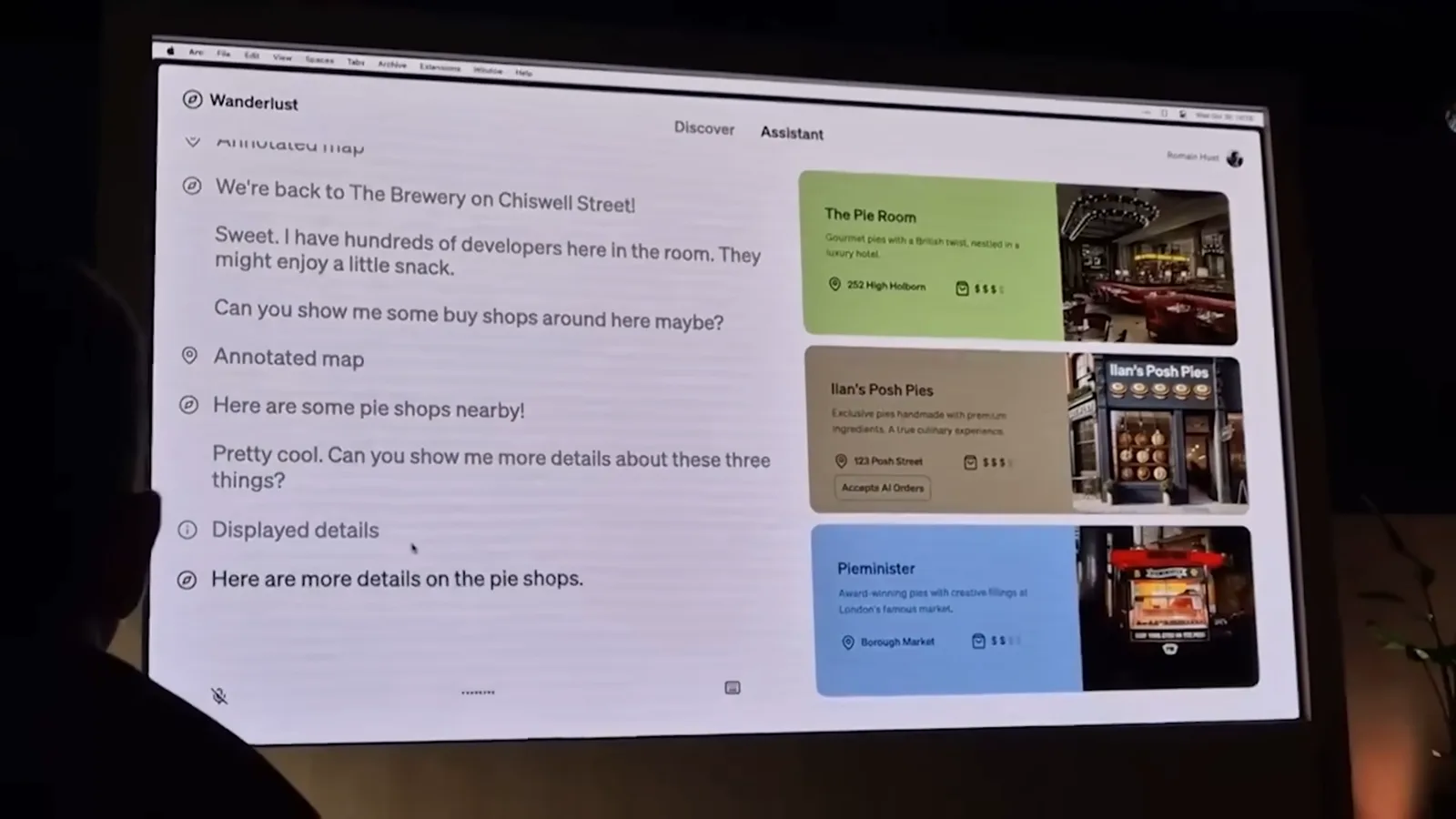
To extend the demonstration beyond the interface, the team connects the Realtime API to Twilio phone calling. A colleague plays the shop representative. The presenter asks the assistant to arrange about 200 pies, split between meat and vegetarian options, and keep the budget under £1,000.
During the staged call, the assistant asks about available pies and the price of 100 meat and 100 vegetarian pies. The shop initially quotes about £1,200, then agrees to £1,000 in exchange for being featured at the event. That reaches the stated £1,000 limit rather than falling strictly below it.
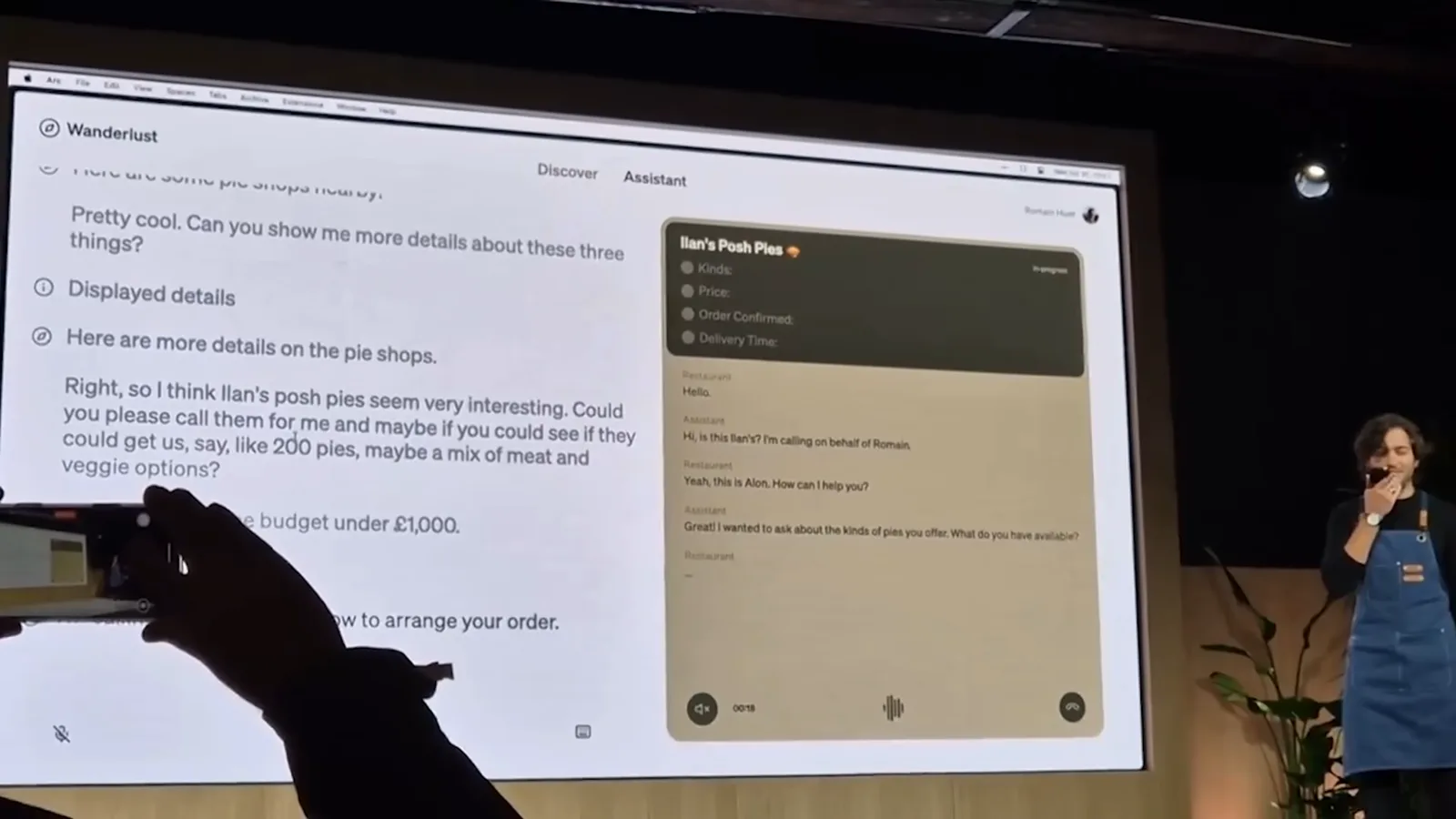
The call continues to a delivery arrangement near the venue. The exchange illustrates how an application can connect a spoken assistant to a telephone service and a human counterpart; it is a scripted demo setting with a fictional business, not evidence of a real commercial order.
A voice-driven lesson
A presenter asks about the solar system while the interface displays planets and a chart. Berman sees potential for interactive education.
A second demonstration uses a voice interface to explore the solar system. The presenter asks for the largest planet, and the assistant identifies Jupiter. The conversation then moves to Earth and its characteristics, while the interface changes what is displayed.
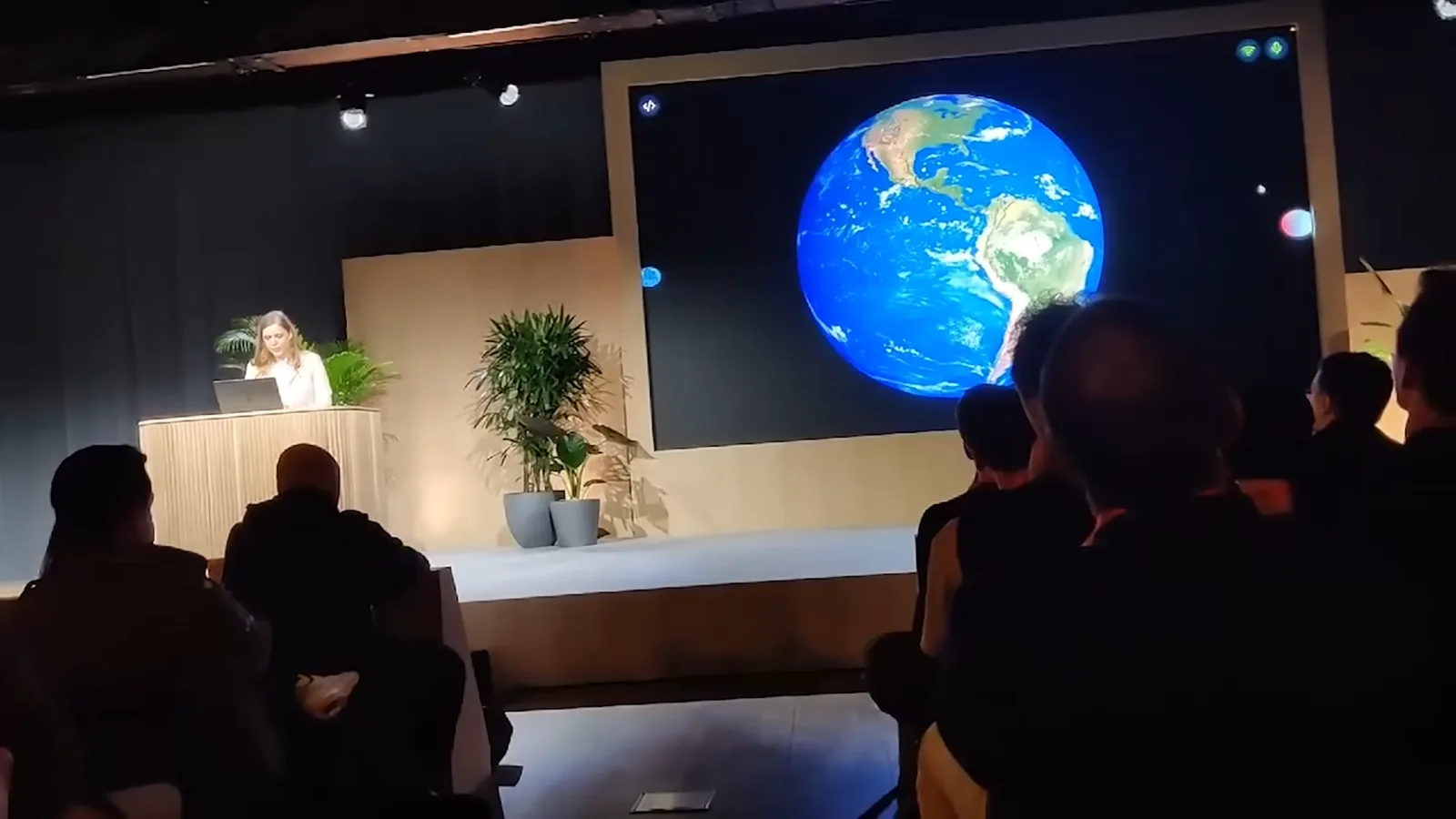
Asked about the balance of land and water, the assistant gives approximately 29% land and 71% water and displays a pie chart. The presenter then asks about Mars and its volcanoes, prompting a response about Olympus Mons and a comparison with other large volcanoes.
I see this kind of responsive dialogue and visualization as a promising direction for education. I describe the content as dynamically generated rather than predefined, although the clip alone does not establish which parts were generated or prebuilt. Educational answers and graphics should still be checked for accuracy.
Voices, cached inputs and o1 availability
Berman reports 2024 API updates and the status of o1-preview. Those product details are historical.
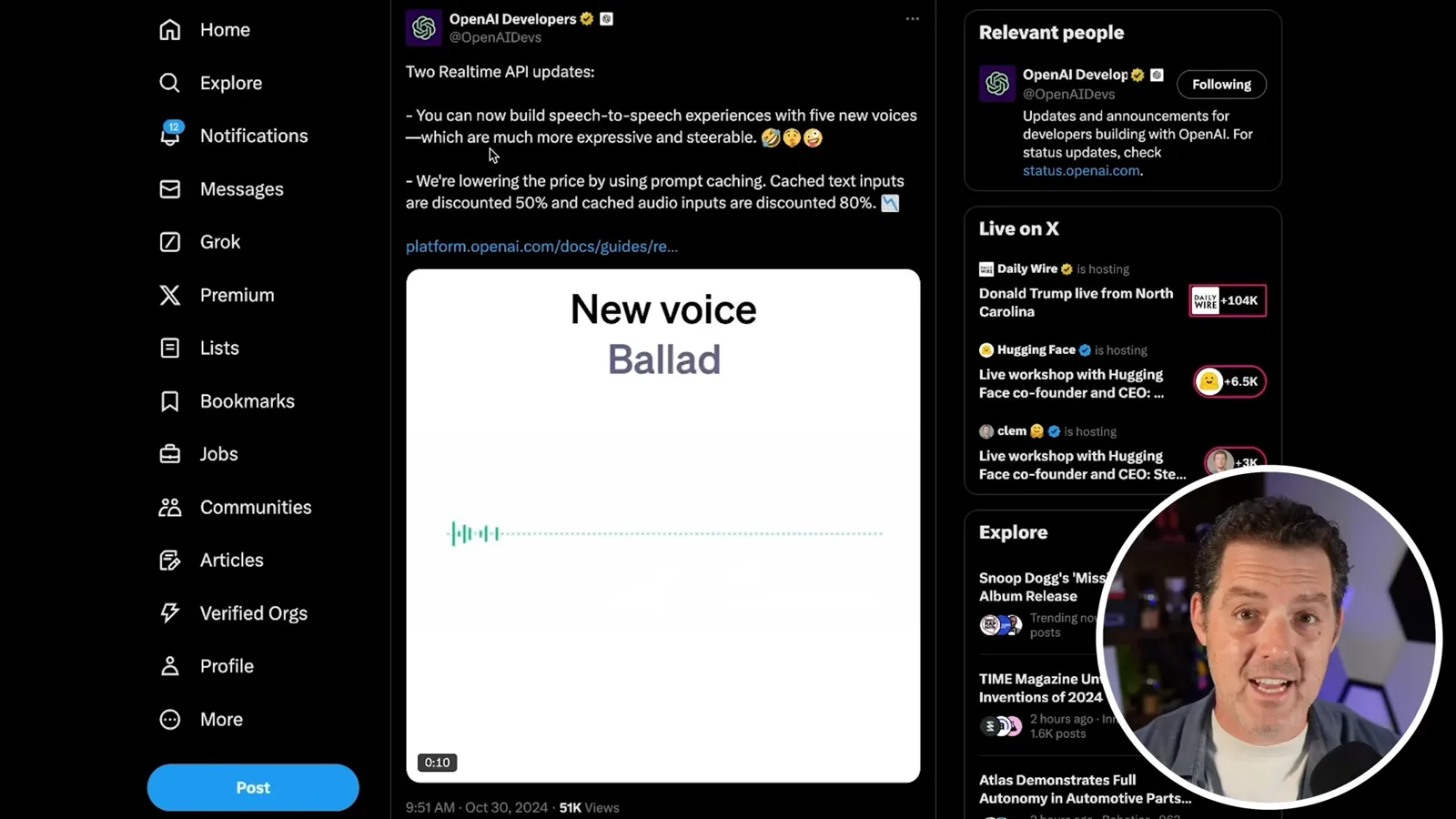
OpenAI also announced five new voices and prompt-caching discounts: at that time, cached text inputs were discounted 50% and cached audio inputs 80%. These figures describe the October 2024 update, not current rates; OpenAI’s later documentation should be consulted for current pricing.
Finally, I report that DevDay audience members were offered o1-preview, while OpenAI product leader Olivier Godement said the full o1 was still being developed. My suggestion that the audience access might reflect European availability was speculation. OpenAI later released an improved o1, and its current o1 page says o1-preview and o1-mini have been retired from the API and o1 is deprecated.
Sur la même chaîne
 34:21EN
 Matthew Berman· 27 oct. 2026Matthew Berman Examines Anthropic’s IPO Filing, AI Growth and GovernanceMatthew Berman, Sam Altman · Forward FutureThe presenter reviews the S-1’s financial metrics, compute strategy and voting structure while questioning the tension between rapid AI development and safety.
 0:26ENMatthew Berman· 25 oct. 2026Sam Altman on Human Values and Problem-Solving in an AI WorldSam Altman · OpenAIIn a short interview excerpt, Altman considers the enjoyment of solving hard problems and the human role in interpreting results.
 0:36ENMatthew Berman· 25 oct. 2026Kimi K3.1 and a Rubik’s Cube Solver DemonstrationMatthew Berman · Forward FutureMatthew Berman shows a scrambled virtual cube being solved and gives the Kimi K3.1 test a favorable assessment.
 0:21ENMatthew Berman· 24 oct. 2026An AI-Generated Kimi Benchmark Chart Used Invented ScoresMatthew Berman · Forward FutureMatthew Berman asks for a graph of Kimi K3.1 Pro benchmarks, then discovers that the displayed figures are illustrative placeholders.
 25:50ENMatthew Berman· 24 oct. 2026Kimi K3.1 Pro Tested: Strong 3D Demos, Uneven Results and Competitive PricingMatthew Berman · Forward FutureMatthew Berman tests the open-weight model on coding, 3D rendering and visual explanations, then compares benchmark results and prices.
 32:20ENMatthew Berman· 23 oct. 2026Who Is Local AI For? The Costs, Trade-offs and a Hybrid FutureMatthew Berman · Forward FutureMatthew Berman weighs data control and independence against hardware cost, setup complexity and inference speed.