En 30 secondes
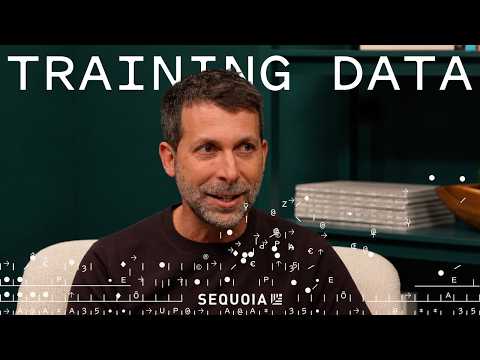
When GitHub’s Copilot preview first reported that 25% of Python in enabled files was coming from the model, the team sent engineering back to re-check the telemetry — nobody believed the number. Four years later the product has more than 1.8 million paid subscribers across 50,000 organizations, and GitHub CEO Thomas Dohmke, speaking with Sequoia’s Stephanie Zhan and Sonya Huang, still describes it as an accident that worked because it met developers in the editor they already used. He wants the same stack — not a GitHub-trained foundation model — to push software literacy toward a billion people, while Autofix, Copilot Workspace, and a culture of radical focus keep the company moving like a startup inside Microsoft.
- 1Copilot was not in the acquisition thesis. A short AI paragraph in the 2018 GitHub deal was a moonshot footnote; the product came from a June 2020 Zoom call where someone typed into GPT-3 and watched it emit real syntax.
- 2The first preview metric — 25% of Python in enabled files written by the model — was so high that GitHub sent the team back to verify the telemetry. By Dohmke’s first CEO keynote in June 2022 it was 40%, and he forecast 80% within five years.
- 3Copilot won by being unobtrusive: it lives in the editor developers already use, the way a phone keyboard predicts the next word. GitHub gave OpenAI no special data access — just the same public code any startup can pull from the API or from archives.
- 4A model, Dohmke argues, is just another layer in a stack GitHub never built alone. Hardware, Linux, Docker, Kubernetes, and now GPT sit with partners; that division of labor is why Copilot could ride GPT-3 to GPT-4o on Azure inference close enough to France for autocomplete to feel instant.
- 5Developers who get past the first week of skepticism almost never want to work without it. The metric Dohmke is proudest of is not revenue but happiness: less boilerplate, less mental energy, more satisfaction — plus 1.8 million paid seats and 50,000 organizations.
- 6An agent and a copilot are the same loop. Autocomplete already sends every keystroke to a model; Autofix burns down 75–80% of some customers’ open security alerts instead of pointing at the dirt like a Roomba that refuses to vacuum.
Lire la transcription complète par chapitre
A geography-lab computer in East Berlin is still the through-line of GitHub’s CEO
On Sequoia’s *Training Data*, Stephanie Zhan and Sonya Huang sit down with GitHub CEO Thomas Dohmke, whose public ambition is a world of a billion developers and agents that run the whole workflow, including code security. He does not tell it as an American-dream speech. He describes a normal life — a house, a wife, two kids — and a passion for software that started before the Berlin Wall came down. At eleven, in East Germany, he could not buy a machine, but the school geography lab had one. He and a friend learned that you had to code even to load a program. After the wall fell he bought a Commodore 64, then a 386 DX-40, and spent his teenage years writing software.
In the late 1990s he built insurance software for a market where most agents still had no software at all — some on mainframes, many still on paper. He moved to southern Germany to write code for Mercedes, then started the company Microsoft later acquired, which is how he landed in the United States. What still delights him is how little capital software takes, and how easily you can throw a mistake away and start over. That same itch, the hosts note, shows up at home with robotic lawn mowers. As GitHub’s CEO it shows up as a job he actually wants: building tools for developers, putting them first, and talking to them in Silicon Valley every week.
The path to that job ran through the 2018 acquisition. Dohmke was then a product manager at Microsoft reporting to Nat Friedman, who ran mobile developer tools and wanted GitHub inside the company. Friedman and a small group worked out how to pitch Satya Nadella and the board. The deal was announced on June 4, 2018; Dohmke became integration manager, the person who runs around legal, HR, finance, product, and engineering until regulators and a “day zero” in October actually happen. That is how he ended up at GitHub and, later, in the CEO chair. The original thesis, he says, saw a two-sided product — home of open source on one side, startups and enterprises on the other — that companies wanted because open source is boundary-less: you often know a handle, not a real name, and you do not sit in an org chart. There was much more to build, from GitHub Actions to, eventually, Copilot. AI was a short paragraph in the acquisition paper. It read like a moonshot, not a product plan.
Copilot began on a lockdown Zoom call, and the first metric was too high to believe
What actually happened, Dohmke says, is mid-2020. Transformer models had been a paper for a few years; GPT-3 was about to launch, GitHub had early access, and everyone was at home. On a June call, team member Oege de Moor started typing into the model while colleagues watched. Someone asked the obvious question: can we prompt it to write code — proper code? That was the first aha. It emitted real syntax. They tried other languages, found flaws, and turned the Zoom into a research program. Staff and principal engineers submitted coding exercises. They pulled Python functions from public GitHub repos. They fine-tuned GPT-3 with OpenAI. By August the model solved 92% of the exercises and 52% of the extracted Python bodies. The lower number was the more interesting one: interview puzzles are specified; real functions are not.
The second confidence moment was internal. Rolled out to GitHub engineers in early 2021, Copilot came back with an NPS in the 70s — rare for developer tools, in a population whose motto is don’t touch the running system and whose virtual desks are as curated as their physical ones. Then came the preview metric: in files where it was on, the model was writing 25% of the Python. Leadership sent the team back to verify the telemetry. It could not be true. It was. In June 2022, Dohmke’s first keynote as CEO, he said it was writing 40% and predicted 80% within five years in those enabled files. Nobody had whiteboxed “Copilot is the next platform.” The model proved itself, usage compounded, and a company whose backlog always feels longer than Amazon’s delivery window had an intrinsic motive: make writing software joyful again, while compliance, security, accessibility, privacy, the EU AI Act, and the Digital Markets Act keep adding tickets.
The product won by meeting developers in the editor — not by owning the training set
A host asks what made Copilot so good, and floats the idea that GitHub’s public and proprietary code was the secret. Dohmke points somewhere else. The original product was autocomplete in the editor you already lived in: next line, multiple lines, a bubble-sort or prime-number demo from a comment or a method declaration. The model had to be good enough, and OpenAI fine-tuned it on publicly available GitHub source. GitHub did not give OpenAI special access. OpenAI got the code the way any startup does now — the API, or archive programs such as the Internet Archive and Software Heritage, with which GitHub has a partnership to stream open source “until the end of time.” The decisive ingredient was UX: meet developers where they are and make the day better, the way a phone keyboard predicts the next word and a photo library finds license plates without anyone calling it AI.
Even the name was an inside joke that landed. Chief architect Alex Graveley suggested “Copilot” because his boss, Nat Friedman, is a hobby pilot. Friedman liked it. Asked what he would do differently in 2020 and 2021, Dohmke reaches for the founder cliché that is also a confession: in hindsight you can always move faster and be more convicted. They kept the team intentionally small. The original staffers were about three principal researchers, which he calls a bit of a cheat — OpenAI and several Microsoft teams on research, training, and inference were in the partnership. The paper had three authors and about a hundred people in the credits. GitHub itself moved from a stub of five to ten. Today the core is larger, but the spirit lives in GitHub Next, an internal incubator whose key result is to throw most ideas away.
A model is just a new layer in a stack GitHub never built by itself
Was it scary to let another company own the “brain” of the AI application? Not to Dohmke. Some people inside wanted GitHub’s own models. He was unmoved. GitHub was born in the cloud and, to his memory, never built hardware; even when it had metal in data centers, it did not build the buildings, CPUs, memory, or network. Higher in the stack it sits on open source, like most software. GitHub loves a statistic: 90% of the stack of most applications — even closed-source ones — is community work, from Linux to Docker and Kubernetes to thousands of libraries. The model slots in as another layer. Microsoft talks about a Copilot stack: hardware, model, infrastructure and filtering, the application, then extensibility. Microsoft has a hand in all of it — Copilot+ PCs with a custom chip, its own Phi-3 models, OpenAI partnership models, Mistral and Llama on Azure AI, a large cloud, responsible-AI practice, and applications of its own.
That split is why they could move fast: OpenAI iterating from GPT-3 and Codex through 3.5, ChatGPT, GPT-4, and GPT-4o, Microsoft building training supercomputers and a global inference network so a developer in France hits a nearby Azure GPU and autocomplete stays low-latency. Would GitHub build its own foundation models? Engineers always want to. The machine-learning team predates the acquisition. They have fine-tuned, including with OpenAI and Azure, and they are working with customers who want models customized on the code in their own repositories. Never say never. Today they are happy with the models they have, and they watch everyone, not only OpenAI.
The metric he is proudest of is not a revenue slide. It is developer happiness. After the adoption hurdle, surveys — GitHub’s and customers’ — say people feel more fulfilled, more satisfied, happier, using less mental energy, writing less boilerplate. Talk to anyone who has used Copilot for a while, he says, and they no longer want to work without it. Productivity numbers matter to developers and to their bosses, but the emotional one is what he keeps. On the commercial side: more than 1.8 million paid subscribers and more than 50,000 organizations. Walking into Sequoia, it still feels like a high-growth startup. The 25% figure remains the launch surprise. A short June 2021 blog post and a page of animations looked like a tech demo until people tried it and realized the model had the rest of the file, adjacent tabs, their style, and the libraries in an import statement — more project context than they thought GPT-3 could hold. Chat later added English, German, Brazilian Portuguese, Hindi demos in India, even voice in VS Code. His kids no longer bring him Python bugs. “Go find your own bug.” Natural language lowers the door. Buying a guitar does not make you Keith Richards, and every touring band still rehearses. Copilot is another tool in the box, not a substitute for the craft.
Kids should still learn to code, and an agent is just a copilot in a loop
Should you still teach children to program? Dohmke is emphatic. Human language is not deterministic — the same sentence can mean several things, and a German answering an English negative question will pick the “wrong” yes or no. Code can describe machine behavior precisely. It is an abstraction on top of assembly on top of a CPU or GPU instruction set. As long as the chip wants a deterministic instruction set, something has to convert to code. We are moving up the stack and spreading who gets to mean things, which is powerful, but the conversion does not vanish. Kids should learn; the way they learn will change.
The 2024 product cadence — Copilot X, Copilot Enterprise, security Autofix, Copilot Workspace — is, he says, a mindset: momentum is energy, and in the AI era you iterate fast. Copilot X means AI in every part of the lifecycle, not only the editor: a commit-message icon that writes a neutral description of the last hour of work, help in the debugger, help wherever the developer already is. Copilot Enterprise, at a higher price, customizes the assistant on a company’s institutional knowledge. “Enterprise” here is any team more than a few weeks old. The pain it attacks is onboarding anxiety — the fear of asking Steph too many dumb questions on day one. Ask the AI why the code is written this way instead.
Agents versus copilots is, for him, a non-distinction that will disappoint the hype cycle. An agent loops with a model to finish a task. A copilot is an agent of agents with several features. Autocomplete is already an agent: every keystroke, plus editor context, goes to inference; the best prediction comes back. More of those loops will take over more work. The one he is most excited about is Autofix. Classic scanners are a Roomba that only shows you the dirt — SQL injection, cross-site scripting — and leaves you to vacuum. Autofix proposes the patch. With some customers it burns through 75 to 80% of open alerts. If you have none right now, he bets you will by Monday. The rest of the magic-wand roadmap is more of the same building blocks. Copilot Workspace runs three agents from idea to pull request: a spec agent that will tell a PM the idea does not fit in a sentence and needs to be an epic; a plan agent that finds the files, including the config you have not touched in a year; and an implement agent that writes the change. The human stays in charge and can edit every intermediate in natural language. Next might be a story-pointing agent, or one that builds, runs, and debugs what the last agent just broke. More Lego piece types, including the weird ones you need for a NASA rocket.
A billion casual developers still leaves the hard part to human systems thinkers
GitHub already hosts more than engineers. Hubbers run the company on GitHub, including legal documents, because version history beats redlines in Word. The larger ambition was in a TED talk: one billion software developers. That is not one billion professionals, though demand is still high. It is democratizing little apps, scripts, and natural-language control of the phone — about 10% of a planet he puts at ten billion people by 2030. He wants the next big tech company to come from India or Brazil, not only the U.S. West Coast. The creative world he sketches is one where a kid is not stuck if their parents and teachers are not technical. Crayons in restaurants made drawing accessible; coding should feel the same. Physicists, the first black-hole image, a Mars helicopter, banks, energy firms, farmers picking seed from soil data — every company is already a software company. He would like an agent that downloads the tax PDFs and extracts the numbers. After nearly thirty years in the profession he no longer has evenings to code, and the first twenty minutes of a weekend hour go to updating whatever bit-rotten. Bring the fun back, like a table of unsorted Lego with no instructions.
When will coding agents match the average professional, or the mythical 10x engineer? The trick, he says, is “as good as.” Prompted well, with the right context, models on average already write better code than the average developer, because they know more of the space. Students grind a hundred lines of binary-to-decimal; Copilot returns one call to an open-source library. The model is not creative and does not hold all the constraints. Software is decomposing a hard problem into blocks whose size keeps growing — next token, then a command, then many lines, then whole files — and at every cut you still choose a database, an infrastructure vendor, a serverless bet, from a menu of thousands of options Sequoia itself has funded. The engineer is the systems thinker making those calls. Humans have built houses for thousands of years. Building a house is still not a solved problem.
Will creativity and systems thinking get baked into Copilot? Never-say-never is dangerous on a podcast, he jokes — they might invite him back in three years. He has not seen the research. His kids speak German at home and English outside, with no German accent in English and no English accent in German, by mimicking the people around them. That kind of learning, he says, still sits far beyond transformers, diffusion models, and today’s image-recognition stacks. Adding a “sentience piece” remains to be seen. He is not seeing it, and he has not seen research that says it is coming soon. In the lightning round he will still say a new architecture beyond transformers arrives within five years — of course — because other architectures existed before, and a new one need not replace the old, any more than a GPU retired the CPU in your phone. That is oxygen for builders who will have to rework the stack.
SourceForge was the elephant once too — and GitHub Next’s job is to throw ideas away
AI code generation is the hottest category, and Copilot plus VS Code plus Workspace plus Autofix looks like the elephant. Dohmke would still found a developer-tools company. When GitHub started, SourceForge held the open-source world; then Git arrived, GitHub’s founders built on Git, and the elephant was gone. A race with one team is not a Super Bowl anyone watches. The whitespace he actually names is legacy modernization. COBOL still runs on mainframes behind credit cards, bank accounts, and Wall Street. He has not met a bank that does not. The authors retired decades ago. Copilot can explain sixty-year-old code and write the unit tests nobody wrote in the 1960s — before hard drives, before personal computers. A one-click rewrite is not here, for COBOL or for the large PHP and Java estates that could still be made more efficient. GitHub, in his metaphor, is one planet in a universe that also holds JFrog (a recently announced partnership on artifact and container scanning), Figma, Vercel, npm, NuGet, and “best of breed” tools developers will keep picking for themselves.
Would GitHub build its own agentic models from scratch? As CEO he says they have always done both: primitives they consider core, and partners for the rest of the supply chain. Advice for founders is focus — whiteboards have too much space — plus product-led growth among excited developers before enterprise logos, because the feedback loop is faster, and thinking on a ten-year horizon so today’s thin wrapper on a model does not get commoditized tomorrow. Advice for incumbents is blunter. Sonya cites Satya saying GitHub is growing 40% year over year; Dohmke corrects her: Nadella said 45%, all-up on the revenue rec. A thousand engineers, or fifty thousand, does not mean you can do it all. Larger teams lose the unit of size that shows friction. Strategy is knowing why you can charge, not adding three features everyone else can copy. Almost nothing on the GitHub platform could not be rebuilt with enough money and time. The culture, the obsession with developers, and the focus are what is hard to mimic.
You cannot yank half the company onto AI without breaking promises already on the enterprise roadmap. The tactic is a tiger team — GitHub Next — that they thought would work five years out and that turned out to be about six months ahead. Hand off to mainline engineering, put old bets in keep-the-lights-on, or shut them down. That goodbye is the painful part of a pivot, for startups and giants alike; small companies just have a stronger forcing function. Ideas start with a Hubber, hack weeks, 20% time. Next runs demos, not memos: stitch React components or Figma, even easier with Copilot, then watch the flywheel. Are people trying it and churning, or sending more ideas? That, plus commercial reality, is keep-or-kill. Outside code, he wants travel agents that know spring break and passport numbers within a year, natural language unlocking world knowledge in about five, and physical AI — hotel keys, dishwashers, chores — in ten, well before fully self-driving cars. He admires founders who obsess about a problem, not the model: biotech aiming at diabetes or cancer, climate, big ideas GitHub only enables a small part of. Lightning round, mostly one word: someone disrupts NVIDIA in five to ten years — yes. SWE-bench agents at 50% — 2025; at 90% — 2028, and he immediately says that last answer was too pessimistic. Open or closed models — both. Where value accrues — across the whole stack. Systems thinking in the models in five years — maybe. A post-transformer consensus architecture — of course yes.
Sur la même chaîne
 1:08:02EN
 Sequoia Capital· 13 oct. 2026PodcastAlphaGo Took Two Years. AlphaZero Took Hours. Silver Is Making the Same Bet on SuperintelligenceDavid Silver and Lasse Espeholt left DeepMind to build Ineffable Intelligence, a twenty-person lab that wants a superlearner to discover science, math, and language from experience rather than from a pre-training run.
 1:04:26ENSequoia Capital· 6 oct. 2026PodcastAt 100,000 Accelerators, Something Fails Every HourGoogle AI infrastructure chief Amin Vahdat tells Sequoia's Sonya Huang why FLOPS is a vanity metric, why the TPU line split in two, and why he would rather wait on a utility than build his own gigawatt.
 1:05:21ENSequoia Capital· 15 sept. 2026PodcastThe Bridge From Model to Workflow Is a Trillion-Dollar BusinessBox CEO Aaron Levie argues that the money in this cycle sits in the messy gap between frontier models and real enterprise work — and that coding's overnight diffusion will not repeat for everyone else.
 52:27ENSequoia Capital· 1 sept. 2026PodcastAfter Two Dozen Police Departments Said No, They Built an Anti-Network-Effect AI CompanyA Wisconsin county had 300 gigabytes sitting on a cold case—and Peregrine's founders still refuse to take the credit.
 55:19ENSequoia Capital· 25 août 2026PodcastHuman Click Data Is a Bug: Rebuilding Search for a Web of AgentsParag Agrawal, former Twitter CEO and founder of Parallel Web Systems, argues that agents will query the web a thousand times more than people, and that both search infrastructure and the ad-supported internet have to be rebuilt for that customer.
 53:44ENSequoia Capital· 18 août 2026PodcastThe Biggest Bug in Today’s Models Is That the Weights Never ChangeTuring Award winner Rich Sutton and Khurram Javed founded Oak Lab to build agents that keep learning after they ship — and they call synthetic data a big mistake.