En 30 secondes
Replit product engineering leader Amol Jain describes three businesses reportedly built by non-coders, then walks Peter Yang through publishing a coaching-site prototype, scanning for security issues, testing payments and considering distribution. He also discusses internal tools and what app providers can offer beyond a model. Revenue and user figures are his reports, not independently verified results. The episode lists Riverside, Linear and Wispr Flow as sponsors.
- 1Treat startup metrics as reported anecdotesJain cites revenue and user figures for three businesses; the interview does not independently verify them or establish profit.
- 2Combine software with an advantageJain emphasizes domain expertise, audience, judgment and distribution as ways to create value.
- 3Move beyond the initial prototypeThe demo discusses hosting, security, payment testing and distribution as separate tasks.
- 4A scan is a check, not a guaranteeThe security discussion covers secrets, malicious dependencies and personal data; findings still require review and remediation.
- 5Internal tools can fit a specific workflowJain describes a sales-demo tool and an analytics interface built around Replit’s own needs.
- 6Application value extends beyond a modelJain argues that hosting, security, distribution and model selection can differentiate an app provider.
À retenir
- Jain reports strong early results for three founders, but the interview does not independently verify revenue, user counts or profitability.
- Domain knowledge, trust and an audience can matter as much as building an interface.
- A prototype still needs attention to hosting, security, payments and customer acquisition.
- Security scans can surface issues but cannot guarantee that an application is secure.
- Replit’s internal examples illustrate the trade-off between bespoke workflows and buying software, from the company’s perspective.
Lire le texte remanié, chapitre par chapitre
Three reported businesses
Jain shares examples and revenue figures for non-coding founders.
Replit product engineering leader Amol Jain joins Peter Yang to discuss businesses built by people without coding backgrounds, taking a prototype toward production, and the role of application companies as AI models improve. The episode lists Riverside, Linear and Wispr Flow as sponsors.
Jain describes Pep AI, a medication-tracking app built by a 22-year-old founder without previous coding experience. He reports $60,000 in first-month revenue and tens of thousands of active users. The interview does not independently verify those metrics or assess the app’s medical reliability.
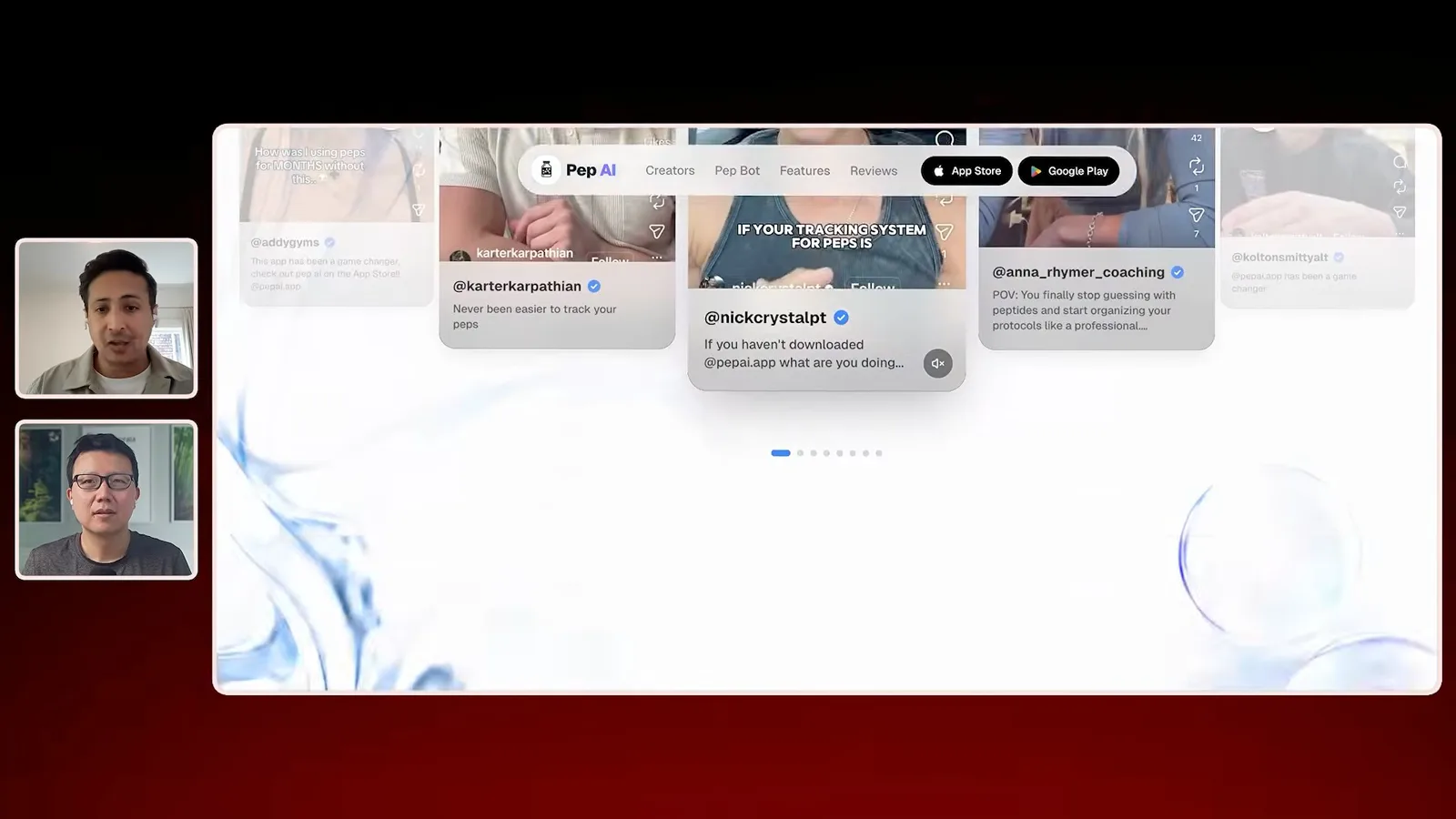
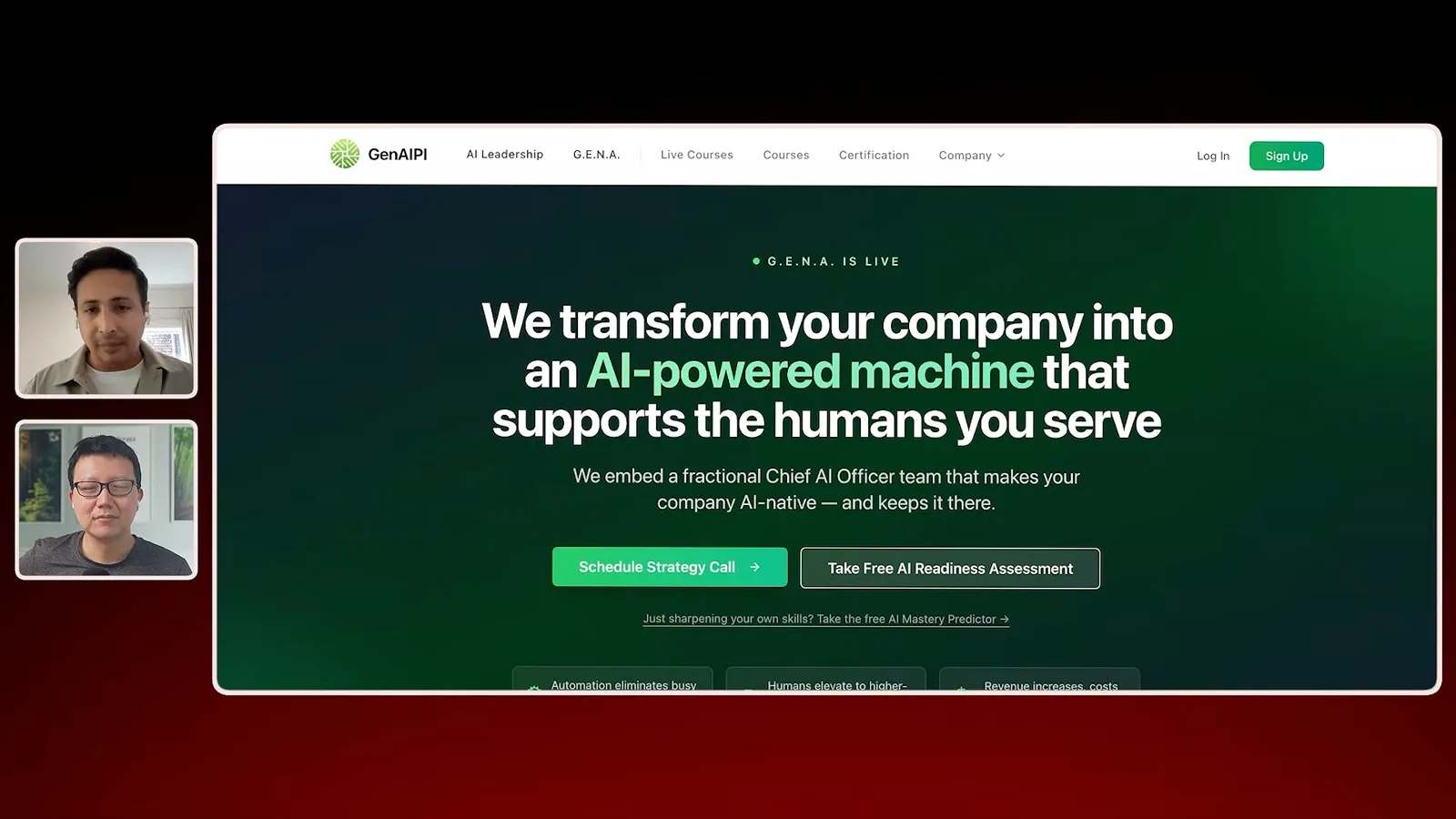
A second founder, John, reportedly received an agency quote above $100,000, built an AI proficiency platform in three days and reached more than $180,000 in revenue in two months. A third example, TryNearby, connects local businesses with creators; Jain reports it exceeded $100,000 in annual recurring revenue. These are guest-reported figures, not audited outcomes or profit figures.
Expertise and distribution
The speakers discuss what makes a product useful to a specific audience.
Jain argues that software production becoming easier makes domain knowledge, taste, trust and distribution more valuable. A business can serve a small audience rather than aiming for the largest possible market, but making a product alone does not establish demand.
From prototype to production
A coaching-site demonstration covers publishing, scanning, payments and SEO.
For a demonstration, Jain builds a product-management interview-coaching site using a rough brief and design exploration. He frames publication, security, payment and distribution as steps beyond a raw prototype. The demonstration is a product walkthrough, not proof that the hypothetical business has customers.
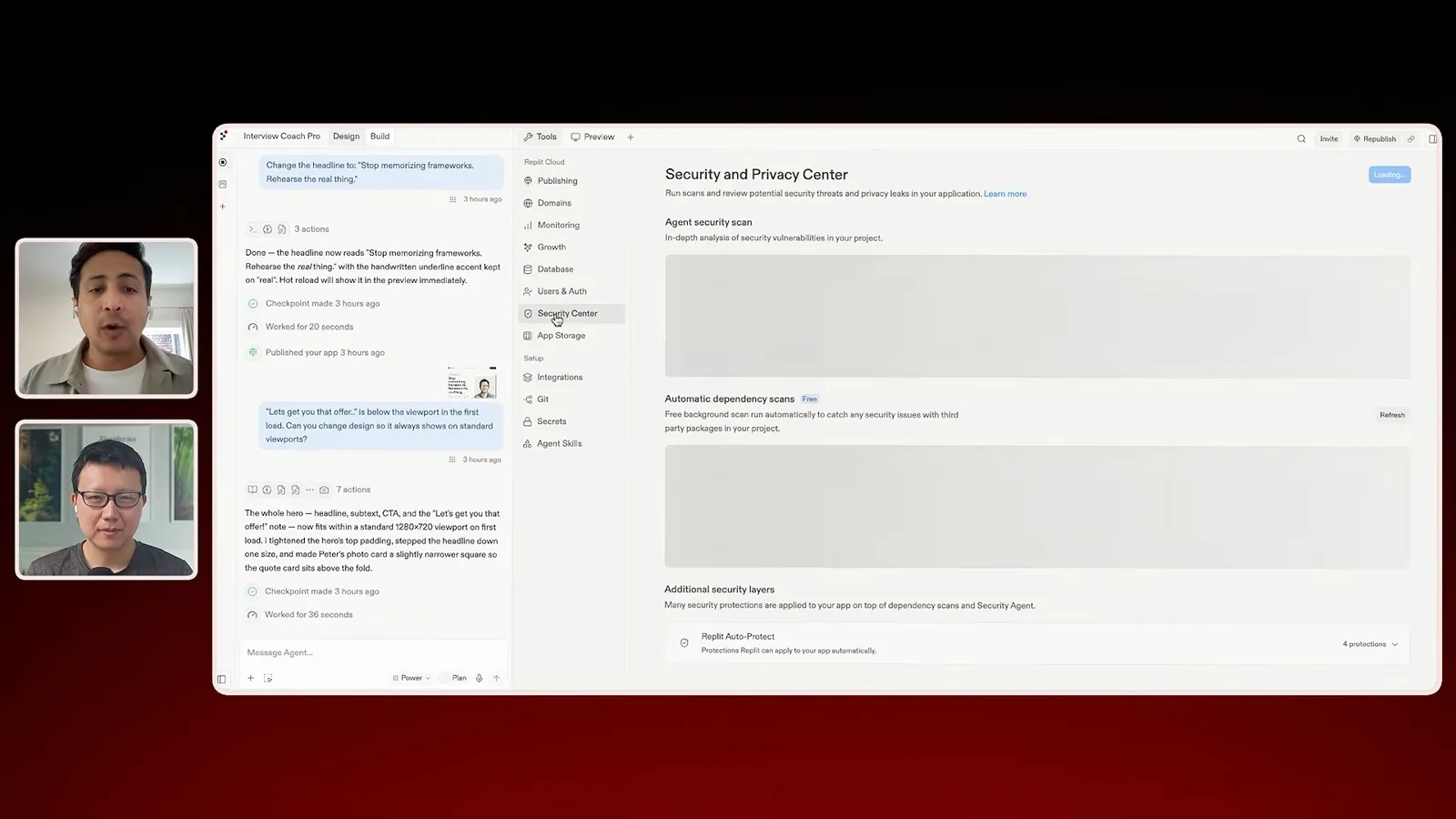
He discusses publishing and a custom domain, then shows Replit’s Security Center. He identifies exposed secrets, malicious packages and improper handling of personal data as examples of risks. He describes a scan and recurring checks; a scan can find issues but cannot guarantee an application is secure.
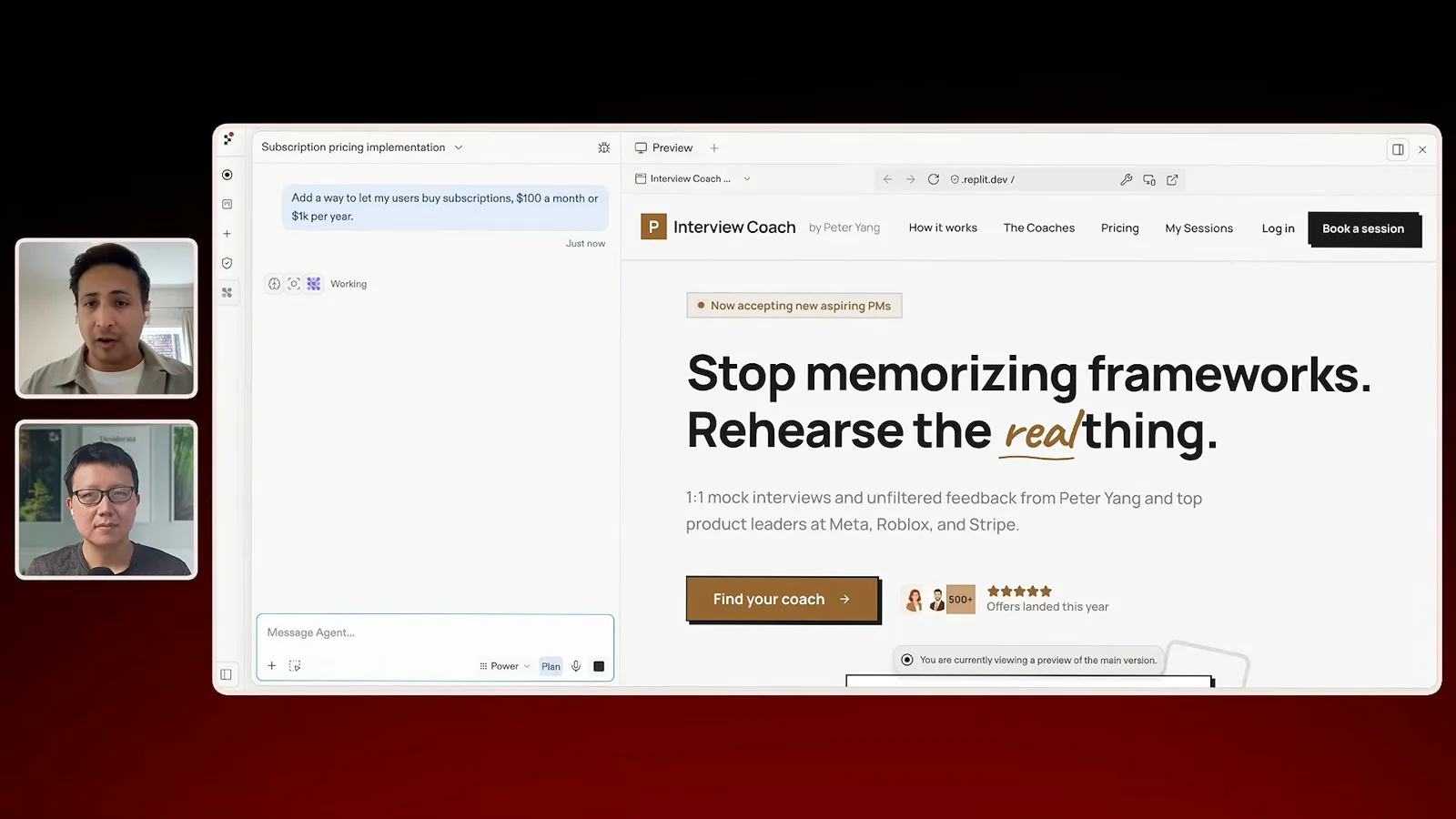
To test monetization, Jain asks the agent to add subscriptions. He says the integration creates a Stripe sandbox for testing, with further account and live-payment setup before accepting real payments. Testing a payment flow is distinct from proving that it works reliably for real customers.
For distribution, he demonstrates an SEO scan intended to improve discoverability and discusses future marketing tools. Yang emphasizes the value of an existing audience. Both describe possible approaches; neither search visibility nor revenue is guaranteed by running a scan.
Building internal tools
Jain describes sales-demo and analytics tools used inside Replit.
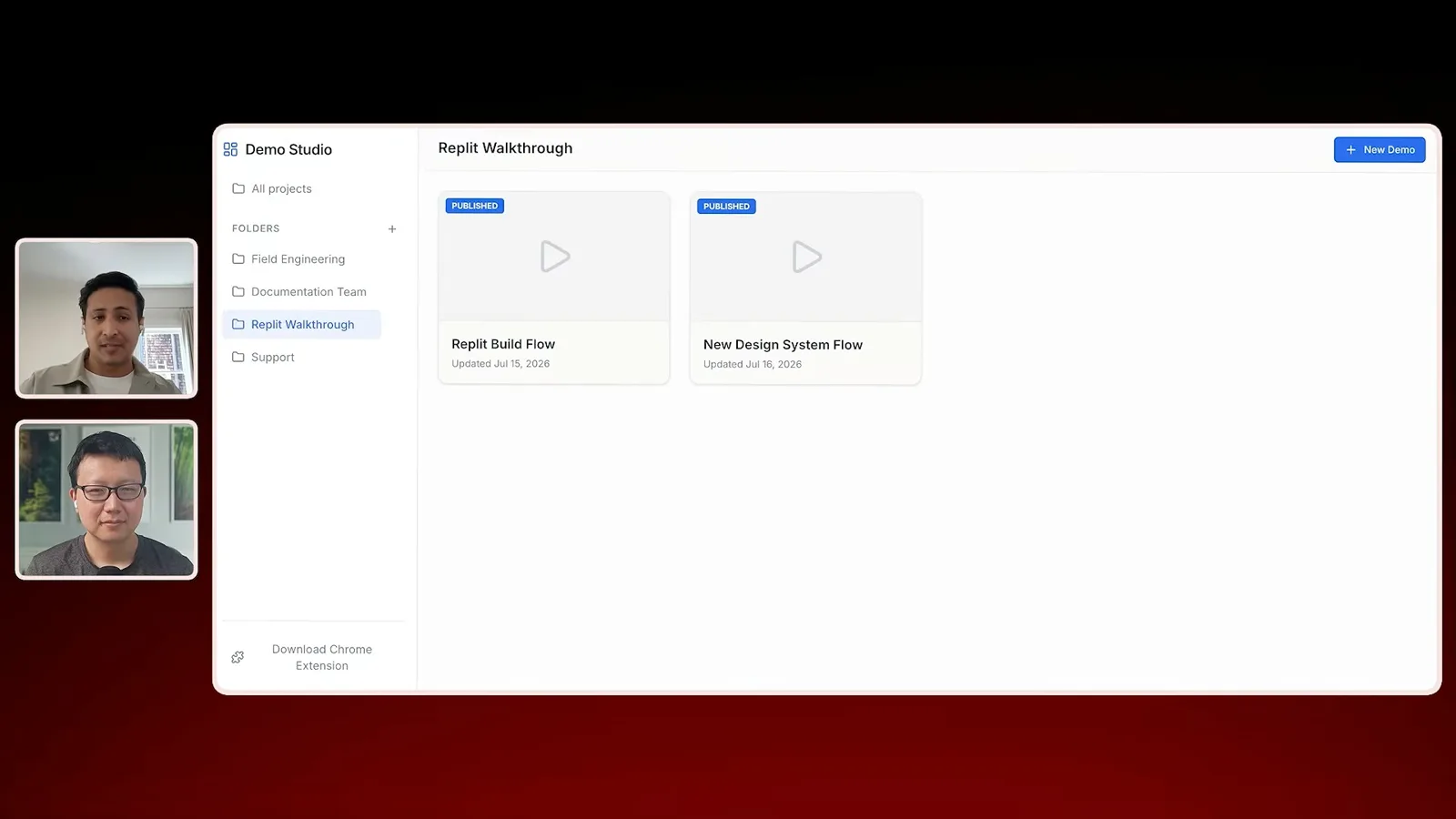
Jain says Replit builds some internal tools instead of buying third-party software. One example records product walkthroughs for repeatable sales demos; he says a non-coding revenue-operations employee built it and later added features for different audiences.
Another internal example is an analytics interface built over the company’s existing data. Jain says a data scientist created it and that it provides charts, funnels and retention views. His estimates of vendor savings and development effort are company anecdotes, not independently verified comparisons.
What software and application providers sell
The discussion turns to trust, data, infrastructure and model choice.
Asked which software will retain value, Jain points to trust, data, infrastructure, physical services and networks rather than code alone. He gives systems of record and payment infrastructure as examples. This is his view of the market, not a prediction established by the demonstrations.
On competition between model labs and application companies, Jain argues that hosting, security, distribution and model choice can differentiate an application. He also discusses using different models for different tasks and monitoring the return on AI spending. These are strategic opinions from an executive at an application provider.
The interview closes with Jain encouraging experimentation and entrepreneurship. The three business stories illustrate claimed possibilities, but results depend on the product, market, costs, safety and execution.
Sur la même chaîne
 46:40EN
 Peter Yang· 8 nov. 2026Podcast · 2 voixAshley Alexander: How AI Helps Me Care for My Parents With CancerInvité : Ashley Alexander · Anime : Peter YangA caregiver uses AI to prepare for appointments, organize records and ask better questions—while keeping doctors at the center of treatment.
 17:50ENPeter Yang· 4 nov. 2026PodcastPeter Yang’s Five Steps for Using AI to Help Care for His MotherYang uses a shared care brief and organized records to navigate appointments, while making time for family.
 15:03ENPeter Yang· 3 nov. 2026PodcastHow Peter Yang Used an AI Phone Agent to Negotiate His Internet BillAn AI call negotiated a lower price and faster service, but Yang still had to approve the change himself.
 33:09ENPeter Yang· 1 nov. 2026Podcast · 2 voixJaclyn Konzelmann: When AI Can Build More, Choose What Deserves to ExistInvité : Jaclyn Konzelmann · Anime : Peter YangGoogle Labs pairs short strategy documents with prototypes, user co-creation and lessons from experiments that end.
 13:05ENPeter Yang· 28 oct. 2026PodcastPeter Yang Tests Genie 4: Convincing Worlds, Unfinished GameplayFive live demonstrations show scenes that respond to prompts and sound, alongside inconsistent actions and limited game mechanics.
 1:06ENPeter Yang· 26 oct. 2026PodcastPeter Yang on Setting Up Payroll for a One-Person BusinessIn a paid partnership, Yang describes the paperwork he encountered and a payroll product integrated with a business account.