En 30 secondes
Range’s financial planners had no coding background, but they knew which client tasks they repeated and how to judge the results. Matt Ragone says the team turned its existing advice standards and examples into AI skills that draft analyses while planners work with other clients. Each client-facing result still requires a certified financial planner’s review. After six to eight months, he says, Range had 24 skills across the company, including 17 in planning; maintaining and reviewing them has become a new bottleneck.
- 1Draft work can proceed while a planner is on another callRagone says agents draft cash-flow, insurance and tax analyses, leaving a planner to review and adjust the result before delivery.
- 2The agent needs client data and the firm’s own advice standardsRange already had standardized recommendations across its planning team, giving the agent reference material beyond a generic prompt.
- 3Choose a repeated workflow before attempting a complex oneThe person who does the work can quickly judge whether the output is useful.
- 4Teach through real cases and explain the judgmentRagone adds examples and corrections, including why a particular item on a pay stub matters.
- 5A skill cannot send advice directly to clientsAt Range every skill’s output must be reviewed by a certified financial planner before delivery.
- 6Test five to ten cases and assign ownershipRagone includes edge cases, involves colleagues, and gives each shipped skill an owner and reviewer.
- 7Range built 24 skills, with 17 for financial planningAfter roughly six to eight months, the team is increasingly concerned with keeping those skills tested and up to date.
À retenir
- Start with a frequent, simple workflow whose output the practitioner can judge.
- Show real and edge cases, explaining why each judgment or source matters.
- Package the questions an agent must ask and the actions it must not take.
- Test on five to ten real cases and appoint an owner and reviewer after release.
- For client advice, Range requires a certified financial planner to review before anything is sent.
Lire le texte remanié, chapitre par chapitre
From chat assistance to parallel drafting
Range’s planners began with chatbots and moved to agents that draft work during client calls. Human review remains necessary.
Matt Ragone says the financial-planning team at Range built agents and skills it uses daily despite having no engineering or coding background. He offers its method to other teams whose domain experts are not programmers.
Ragone is a financial planner with about seven years in wealth management. At Range he leads AI adoption for the planning team and represents it on an AI Council, where people from different parts of the company share practices and reuse skills.
That cross-company exchange matters: a skill developed by member success might also help marketing. Range operates in a regulated business, so its financial advice affects real clients and review is not optional.
Initially, the team used AI as a chatbot to rewrite emails, check tax-code changes and parse long documents. It saved time, but planners still had to perform the work manually.
Typing speed and attention were bottlenecks. During a 30- or 45-minute call with one client, a planner could not simultaneously complete another client’s work.
Ragone says Claude Cowork changed that workflow: while he is on a call, an agent can draft a cash-flow analysis, insurance analysis or tax review. When the call ends, he reviews and adjusts the draft before it goes to the client.
Build on client data and existing standards
An agent needs to find relevant client information and follow the firm’s approach. Range’s earlier process standardization gave it a starting point.
Two things were needed beyond a prompt. First, the agent had to find the right client information in Range’s systems. Members connect financial accounts and documents, so the agent must distinguish relevant and incorrect data when pulling material.
Second, the agent had to understand how Range delivers advice rather than produce generic recommendations. Its approach may be more conservative than a model’s default. The roughly 20-person planning team had already standardized insurance, investment and retirement recommendations.
Those standards lived in shared Notion pages and Google Docs. Instead of recreating the process, planners could instruct the agent to reference the relevant documents as part of its review.
Pick, teach and package a skill
Ragone chooses frequent work, demonstrates real cases and encodes questions and limits. Practitioners contribute the judgment.
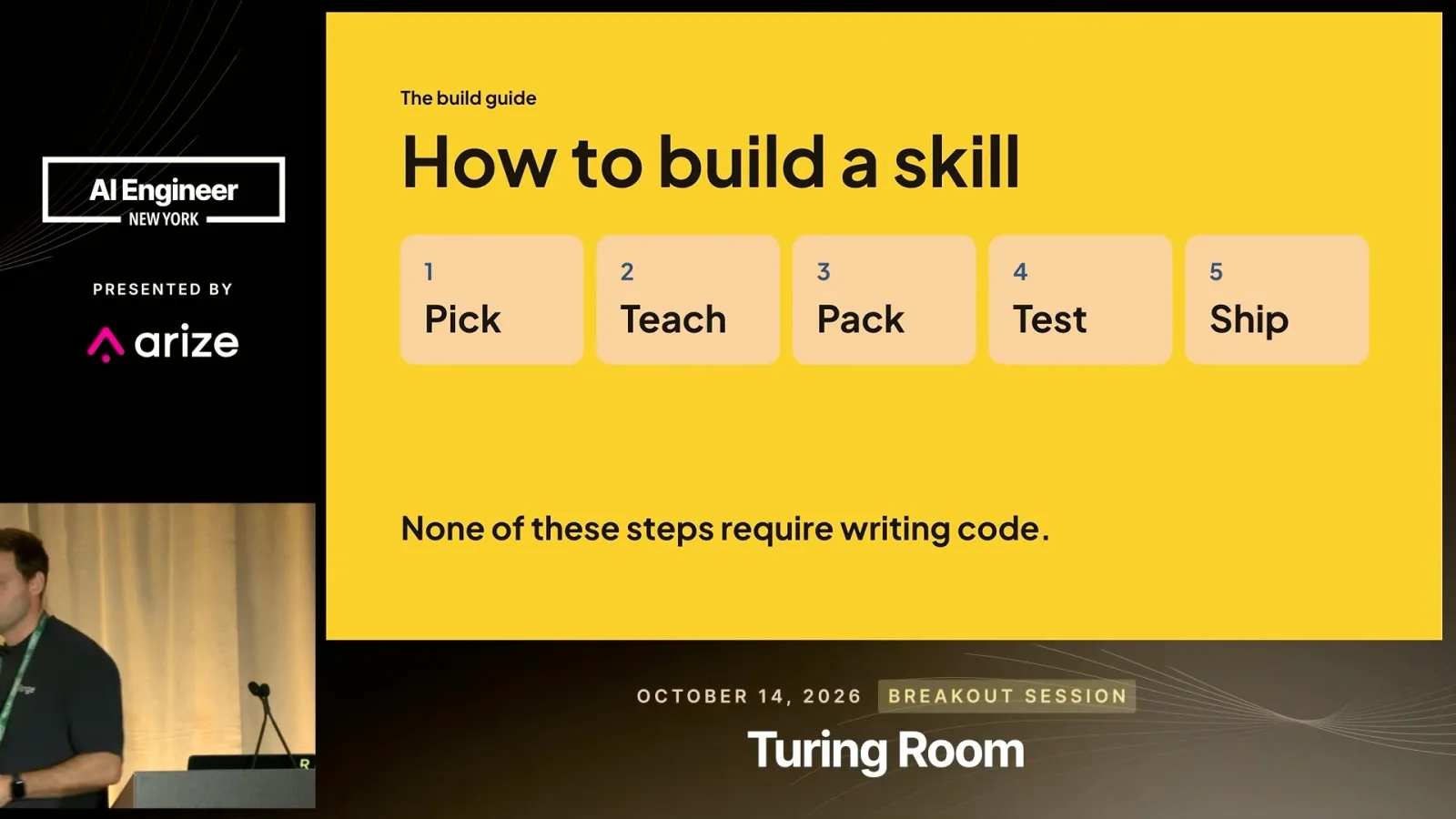
Ragone summarizes the build process in five steps: pick, teach, pack, test and ship. He says none requires the planner to write code, but each requires knowing the work well.
First, pick a workflow repeated daily or weekly. Ragone advises against starting with the flashiest or most complex task; choose something time-consuming but straightforward to automate, where the practitioner can immediately recognize good or bad output.
For Range, candidates included cash-flow analyses, insurance reviews and other recommendations that previously required considerable manual effort.
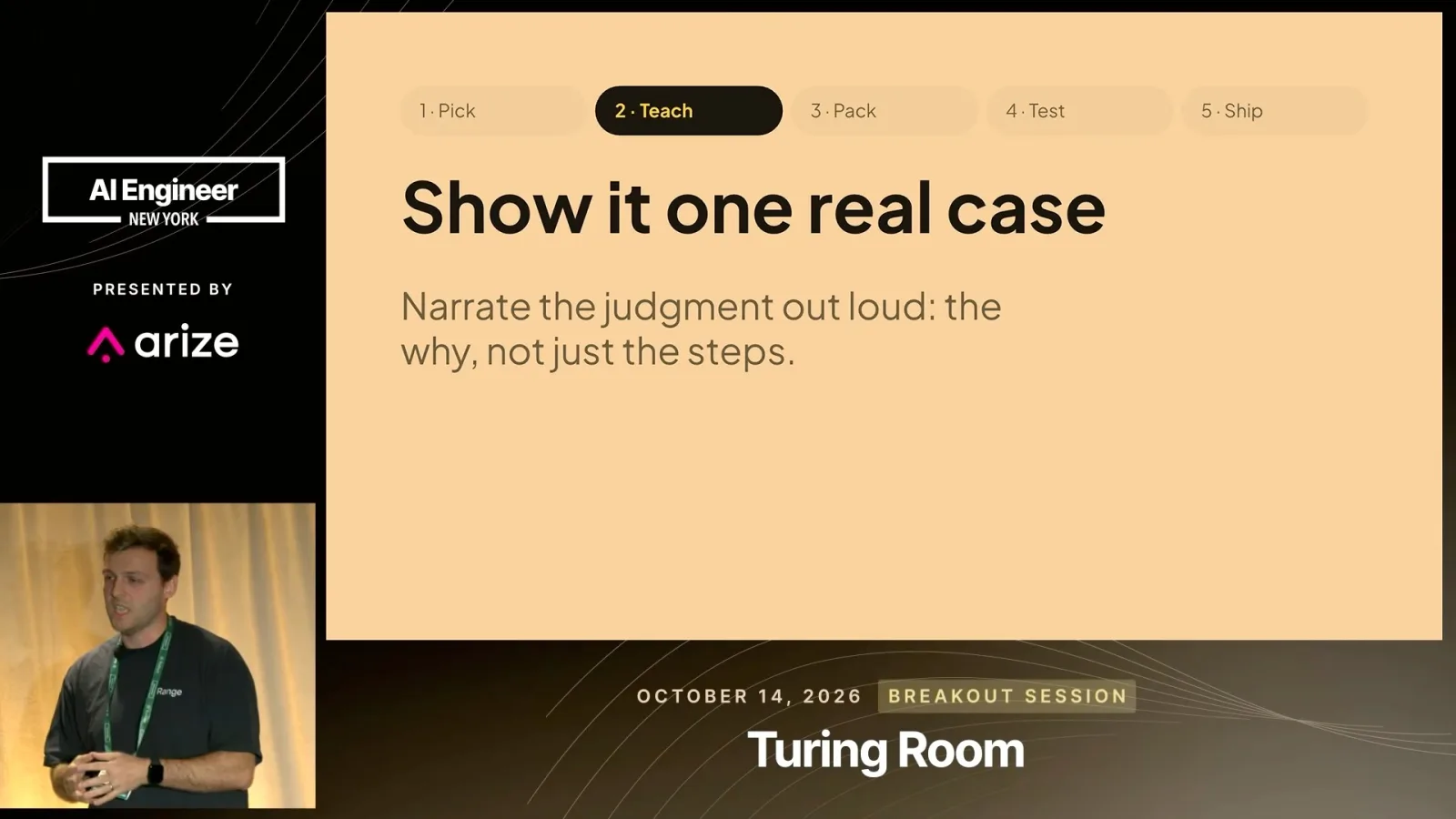
Next, show the agent a real case. Ragone would now provide several, including edge cases and instances where he corrected its work. The standards explain the method, while examples show what a completed result should look like.
While demonstrating the task, explain why each step matters. For example, if a pay stub is used for an insurance or cash-flow analysis, tell the agent to look for deductions related to group life insurance rather than simply uploading the document without context.
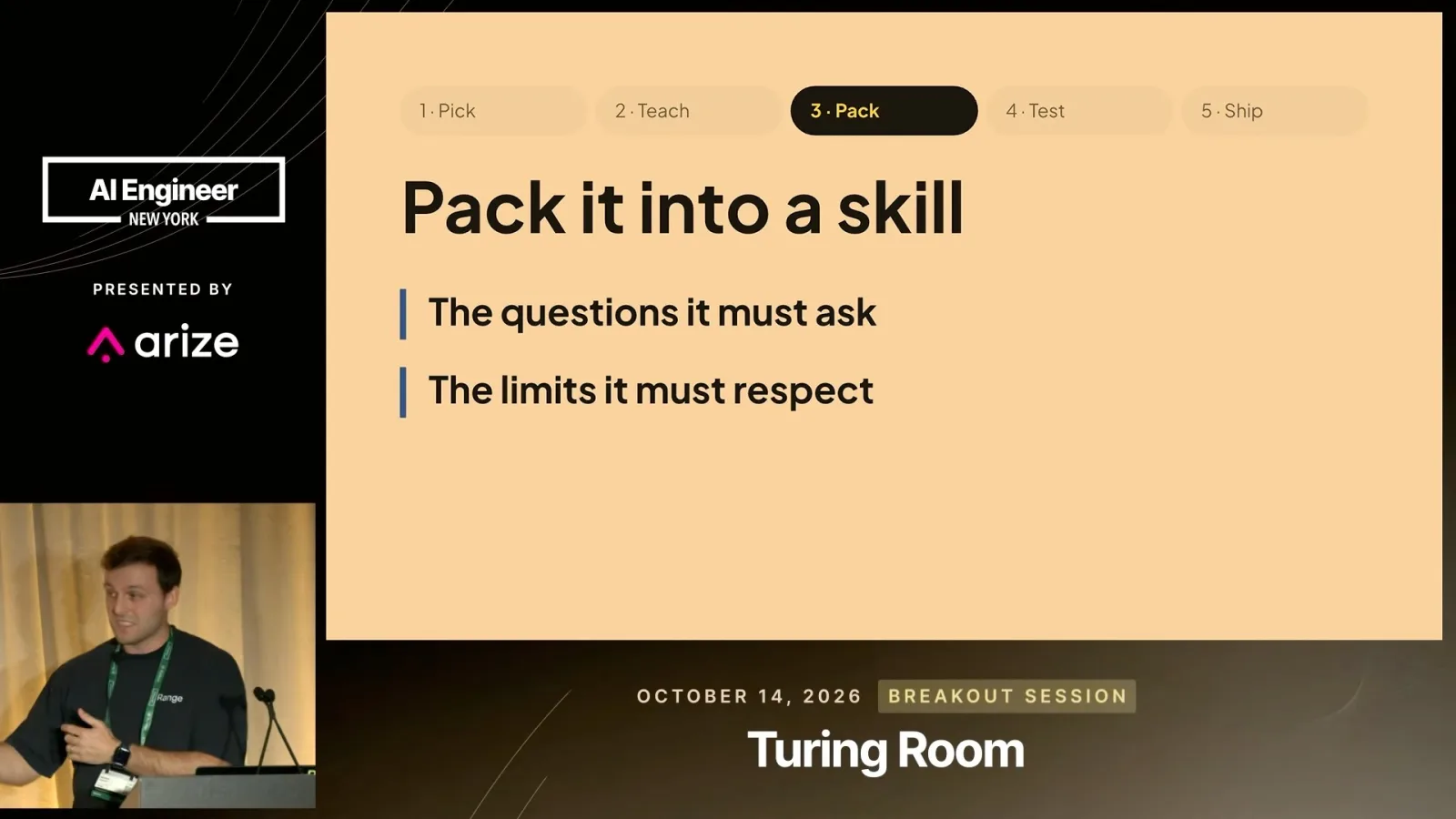
Once the workflow works well, package it as a skill. Ragone has the skill ask clarifying questions: which tax year and state apply, or whether the client’s immediate concern is homeowners, disability or life insurance.
The package also needs limits. Range’s skills cannot send anything directly to a client: a certified financial planner must review the output. Ragone notes that the firm also has a built-in AI feature, but human validation remains part of the workflow when a client asks for human interaction.
Test, ship and maintain the skills
The team tests real and edge cases and assigns an owner and reviewer. Adoption has created a new need to maintain the growing collection.
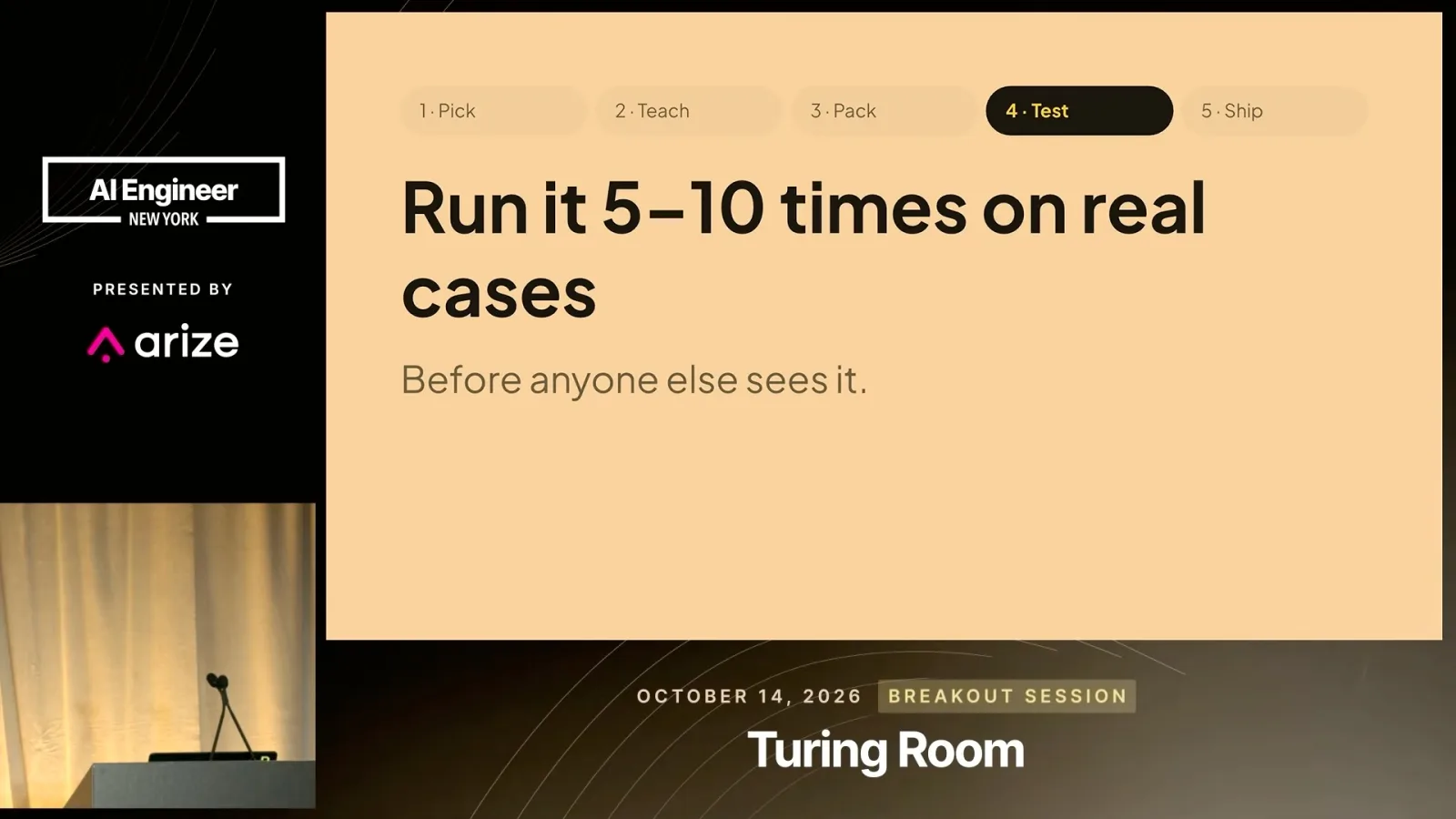
Before sharing a skill with the team, Ragone runs it on five to ten real cases, including edge cases, and asks one or two colleagues to stress-test it. After each run, the team incorporates what it learned and continues revising the skill.
He also asks the agent how it could improve the skill, then updates the package. Shipping is not the end: tax rules and other circumstances change, so the skill needs an owner and a reviewer.
At a small company one person may fill both roles. In Range’s larger planning team, an owner can ask a colleague with deeper insurance expertise to review an insurance skill.
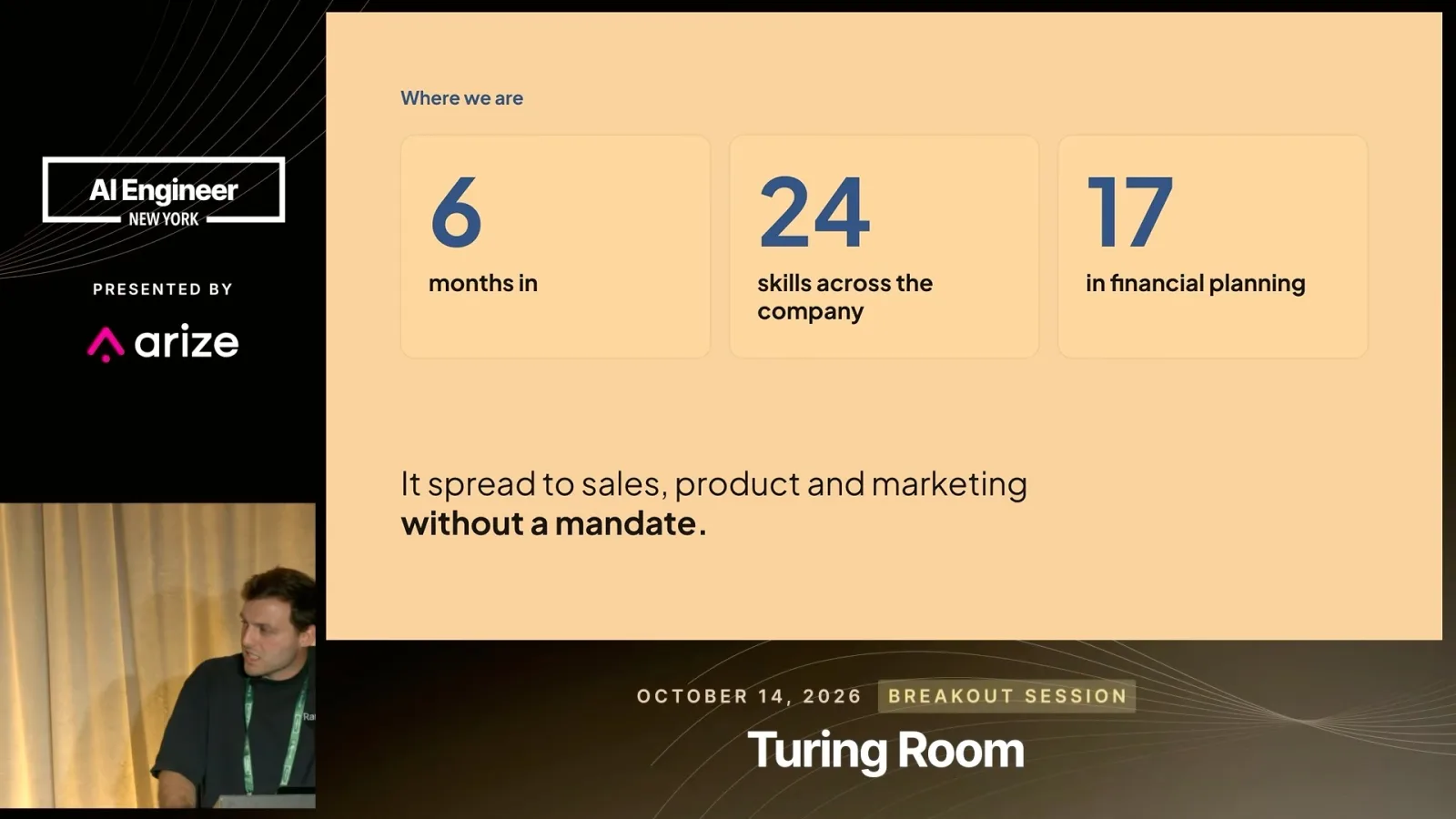
Ragone says that six to eight months into the experiment, Range had about 24 skills across the company, including 17 for financial planning. Planners, marketing and member-success staff share what they build across teams.
Range also created an agent called Ranger that assists employees in Slack and can use the company dashboard for member-related tasks. Ragone says the team is still developing that capability.
The subject-matter expert should help build and refine the corresponding skill. An insurance specialist may notice problems a generalist misses; tax and accounting colleagues can contribute the expertise needed for tax skills.
The bottleneck is moving from drafting speed to testing and keeping every skill current. Ragone expects planners increasingly to manage agents while still speaking with clients, and describes serving 100 people a day per planner as a goal rather than a current result.
Sur la même chaîne
 19:41EN
 AI Engineer· 9 nov. 2026A high-reliability automation starts by routing the hard cases awayMatthew Jewkes · Standard CyberneticsMatthew Jewkes describes separating critical errors, ambiguous decisions and unusual exceptions in a biopharma indexing workflow.
 22:01ENAI Engineer· 9 nov. 2026Zach Lloyd: make the software factory measurable and editableZach Lloyd · WarpWarp’s CEO proposes recording agent runs, scoring failures and testing changes to the workflow on real tasks.
 27:35ENAI Engineer· 9 nov. 2026Uber traded an always-green trunk for faster AI-scale mergesPreetam Dwivedi, Manjari Akella · UberIts merge queue now relaxes some conflicts and validates the combined state after landing, with a verified-good fallback.
 15:25ENAI Engineer· 9 nov. 2026Hassan and Omar El Mghari: When an AI financial forecast is right for the wrong reasonsHassan El Mghari, Omar El Mghari · Together AIA Costco membership-fee model passed basic checks and landed close to reported results, but an audit uncovered offsetting assumptions.
 14:38ENAI Engineer· 9 nov. 2026Jemima Abu: Give coding agents accessibility rules from the startJemima Abu · CAISA product engineer shows how semantic HTML, reusable components and explicit agent skills can help teams build more usable interfaces.
 21:12ENAI Engineer· 9 nov. 2026Tom Moor: Give coding agents the product context that code cannot showTom Moor · LinearLinear’s workflow carries customer requests, past decisions, review history and human feedback from intake through implementation and review.