En 30 secondes
Musk discusses why he hopes more precise sensing and stimulation could help research into brain function.
- 1Research questionFridman asks about brain understanding.
- 2AnalogyMusk compares external measurement to listening through a wall.
- 3Proposed measurementsHe discusses sensing and stimulation.
À retenir
- Musk argues observations are limited.
- He proposes combining sensing with stimulation.
- The clip describes possibilities rather than results.
Lire le texte remanié, chapitre par chapitre
Measuring the brain
In a 2019 interview, Lex Fridman asks Elon Musk whether Neuralink’s work might improve understanding of the human brain.
In a 2019 interview, Lex Fridman asks Elon Musk whether Neuralink’s work might improve understanding of the human brain.
Musk argues that current observations are limited and compares external measurements to listening through the wall of a factory. The analogy is his simplified view.
Stimulus and response
He describes a hoped-for approach combining precise sensing with stimulation and observation of responses.
He describes a hoped-for approach combining precise sensing with stimulation and observation of responses.
Musk suggests that human participants could describe changes in mood, perception, speech or memory. These are proposed research possibilities, not demonstrated results in the clip.
Sur la même chaîne
 3:34:27EN
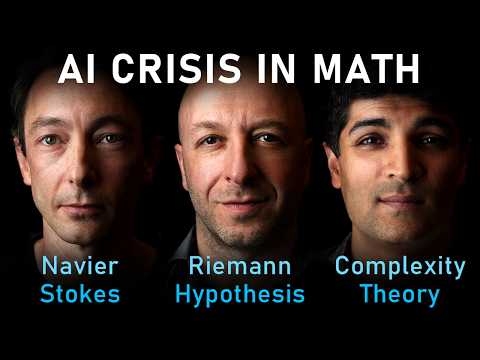
 Lex Fridman· 26 oct. 2026Podcast · 4 voixAI, Mathematics, and the Meaning of a ProofInvité : Steven Brunton, Ankur Moitra, Alex Kontorovich · Anime : Lex FridmanLex Fridman and three mathematicians discuss recent AI-generated research, hard open problems and what human understanding contributes.
 3:36:56ENLex Fridman· 16 sept. 2026PodcastPsychiatry Has Never Found Its PenicillinAnime : Lex FridmanHistorian Andrew Scull tells Lex Fridman why the field can ease symptoms, has never cured a major mental illness, and keeps paying for overconfidence with patients' lives.
 5:15:51ENLex Fridman· 26 août 2026Podcast · 2 voixDHH Did Not Write a Line of Omarchy QuattroInvité : DHH · Anime : Lex FridmanThirteen months after a skeptical conversation with Lex Fridman, the Rails creator describes how Opus 4.5, a swarm of coding agents, and a one-minute Linux installer ended his era of hand-chiseled Ruby.
 3:12:58ENLex Fridman· 12 août 2026Podcast · 2 voixOne Cold Shower, Twenty Champions: How Khabib Nurmagomedov Was ForgedInvité : Khabib Nurmagomedov · Anime : Lex FridmanIn a Makhachkala school gym, seventy men shared one shower, and the water was only cold.
 3:46:18ENLex Fridman· 28 juil. 2026Podcast · 2 voixIf You Take Slavery Out of the Picture, There Is No Civil WarInvité : Gary Gallagher · Anime : Lex FridmanIn 1860, enslaved people were worth more than every railroad and factory in the United States combined.
 3:51:47ENLex Fridman· 30 juin 2026Podcast · 2 voixForty-Six Percent of Emperors Were Overthrown. The Empire Lasted AnywayInvité : Anthony Kaldellis · Anime : Lex FridmanHistorian Anthony Kaldellis walks Lex Fridman through 2,200 years of Roman history and argues that what we call Byzantium was Rome itself.