En 30 secondes
Musk and Lex Fridman discuss impulses, neural networks and a possible future relationship between human and digital intelligence.
- 1An analogyMusk simplifies the interaction of impulses and thought.
- 2Machine learningFridman asks about interpreting brain-machine signals.
- 3Possible coexistenceMusk speculates about a digital layer of intelligence.
À retenir
- Musk uses a simplified brain analogy.
- Fridman asks about decoding brain-machine signals.
- Digital coexistence is presented as speculation.
Lire le texte remanié, chapitre par chapitre
A brain analogy
Elon Musk describes the brain through an analogy: impulses from the limbic system interact with the cortex, which he likens to a computer. This is his simplified interpretation, not a complete account of neuroscience.
Elon Musk describes the brain through an analogy: impulses from the limbic system interact with the cortex, which he likens to a computer. This is his simplified interpretation, not a complete account of neuroscience.
Musk suggests that the cortex often works to satisfy impulses rather than independently directing them, and that people tell themselves stories about their behavior.
Brain-machine communication
Lex Fridman asks whether machine-learning methods could help interpret two-way communication between a brain and a machine, including signals related to movement and vision.
Lex Fridman asks whether machine-learning methods could help interpret two-way communication between a brain and a machine, including signals related to movement and vision.
Musk agrees and imagines a digital neural network interfacing with a biological neural network. He speculates that much of future intelligence could be digital.
Drives and thought
Returning to his analogy, he contrasts the capabilities of the cortex with basic drives such as hunger and tiredness. He argues that those drives can motivate extensive thought and effort.
Returning to his analogy, he contrasts the capabilities of the cortex with basic drives such as hunger and tiredness. He argues that those drives can motivate extensive thought and effort.
The conversation turns playful as Musk and Fridman discuss desire and joke about funding research. Musk returns to the idea that people value having both drives and the capacity to think.
A digital layer
Musk proposes a possible third layer of digital superintelligence. He is optimistic that it might coexist with human intelligence, using his analogy between cortex and limbic system; this is a speculation, not an established outcome.
Musk proposes a possible third layer of digital superintelligence. He is optimistic that it might coexist with human intelligence, using his analogy between cortex and limbic system; this is a speculation, not an established outcome.
Sur la même chaîne
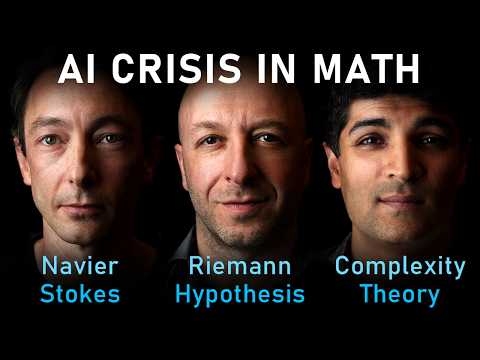 3:34:27EN
 Lex Fridman· 26 oct. 2026Podcast · 4 voixAI, Mathematics, and the Meaning of a ProofInvité : Steven Brunton, Ankur Moitra, Alex Kontorovich · Anime : Lex FridmanLex Fridman and three mathematicians discuss recent AI-generated research, hard open problems and what human understanding contributes.
 3:36:56ENLex Fridman· 16 sept. 2026PodcastPsychiatry Has Never Found Its PenicillinAnime : Lex FridmanHistorian Andrew Scull tells Lex Fridman why the field can ease symptoms, has never cured a major mental illness, and keeps paying for overconfidence with patients' lives.
 5:15:51ENLex Fridman· 26 août 2026Podcast · 2 voixDHH Did Not Write a Line of Omarchy QuattroInvité : DHH · Anime : Lex FridmanThirteen months after a skeptical conversation with Lex Fridman, the Rails creator describes how Opus 4.5, a swarm of coding agents, and a one-minute Linux installer ended his era of hand-chiseled Ruby.
 3:12:58ENLex Fridman· 12 août 2026Podcast · 2 voixOne Cold Shower, Twenty Champions: How Khabib Nurmagomedov Was ForgedInvité : Khabib Nurmagomedov · Anime : Lex FridmanIn a Makhachkala school gym, seventy men shared one shower, and the water was only cold.
 3:46:18ENLex Fridman· 28 juil. 2026Podcast · 2 voixIf You Take Slavery Out of the Picture, There Is No Civil WarInvité : Gary Gallagher · Anime : Lex FridmanIn 1860, enslaved people were worth more than every railroad and factory in the United States combined.
 3:51:47ENLex Fridman· 30 juin 2026Podcast · 2 voixForty-Six Percent of Emperors Were Overthrown. The Empire Lasted AnywayInvité : Anthony Kaldellis · Anime : Lex FridmanHistorian Anthony Kaldellis walks Lex Fridman through 2,200 years of Roman history and argues that what we call Byzantium was Rome itself.