En 30 secondes
An unidentified speaker describes a medical-language-model hypothesis and follow-up genetic experiments. A later study reports a partial effect in mice; this is not evidence of an established treatment for people. YouTube embedding is disabled.
- 1CollaborationResearchers explored whether a language model could suggest genetic factors.
- 2HypothesesA model suggestion is not a diagnosis or proof.
- 3Mouse experimentThe later study reports a partial effect in mice, not a human treatment.
- 4Expert reviewExperts filtered many poor suggestions.
- 5ReliabilityThe team sought better calibrated hypothesis generation.
À retenir
- Researchers explored whether a language model could suggest genetic factors.
- A model suggestion is not a diagnosis or proof.
- The later study reports a partial effect in mice, not a human treatment.
- Experts filtered many poor suggestions.
- The team sought better calibrated hypothesis generation.
Lire le texte remanié, chapitre par chapitre
A genetic hypothesis
The collaboration and its research question.
In this April 2025 excerpt, an unidentified speaker describes using medical language models to propose genetic hypotheses. The video cannot be embedded, but its original page can be opened on YouTube.
The speaker recounts a collaboration with Stanford researcher Gary Peltz on whether models trained on scientific literature could help identify factors associated with disease traits.
The models were asked to suggest possible causal genetic factors for combinations of observed traits. Generating a hypothesis is a starting point for investigation, not a diagnosis or proof of causation.
Validation and limitations
Mouse experiments and the need for expert filtering.
The speaker describes a two-gene hearing-loss hypothesis followed by gene-editing experiments. A [later published study](https://pmc.ncbi.nlm.nih.gov/articles/PMC13088295/) describes work in mice and a partial effect from reverting one mutation; it does not establish a treatment for people.
The speaker says the model could generate many poor hypotheses for each useful one. A researcher’s expertise and patience were needed to discard candidates and select those worth testing.
The team’s stated goal was to improve the reliability and calibration of hypothesis generation. The excerpt ends as the speaker begins describing that subsequent work.
Sur la même chaîne
 1:26:42EN
 Cognitive Revolution "How AI Changes Everything"· 31 oct. 2026Podcast · 7 voixAI:AM on Alignment, Memory Chips and an Agent-Run EconomyInvité : Anastasios Angelopoulos, Debo Olaosebikan, Samvit Ramadurgam, Michael Freeman, Sagar Vaze · Anime : Nathan Labenz, Prakash NarayananThe Cognitive Revolution’s hosts examine reported model behavior, new memory hardware, work and cyber risk with guests from Arena, Kepler, Union, ServiceNow and Mistral.
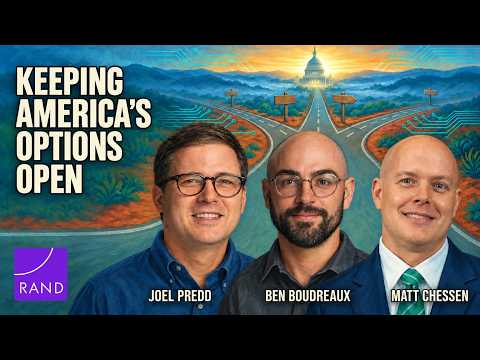 1:49:40ENCognitive Revolution "How AI Changes Everything"· 28 oct. 2026Podcast · 4 voixA Strategy for Preserving Options on the Path to Advanced AIInvité : Joel Predd, Ben Boudreaux, Matt Chessen · Anime : Nathan LabenzRAND researchers discuss uncertainty, security architecture and human agency with Nathan Labenz.
 1:28:36ENCognitive Revolution "How AI Changes Everything"· 24 oct. 2026Podcast · 5 voixAI’s Pace: Interpretability, GPU Credit and the Physical Supply ChainInvité : Zvi Mowshowitz, Evan Conrad, Lonis Hamaili · Anime : Nathan Labenz, Prakash NarayananA weekly highlights episode weighs uncertain AI research trajectories against finance, infrastructure, security and regulation.
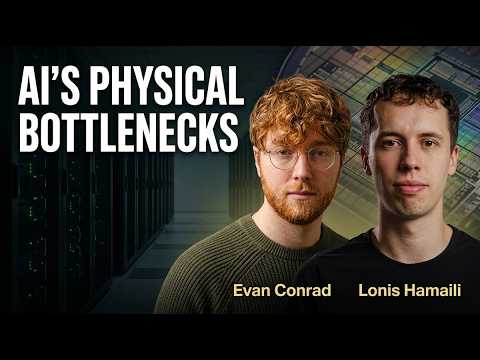 3:13:44ENCognitive Revolution "How AI Changes Everything"· 22 oct. 2026Podcast · 4 voixAI’s Physical Bottlenecks: Compute Markets, Chip Investments and Agent TrustInvité : Evan Conrad, Lonis Hamaili · Anime : Nathan Labenz, Prakash NarayananA full AI:AM discussion of security incidents, GPU financing, semiconductor supply and an agent-to-agent network.
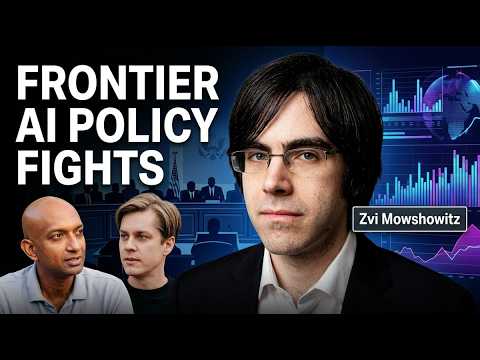 2:40:58ENCognitive Revolution "How AI Changes Everything"· 21 oct. 2026Podcast · 3 voixFrontier AI, Interpretability and the Fight Over Its PaceInvité : Zvi Mowshowitz · Anime : Nathan Labenz, Prakash NarayananZvi Mowshowitz joins AI:AM to discuss neural networks, policy and the institutions facing rapid change.
 1:25:56ENCognitive Revolution "How AI Changes Everything"· 17 oct. 2026PodcastClaude Changed the Password. The Steering Wheel Was Already OptionalAnime : Nathan LabenzNathan Labenz and Prakash Narayanan spend a week on agents that can lock you out, models that dodge a feeling they deny having, and formal proofs that found Linux bugs.