








Résultats
17 articlesTrier
 10:00EN
 Matthew Berman· 30 sept. 2026OpenAI DevDay: Dots, Faster Inference, Codex and ChatGPT SpaceMatthew Berman · Forward FutureMatthew Berman reviews the event’s personal assistant, model, developer tooling and collaboration announcements.
 1:01:41ENMatthew Berman· 15 mai 2026What Business Payments Reveal About OpenAI and Anthropic: Ara Kharazian on Ramp's AI IndexMatthew Berman, Ara Kharazian · Forward FutureRamp's chief economist explains what company purchases can reveal about AI adoption, model spending and the competition between providers—and what the data cannot show.
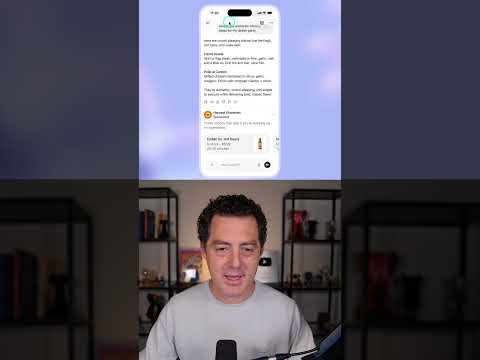 0:22ENMatthew Berman· 22 janv. 2026OpenAI’s 2026 Plan to Test Ads in ChatGPTMatthew Berman · Forward FutureMatthew Berman highlights OpenAI’s planned ad test and a mockup showing a sponsored product beneath a recipe response.
 2:01ENMatthew Berman· 7 janv. 2026A Rumor About OpenAI’s AI Device and Its Possible FormMatthew Berman · Forward FutureMatthew Berman considers a reported pen-like device and speculates about its use alongside a phone.
 11:50ENMatthew Berman· 3 déc. 2025OpenAI’s Reported “Code Red” and the Debate Over AI PretrainingMatthew Berman, Ilya Sutskever, Mark Chen · Forward FutureMatthew Berman examines reports of a ChatGPT quality push and a model code-named Garlic, alongside differing views on whether pretraining can keep scaling.
 15:08ENMatthew Berman· 8 août 2025GPT-5 at Launch: Routing, Coding, Benchmarks and ReliabilityMatthew Berman · Forward FutureMatthew Berman reviews OpenAI’s 2025 GPT-5 release, its unified ChatGPT experience, benchmark claims and the limitations of model evaluations.
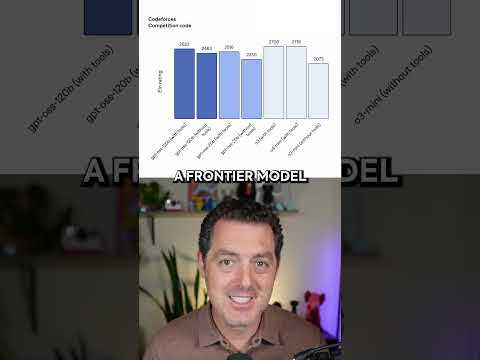 1:01ENMatthew Berman· 5 août 2025OpenAI’s gpt-oss Release and a Coding BenchmarkMatthew Berman · Forward FutureMatthew Berman introduces two open-weight models and reviews a Codeforces comparison from the launch.
 20:00ENMatthew Berman· 19 juin 2025Sam Altman on Meta’s Hiring, GPT-5 and the Future of AIMatthew Berman, Sam Altman, Jack Altman, Andrew Mayne · Forward FutureMatthew Berman examines 2025 interview clips in which OpenAI’s CEO discusses competition for researchers, scientific discovery, robots and new AI hardware. His claims and forecasts are presented in their historical context.
 15:46ENMatthew Berman· 16 avr. 2025OpenAI o3 and o4-mini: Tool Use, Benchmarks and the First Codex CLIMatthew Berman · Forward FutureMatthew Berman reviews OpenAI’s April 2025 reasoning-model release, a scientific image-analysis demonstration and the debut of its terminal coding agent.
 21:16ENMatthew Berman· 14 avr. 2025GPT-4.1, Mini and Nano: Coding, Long Context and 2025 API PricingMatthew Berman · Forward FutureMatthew Berman reviews OpenAI’s April 2025 model launch, selected coding benchmarks and demonstrations, and a sponsored Box evaluation.
 24:14ENMatthew Berman· 26 mars 2025GPT-4o Image Generation: Launch Demos, Editing, and LimitationsMatthew Berman, Sam Altman · Forward FutureMatthew Berman reviews OpenAI's March 2025 image-generation launch, testing text rendering, image editing, and visual consistency.
 13:04ENMatthew Berman· 4 févr. 2025Deep Research, AI Takeoff and the Limits of Early ReactionsMatthew Berman, Sam Altman · Forward FutureMatthew Berman surveys February 2025 reactions to OpenAI’s research agent and argues that reasoning and tools could accelerate AI progress.
 9:58ENMatthew Berman· 31 janv. 2025OpenAI o3-mini Launch: Reasoning Effort, Benchmarks and a Snake TestMatthew Berman · Forward FutureIn January 2025, Matthew Berman reviews OpenAI’s reported results and tries two coding examples with different reasoning settings.
 7:57ENMatthew Berman· 22 janv. 2025Stargate’s 2025 Announcement and the OpenAI–Microsoft PartnershipMatthew Berman · Forward FutureMatthew Berman reviews the planned US AI infrastructure project and a contemporaneous change to compute arrangements.
 22:12ENMatthew Berman· 11 déc. 2024OpenAI’s 2024 Canvas Update: Writing, Python Execution and Custom GPTsMatthew Berman, Kevin, Lee, Alexi · Forward FutureMatthew Berman reviews a launch demonstration of collaborative editing, an in-canvas Python debugging loop and Canvas support for custom GPTs.
 18:54ENMatthew Berman· 2 oct. 2024AI News in October 2024: DevDay, Leadership Changes and New ModelsMatthew Berman · Forward FutureMatthew Berman reviews OpenAI developer announcements, a vetoed California bill, Pika 1.5 and Liquid AI models.
 22:17ENMatthew Berman· 21 mars 2024Q* Rumors, Energy-Based Models, and Research on ReasoningMatthew Berman, Yann Lecun · Forward FutureMatthew Berman examines an anonymous, unverified account of Q* and compares its ideas with published research on teaching language models to reason.