En 30 segundos
Neuralink researchers said in 2022 that flexible electrode threads were intended to limit tissue response, but long-term signals and safe removal remained important questions. They distinguished animal observations from accelerated component tests and described compression and on-device decoding to fit wireless bandwidth. The panel also discussed regulatory review, deeper brain targets and the need for device-specific safety evidence.
- 1Flexible threads aim to limit scarringResearchers acknowledge that tissue response and long-term signal quality remain challenges.
- 2Animal use and accelerated tests answer different longevity questionsThe panel separates hundreds of days of animal data from component-life estimates.
- 3On-device processing can reduce wireless data needsThe team describes compression and decoding before transmission.
- 4Safety review includes removal, heat and biocompatibilityA panelist says new technology requires device-specific evidence.
- 5Reaching deeper structures requires new imaging and steeringEngineers describe these as open design problems.
Conclusiones
- Animal observations and accelerated component tests measure different aspects of device longevity.
- Signal stability, tissue response and safe removal require continued study.
- Compression and on-device decoding can reduce wireless data transmission.
- The panel identified heating and biocompatibility among regulatory-review topics.
- Deep insertion and high-bandwidth communication remained research challenges in 2022.
Lee el texto editado por capítulos
Sharing tools and managing tissue response
The panel answers questions about access, scarring and variable signals.
Asked whether neuroscientists could use Neuralink’s tools, Musk says the company would like to provide devices and surgical robots to research institutions once production and necessary regulatory approvals are in place.
An audience member asks about releasing datasets. The panel says it would consider publishing data that researchers could use to develop models of brain activity.
A researcher asks how the team addresses scarring around implanted electrodes, which can weaken recorded signals. A microfabrication lead says the small, flexible threads are intended to limit tissue damage and inflammation, while acknowledging the problem is not simply solved.
The team cites animal data: one animal had useful channels after roughly 600 days, while a newer device had around a year of data. These were observations from the company’s animal studies in 2022.
Another team member describes research into coatings that might reduce inflammation or make threads easier to remove from tissue formed after implantation. The group says it is also studying smaller electrodes.
An audience member asks why signals vary over time and whether electrode movement is responsible. A software lead says similar signal shapes offer some evidence of recording the same neurons, but acknowledges that the explanation is not conclusive.
Musk suggests that an implant might eventually support additional health monitoring, including detecting changes associated with fever or stroke. He presents these as possible future applications.
A questioner asks how precisely stimulation can produce visual sensations. A team member says the affected tissue depends on electrode properties and stimulation settings, and describes a rough estimate rather than a measured visual resolution.
Musk speculates that adjusting electric fields between electrodes could eventually increase effective visual resolution. The panel treats this as a possible outcome, not a demonstrated restoration of normal sight.
Longevity, testing and wireless bandwidth
Engineers distinguish animal observations, component tests and future design work.
Asked about implant longevity, an engineer separates evidence from prediction: the team reports hundreds of days of animal use and accelerated tests of device components. He identifies the seal, electronics and electrode threads as separate possible limits.
The engineer says battery life depends on usage and that the team is working to extend runtime. Another researcher describes experimental insulation materials and says their long-term durability still needs testing.
Asked what the team learned in two years, engineers point to brain movement and tissue changes during healing. They say realistic test models and continuous validation are needed to develop precise robotic systems.
A researcher says a demonstration working with one monkey is different from making a system work reliably across animals and over time. The team describes that repeatability as a product-development challenge.
A questioner asks about wireless bandwidth. The panel says compression can reduce the data sent from the implant, and describes moving some decoding computation onto the device itself.
An engineer says the team was also considering other radio technologies with higher data rates and lower latency. These were development options discussed in 2022.
Learning, careers and animal studies
The discussion covers adapting algorithms, animal care and replacement of devices.
A researcher asks how the system can adapt when the brain learns and changes over days or years. The panel describes an interactive process in which users learn to operate an interface and software models are updated.
The team says a high channel count could provide overlapping information and allow software to compensate for some signal changes. They present this as an advantage they hope to achieve.
Asked what students should study to work in the field, the panel lists chip design, materials, software and animal care. Team members emphasize that brain-interface development draws on many disciplines.
An audience member asks about animal training and daily care. The research-services lead says the program uses positive reinforcement and aims to reduce restraint; an engineer describes voluntary interactions with wireless equipment.
Asked about upgrades, a team member says the goal is to remove an implant and place a new one in the same useful area. They report that some animals were using second devices, while discussing the challenge of avoiding tissue damage.
The team says trained animals learned to operate a replacement system after several days in one example. Asked about adverse behavioral changes, a researcher says it is hard to determine and does not report a specific observed example.
Compression, removal and regulatory review
The team discusses transmission, animal pathology and questions raised during safety review.
Engineers explain that the implant processes signals and sends compressed information rather than continuously transmitting every raw channel. They say earlier wired prototypes helped them decide what information to retain.
Musk argues that basic cursor or phone control requires much less data than a high-bandwidth visual interface. The team also discusses possible surgical changes designed to reduce tissue disruption; these remain proposals.
A researcher asks about tissue pathology and the safety of use in healthy people. A panelist says the company has examined tissue in animal studies and is working on safer removal; those animal observations do not establish long-term human safety.
Another question concerns the regulator’s review. The panel identifies removal safety, device heating, biocompatibility and chemical characterization as areas requiring rigorous testing and discussion with the US Food and Drug Administration.
A team member says novel surgical and electrode technology requires generating device-specific evidence rather than relying solely on previous literature. Musk separately expresses his personal confidence about safety.
Users, deeper targets and future research
Audience questions address disability input, deeper insertion and communication methods.
Asked whether people with motor disabilities are involved, a panelist describes an advisory group and says potential users have discussed everyday goals such as gaming and managing finances.
Musk says the company was building production capacity in parallel with development. He hopes to scale the number of devices, while saying early human progress could be slow.
A researcher asks how the device might reach deeper brain structures while avoiding blood vessels. Engineers say deeper imaging and steering are open design problems and mention ultrasound and photoacoustic imaging as possible approaches.
Asked how they validate electrode insertion and tolerate failed channels, the team describes testing in synthetic tissue models and says models can use fewer channels than are available.
An audience member asks whether the company will pursue neuroscience beyond engineering a device. Musk says he expects outside researchers to build on the interface; another team member credits decades of prior academic and medical research.
On increasing communication speed, researchers describe testing handwriting decoding and different on-screen keyboards. They say human participants would help investigate which approaches work.
The panel closes by discussing the potential of better tools to study brain activity. Neuralink’s later [UAE-PRIME registration](https://clinicaltrials.gov/study/NCT06992596) describes an investigational feasibility study assessing initial safety and functionality.
Más de este canal
 3:35:00EN
 CNET Highlights· 2 mar 2023Tesla’s 2023 Investor Day: the plan to scale clean energy and carsElon Musk, Zach Kirkhorn, Drew Baglino, Franz von Holzhausen, Lars Moravy, Colin Campbell, Pete Bannon, David Lau, Ashok Elluswamy, Rebecca Tinucci, Karn Budhiraj, Roshan Thomas, Tom Zhu, Mike Snyder, Laurie Shelby, Brandon Ehrhart · TeslaTesla leaders outline a global electrification scenario, a lower-cost vehicle platform and the factories and supply chains needed to scale.
 41:04ENCNET Highlights· 2 mar 2023Tesla’s 2023 investor Q&A puts battery supply and costs in focusElon Musk · TeslaExecutives explain refining, factory localization and dry-electrode scaling, while Musk discusses affordability and a future autonomous fleet.
 8:15ENCNET Highlights· 1 mar 2023Tesla’s 2023 plan estimates the scale of a fully electrified energy systemElon Musk, Drew Baglino · TeslaMusk and Drew Baglino describe a proposed energy transition requiring batteries, renewable generation and manufacturing investment.
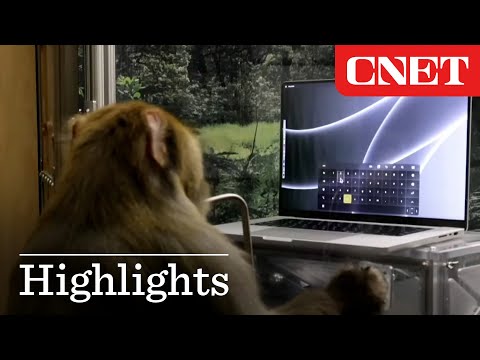 7:20ENCNET Highlights· 1 dic 2022Neuralink’s 2022 monkey demo selected highlighted keysElon Musk · NeuralinkMusk showed cursor control with an implant, while stressing the monkey was following prompts rather than spelling independently.
 3:39:05ENCNET Highlights· 1 dic 2022Neuralink’s 2022 update: from neural signals to a working interfaceElon Musk, DJ Seo · NeuralinkEngineers explain cursor decoding, implants and robot-assisted insertion, while separating animal demonstrations from clinical ambitions.
 55:08ENCNET Highlights· 1 oct 2022Tesla engineers explain robot hands and driving-model testsElon Musk · TeslaAt AI Day 2022, the panel described Optimus design trade-offs, curated failure cases and offline models that label driving data.