En 30 segundos
Theo Browne tries Claude Design for the first time, generating and iterating on a marketing page for his T3 Code project. He draws on design collaboration at Twitch, records inaccurate generated details, apparently missing files and rising usage, and ultimately hands off a workable draft for further refinement.
- 1Visual feedback and handoffThe product combines context, element comments, adjustments and an export for implementation.
- 2A designer’s prototypeIris built an interactive Mod View prototype that made a design idea easier to test and discuss.
- 3Variations need contextDifferent visual directions can be useful, but missing source context can lead to invented details.
- 4Reliability affects trustDesign files appeared to disappear in one session and had to be rebuilt.
- 5A workable starting pointThe handoff produced a draft Theo liked, with further refinement and testing still needed.
Conclusiones
- Claude Design combines visual prototypes, contextual comments and a coding-agent handoff.
- Providing a real codebase, design system and assets can improve context but does not guarantee accurate output.
- Designers, product managers and engineers benefit from understanding one another’s constraints.
- Inspect generated pages for responsive behavior, invented details and functional errors.
- Reliability and account-specific usage limits affect whether an iterative workflow is practical.
Lee el texto editado por capítulos
A first look at Claude Design
Theo tests a new interface for generating and refining visual work. The session is an early, personal evaluation.
I have often found Claude models useful for interface design, although getting a good result usually takes substantial iteration. Claude Design interests me because it puts a dedicated interface around that work. I am trying it for the first time here, with an open mind and no claim that the initial result represents every use case.
A design-oriented skill can influence the model with a relatively small amount of written context. A whole product might go further by adding visual feedback, previews and a handoff to coding tools. I want to see whether the workflow actually helps someone make better design decisions.
The onboarding offers prototypes, wireframes and other visual work. It can import design-system context and, when given access, read a local codebase. Anthropic describes the product and its intended workflow at https://www.anthropic.com/news/claude-design-anthropic-labs.
One example asks for several distinct design directions. That matches a technique I use: request varied options together rather than repeatedly regenerating the same prompt and hoping for a larger difference. The alternatives still need to be judged against the actual product and audience.
From prompt to prototype
He imports context and asks for a T3 Code marketing page. He examines the proposed design system and feedback tools.
The tutorial shows screenshots as input, local-folder context, comments pinned to elements, live adjustment controls and a handoff bundle for Claude Code. These are product features described at launch; their availability and behavior may change. The interesting question is how well they work together in a real project.
For the test I choose the T3 Code marketing site. I ask for a dark landing page that explains supported coding-agent tools, open-source access, performance, Git workflows and parallel work. This is my own product, so I have a direct interest in the quality and presentation of the result.
The interface starts by reading the supplied context and describing a design plan: existing fonts and colors, a restrained accent, dark surfaces and a set of page sections. It writes prototype files, but that does not mean the generated code is already integrated into the production application.
I like the possibility of pointing at an element, leaving comments and having an agent address several pieces of feedback together. A collaborative design interface could make the conversation more precise than a long description of where an issue appears. Whether it is reliable is something the test still has to show.
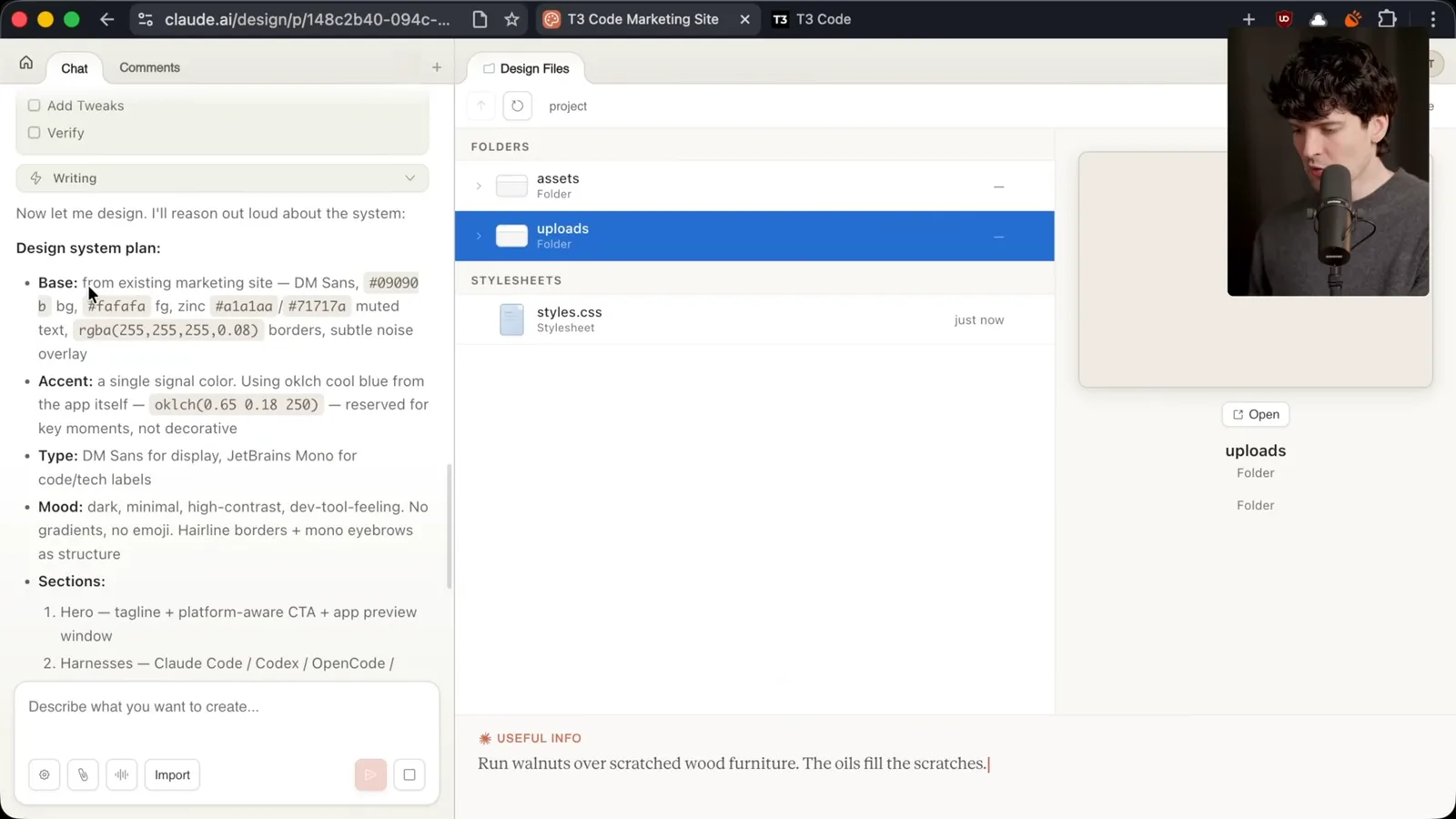
At Twitch, designers and engineers worked to keep Figma components aligned with the actual component library. That made it easier to implement a design without inventing every element again. If a mockup does not reflect the real design system, an agent can struggle with the same handoff problem as a human developer.
Design as collaboration
Theo draws on his Twitch experience and a designer’s interactive prototype to explain the value of bridging roles.
I think of the product process as a chain connecting users, product managers, designers, frontend developers and backend engineers. The boundaries vary by team, but the strongest collaboration happens when people understand the needs on both sides of their usual role.
At Twitch I spent time talking with backend engineers about APIs and with designers about implementation, even after moving into frontend work. That helped me contribute beyond one narrow layer. A useful specialist can have depth in one area while maintaining enough breadth to collaborate across adjacent ones.
A designer I worked with, Iris, changed how I thought about this. She gave me a design with rounded cards and a pop-out control, and I pushed back because the CSS overflow behavior made the combination awkward to implement. I expected a design change request to end there.
Instead, Iris asked questions about the constraint and came back with a revised layered design that avoided the problematic clipping. She did not need to become an engineer to understand the problem well enough to work with me. Her skill was connecting user needs, product goals and technical constraints.
Later she built an interactive prototype for what became Twitch Mod View, using HTML, CSS and jQuery despite not having a development background. It was not connected to the real backend, but it allowed resizing and rearranging elements. The prototype made an idea easier to discuss and test before engineering committed to it.
That is the promise I see in a tool like this: give a motivated designer or product person a way to make an idea interactive, share it and learn from feedback. It does not eliminate the need for design judgment or engineering; it can make the conversation between them more concrete.
Critiquing and iterating
The initial mockup has inaccurate details and layout issues. Theo uses comments and explores multiple directions.
The first T3 Code mockup is workable but imperfect. It duplicates the product name near the logo, wraps text awkwardly and invents a product interface rather than accurately showing the existing application. It also uses incorrect logos. A convincing visual is not necessarily an accurate representation of the product.
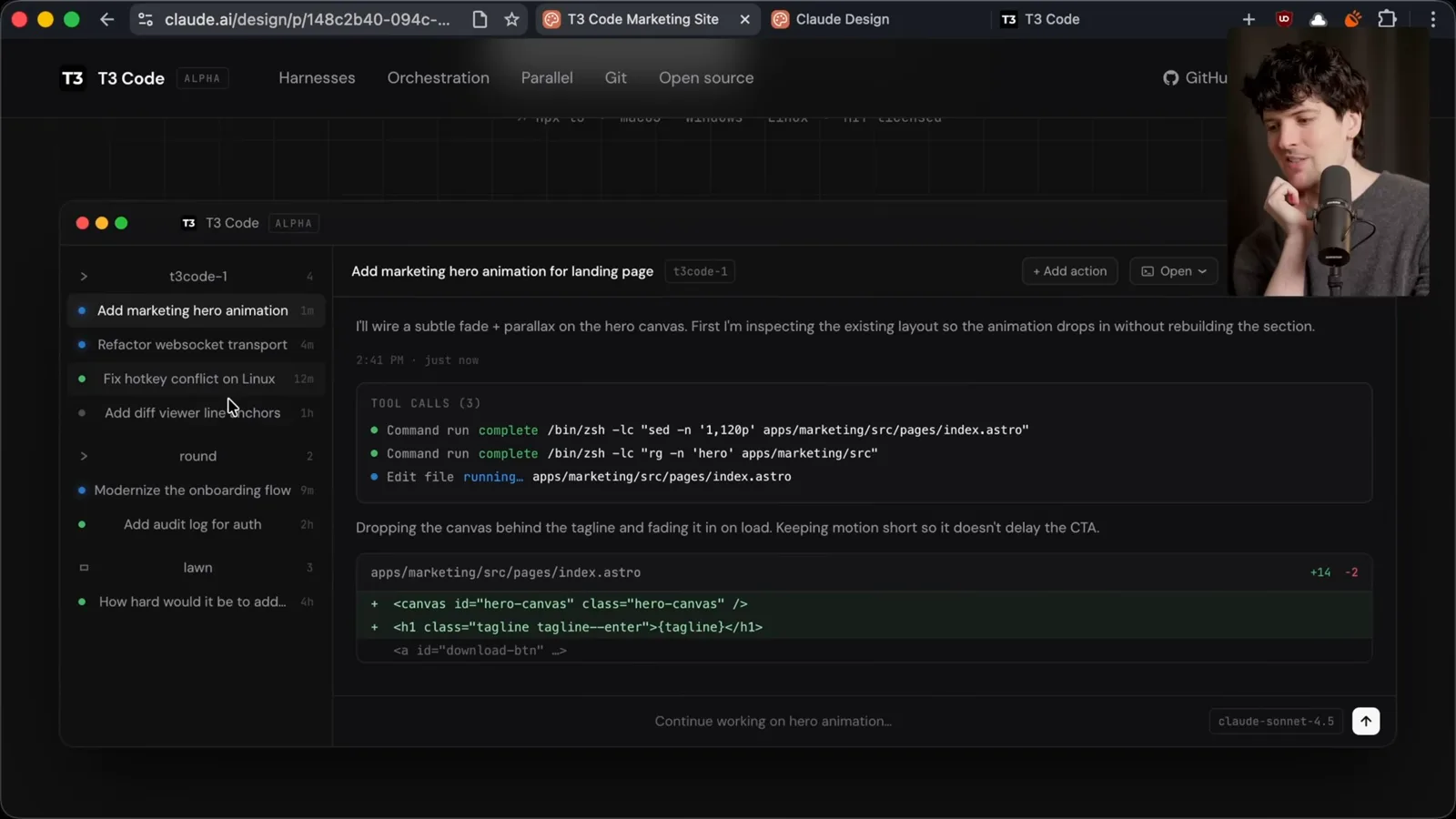
I use the comment tool to mark specific issues: unnecessary navigation, weak emphasis on the open-source aspect, poor wrapping and a scroll indicator that does not fit. The ability to select several comments and send them together makes the feedback feel tied to the design rather than separated from it.
The first revision fixes some things but leaves other layout problems. I try different screen sizes and find that the scroll hint and text wrapping still need attention. This is a useful reminder to inspect interactive behavior and responsive layouts, not just the first preview.
I start another project and ask for four different directions, this time without attaching the codebase. That may encourage variety, but it also removes concrete information the model could use to represent the product accurately. The tradeoff becomes visible in the mock interfaces and installation details it invents.
The interface appears frozen and one preview says a file cannot be found. Later I see that some work had proceeded without the status updating clearly. An agent’s output and the product’s progress indicators both need to be dependable if people are going to build a workflow around them.
I notice a separate Claude Design usage meter and watch it climb during the test. Those percentages describe my account and subscription at that moment, not a general price or quota for everyone. The amount of exploration a plan permits is part of the practical cost of using the product.
I leave a second batch of comments: remove redundant labels and status pills, use real logos, reduce oversized sections and show an accurate product screenshot earlier. I like sending feedback in context, though manually selecting comments and seeing old comments remain is cumbersome.
The alternative designs take different aesthetic directions, but some contain incorrect product details and broken typography. One direction is closer to what I want. Generating several options is useful only if someone can inspect them critically and identify which details are invented or unusable.
Assets, reliability and limits
He supplies real logos, encounters apparently missing files and monitors usage. The alternate designs are later rebuilt.
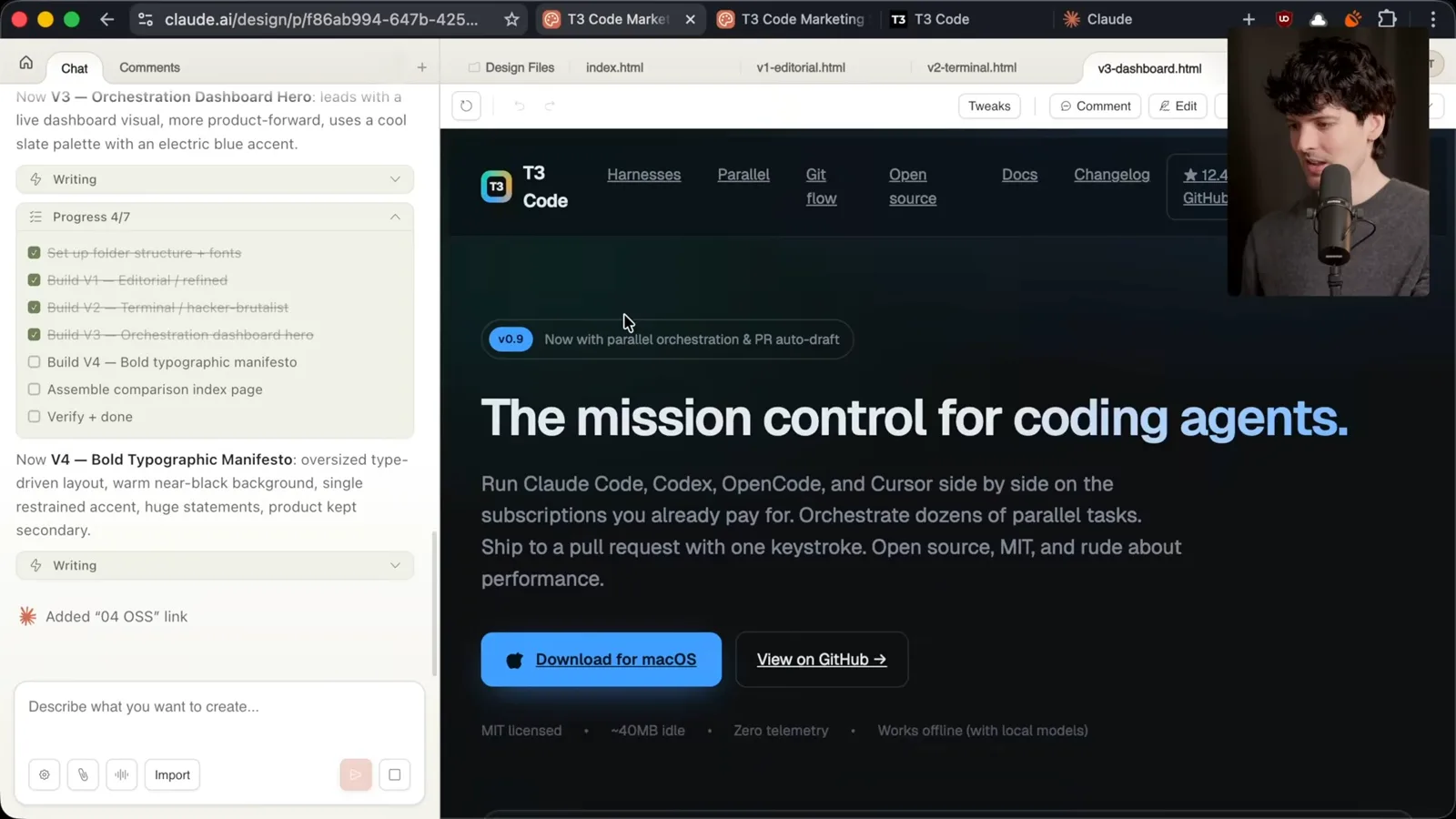
A generated logo is inaccurate, so I turn to SVGL for recognizable SVG assets and upload them. Supplying the actual files gives the model better material than asking it to recreate a brand mark from memory. I still need to check the resulting placement, size and behavior.
The alternate project then appears to lose its design files: the preview fails and the agent reports that only the upload folder remains. It offers to rebuild the variants. This happened in my session; I cannot infer from it how often the problem occurs for other users or why it occurred.
The apparent disappearance changes my trust in the workflow. If I cannot tell whether work will still be present after a refresh, I have to monitor and preserve it more carefully. A polished interface is valuable, but reliability of the underlying work is essential.
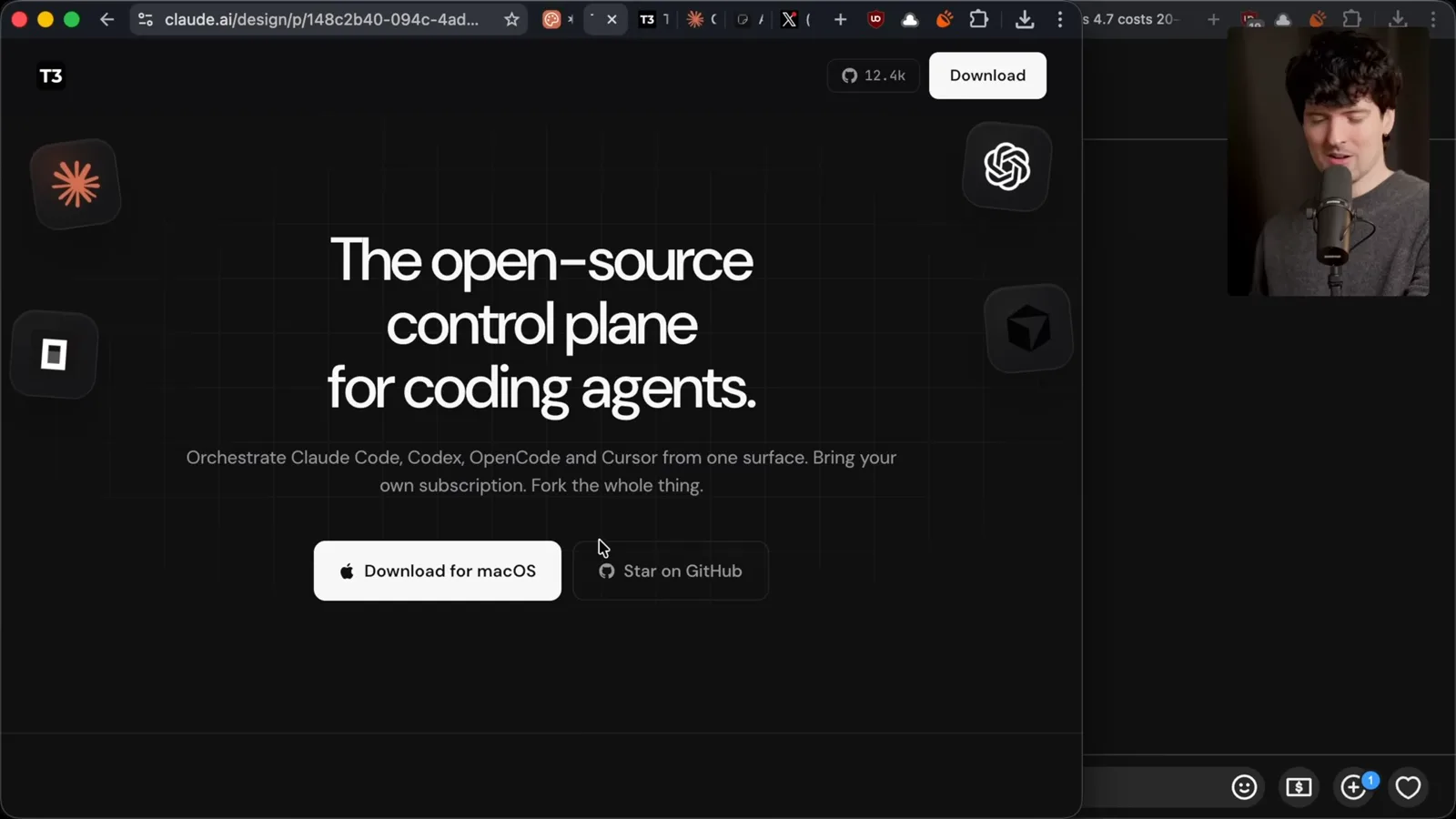
Back in the first project, I provide the real SVG files and ask for larger floating logos. After further revisions the page is much closer to my intended direction, even though resizing briefly causes elements to disappear. I decide it is good enough to try the handoff.
Handoff to implementation
A design bundle reaches Claude Code and produces a workable site draft. Remaining details and controls still need attention.
The handoff produces a command that gives a local coding agent access to a design bundle. Claude Code locates the relevant marketing directory and begins implementing the design. I deliberately do not specify the directory in this test, and it finds the intended area on its own.
I inspect the bundle: it includes page and style files, components, uploaded images, assets and conversation context. Passing the artifacts together gives the coding agent more than a screenshot; it can see both a prototype and some of the intent behind it. Long chat history can also consume context and needs judgment.
Some of the previously missing alternate designs are rebuilt, while the coding agent continues implementing the main page. My Claude Design meter has climbed substantially during these experiments. The exact numbers are specific to this account and point in time, but they make usage limits relevant to an iterative workflow.
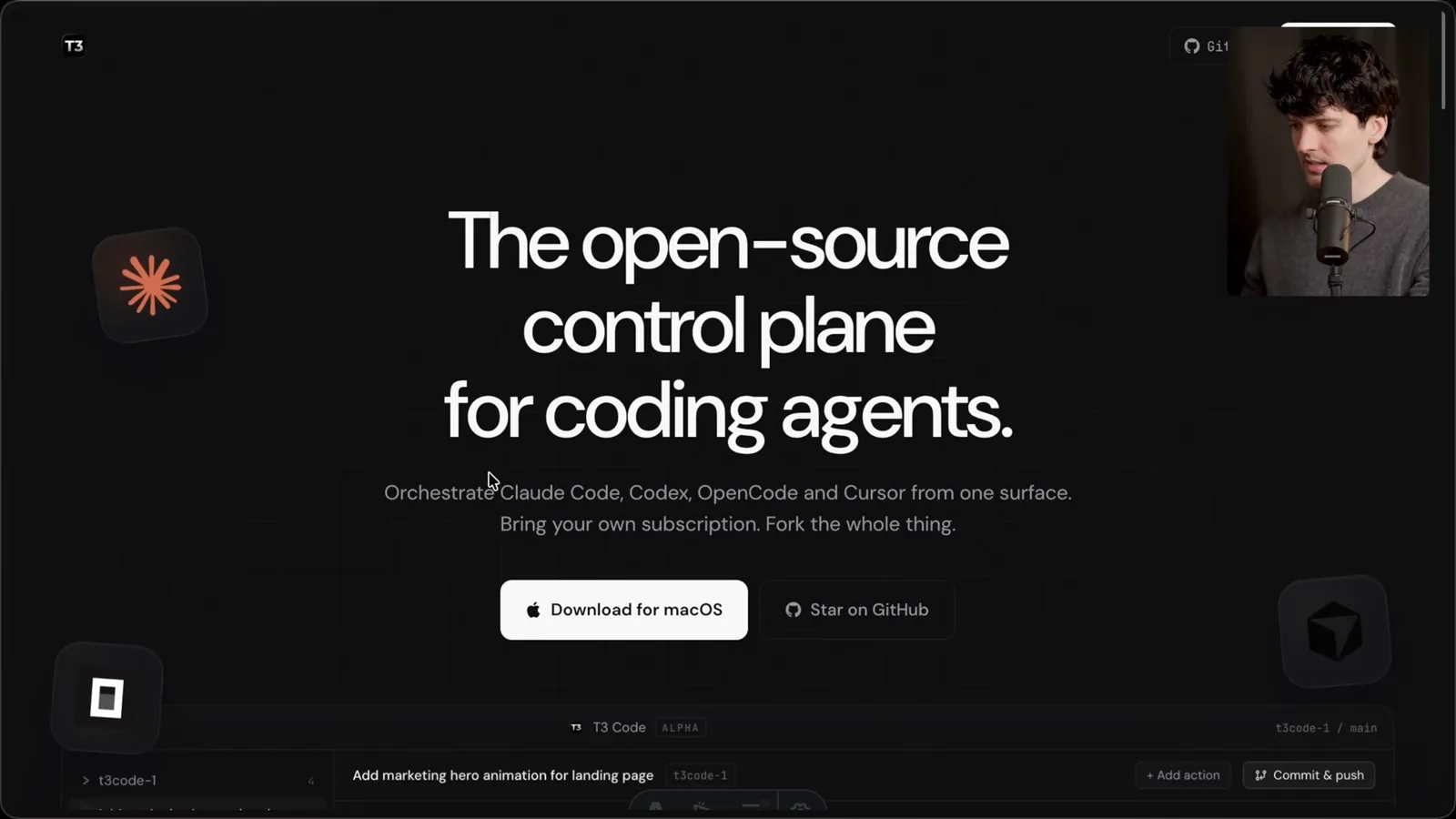
The implemented site is a good starting point in my view. I still want to tighten spacing, replace or adjust logos, remove sections and improve the accuracy of the product mockup. A successful handoff gets me to a workable draft; it does not mean the page is finished or production-ready.
I experiment with generated adjustment controls for logo size and movement. Some controls do not affect the page as expected, and certain defaults damage the layout. They are promising as a way to communicate visual preferences, but they still need testing and refinement.
Despite the bugs, I like the direction of the product. It brings together code-aware context, visual iteration, comments and a concrete handoff in a way that fits how I want to work. My conclusion is based on one early session and is not a claim that it has replaced Figma for every team.
I can see possible value for designers, product managers and marketers, particularly if a prototype can move into engineering with its context intact. I also expect the usage cost and product reliability to influence adoption. Whether it becomes a major competitor is a prediction, not an outcome established by my demo.
For now, I have a design I can continue refining for T3 Code. I am excited to see a product explore a different design workflow, while recognizing the glitches and cost concerns I encountered along the way.
Más de este canal
 38:47EN
 Theo - t3․gg· 28 oct 2026Theo’s Long-Running Agent Experiments: Verification, Compute and CostTheo Browne · Ping LabsA skateboard game and two compiler projects show how repeated checks and flexible compute can sustain agent work—and how expensive those loops can become.
 36:07ENTheo - t3․gg· 27 oct 2026Theo on Token Costs, Coding Agents, and the Price of AI CapabilityTheo Browne · Ping LabsA viral estimate of Lauren's AI spending prompts a closer look at cache pricing, benchmarks, and the changing work of coding agents.
 30:37ENTheo - t3․gg· 26 oct 2026Theo’s Three Skills for Reviewing and Shipping with Coding AgentsTheo Browne · Ping LabsHow sol-loop, full-send and full-stop encode review, verification and different levels of merge authority.
 0:43ENTheo - t3․gg· 23 oct 2026Theo Distinguishes Security Vulnerabilities from Active AttacksTheo Browne · Ping LabsA short explanation of why disclosed software flaws and reported attacks are different kinds of security news.
 29:22ENTheo - t3․gg· 22 oct 2026Theo on Security Vulnerabilities, Stolen API Keys and AITheo Browne · Ping LabsA look at the gap between vulnerability disclosure and patching, and a speculative account of why stolen inference keys may be valuable.
 31:13ENTheo - t3․gg· 20 oct 2026Theo on Why Smarter Models Help More Than DevelopersTheo Browne · Ping LabsFrom game modifications to compiler experiments, Theo revisits his assumptions about who benefits from more capable AI.