En 30 segundos
Paul Dancstep follows Sol LeWitt’s notebooks and independently explores the counting problem behind Variations of Incomplete Open Cubes. By counting pairs of shapes and rotations in two different ways, he arrives at Burnside’s lemma and reflects on the creative process shared by art and mathematics.
- 1The artwork’s rulesA valid framework is incomplete, connected and three-dimensional; rotations are not counted twice.
- 2Begin with squaresSix rotational families of four-edge subsets become two when the artwork’s analogous restrictions are applied.
- 3Symmetry and family sizeA shape’s family size multiplied by the number of rotations that leave it unchanged is 24.
- 4Count the other wayCount shape–rotation pairs by transformation instead of by shape, then divide by the number of rotations.
- 5The cube calculationThe 24 rotations fix 5,232 configurations in total, yielding 218 families before applying the extra rules.
- 6The final sculptureA computational study confirms the intended 122 shapes but identifies one duplicate and one omitted shape.
Conclusiones
- LeWitt’s rules retain connected, three-dimensional, incomplete edge frameworks and treat rotations as equivalent.
- A cube has 4,096 edge subsets but only 218 rotational families before the artwork’s extra restrictions.
- The size of a rotational family times the number of rotations fixing one member equals 24.
- Counting fixed configurations by rotation gives Burnside’s lemma, avoiding explicit sorting into families.
- Exploration, notation, mistakes and unexpected insights matter in both artistic and mathematical work.
Lee el texto editado por capítulos
An artwork as an enumeration
The rules of LeWitt’s incomplete open cubes turn an artwork into a counting problem.
Imagine an art museum table covered with small white skeletal cube fragments. Sol LeWitt’s Variations of Incomplete Open Cubes presents every distinct way a cube can be incomplete under certain rules. We will explore those rules and follow a trail from a playful visual question to a powerful counting method.
An open cube is the frame of its 12 edges; we make it incomplete by removing edges. The surviving edges must remain connected and span all three dimensions, so a flat square or disconnected pieces do not qualify.
Two frameworks that can be rotated into one another count as the same shape. The artwork selects one representative of each rotational family. The intended collection contains 122 distinct frameworks satisfying all the rules.
LeWitt’s creative process
His notebooks reveal the difficulty of identifying rotations and the use of physical models.
LeWitt was associated with conceptual art, minimalism and serial art. In wall drawings he supplied instructions for others to execute, emphasizing the idea behind the work. His spare geometric forms and systematic series asked questions such as how many arrangements satisfy a given rule.
Around 1973 he asked how many ways a cube could be incomplete. About 50 notebook pages in the Wadsworth Atheneum archives preserve sketches, working lists and revisions. They let us watch a creative search rather than just inspect the finished table.
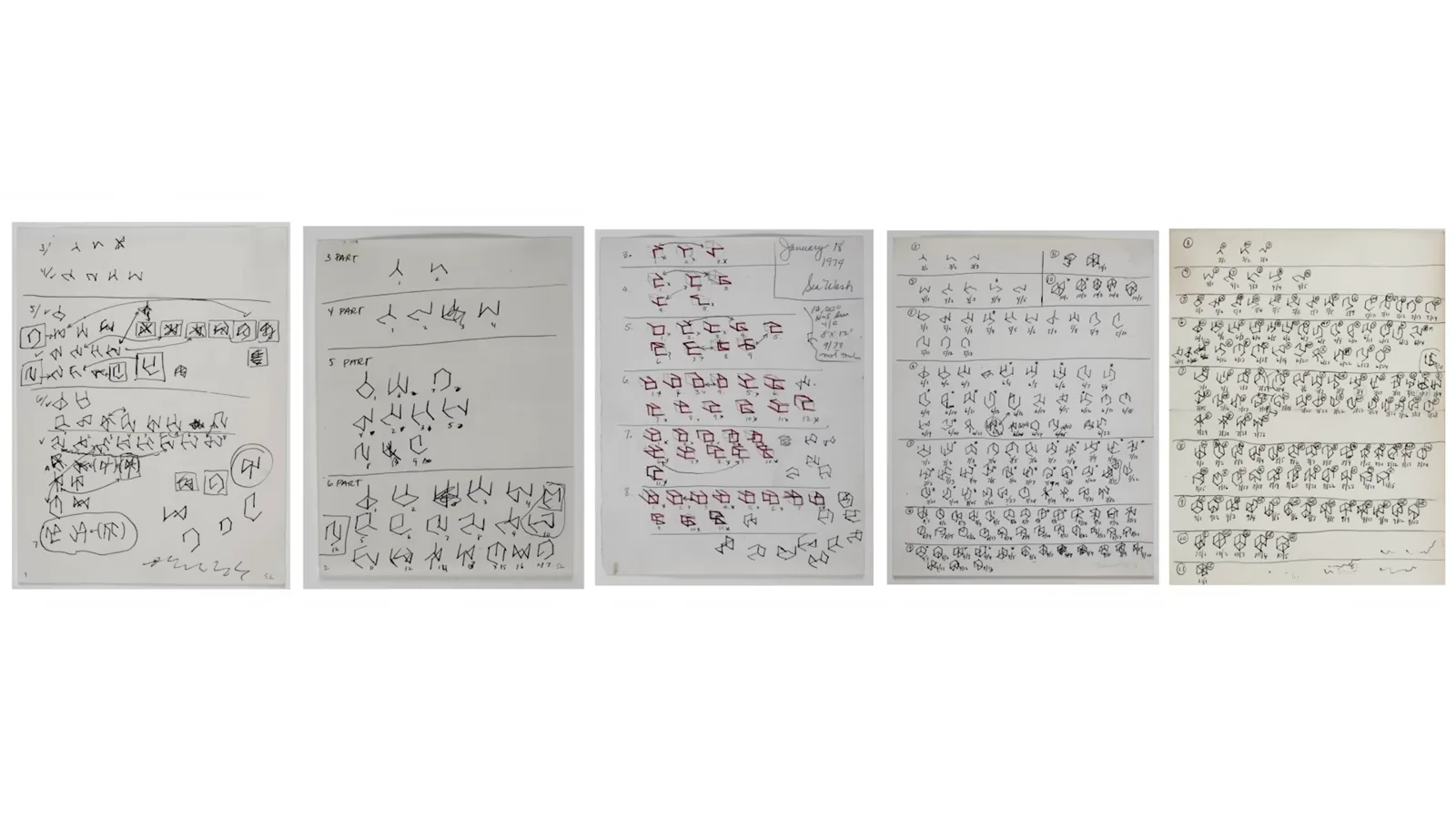
Rotational equivalence was especially hard: connectedness and flatness could often be seen directly, but apparently different frameworks might match after a turn. LeWitt made small physical models, compared them and crossed out duplicates. Mathematicians later confirmed the intended count.
Start with a square
A smaller two-dimensional problem exposes why families have different sizes.
For our mathematical exploration, temporarily relax the connectivity, three-dimensionality and incompleteness constraints. We will count every subset of cube edges up to rotation, including disconnected, flat, full and empty cases. The resulting count will be larger than 122.
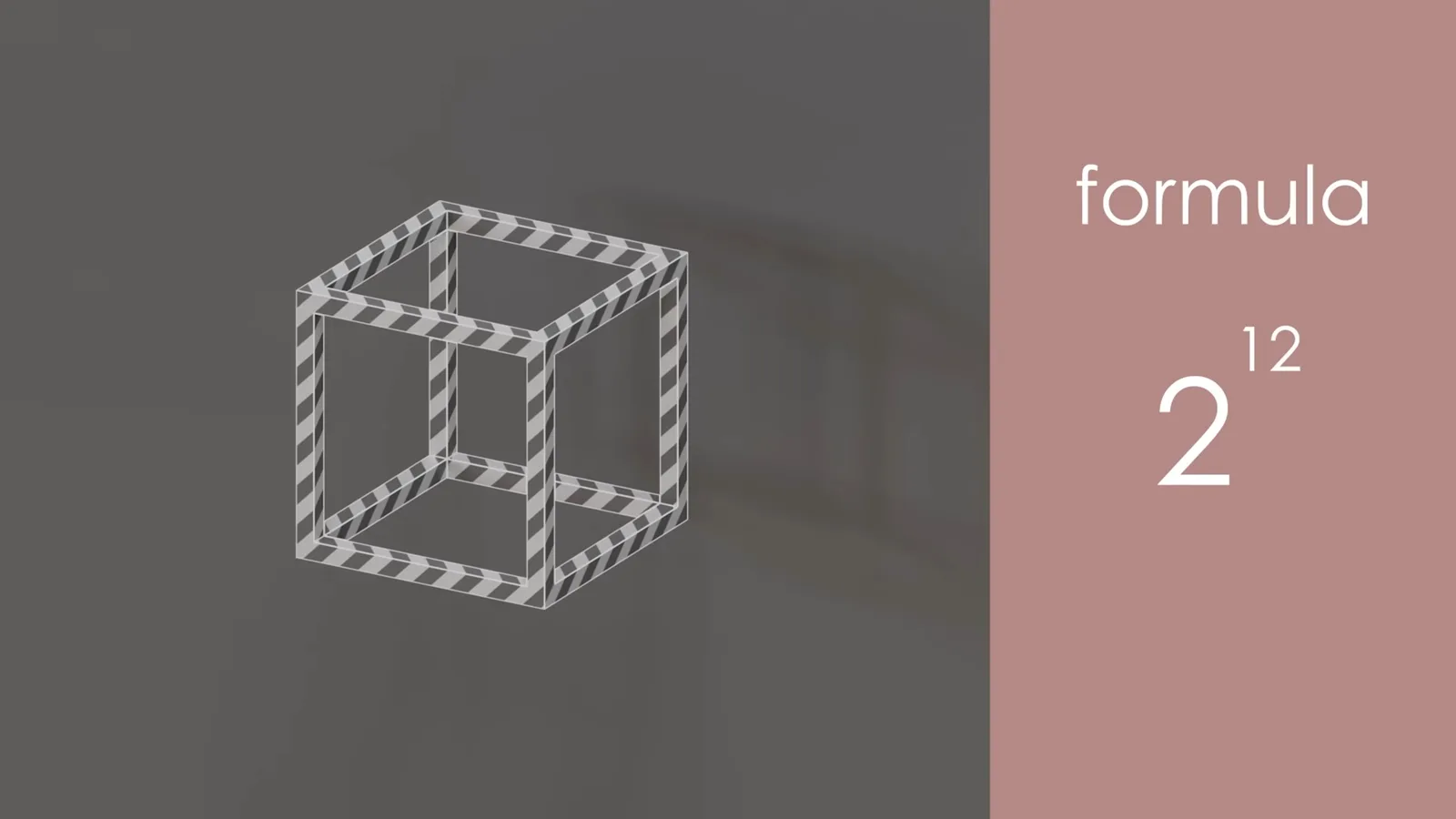
First try the two-dimensional version. Each of a square’s four edges is either on or off, giving 2⁴ = 16 configurations. For a cube, 12 independent binary choices produce 2¹² = 4,096 configurations before identifying rotations.
Sort the 16 squares by rotation. A single edge has four orientations, as does a corner; parallel pairs have only two. Three-edge shapes have four, while the full and empty squares each form a family of one. There are six rotational families altogether.
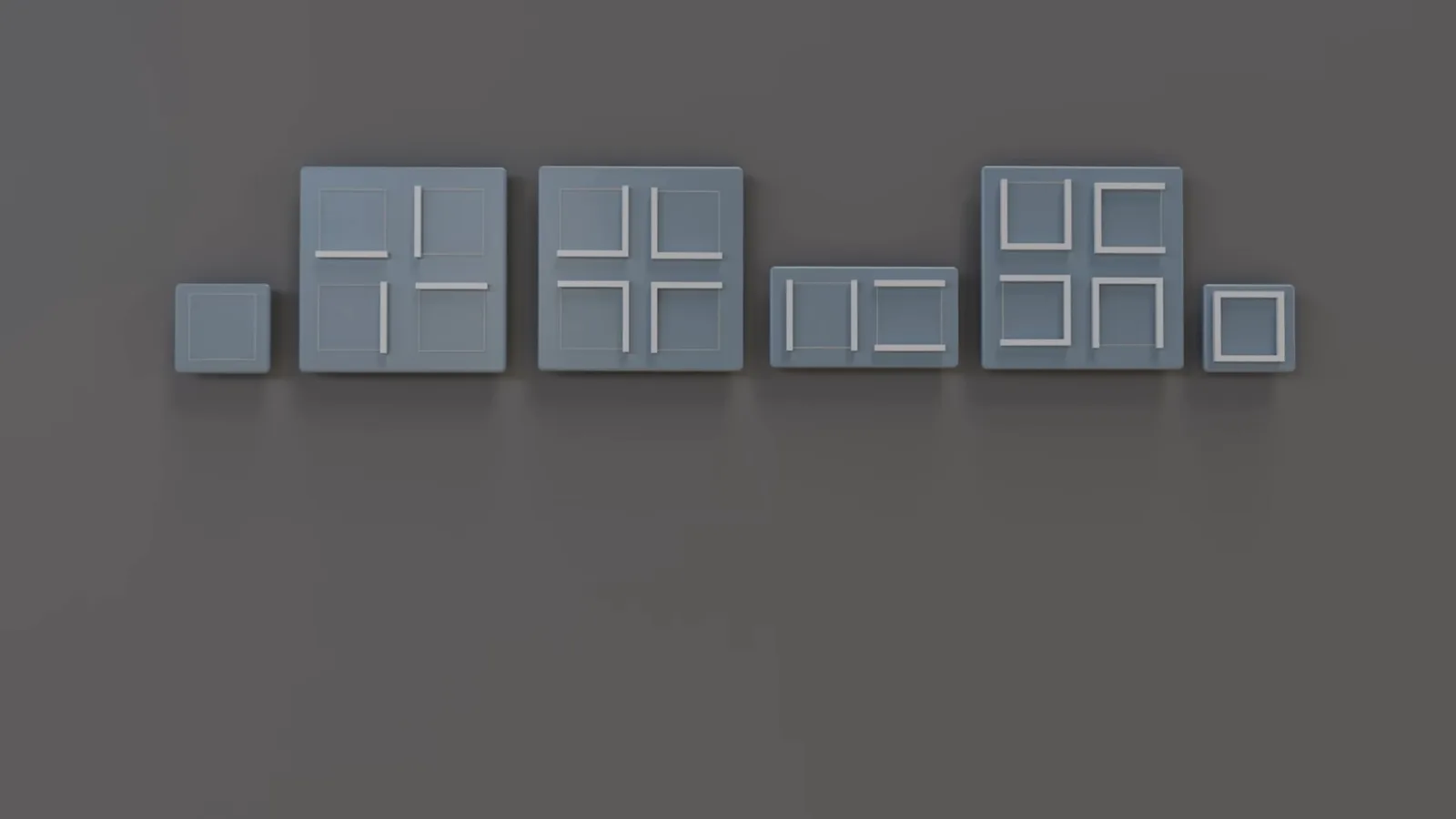
Apply the analogous artistic rules: remove the complete square, shapes that do not span two dimensions, and the disconnected parallel bars. Two families remain. The square is manageable by direct comparison, but a hallway of 4,096 cubes makes repeated manual sorting daunting.
Size, notation and symmetry
LeWitt divides the search by edge count and uses complements; rotations label family portraits.
LeWitt broke his task into smaller ones by grouping frameworks according to edge count: a five-edge shape cannot rotate into a six-edge one. The finished table reflects this strategy, arranging its examples in rows by size.
For our approach, study the brute-force process itself. The obstacle is that rotational families have different sizes. A table-shaped frame can point its top toward any of six faces, giving six orientations, while a less symmetric framework may have 24.
LeWitt also experimented with labels. He numbered each framework by its number of edges and an index, and moved from labeling corners to numbering edges. Useful notation does more than organize: it can make previously hidden relationships easier to see.
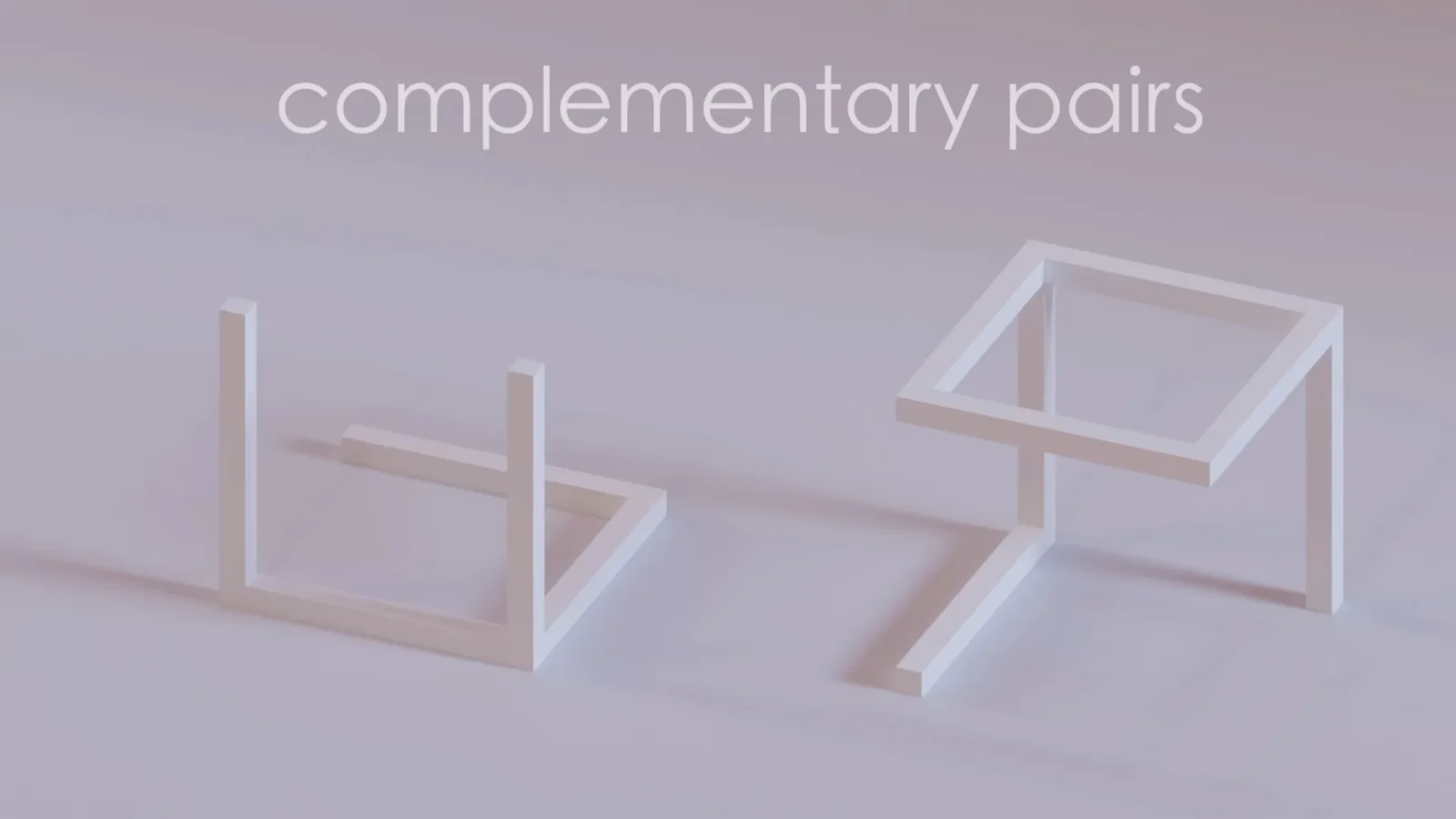
The missing edges of a framework form its complement. Edge labels make complements easy to find, and the two edge counts add to 12. LeWitt could explore four-edge and eight-edge cases together, as well as five and seven, effectively reducing some of the search.
We need labels for transformations. Rotations around the three face axes give three nontrivial turns each: 90, 180 and 270 degrees. Four corner axes give two turns each, 120 and 240 degrees; six edge axes each give one 180-degree turn.
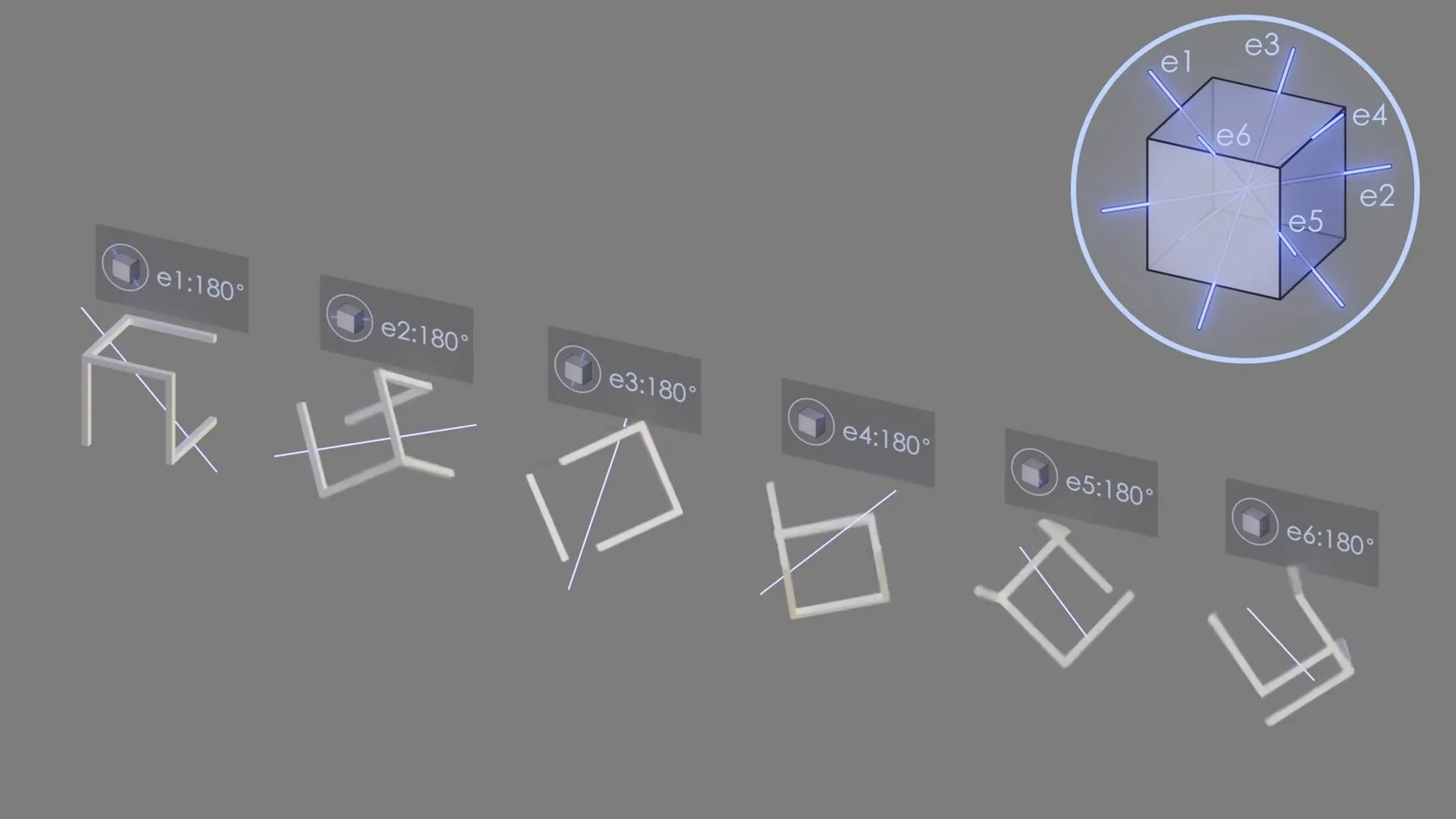
These are 9 + 8 + 6 nontrivial rotations; add doing nothing and there are 24. A label refers to an action, not a particular resulting shape. Apply all 24 actions to one framework to create what I call its family portrait.
Lookalikes and family albums
Dancstep explores how symmetry determines family size and how every family contributes equally to a count.
If the family has fewer than 24 distinct orientations, the portrait contains repeats. The table-shaped example has six orientations, and each appears four times. A three-edge corner has eight orientations, each repeated three times.
Call an output a lookalike when the transformation leaves the original framework appearing unchanged. The table has four such transformations, and the corner has three. In both cases family size multiplied by the number of lookalikes equals 24.
A cube missing one edge illustrates the formula: only the identity and one edge-axis half-turn preserve it, so the family has 24/2 = 12 members. That agrees with the 12 choices of missing edge. The full cube has 24 fixing rotations and only one family member.
The relationship supports our intuition that a more symmetric framework has fewer distinct orientations. Formally, it is an instance of the orbit–stabilizer theorem. Our labels for actions made the pattern visible in the first place.
LeWitt’s notebook includes a running total divided by 12. I suspect he was probing for a relationship with the cube’s geometry, though we cannot know his reasoning from this alone. Such experiments may fail but can be part of finding a useful pattern.
Make a portrait for every member of a family and arrange the portraits into an album. Each column contains the same family, possibly in a different order. A family with 12 members has two lookalikes per column; one with six has four per column.
Each family album therefore contains 24 lookalikes in total: family size times the number of fixing rotations. If we could count all the shape–rotation pairs that leave a shape unchanged, dividing by 24 would give the number of families.
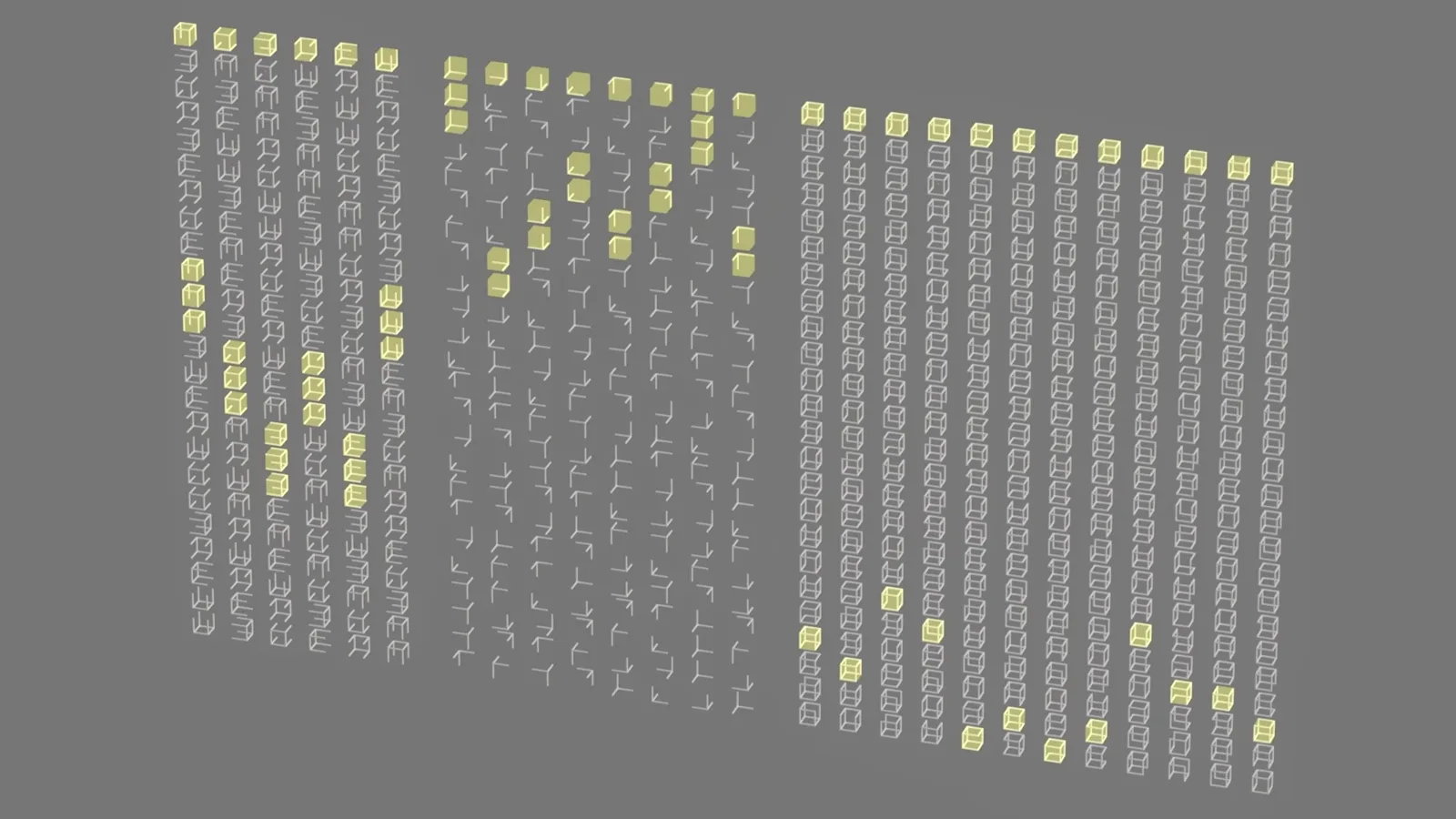
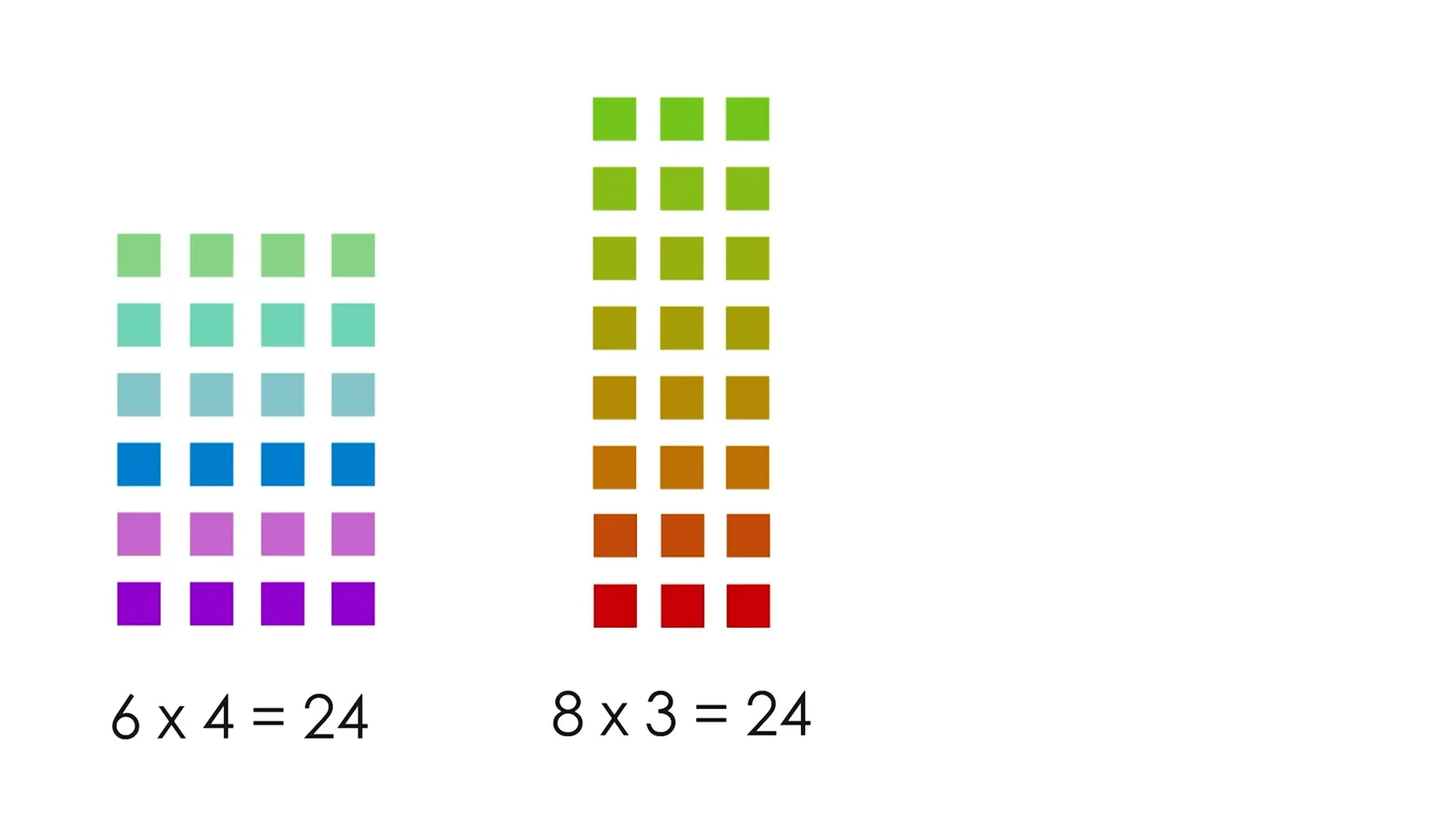
Try this with squares. Their four rotations yield four lookalikes per family, so the six families contribute 24 altogether. Counting the same marked entries while the original 16 configurations remain unsorted also gives 24; divide by four to recover six.
This is a correct formula, but counting fixing rotations separately for all 4,096 cubes still looks like a long walk down the hallway. We have related one difficult count to another. Then comes the key change in perspective: count the same entries across rows instead of down columns.
An epiphany: count by rotation
Counting fixed shapes for each transformation yields the cube result.
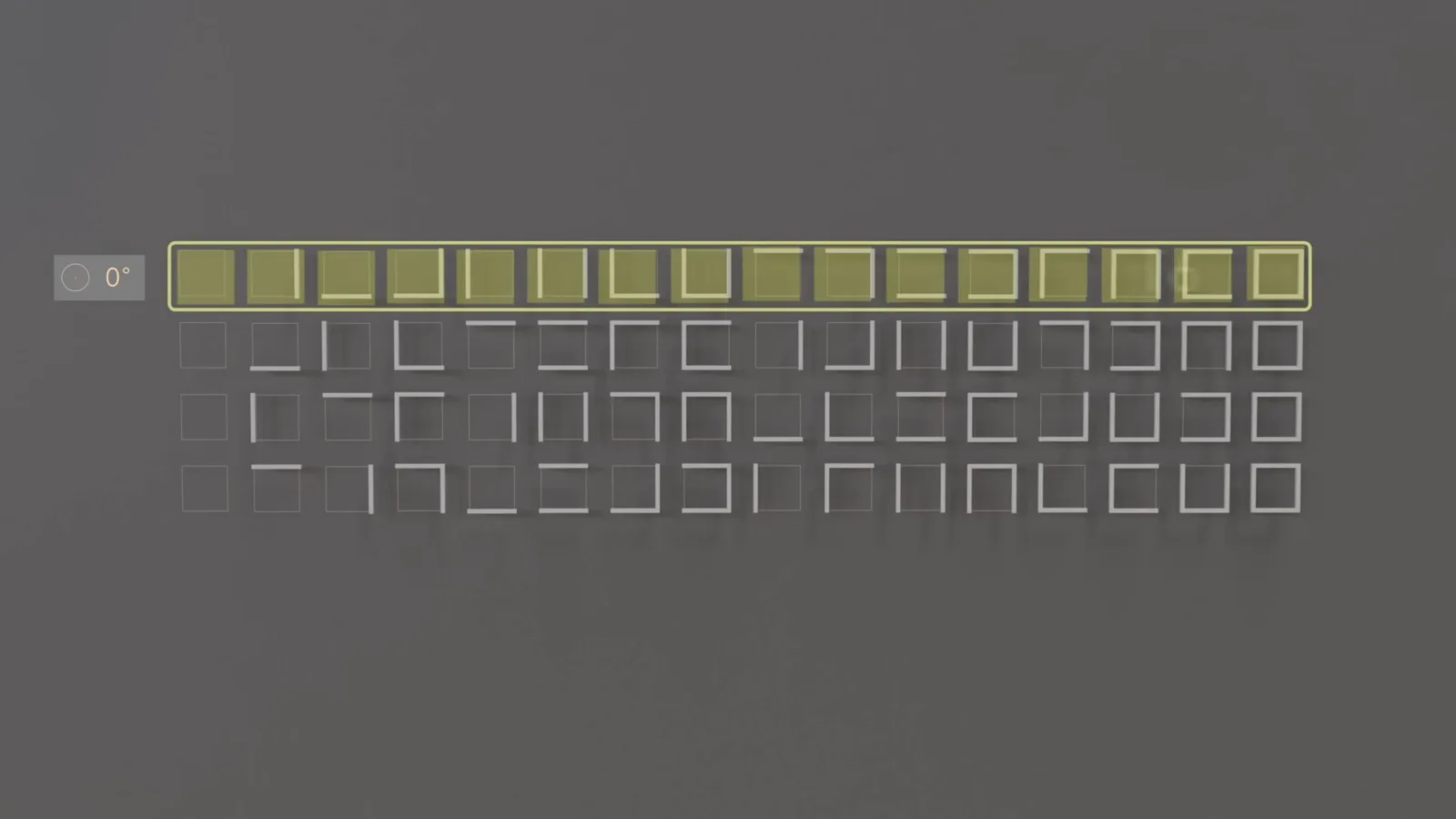
Ask, for each rotation, how many shapes it fixes. For squares the identity fixes all 16; the 90- and 270-degree turns each fix two; and the half-turn fixes four. Their sum is 24, and 24/4 gives the same six families without sorting them.
A lookalike is a pair consisting of a shape and a transformation that leaves it unchanged. Counting by shape or by transformation counts the same pairs. The second method is easier because the cycles of edges under a rotation determine which edges must share an on-or-off choice.
For a 90-degree square rotation, all four edges cycle together, so they must all be on or all off: two choices. A 180-degree rotation swaps the horizontal pair and the vertical pair independently, yielding 2² = 4 fixed configurations.
For a 90-degree face-axis rotation of a cube, the top four edges, vertical four edges and bottom four edges form three separate cycles. Each cycle is all on or all off, giving 2³ = 8 fixed configurations per quarter-turn.
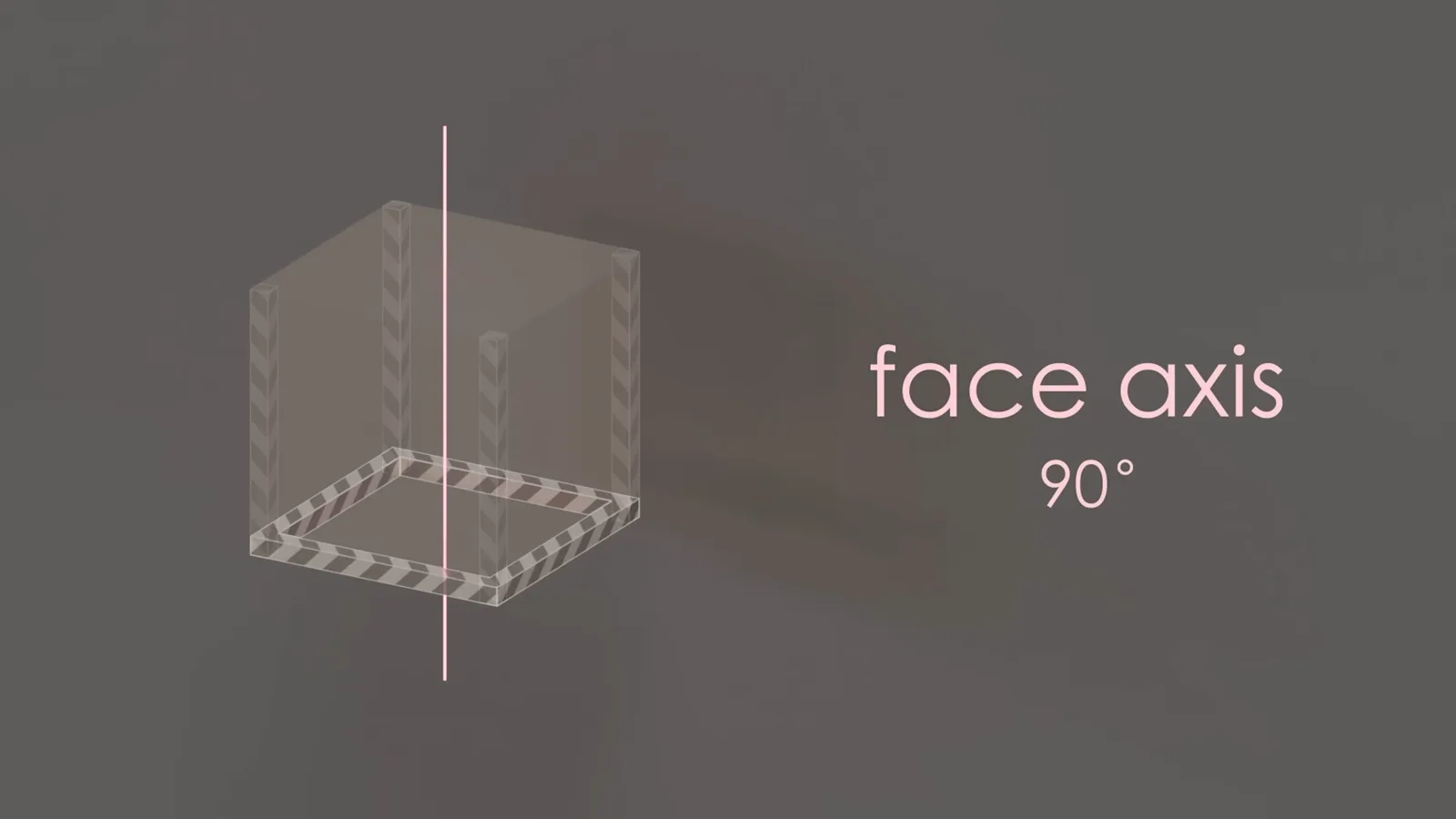
A 180-degree face-axis turn partitions the edges into six cycles, giving 2⁶ = 64 configurations. A 120- or 240-degree corner-axis rotation has four edge cycles and fixes 2⁴ = 16. Each half-turn about an edge axis has seven cycles and fixes 2⁷ = 128.
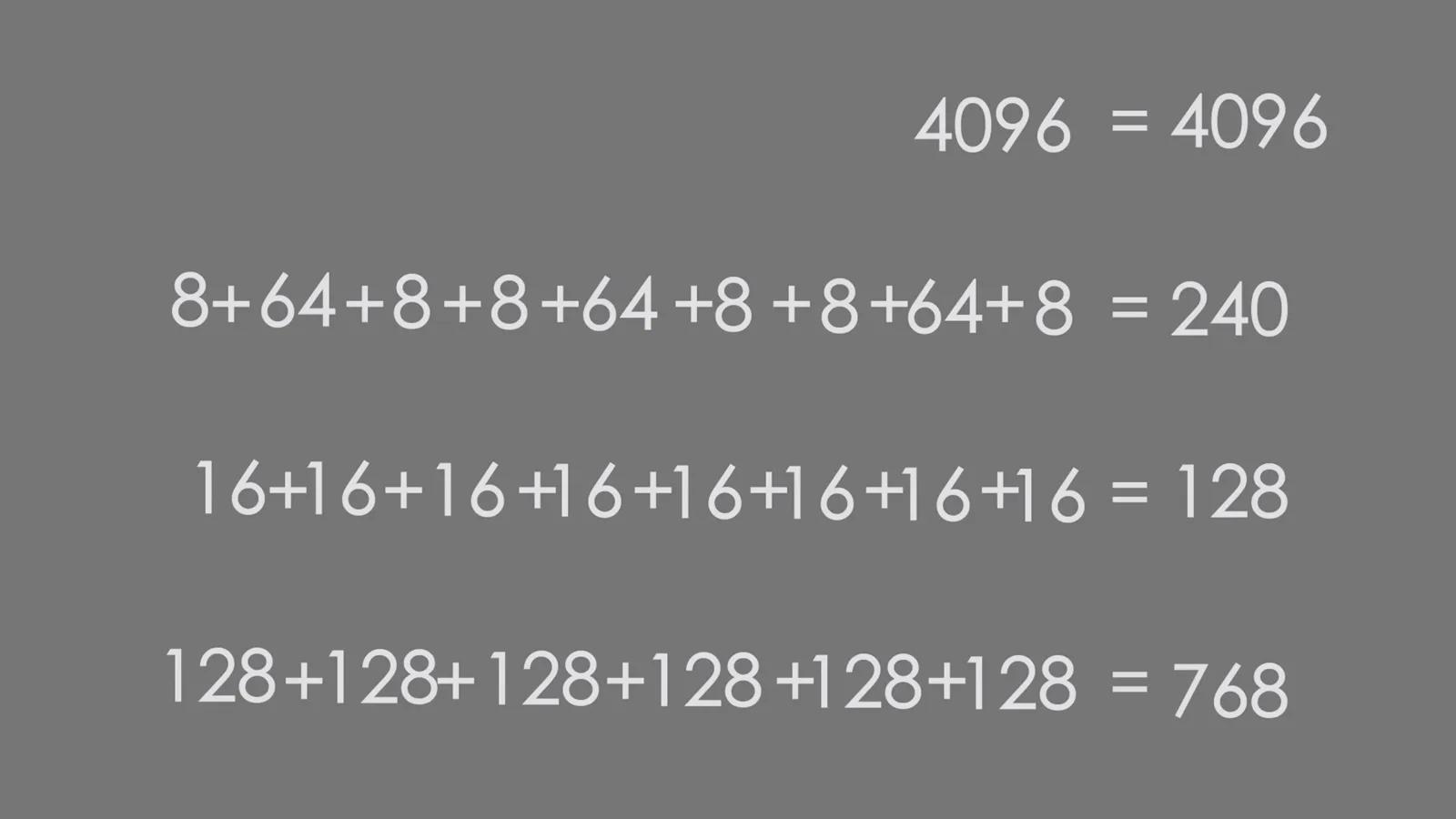
The identity fixes all 4,096 configurations. Adding across the 24 rotations gives 4,096 + 6×8 + 3×64 + 8×16 + 6×128 = 5,232. Divide by 24 and obtain 218 rotational families, before restoring the artwork’s additional constraints.
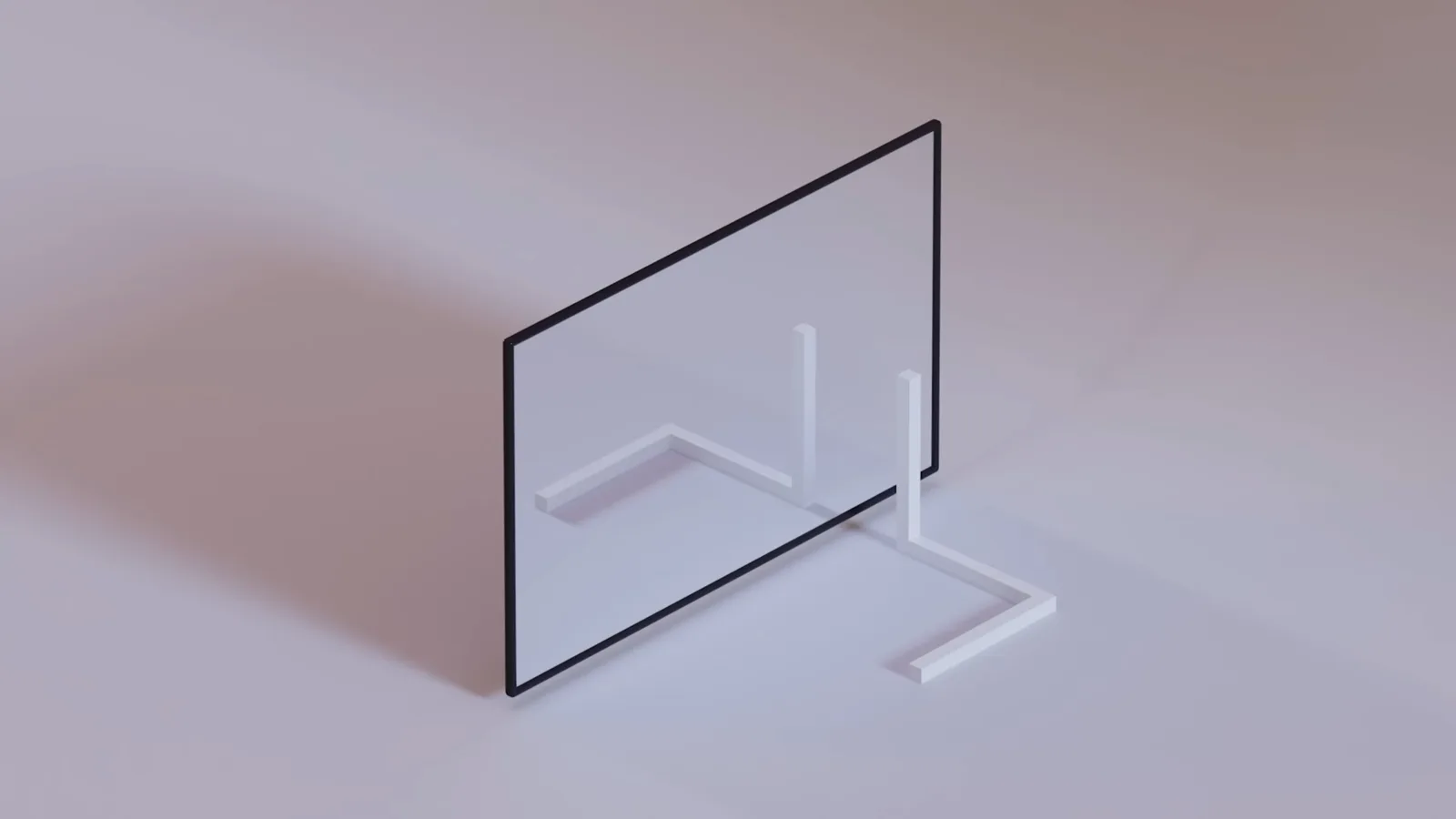
LeWitt’s notebooks suggest another possible insight. Some frameworks and their mirror images look related but cannot be rotated into one another, so they are distinct families. Dancstep infers that recognizing this may have caused the artist’s lists to expand; the precise moment remains speculative.
Formalizing and reflecting
Burnside’s lemma generalizes the technique, while LeWitt’s final work reveals the value of the process.
By early 1974 LeWitt had formalized his enumeration in several artworks, including the table, large sculptures, drawings and a book. A flat, simplified diagram of each framework compresses the three-dimensional form into an efficient record.
Dancstep found that those compact diagrams were also convenient for transcribing the work into code. LeWitt used them to track which fabricator was making each larger sculpture. Abstraction can serve both thought and practical coordination.
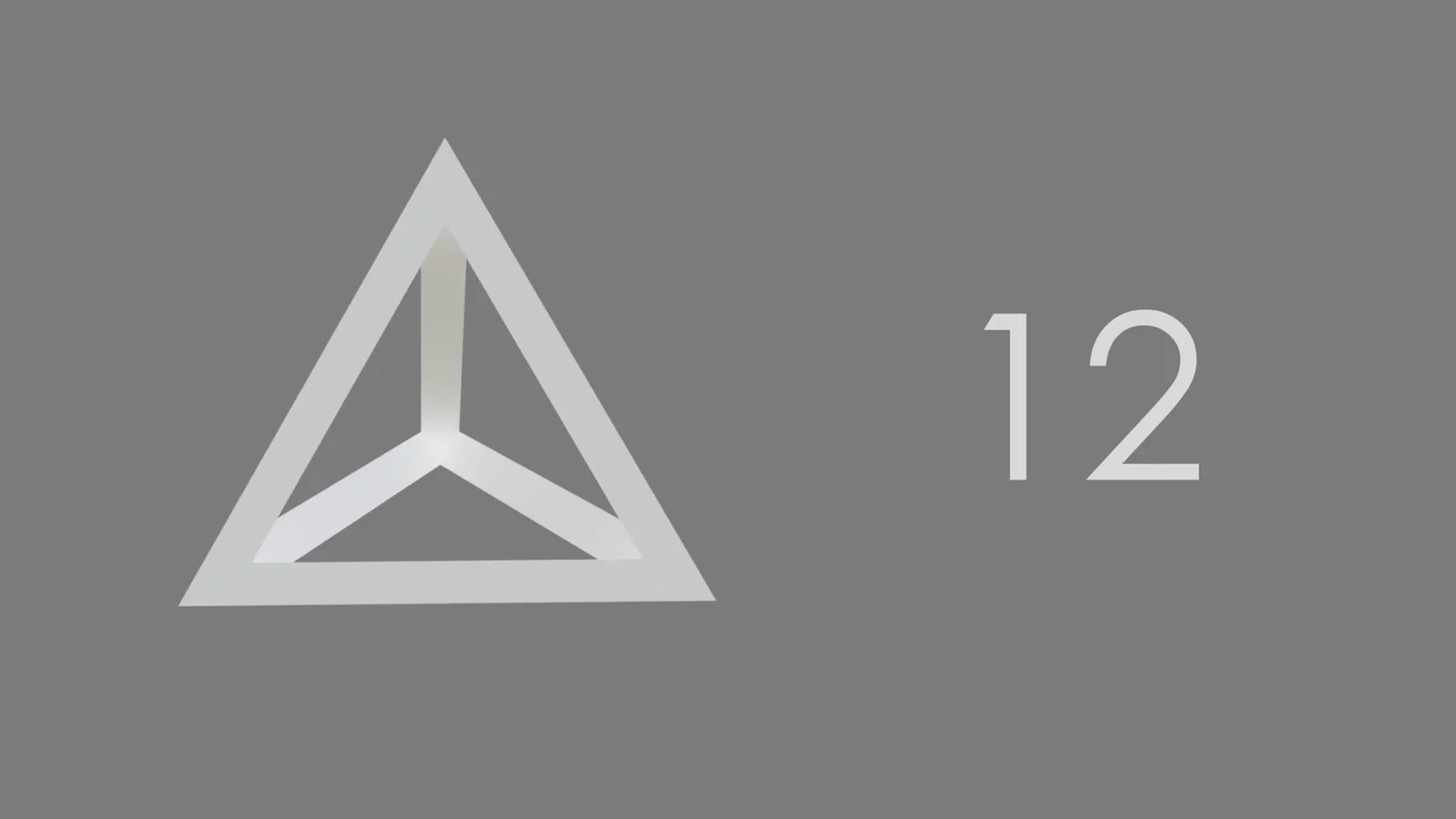
The counting method is Burnside’s lemma: the number of families is the average number of objects fixed by a transformation. It applies beyond binary cube edges: the video gives 12 families of incomplete tetrahedra and 22,815 rotationally distinct three-color cube-edge assignments as examples.
A complete mathematical treatment would prove the claims used along the way, including the 24 rotations and orbit–stabilizer relationship. Proof makes the result reliable and useful to others, but the exploratory path is full of hunches, failed ideas and flashes of insight.
A 2014 computational study confirms that applying LeWitt’s full constraints gives 122 shapes. The video reports that the final sculpture nevertheless contains one duplicate, numbered 104 and 105, and omits another shape. The correct total and a flawless physical enumeration are separate claims.
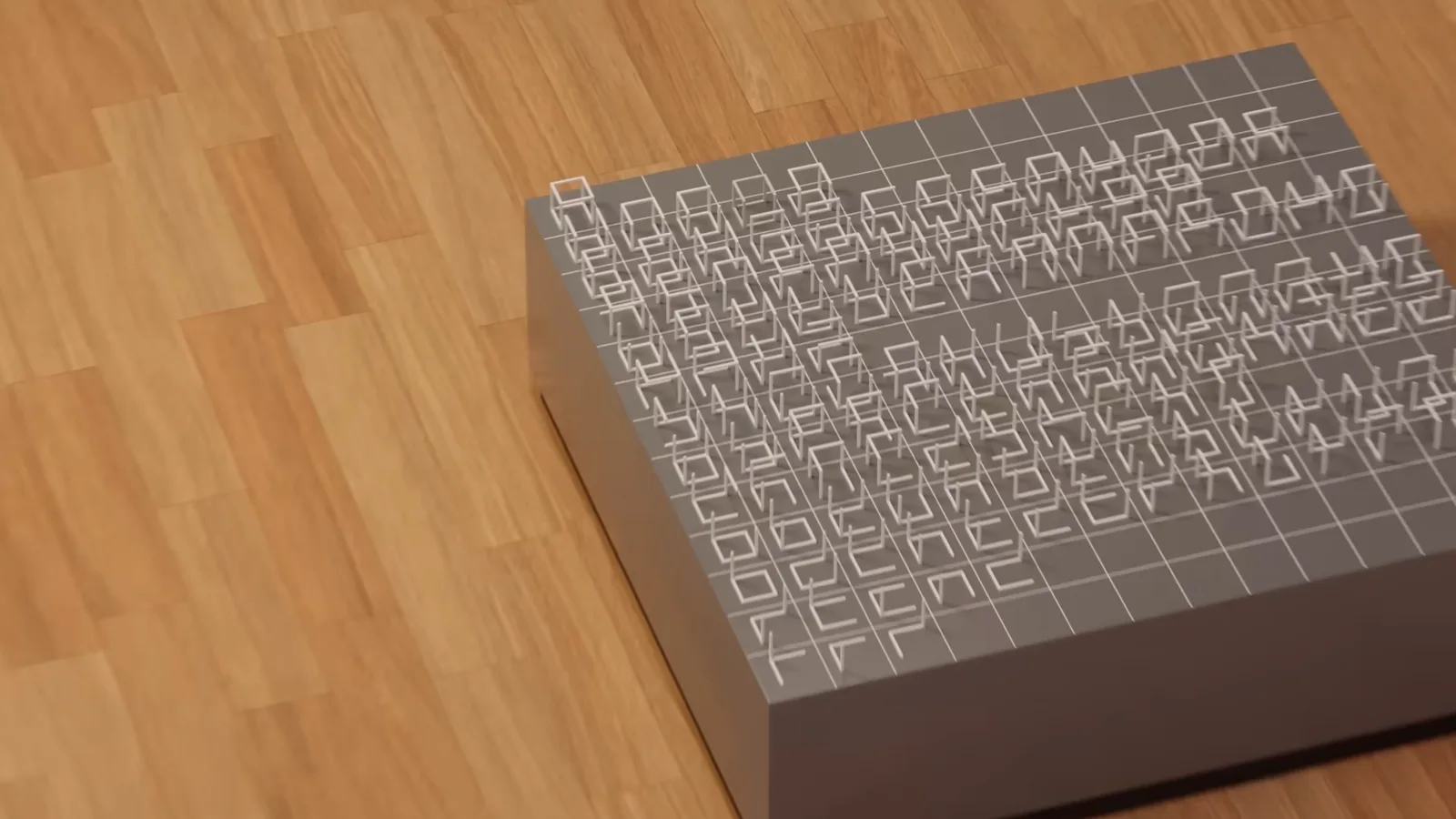
Dancstep sees mathematics as more than a way to grade an artwork for mistakes. It adds a conceptual way to engage with it. The sketches, failed attempts, models and thought process can be as revealing as the finished object, showing common ground between artistic and mathematical discovery.
Más de este canal
 40:44EN
 3Blue1Brown· 16 oct 2026Grant Sanderson: There's never been a better time to go into mathGrant Sanderson, Constantin Kogler · 3Blue1BrownStudents fear AI has solved mathematics. Grant Sanderson argues the opposite: even if machines prove theorems better than we do, the institution of math stays valuable—and this is a rare moment when newcomers can reshape it.
 51:55EN3Blue1Brown· 18 sept 2026The last IMO problem AI could not solveGrant Sanderson · 3Blue1BrownGrant Sanderson walks through IMO 2025 Problem 6 — a tiling puzzle that frontier models missed — and the visual patience it takes to prove a construction is optimal.
 0:55EN3Blue1Brown· 24 jul 2026The 64 Sugar Cubes Puzzle: Six Equal DistancesA 4×4×4 block has three colors; prove that six same-colored pairs share a distance.
 2:25EN3Blue1Brown· 12 jun 2026How Shannon Measured the Entropy of EnglishA guessing game helped Claude Shannon estimate how much information English text contains, and why prediction is central to compression.
 1:02EN3Blue1Brown· 10 jun 2026A Robot Walk and the Puzzle of Optimal Binary EncodingHow few bits does it take to send directions that occur with unequal frequencies?
 32:19EN3Blue1Brown· 7 jun 2026Reinventing Entropy: Why Prediction Helps Compress LanguageA robot’s movement code leads from prefix-free encoding to Shannon information and the entropy of language.