En 30 segundos
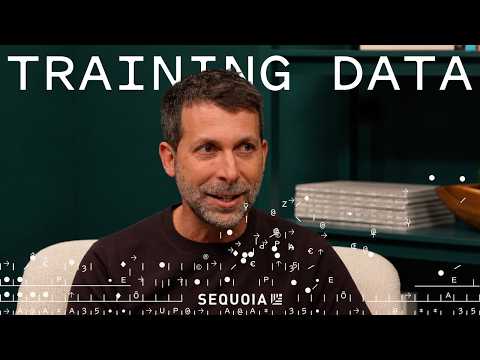
Josh Woodward, who leads Google Labs, tells Sequoia's Training Data that his team celebrates 10,000 weekly active users — a figure too small to register on Search dashboards. In a conversation with Sonya Huang and Ravi Gupta he walks through how Labs ships from idea to users in 50 to 100 days, why ordinary people will stop writing paragraph prompts, and why Veo 2, Project Mariner, and AI-written code are the ponds he wants to fish in. The through-line is taste: build for models that keep getting smarter, cheaper, and faster, and put human creativity on the amplified side of the ledger.
- 1End users will look back and say they cannot believe they typed paragraphs into tiny boxes. Context is not going away; the way you deliver it is changing fast, from long text toward PDFs, images, voice, and video.
- 2Labs' shipping standard is idea to users in 50 to 100 days. Project Mariner went from a hint that models could drive a computer to a Chrome extension in 84.
- 3Among AI filmmakers the brag is cherry-pick rate: how many runs until a clip is usable. With Veo 2, Woodward says that rate is falling toward one.
- 4Everyone talks about product-market fit. His years of building taught him the neglected half: early on, people iterate the product and forget to iterate the market.
- 5For three years he has been waiting for the curve to flatten. It has not. Pre-training looks like a wall; inference-time compute opens another horizon, a room with something like 30 doors.
- 6Google now writes about 25 percent of its code with AI, and the share is still rising. The other bet is disposable software: a chore app he and his fourth-grader shipped in 28 minutes for 45 cents.
Lee la transcripción completa por capítulos
Writing a paragraph into a little box is already starting to look old-fashioned
Sonya Huang and Ravi Gupta of Sequoia Capital's *Training Data* welcome Josh Woodward, who leads Google Labs, the experimental group behind NotebookLM, the computer-use agent Project Mariner, AI Studio, and the Gemini API. On the way in he offered Huang a claim she wanted on tape: writing prompts is old-fashioned. From an end-user point of view, he says, we will look back at this stretch and not believe we tried to type paragraph-level prompts into tiny boxes.
He splits the world in two. Developers and AI engineers inside Labs are writing what he calls beautiful multi-page prompts, and that craft is not going away. Ordinary people do not have time for it. Unlocking a model that way means becoming a kind of whisperer. What he sees instead, in Labs products and across the industry, is pull toward bringing your own assets: drag in a PDF or an image, recombine what you already have, and skip the essay.
The models still love context. Context will not disappear. What is changing fast is the type of context and how you deliver it — a picture, a pile of documents, a voice note, a video. NotebookLM is the pattern he is proudest of: you bring your own sources, the model grips them, and you can already turn that pile into a two-voice podcast. A marketer on the team named the feeling an AI joystick. Users should feel they are steering, not rolling dice.
Labs will throw a party for 10,000 weekly users, then try to live to the next milestone
Google Labs is an old name that went dormant and restarted about three years ago as a collection of builders doing zero-to-one AI products — consumer, B2B, and developer. The mix is half Google veterans and half founders and ex-founders. They pick a future, creativity or software development or entertainment, break into four- or five-person teams, and ship. The group sits outside the traditional product areas, close enough to dip into Search or Chrome, far enough to try to disrupt them.
Speed is the culture they protect. The standard is idea to end users in 50 to 100 days, which he treats as the right tempo for an AI platform shift. The second doctrine is that big things start small. At Google you are surrounded by billion-user products, and people forget those products began as one user and one pain. Labs gets excited at 10,000 weekly active users and will celebrate it. Other groups' dashboards, he notes, do not even count that low.
Organizationally they keep one foot outside, co-creating with startups, and one foot inside Google DeepMind, with a view of the research frontier and, more important, where it is going. They look for underdogs with hustle. A document called Labs in a Nutshell has a favorite chapter, "Who thrives in Labs," with 16 or 17 bullets. Failure has to be normalized, including in promotion and compensation. Unicorns who combine model depth with consumer taste are welcome; so are people who look wrong on paper and right on a GitHub history.
Topic choice is a blend. Top-down they pick ponds that are on mission for Google — software development is an obvious one, with tens of thousands of engineers inside the company. Woodward is from Oklahoma and likes to fish in the summer: spend the thought on which pond, then let the small teams choose the user problem. There are no multi-quarter roadmaps. The job is to survive to the next 10,000-user milestone and grow it. Three endings all count: graduate a product, as AI Studio and the Gemini API did into DeepMind; keep it in Labs and turn it into a business, the NotebookLM path; or cut it after a 100-day sprint. If every project is working, he says, you are not swinging hard enough.
Veo 2 is pushing cherry-pick rate toward a single usable take
Generative video, Woodward says, has moved from almost possible to possible. The catch is size. Veo 2 still takes hundreds of computers to run, and an eight-second clip is obscenely expensive. He tells people not to freeze on that number. Text models from Gemini, OpenAI, and Anthropic dropped in cost about 97 times in a year. Assume a similar curve and the video models follow. What is new with Veo 2 is quality and physics: motion, scenes, instruction following.
AI filmmakers talk about cherry-pick rate, how many generations you burn to find a clip you can keep. With Veo 2 he is seeing that rate fall toward one: you got what you wanted. Physics is never fully solved, but it is close enough. A few years ago the Will Smith pasta video was a disaster; even last year knives produced six fingers. Photoreal quality, jump cuts, and camera control are on paths to solved. What remains is serving cost and, more interesting to him, the application layer. Models and tools sit underneath. The real value, Labs believes, is rethinking video workflows, which is still wide open.
This week he had been talking to filmmakers who want character consistency, scene consistency, and camera control — almost an AI camera, as decades of hardware were perfected for a different input and output. Generate infinite scenes, then change a red sweater to blue not in one shot but across a two-hour film. Internally they talk about lowering the bar and raising the ceiling: make video accessible to people who could never shoot, and let professionals blow the quality out of the water. Both are starting to happen at once.
Ravi quotes a Paul Graham post: at this pace you want to build things that do not quite work and cost too much, because they will work and the cost will fall. That, Woodward says, is exactly how Labs operates. A principle from the last few years of AI products: make sure the product is aligned to models getting smarter, cheaper, and faster. If the core value proposition rides those tailwinds, you are in a good spot. If any of the three is off, question your existence. Subscription plus usage is one commercial shape; creators talk more like producers, paying per output, even auction-style. He thinks the economics get interesting on a scale of quarters, not many years.
He has spent three years waiting for progress to slow down. It has not.
Does the curve accelerate? Woodward has a privileged view into DeepMind and still answers like someone who keeps being wrong in the same direction. He keeps thinking it will slow down. In the last three years it never has. Pre-training looks as if it might plateau; inference-time compute opens another horizon. Steven Johnson, the author they hired onto the NotebookLM team, writes about adjacent possibles in the history of innovation. Right now it feels like walking into a room where about 30 doors are opening at once.
The future of watching video, in that room, could spider in many directions. Entertainment gets more steerable: you sit on the couch and interject, taking a story a different way. Personalization goes far past today's YouTube and TikTok ranking, fine-tuned to what you are willing to share with the model. A lot of it generates on the fly. After the creator class of the last 10 or 15 years he expects a curator class, people who work with the model, remix, and tap out a variant. Whether the 90-to-95 percent who only consume will shift is an open question. He can already imagine a Join button next to Play, the content asking Sonya and Ravi what they want to talk about — a pattern NotebookLM is building toward with avatars, lip animation, and voice cloning.
Movies and games may blur. Training tricks are already leaking among video, games, world-building, and 3D, and Labs will not pick a winner. They are hedged. On the 3D side a live Search project turns six photos of a sneaker into a spinable model; Veo 2 dropped the need to two or three shots, which means, in principle, every product Google has indexed could become a 3D object overnight, panned, relit, and dropped into a scene. On the video side they prototyped a classroom Moon landing: kids in the lunar module, a teacher sidebar that can set the back on fire, and a model that fills in details when you say "look right." That is why the line feels like it is dissolving.
Mariner can drive a computer. Accurate sometimes. Fast, not at all yet.
Project Mariner shipped in December 2024 as a Chrome extension, a 84-day sprint from noticing a new model capability to putting it in people's hands. The question was what happens, good and bad, if you let a model control a browser: scroll, type, click, not in one tab but in an infinite number in the background. Anthropic, OpenAI, Google, and a pile of startups hit the same idea at once. Woodward reads that the way historians read simultaneous discovery: a new paradigm, shared potential, and people changing labs. Huang asks why everyone converged. He does not claim inside knowledge of the others. It keeps you on your toes, which fits the underdog mindset.
Demo videos always book a flight or order pizza. Huang objects: booking a flight is one of her delights. Woodward agrees that the consumer killer is not obvious yet. Trusted testers keep pointing at an older word, toil — the work that makes you grumpy. A lot of those jobs are showing up on the enterprise side. A call center today uses a baroque remote-takeover flow to debug a customer's machine; they want Mariner to do it. A salesperson finishes a call and then hand-updates a stack of clunky SaaS tools; they want to fan the next steps out in one shot. Labs tests with Google Cloud customers who have their own internal labs, and with startups. He invites listeners to DM him.
Product-market fit, he has found, is only half the early work. People iterate the product and forget to iterate the market; the right market is as important as the right product, and you have to connect them. Mariner sits in that gap. Can a model drive your computer? Yes, a huge new capability. Accurate? Sometimes. Fast? Not at all yet. Then you still have to find the market. He coaches PMs, engineers, and UX people the same way: do not look at the dashboards, the numbers are too small. Look at the customer's eyes. When you show them something, do they light up? At this stage it is more art than science.
Gupta asks whether Google's existing search, Gmail, and calendar data could be opted in so you stop dragging context by hand. Woodward says they experiment on their own data — he has opted into a lot, "take it all" — and some of it will surface in the Gemini app, with controls so it does not feel like giving everything away. Gemini's long context is the lever they are trying to exploit, a second brain with impressive short-term memory. Computer use that is accurate and fast enough is hard to date; labs are on roughly a monthly or two-month rev, so four to six versions this year are already in view. The jagged edges are XY precision, almost a lat-long for the screen, and human-in-the-loop granularity. Today the rules are blunt: do not buy anything, do not accept terms. People will want "fine under five dollars, not a penny more." Bank on the model getting smarter, faster, cheaper, and on those revs arriving.
They cold-emailed a tools-for-thought author, then invented a job ladder so he could stay
The visiting-scholar trick started before ChatGPT. Clay Bavor, who restarted Labs, and Woodward were both subscribers to Steven Johnson's Substack. Johnson had spent decades hunting the perfect tool for thought. In the summer of 2022 they cold-emailed him: we love you, come build the tool you have always wanted. He picked up the phone and said yes. Google had no job ladder for a visiting scholar doing product, so Woodward went to HR and made one. NotebookLM's fussiness about sources and citations is that novelist-historian's respect for provenance coming through the product. Musicians have come in on the same pattern; they are trying to land a visiting filmmaker. Co-create with the industry, he says, and you get past the toy feature into the workflow.
The original incubator story was build and graduate into the mothership. Some of that happened. Some products, NotebookLM among them, stay in Labs because they are only possible with AI and because the team wants them to become sustainable businesses. Take big swings. If they all work, you are not swinging big enough. Stopping after a 100-day sprint is a good outcome too. For 2025 the ponds are agents, video, and computer use, but he thinks about ponds through a document called Labs is a Collection of Futures: 82 predictions, which is a dangerous number. The thought experiment is a capsule that slings the team to 2028 for five minutes. Write down everything. One prediction is that knowledge becomes infinitely remixable — anything in can become anything out. If you believe that, you build accordingly. Video and agents are the obvious moment. Coding, he thinks, is still under the radar for how large the leap this year could be.
Taste, truth, and a chore app that cost 45 cents are the underhyped bets
Labs is doing coding work. About 25 percent of Google's code is now written by AI, a figure Jeff Dean has discussed, and the share is up a lot. Lower the bar and raise the ceiling: let people who never wrote software make it, and make trained programmers 10x to 100x. One weekend Woodward and his fourth-grade son, stuck on household chores, used Replit's agent to ship a chore tracker. Twenty-eight minutes, 45 cents, and they are daily active users. That is a taste of software abundance and of what the team calls disposable software: use it once and throw it away. If code models can write, self-correct, self-heal, and migrate, the current pace will look slow.
Overhyped, in his view: the chatbot interface, still reused everywhere including at Google, and the habit of jamming AI into existing products. It reminds him of arriving at Google as the iPhone took hold. Steve Jobs walked on stage in 2007. The 2009 App Store, three years later, which is roughly where he thinks this AI wave sits, was shrunken websites, flashlight apps, and fart apps. The Ubers, Airbnbs, and Instacarts come later. The real stuff, he thinks, starts to appear this year and next. Underhyped besides coding: long or infinite context, a strategic lever for Google and the thing that lets an agent like Mariner just keep going; taste and design, because value sits in the application layer and AI slop is coming, so human-crafted work becomes more artisan; and veracity, what is real.
Gupta's analogy lands. The person with whom you share the most context is a spouse, and a flick of an eye can mean it is time to leave the party. That is the ceiling of infinite shared context. Woodward says they know the ceiling is up there. The same wound exists at work: when a long-term employee leaves, the context walks out the door. Rapid fire: favorite new AI app is Replit's agent; Sequoia partner Andrew Reed now slings little apps the way he used to sling memes. Breakout category this year is video. Recommended reading is not an AI paper but the Lego story, a third-generation family company that bet the firm on the brick. Pre-training hitting a wall: he leans agree, with juice still to squeeze and focus already shifting. He will not give Nvidia advice. The Nobel Prize in the building belongs to Demis Hassabis and John Jumper, not to him.
He leaves a values note rather than another prediction. It is a time to be alive and building, a window of adjacent possibles. Listeners should think less about which lab is winning the model race and more about what they are putting into the tools, because those tools will shape follow-on generations. Are you trying to replace people, or amplify human creativity? On video he is on the amplify side. The Valley has moments that change things for generations, for good or bad. The models are only getting smarter, faster, and cheaper. Put them to good use, and think about what happens downstream.
Más de este canal
 1:08:02EN
 Sequoia Capital· 13 oct 2026PódcastAlphaGo Took Two Years. AlphaZero Took Hours. Silver Is Making the Same Bet on SuperintelligenceDavid Silver and Lasse Espeholt left DeepMind to build Ineffable Intelligence, a twenty-person lab that wants a superlearner to discover science, math, and language from experience rather than from a pre-training run.
 1:04:26ENSequoia Capital· 6 oct 2026PódcastAt 100,000 Accelerators, Something Fails Every HourGoogle AI infrastructure chief Amin Vahdat tells Sequoia's Sonya Huang why FLOPS is a vanity metric, why the TPU line split in two, and why he would rather wait on a utility than build his own gigawatt.
 1:05:21ENSequoia Capital· 15 sept 2026PódcastThe Bridge From Model to Workflow Is a Trillion-Dollar BusinessBox CEO Aaron Levie argues that the money in this cycle sits in the messy gap between frontier models and real enterprise work — and that coding's overnight diffusion will not repeat for everyone else.
 52:27ENSequoia Capital· 1 sept 2026PódcastAfter Two Dozen Police Departments Said No, They Built an Anti-Network-Effect AI CompanyA Wisconsin county had 300 gigabytes sitting on a cold case—and Peregrine's founders still refuse to take the credit.
 55:19ENSequoia Capital· 25 ago 2026PódcastHuman Click Data Is a Bug: Rebuilding Search for a Web of AgentsParag Agrawal, former Twitter CEO and founder of Parallel Web Systems, argues that agents will query the web a thousand times more than people, and that both search infrastructure and the ad-supported internet have to be rebuilt for that customer.
 53:44ENSequoia Capital· 18 ago 2026PódcastThe Biggest Bug in Today’s Models Is That the Weights Never ChangeTuring Award winner Rich Sutton and Khurram Javed founded Oak Lab to build agents that keep learning after they ship — and they call synthetic data a big mistake.