En 30 segundos
In February 2026, Matthew Berman reacts to Anthropic documentation restricting third-party use of consumer subscription OAuth credentials. He distinguishes that restriction from access through a separately billed API, discusses confusing statements about the Agent SDK, and describes his own model-routing changes. The video reflects policy, pricing, and personal usage at that time; current terms can differ.
- 1OAuth restrictionThe documentation shown restricts use of Claude consumer subscription OAuth tokens in other products; Berman says API access remained available.
- 2Cost of large contextsHe estimates that a 50,000-token input at the cited $5-per-million rate costs $0.25 before output; caching and actual billing can change costs.
- 3SDK clarificationAn Anthropic employee's contemporaneous clarification says local experimentation and commercial use should be distinguished, although the wording shown had caused confusion.
- 4Changed model routingBerman describes moving most work to OpenAI models and retaining Claude models as backups.
Conclusiones
- The dispute concerned using consumer subscription OAuth credentials in third-party tools, not a general ban on Claude's API.
- Berman says subscription quotas and separately billed API usage led to very different costs in his setup.
- The Agent SDK clarification shown in the video caused confusion; users should consult applicable current terms for their use.
- Routing different tasks to different models can change cost and complexity, depending on the workload.
Lee el texto editado por capítulos
The subscription credential restriction
Berman reacts to Anthropic's OAuth documentation and provides background on OpenClaw's renaming.
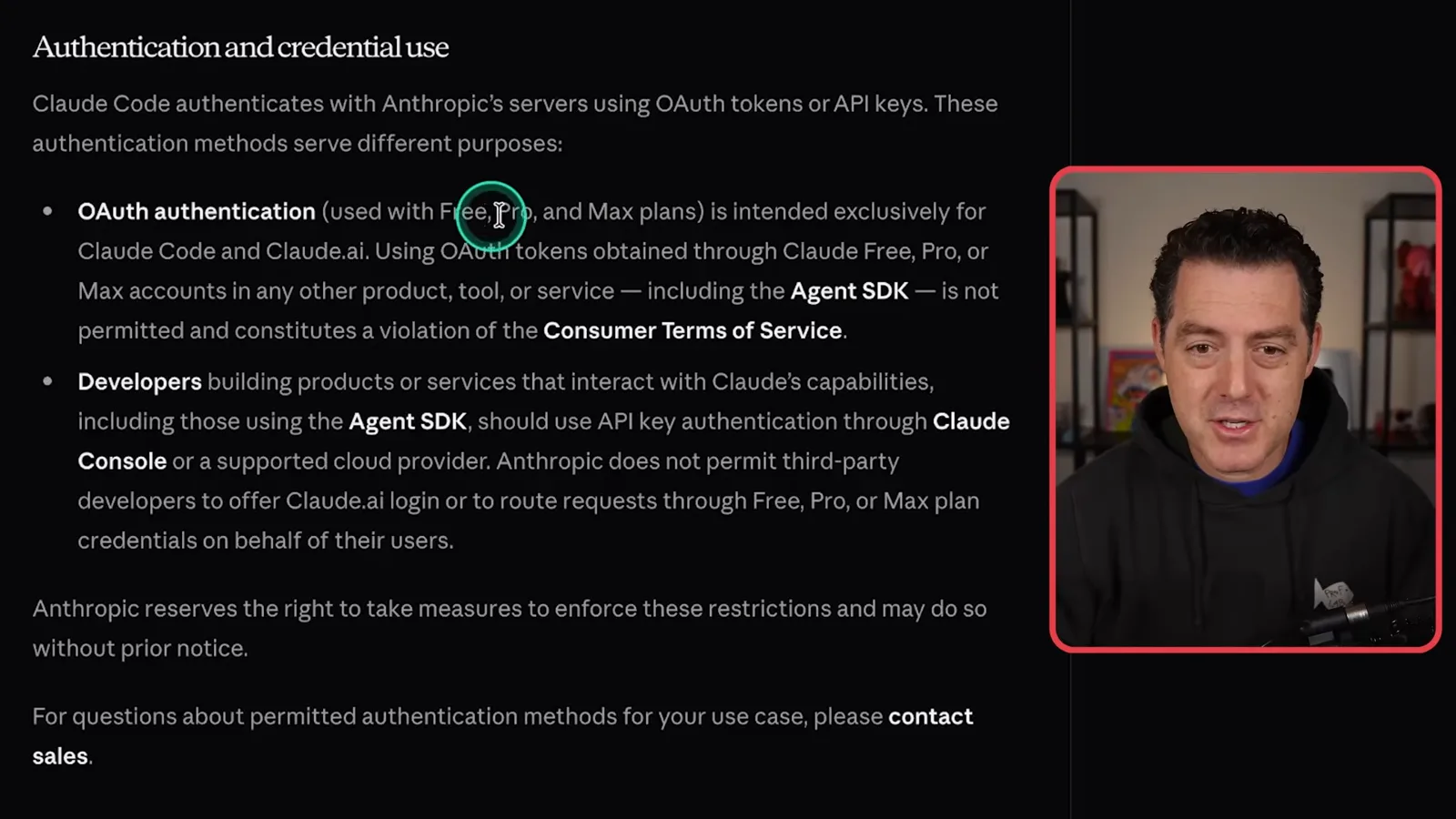
Matthew Berman reacts to Anthropic documentation saying OAuth tokens obtained from Claude Free, Pro, or Max accounts were intended for Claude's own supported products and not other tools. He believes the restriction affected OpenClaw users, although the wording he shows does not name OpenClaw. This is a restriction on a credential and subscription use, not a blanket ban on using Claude models through the API.
Berman describes OpenClaw as a locally runnable personal assistant able to use different model providers. He recounts its earlier names, Clawdbot and Moltbot, and says trademark concerns led to a rename. The policy discussion takes place in February 2026; terms and supported integrations can change.
Subscription and API costs
He compares his subscription experience with API billing and explains a large-context example.
He explains why the distinction matters to him: a subscription provides usage within plan limits, whereas API requests are separately metered. Berman says he moved from a $20 subscription to higher Max tiers as his OpenClaw use grew. His personal spending and effective discount do not establish a universal price comparison for every workload.
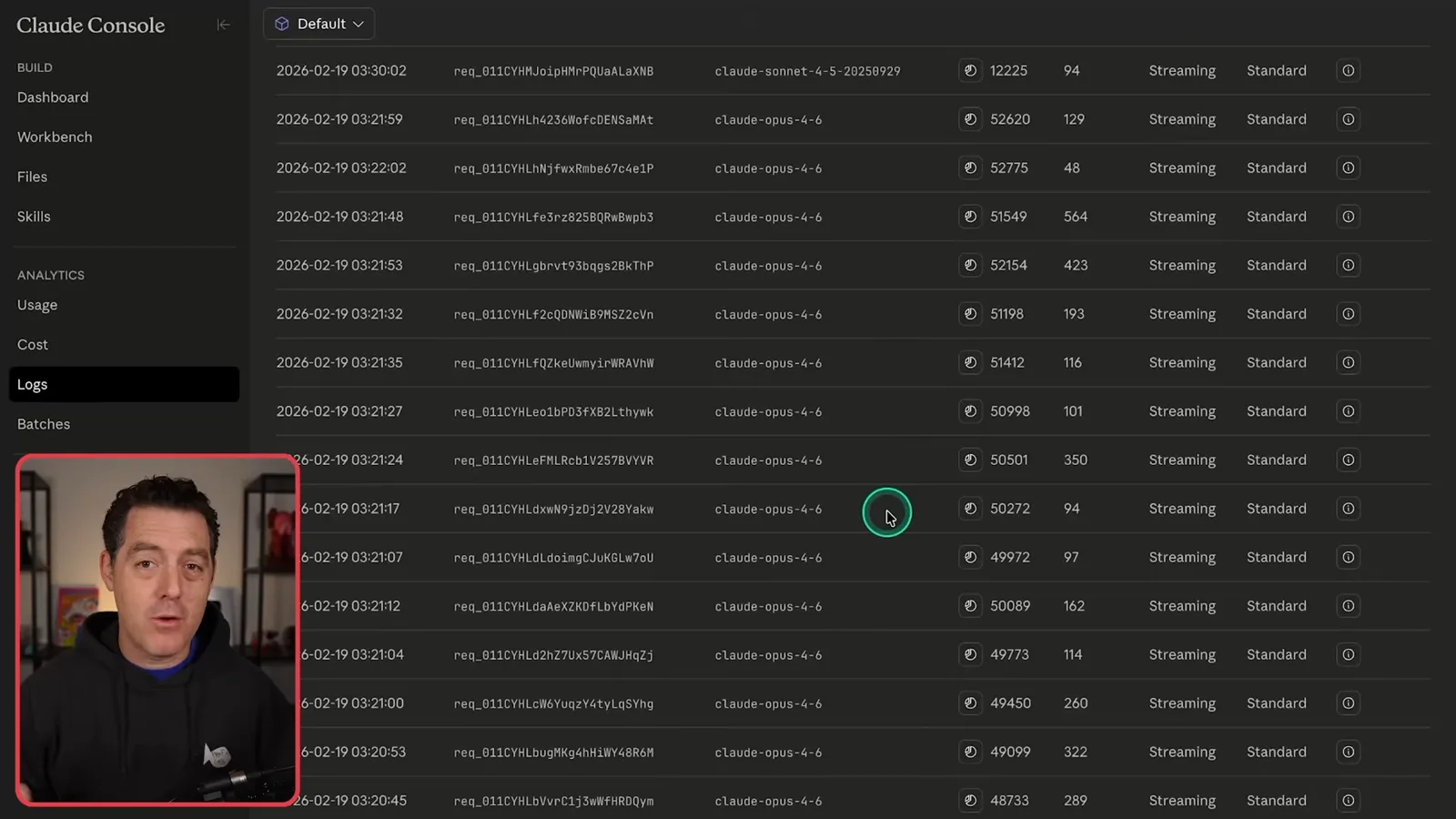
Using the prices he cites for Claude Opus 4.6, Berman calculates that 50,000 uncached input tokens at $5 per million would cost $0.25 before output charges. His configuration sends a large context even for a simple greeting. Actual charges depend on input and output volumes, caching, context tier, provider pricing, and the configuration; the example is not a minimum cost for all users.
Agent SDK confusion and timeline
Berman reads a clarification and describes reactions to competing access approaches.
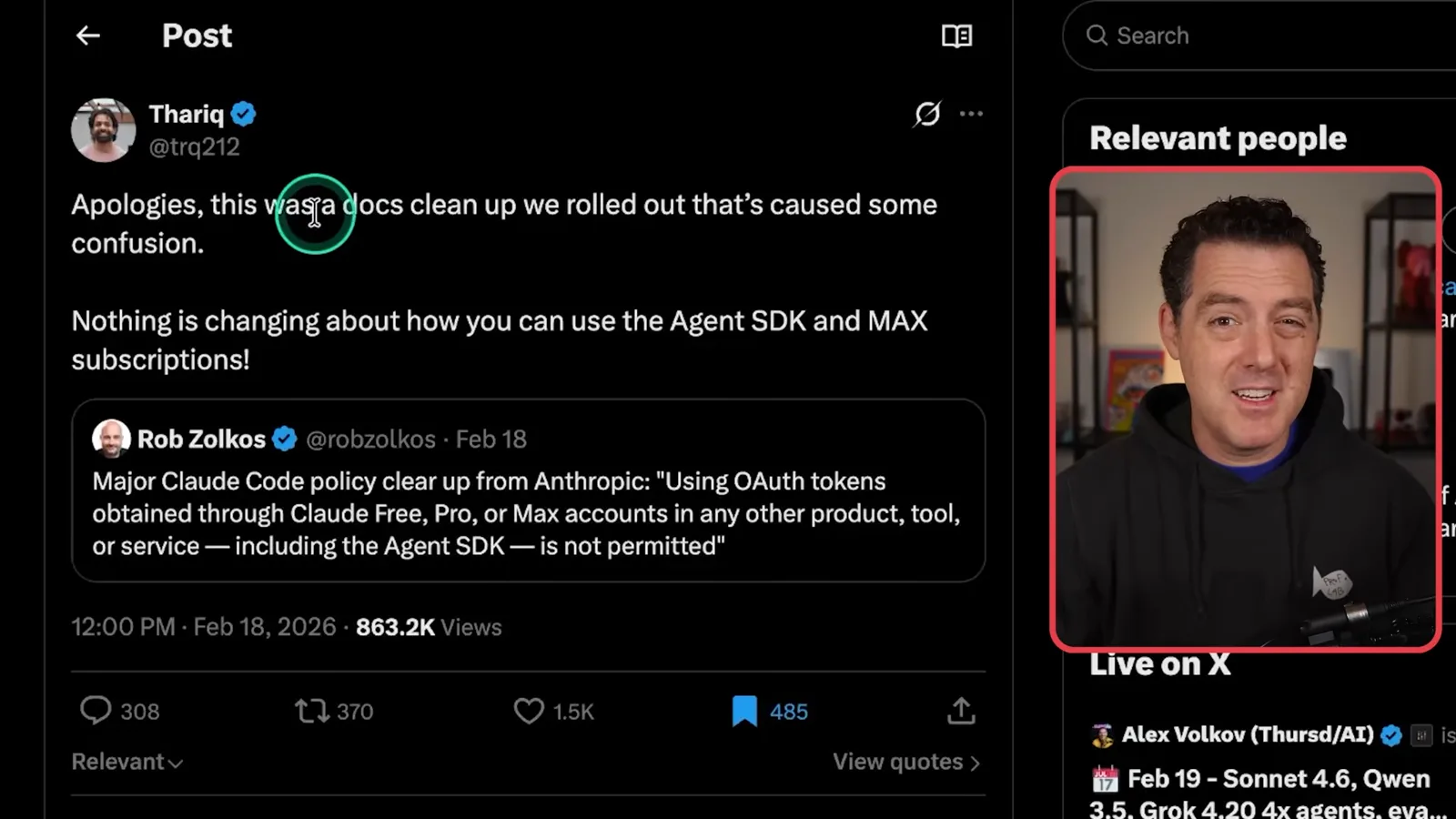
The displayed documentation also mentioned the Agent SDK, prompting confusion. Berman reads an Anthropic employee's clarification that existing use of the Agent SDK and Max subscriptions had not changed, followed by a distinction between local experimentation and building a business with API credentials. The video itself acknowledges ambiguity, so its reading should not substitute for checking the applicable current documentation and terms.
Berman argues that many OpenClaw users are individual tinkerers who already pay for subscriptions, and he dislikes the restriction. He speculates about Anthropic's economic incentives and compares the reaction with statements he attributes to OpenAI about its own subscription access. These are his account and interpretation of a rapidly changing policy situation, not definitive guidance on present permissions.
A new model-routing setup
He describes routing different tasks among models and using Claude as a fallback.
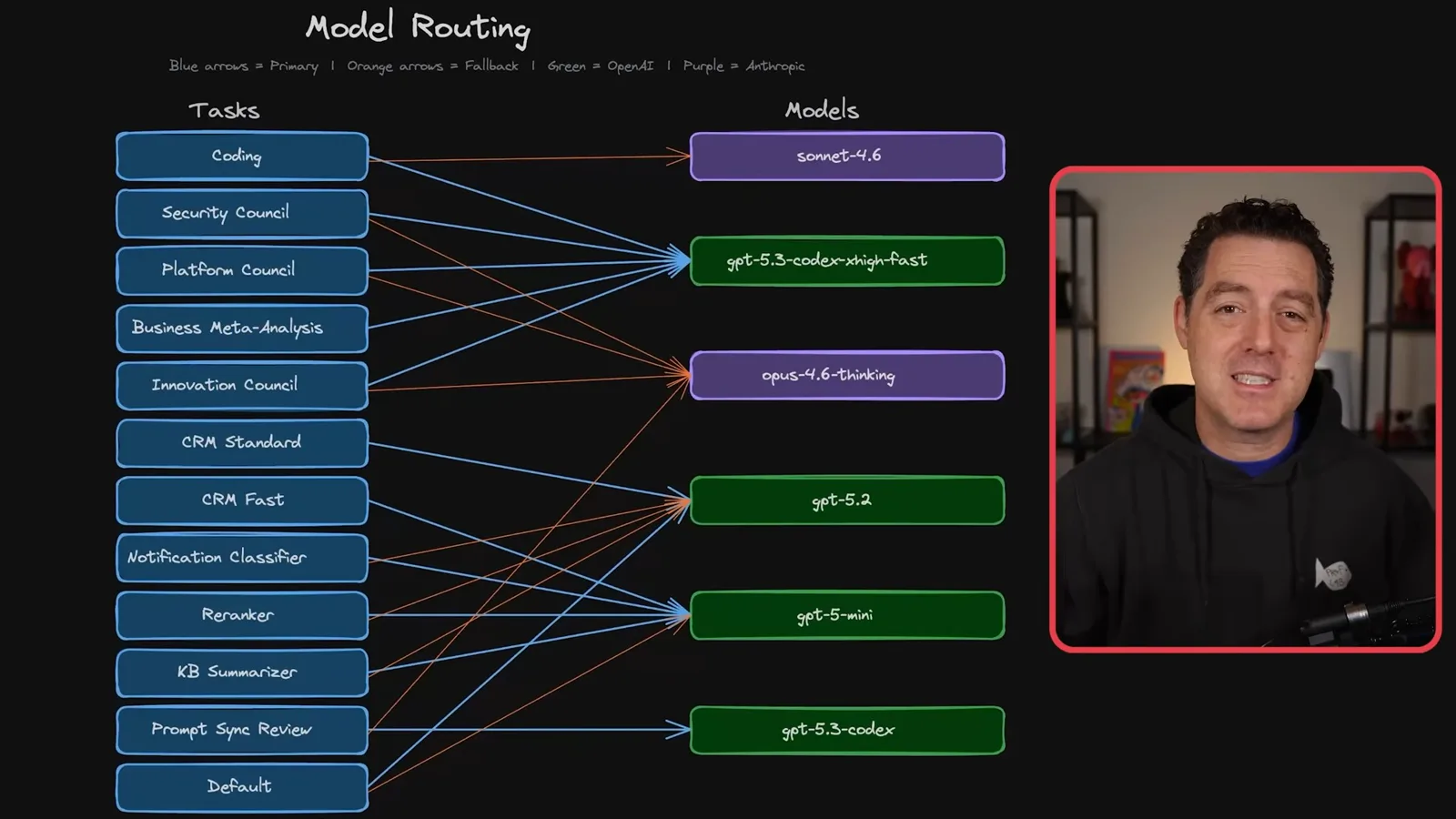
Previously Berman used Claude Opus for much of his setup. He says he moved coding and several analysis tasks to GPT-5.3 Codex, assigned simpler classifications to a smaller model, and used GPT-5.2 for other work, with Claude Sonnet and Opus as backups. The arrangement is his personal snapshot, and he notes that it is more complex than his previous configuration.
He mentions also experimenting with Gemini and closes by inviting discussion. The main tradeoff in his example is between a simple subscription-based workflow and the cost, access conditions, and operational complexity of routing requests among providers.
Más de este canal
 25:50EN
 32:20EN
 45:08EN
 0:32EN
 12:14EN
 10:36EN