En 30 segundos
Michio Kaku discusses his interpretation of Einstein’s views on nature, the elegance of physical theories and the relationship between science and ethics. The philosophical claims and alien analogy are presented as his views.
- 1A philosophical interpretationKaku distinguishes a personal deity from an idea of order in nature.
- 2The library metaphorCompact theories coexist with much that remains unknown.
- 3Ethics and physicsKaku argues that moral rules are not directly mandated by physics.
Conclusiones
- Kaku interprets Einstein’s language in terms of order in nature.
- Compact theories coexist with unanswered questions.
- He sees a distinction between physical law and moral rules.
- His alien analogy is speculative.
Lee el texto editado por capítulos
Einstein and nature
Lex Fridman asks physicist Michio Kaku what Einstein’s language about the “mind of God” might mean and whether physics can answer questions about purpose.
Lex Fridman asks physicist Michio Kaku what Einstein’s language about the “mind of God” might mean and whether physics can answer questions about purpose.
Kaku recalls a pessimistic view of cosmic meaning associated with Steven Weinberg, then says he does not claim to know the universe’s ultimate secrets.
He contrasts a personal deity with what he describes as Einstein’s admiration for Spinoza’s idea of order and harmony in nature. This is Kaku’s interpretation of Einstein’s views.
Kaku marvels at the compact mathematical forms of physical theories and uses a library metaphor to describe how much remains unknown. Compact equations do not mean every phenomenon is fully understood.
Science, ethics and meaning
He describes science as investigating natural laws and religion as addressing ethical questions, arguing that confusing these roles can cause tension. This is a philosophical position, not a universally accepted boundary.
He describes science as investigating natural laws and religion as addressing ethical questions, arguing that confusing these roles can cause tension. This is a philosophical position, not a universally accepted boundary.
Fridman asks whether ethics is outside the reach of physics. Kaku says he does not view moral rules as mandated by a physical law.
Kaku uses hypothetical encounters between humans, animals and extraterrestrials to illustrate differences in perspective. His comments about alien behavior are speculative.
He concludes that human ethics can support and enrich civilization, even though he does not regard it as a law of physics.
Más de este canal
 3:34:27EN
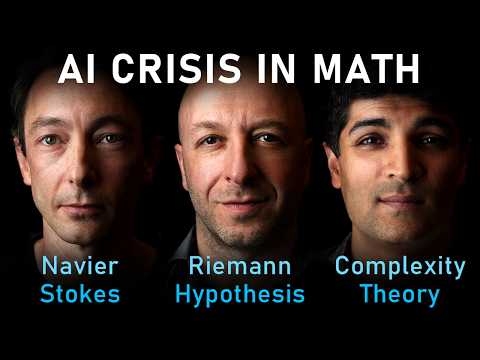
 Lex Fridman· 26 oct 2026Pódcast · 4 vocesAI, Mathematics, and the Meaning of a ProofInvitado: Steven Brunton, Ankur Moitra, Alex Kontorovich · Presenta: Lex FridmanLex Fridman and three mathematicians discuss recent AI-generated research, hard open problems and what human understanding contributes.
 3:36:56ENLex Fridman· 16 sept 2026PódcastPsychiatry Has Never Found Its PenicillinPresenta: Lex FridmanHistorian Andrew Scull tells Lex Fridman why the field can ease symptoms, has never cured a major mental illness, and keeps paying for overconfidence with patients' lives.
 5:15:51ENLex Fridman· 26 ago 2026Pódcast · 2 vocesDHH Did Not Write a Line of Omarchy QuattroInvitado: DHH · Presenta: Lex FridmanThirteen months after a skeptical conversation with Lex Fridman, the Rails creator describes how Opus 4.5, a swarm of coding agents, and a one-minute Linux installer ended his era of hand-chiseled Ruby.
 3:12:58ENLex Fridman· 12 ago 2026Pódcast · 2 vocesOne Cold Shower, Twenty Champions: How Khabib Nurmagomedov Was ForgedInvitado: Khabib Nurmagomedov · Presenta: Lex FridmanIn a Makhachkala school gym, seventy men shared one shower, and the water was only cold.
 3:46:18ENLex Fridman· 28 jul 2026Pódcast · 2 vocesIf You Take Slavery Out of the Picture, There Is No Civil WarInvitado: Gary Gallagher · Presenta: Lex FridmanIn 1860, enslaved people were worth more than every railroad and factory in the United States combined.
 3:51:47ENLex Fridman· 30 jun 2026Pódcast · 2 vocesForty-Six Percent of Emperors Were Overthrown. The Empire Lasted AnywayInvitado: Anthony Kaldellis · Presenta: Lex FridmanHistorian Anthony Kaldellis walks Lex Fridman through 2,200 years of Roman history and argues that what we call Byzantium was Rome itself.