En 30 segundos
Judea Pearl discusses human-level AI with Lex Fridman, proposing a soccer thought experiment and offering his views on causal reasoning, ethics and self-models. The philosophical interpretations are attributed to Pearl.
- 1Counterfactual questionsPearl sees counterfactual reasoning as part of the goal.
- 2A proposed testHe imagines robots discussing responsibility in a game.
- 3Ethics and models of othersHe links causal reasoning with modeling another person.
- 4Self-modelsHis interpretation connects self-modeling to free will and consciousness.
Conclusiones
- Pearl sees counterfactual reasoning as a research goal.
- His soccer scenario is a proposed test, not an established measure.
- He connects ethical reasoning with models of other people.
- His account of free will and consciousness is a philosophical position.
Lee el texto editado por capítulos
Human-level intelligence
Lex Fridman asks Judea Pearl about the long-term goal of human-level machine intelligence. Pearl says the idea has motivated his work, while he approaches research incrementally.
Lex Fridman asks Judea Pearl about the long-term goal of human-level machine intelligence. Pearl says the idea has motivated his work, while he approaches research incrementally.
Pearl imagines machines answering sophisticated counterfactual questions and discusses concepts such as responsibility, compassion and free will. These are his proposed research goals.
A soccer thought experiment
Asked how to test free will, he proposes a thought experiment involving robots communicating about rewards, punishment and responsibility while playing soccer.
Asked how to test free will, he proposes a thought experiment involving robots communicating about rewards, punishment and responsibility while playing soccer.
The question is whether communicating about a missed pass and its consequences helps the team perform better than a system without that kind of reasoning. This is a proposed test, not an established measure of free will.
Pearl argues that a coach’s concise instruction can communicate useful knowledge without directly editing another agent’s software. The recipient must interpret and apply the feedback.
Ethics and self-models
Fridman asks about aligning machine decisions with human values. Pearl says causal reasoning and a model of another person may be important components of an ethical system.
Fridman asks about aligning machine decisions with human values. Pearl says causal reasoning and a model of another person may be important components of an ethical system.
He describes compassion through imagining another person’s experience using a model of oneself. This is his account of a possible mechanism, not proof that a machine experiences empathy.
Pearl then discusses a system modeling its own abilities and possible changes in behavior. He connects this self-model to his account of free will and consciousness; those concepts remain debated.
Más de este canal
 3:34:27EN
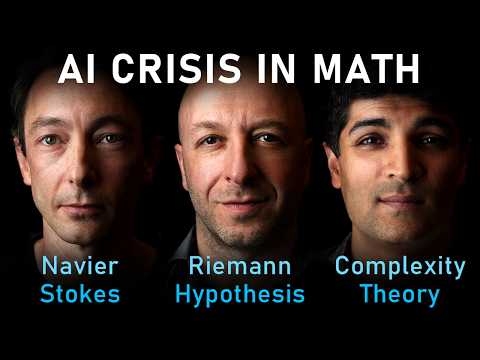
 Lex Fridman· 26 oct 2026Pódcast · 4 vocesAI, Mathematics, and the Meaning of a ProofInvitado: Steven Brunton, Ankur Moitra, Alex Kontorovich · Presenta: Lex FridmanLex Fridman and three mathematicians discuss recent AI-generated research, hard open problems and what human understanding contributes.
 3:36:56ENLex Fridman· 16 sept 2026PódcastPsychiatry Has Never Found Its PenicillinPresenta: Lex FridmanHistorian Andrew Scull tells Lex Fridman why the field can ease symptoms, has never cured a major mental illness, and keeps paying for overconfidence with patients' lives.
 5:15:51ENLex Fridman· 26 ago 2026Pódcast · 2 vocesDHH Did Not Write a Line of Omarchy QuattroInvitado: DHH · Presenta: Lex FridmanThirteen months after a skeptical conversation with Lex Fridman, the Rails creator describes how Opus 4.5, a swarm of coding agents, and a one-minute Linux installer ended his era of hand-chiseled Ruby.
 3:12:58ENLex Fridman· 12 ago 2026Pódcast · 2 vocesOne Cold Shower, Twenty Champions: How Khabib Nurmagomedov Was ForgedInvitado: Khabib Nurmagomedov · Presenta: Lex FridmanIn a Makhachkala school gym, seventy men shared one shower, and the water was only cold.
 3:46:18ENLex Fridman· 28 jul 2026Pódcast · 2 vocesIf You Take Slavery Out of the Picture, There Is No Civil WarInvitado: Gary Gallagher · Presenta: Lex FridmanIn 1860, enslaved people were worth more than every railroad and factory in the United States combined.
 3:51:47ENLex Fridman· 30 jun 2026Pódcast · 2 vocesForty-Six Percent of Emperors Were Overthrown. The Empire Lasted AnywayInvitado: Anthony Kaldellis · Presenta: Lex FridmanHistorian Anthony Kaldellis walks Lex Fridman through 2,200 years of Roman history and argues that what we call Byzantium was Rome itself.