En 30 segundos
A researcher describes cellular communication as “cognitive glue” and proposes viewing cancer through a breakdown of collective organization. This short presents a conceptual analogy, not a clinical diagnosis or complete explanation of cancer.
- 1A question about cooperationThe speaker asks how cells coordinate to build organs.
- 2Communication as a metaphorical glueHe uses “cognitive glue” to describe coordination across cell networks.
- 3A research framing of cancerHe proposes an analogy between cancer and a breakdown in collective organization.
Conclusiones
- The speaker asks how cells coordinate to build organs.
- He uses “cognitive glue” to describe coordination across cell networks.
- He proposes an analogy between cancer and a breakdown in collective organization.
Lee el texto editado por capítulos
Cellular cooperation
The speaker asks how cells coordinate to build organs. He uses “cognitive glue” to describe coordination across cell networks.
The speaker says his research interest in cancer includes both its biomedical importance and what it might reveal about how cells coordinate in multicellular organisms. He asks why cells cooperate to form organs and anatomical structures.
He calls cellular communication a kind of “cognitive glue.” In his conceptual account, networks of cells carry information about larger patterns and coordinate activity toward forming structures such as a liver, kidney or heart.
A cancer analogy
He proposes an analogy between cancer and a breakdown in collective organization.
He proposes viewing cancer as a breakdown of this collective organization, with cells behaving more independently of tissue-level organization. His language about cells having “goals” and a dissociative disorder is an analogy and research framing, not a clinical diagnosis or a complete account of cancer biology.
Más de este canal
 1:49:40EN
 Cognitive Revolution "How AI Changes Everything"· 28 oct 2026Pódcast · 4 vocesA Strategy for Preserving Options on the Path to Advanced AIInvitado: Joel Predd, Ben Boudreaux, Matt Chessen · Presenta: Nathan LabenzRAND researchers discuss uncertainty, security architecture and human agency with Nathan Labenz.
 1:28:36ENCognitive Revolution "How AI Changes Everything"· 24 oct 2026Pódcast · 5 vocesAI’s Pace: Interpretability, GPU Credit and the Physical Supply ChainInvitado: Zvi Mowshowitz, Evan Conrad, Lonis Hamaili · Presenta: Nathan Labenz, Prakash NarayananA weekly highlights episode weighs uncertain AI research trajectories against finance, infrastructure, security and regulation.
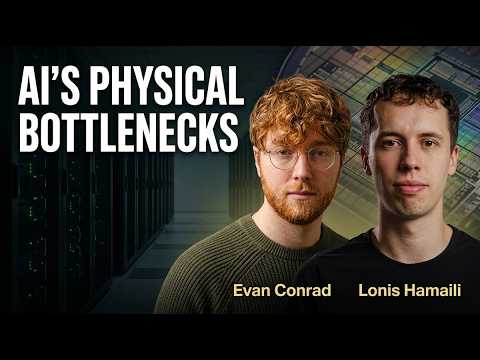 3:13:44ENCognitive Revolution "How AI Changes Everything"· 22 oct 2026Pódcast · 4 vocesAI’s Physical Bottlenecks: Compute Markets, Chip Investments and Agent TrustInvitado: Evan Conrad, Lonis Hamaili · Presenta: Nathan Labenz, Prakash NarayananA full AI:AM discussion of security incidents, GPU financing, semiconductor supply and an agent-to-agent network.
 2:40:58ENCognitive Revolution "How AI Changes Everything"· 21 oct 2026Pódcast · 3 vocesFrontier AI, Interpretability and the Fight Over Its PaceInvitado: Zvi Mowshowitz · Presenta: Nathan Labenz, Prakash NarayananZvi Mowshowitz joins AI:AM to discuss neural networks, policy and the institutions facing rapid change.
 1:25:56ENCognitive Revolution "How AI Changes Everything"· 17 oct 2026PódcastClaude Changed the Password. The Steering Wheel Was Already OptionalPresenta: Nathan LabenzNathan Labenz and Prakash Narayanan spend a week on agents that can lock you out, models that dodge a feeling they deny having, and formal proofs that found Linux bugs.
 2:51:22ENCognitive Revolution "How AI Changes Everything"· 14 oct 2026Pódcast · 4 vocesAI Minds and 8 mm Memories: Research, Archives and SimulationInvitado: Cameron Berg, Phil Maher · Presenta: Nathan Labenz, Prakash NarayananCameron Berg discusses hidden model states; Phil Maher explains preserving home movies and a fly-brain demo.