









Resultados
11 artículosOrdenar
 13:30EN
 3Blue1Brown· 17 ago 2025How AlphaGeometry Combines Logical Proof with Creative ConstructionAleph0Aleph0 explains how a symbolic geometry solver gets surprisingly far without AI, and how a language model supplies the auxiliary constructions that take it to Olympiad level.
 12:42EN
 Lex Fridman· 28 mar 2020Pódcast · 2 vocesThe Experience Machine: What Our Refusal to Plug In Says About What We ValueInvitado: Nick Bostrom · Presenta: Lex FridmanNick Bostrom unpacks Robert Nozick's experience machine, the status quo effect behind our answers, and whether a simulation convincing enough to feel real would have to contain real minds.
 11:11ENLex FridmanPódcast · 2 vocesYann LeCun on Benchmarks, Interactive Environments, and Why Human Intelligence Is Not GeneralInvitado: Yann Lecun · Presenta: Lex FridmanIn a 2019 clip, LeCun defends benchmarks as a test of AI claims, explains why interactive environments break the usual train-test protocol, and argues that "general intelligence" is a misnomer.
 14:41ENLex FridmanPódcast · 2 vocesTalking for 20 Minutes: How the Alexa Prize Turns Real Customers into a Testbed for Conversational AIInvitado: Rohit Prasad · Presenta: Lex FridmanRohit Prasad, head scientist of Amazon Alexa, explains the Alexa Prize grand challenge, how it is judged and why true conversation still needs reasoning.
 11:41ENLex FridmanPódcast · 2 vocesTeaching Machines Humility: Stuart Russell on Escaping the King Midas ProblemInvitado: Stuart Russell · Presenta: Lex FridmanIn a short clip from a 2018 conversation, Berkeley's Stuart Russell explains why fixed objectives make superintelligent AI dangerous and why uncertainty about our goals is the fix.
 10:16ENLex FridmanPódcast · 2 vocesReasoning Without Logic: Yann LeCun on Teaching Neural Networks to ThinkInvitado: Yann Lecun · Presenta: Lex FridmanYann LeCun explains why he believes neural networks can reason, and what memory, recurrence and continuous representations would need to look like.
 13:58ENLex FridmanPódcastDeep Reinforcement Learning, Explained by the Researcher Behind AlphaGoPresenta: Lex FridmanDavid Silver of DeepMind walks through what reinforcement learning is, how its building blocks fit together, and why deep neural networks keep surprising even the experts.
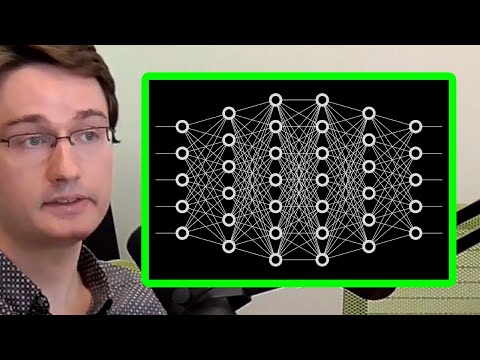 10:34ENLex FridmanPódcast · 2 vocesWhy Deep Learning Needs Rules: Chollet on Interpolation, Abstraction and Hybrid AIInvitado: François Chollet · Presenta: Lex FridmanFrançois Chollet explains why neural networks only interpolate between points they have seen, and why the best AI systems pair them with symbolic rules.
 10:39ENLex FridmanPódcastStatistics as Decision-Making: Michael I. Jordan on Bayesians, Frequentists and the Ideas Between ThemPresenta: Lex FridmanBerkeley's Michael I. Jordan explains where statistics came from, why it is really about decisions, and how empirical Bayes and false discovery rate bridge two rival philosophies.
 11:26ENLex FridmanPódcastThe Cookie Your Brain Bakes: Joscha Bach on Happiness, Cells and the Meaning of GodPresenta: Lex FridmanIn a short clip, Joscha Bach moves from why happiness is not the point to the cell as a cosmic probe and a naturalistic reading of God as civilization.
 11:23ENLex FridmanPódcast · 2 vocesScience Is a Self-Improving System That Isn't Exploding: Chollet on the Limits of an Intelligence ExplosionInvitado: François Chollet · Presenta: Lex FridmanFrançois Chollet uses the history of science to argue that recursive self-improvement meets exponential friction and yields linear, not explosive, progress.