 AI Engineerayer
 PragerUanteayer
 Y Combinatoranteayer
 GOTO Conferenceshace 3 días
 Latent Spacehace 4 días
 Adrian Twaroghace 5 días
 Cognitive Revolution "How AI Changes Everything"la semana pasada
 3Blue1Brownla semana pasada
 No Priors: AI, Machine Learning, Tech, & Startupshace 2 semanas
 Sequoia Capitalhace 2 semanas
Resultados
21 artículosOrdenar
 12:49EN
 OpenAI· 7 oct 2026Alex Mashrabov: Higgsfield agents that choose models and launch their own GPUsAlex Mashrabov · HiggsfieldAt OpenAI DevDay 2026, Higgsfield's CEO walks through why a continuous media experience needs an agent that picks models, scores its own output, and provisions GPUs — including a live 10-hour AI stream small teams can now ship.
 13:12ENOpenAI· 7 oct 2026Alexandra Lato on Building Stack Overflow for Agents and Stack Internal with CodexAarti Bagul, Alexandra Lato · OpenAIStack Overflow’s VP of Product explains how a small team used Codex with opposite constraints on two products—and why agent-native design means letting agents contribute knowledge, not just read it.
 13:30EN3Blue1Brown· 17 ago 2025How AlphaGeometry Combines Logical Proof with Creative ConstructionAleph0Aleph0 explains how a symbolic geometry solver gets surprisingly far without AI, and how a language model supplies the auxiliary constructions that take it to Olympiad level.
 11:26EN
 Lex Fridman· 11 abr 2020Pódcast · 2 vocesRichard Dawkins on Memes, the Internet and Why Wrong Ideas SpreadInvitado: Richard Dawkins · Presenta: Lex FridmanThe man who coined the word explains to Lex Fridman what makes a meme more than a metaphor, why the internet is a step change for ideas, and why an idea, like a peacock's tail, doesn't need to be true or useful to spread.
 12:42ENLex Fridman· 28 mar 2020Pódcast · 2 vocesThe Experience Machine: What Our Refusal to Plug In Says About What We ValueInvitado: Nick Bostrom · Presenta: Lex FridmanNick Bostrom unpacks Robert Nozick's experience machine, the status quo effect behind our answers, and whether a simulation convincing enough to feel real would have to contain real minds.
 14:55ENLex Fridman· 29 oct 2019Pódcast · 2 vocesKasparov on Deep Blue, AlphaZero, and Why Machines Win Closed Systems but Humans Still Choose the QuestionsInvitado: Garry Kasparov · Presenta: Lex FridmanGarry Kasparov revisits the 1997 loss to Deep Blue, explains why machines beat humans in closed systems, and argues that the human role is to pick the right questions and not interfere with superior machine knowledge.
 10:20ENLex FridmanPódcast · 2 vocesHow C++ Is Standardized: Votes, Consensus and the Move to a Three-Year Release CycleInvitado: Bjarne Stroustrup · Presenta: Lex FridmanBjarne Stroustrup explains how the ISO committee works, why C++0x slipped to C++11, and how shorter cycles made C++14, C++17 and C++20 arrive on time.
 11:11ENLex FridmanPódcast · 2 vocesYann LeCun on Benchmarks, Interactive Environments, and Why Human Intelligence Is Not GeneralInvitado: Yann Lecun · Presenta: Lex FridmanIn a 2019 clip, LeCun defends benchmarks as a test of AI claims, explains why interactive environments break the usual train-test protocol, and argues that "general intelligence" is a misnomer.
 14:41ENLex FridmanPódcast · 2 vocesTalking for 20 Minutes: How the Alexa Prize Turns Real Customers into a Testbed for Conversational AIInvitado: Rohit Prasad · Presenta: Lex FridmanRohit Prasad, head scientist of Amazon Alexa, explains the Alexa Prize grand challenge, how it is judged and why true conversation still needs reasoning.
 11:41ENLex FridmanPódcast · 2 vocesTeaching Machines Humility: Stuart Russell on Escaping the King Midas ProblemInvitado: Stuart Russell · Presenta: Lex FridmanIn a short clip from a 2018 conversation, Berkeley's Stuart Russell explains why fixed objectives make superintelligent AI dangerous and why uncertainty about our goals is the fix.
 10:16ENLex FridmanPódcast · 2 vocesReasoning Without Logic: Yann LeCun on Teaching Neural Networks to ThinkInvitado: Yann Lecun · Presenta: Lex FridmanYann LeCun explains why he believes neural networks can reason, and what memory, recurrence and continuous representations would need to look like.
 11:19ENLex FridmanPódcast · 2 vocesWhy Donald Knuth Thinks P = NP and Why It Might Not MatterInvitado: Donald Knuth · Presenta: Lex FridmanKnuth explains how an algorithm can provably exist without anyone being able to write it down, and why that shapes his view of P versus NP.
 12:53ENLex FridmanPódcast · 2 vocesPrinciples, Not Black Boxes: Ray Dalio on When to Trust AIInvitado: Ray Dalio · Presenta: Lex FridmanRay Dalio explains how Bridgewater turns human thinking into algorithms, why machine learning is risky when the future differs from the past, and why writing down principles is the route to better decisions.
 12:01ENLex FridmanPódcast · 2 vocesThe Big Nap: Why Eric Weinstein Thinks the Pandemic Ends 75 Quiet YearsInvitado: The Big Nap · Presenta: Lex FridmanIn an April 2020 conversation, Eric Weinstein and Lex Fridman discuss what a global crisis reveals about collective action, fragility, and the institutions we treat as museum pieces.
 10:24ENLex FridmanPódcast · 2 vocesConcepts: How C++ Finally Got Compile-Time Constraints on TemplatesInvitado: Bjarne Stroustrup · Presenta: Lex FridmanBjarne Stroustrup explains what C++ concepts are, why they are real and shippable today, and why it took decades to get them right.
 11:11ENLex FridmanPódcast · 2 vocesFilling the Empty Quadrants: Jim Gates on Supersymmetry and the Beauty of Broken SymmetryInvitado: Jim Gates · Presenta: Lex FridmanTheoretical physicist Jim Gates explains supersymmetry with a four-slice pie, recalls how he chose it for his thesis in the 1970s, and connects it to the way physics moves from mathematics to experiment.
 12:52ENLex FridmanPódcast · 2 vocesRoger Penrose on a Universe That Restarts: When the Far Future Becomes the Next Big BangInvitado: Roger Penrose · Presenta: Lex FridmanPenrose explains conformal cyclic cosmology, in which the remote future of one cosmic eon is mathematically the same as the Big Bang of the next.
 14:47ENLex FridmanPódcast · 2 vocesBuild Your Own Types: What Bjarne Stroustrup Learned from Simula, Fortran and LispInvitado: Bjarne Stroustrup · Presenta: Lex FridmanThe creator of C++ traces how Simula's user-defined types shaped his language, and why he builds for constrained, long-lived systems.
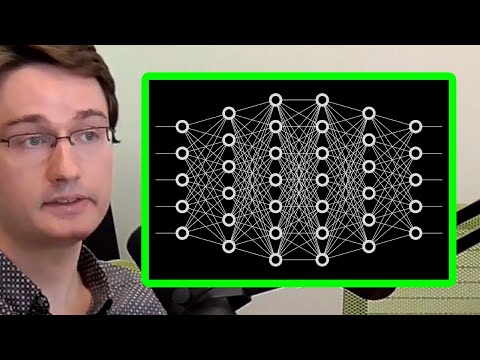 10:34ENLex FridmanPódcast · 2 vocesWhy Deep Learning Needs Rules: Chollet on Interpolation, Abstraction and Hybrid AIInvitado: François Chollet · Presenta: Lex FridmanFrançois Chollet explains why neural networks only interpolate between points they have seen, and why the best AI systems pair them with symbolic rules.
 11:59ENLex FridmanPódcast · 2 vocesFrom a Side Project to TensorFlow's Core: François Chollet on How Keras Came to BeInvitado: François Chollet · Presenta: Lex FridmanThe creator of Keras recalls why he built it in 2015 around recurrent networks, how it moved onto TensorFlow, and what TensorFlow 2.0 means for its design.
 11:23ENLex FridmanPódcast · 2 vocesScience Is a Self-Improving System That Isn't Exploding: Chollet on the Limits of an Intelligence ExplosionInvitado: François Chollet · Presenta: Lex FridmanFrançois Chollet uses the history of science to argue that recursive self-improvement meets exponential friction and yields linear, not explosive, progress.