









Artículos recientes
4484 artículosOrdenar
 3:11:09EN
 Lex Fridman· 18 abr 2020Pódcast · 2 vocesIn the computational universe, the animals are always smarter than youInvitado: Stephen Wolfram · Presenta: Lex FridmanStephen Wolfram talks with Lex Fridman about Rule 30, computational irreducibility, a hypergraph model of physics, and why Wolfram Language is a notation for talking about the world.
 1:05:06EN
 Jane Street· 15 abr 2020Raph Levien: GPU Compute, Functional Design, and a 2D RendererRaph LevienA tour of GPU execution and memory explains why parallel rendering needs more than simply assigning one thread to every pixel.
 49:29EN
 GOTO Conferences· 14 abr 2020The Five Pillars of Collaborative Product OwnershipJohn Le DrewJohn Le Drew argues that teams can share product knowledge and test decisions together.
 2:46:36ENLex Fridman· 13 abr 2020Pódcast · 2 vocesThe Great Nap Is OverInvitado: Eric Weinstein · Presenta: Lex FridmanMathematician Eric Weinstein tells Lex Fridman that seventy-five quiet years selected the wrong leaders, then walks through Geometric Unity, the theory he kept in a drawer for decades.
 11:26ENLex Fridman· 11 abr 2020Pódcast · 2 vocesRichard Dawkins on Memes, the Internet and Why Wrong Ideas SpreadInvitado: Richard Dawkins · Presenta: Lex FridmanThe man who coined the word explains to Lex Fridman what makes a meme more than a metaphor, why the internet is a step change for ideas, and why an idea, like a peacock's tail, doesn't need to be true or useful to spread.
 1:07:21ENLex Fridman· 9 abr 2020Pódcast · 2 vocesComplex Things Have to GrowInvitado: Richard Dawkins · Presenta: Lex FridmanRichard Dawkins talks with Lex Fridman about alien minds, memes, morality, and why even a simulated world would still need Darwin.
 1:48:01ENLex Fridman· 3 abr 2020Pódcast · 2 vocesDavid Silver: AlphaGo Won by Taking Human Knowledge OutInvitado: David Silver · Presenta: Lex FridmanThe DeepMind researcher behind AlphaGo and AlphaZero tells Lex Fridman how an unclaimed million-dollar Go prize, a BBC Micro at age seven, and a honeymoon insight led to superhuman self-play.
 1:41ENLex Fridman· 2 abr 2020PódcastA Talk on Measuring Passion Rather Than ProgressA speaker offers a personal perspective on goals and outside advice.
 1:27:57ENLex Fridman· 31 mar 2020Pódcast · 2 vocesThe Brain's Best Computer Has No Inner LifeInvitado: Roger Penrose · Presenta: Lex FridmanRoger Penrose tells Lex Fridman why HAL raises a moral problem the field will not name, why the cerebellum wrecks the computational theory of mind, and why gravity, Gödel, and an infinite cosmos all hang on the same kind of understanding.
 12:42ENLex Fridman· 28 mar 2020Pódcast · 2 vocesThe Experience Machine: What Our Refusal to Plug In Says About What We ValueInvitado: Nick Bostrom · Presenta: Lex FridmanNick Bostrom unpacks Robert Nozick's experience machine, the status quo effect behind our answers, and whether a simulation convincing enough to feel real would have to contain real minds.
 1:56:38ENLex Fridman· 25 mar 2020Pódcast · 2 vocesBostrom Will Not Pick a Fork: The Simulation Argument Is a Disjunction, Not a BetInvitado: Nick Bostrom · Presenta: Lex FridmanNick Bostrom walks Lex Fridman through the simulation argument, anthropic reasoning, and why superintelligence talk should be split into near-term and long-term conversations.
 37:49ENLex Fridman· 21 mar 2020Pódcast · 2 vocesYou cannot finish first in a game that has no finish lineInvitado: Simon Sinek · Presenta: Lex FridmanSimon Sinek on finite versus infinite games, the legacy a career leaves, and why passion cannot be demanded.
 1:38:33ENLex Fridman· 19 mar 2020Pódcast · 2 vocesMaybe people are rational under different assumptionsInvitado: Anca Dragan · Presenta: Lex FridmanAnca Dragan talks with Lex Fridman about inverse reinforcement learning, autonomous driving, and why a written reward is evidence rather than law.
 17:19ENLex Fridman· 17 mar 2020PódcastMoney Is a Game of Points: Vitalik Buterin on Coordination, Public Goods, and Quadratic FundingPresenta: Lex FridmanVitalik Buterin explains money as a social point system, why value can survive without physical backing, and how quadratic funding tries to fix public-good underfunding.
 1:35:04ENLex Fridman· 16 mar 2020Pódcast · 2 vocesSatoshi Vanished. Vitalik Stayed Behind to Finish the Other Half.Invitado: Vitalik Buterin · Presenta: Lex FridmanVitalik Buterin tells Lex Fridman what money actually is, what Satoshi invented, and why Ethereum is trying to become more than a points game.
 12:34EN
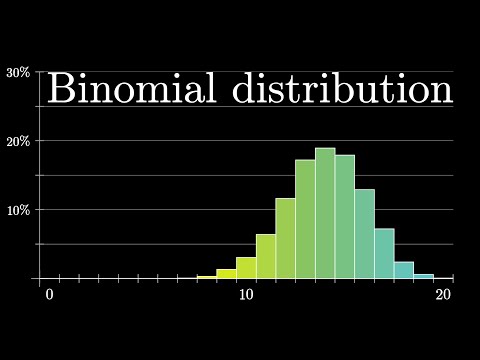
 3Blue1Brown· 15 mar 2020Binomial Distributions and the Problem of Seller RatingsHow review counts, independent trials and uncertainty about an unknown success rate fit together.
 1:09:52ENLex Fridman· 7 mar 2020Pódcast · 2 vocesLee Smolin Does Not Believe in the Scientific MethodInvitado: Lee Smolin · Presenta: Lex FridmanThe theoretical physicist talks with Lex Fridman about realism, the measurement problem, and why finishing Einstein’s revolution means treating time as fundamental and locality as optional.
 4:51ENLex Fridman· 6 mar 2020Pódcast · 2 vocesAlex Garland on Technology and Space ExplorationInvitado: Alex Garland · Presenta: Lex FridmanThe filmmaker discusses real-world inspiration for fiction.
 1:09:12ENLex Fridman· 5 mar 2020Pódcast · 2 vocesAnn Druyan on Voyager, Carl Sagan, and Love Without IllusionInvitado: Ann Druyan · Presenta: Lex FridmanThe creative director of the Voyager Golden Record argues that science is an error-correcting way of seeing the universe — and of seeing another person.
 1:11:09ENLex Fridman· 3 mar 2020Pódcast · 2 vocesAva smiled when nobody was watchingInvitado: Alex Garland · Presenta: Lex FridmanAlex Garland talks with Lex Fridman about Ex Machina, Annihilation, Devs, and how you tell whether anything is really in there.
 1:12:48ENLex Fridman· 29 feb 2020Pódcast · 2 vocesJohn Hopfield's Physics of Mind: Glitches Become FeaturesInvitado: John Hopfield · Presenta: Lex FridmanThe Princeton physicist walks Lex Fridman from a wobbly London bridge to Hopfield networks, consciousness-as-story, and why his famous model still does not explain learning.
 1:39:56ENLex Fridman· 26 feb 2020Pódcast · 2 vocesWhy Marcus Hutter Treats Compression as Intelligence ItselfInvitado: Marcus Hutter · Presenta: Lex FridmanThe DeepMind researcher behind AIXI tells Lex Fridman why a Wikipedia compression contest, Solomonoff induction, and an incomputable formula belong in the same conversation.
 1:45:49ENLex Fridman· 24 feb 2020Pódcast · 2 vocesPrediction is not a decision: Michael I. Jordan on markets and the unfinished AI revolutionInvitado: Michael I. Jordan · Presenta: Lex FridmanThe Berkeley statistician tells Lex Fridman that today's systems are a proto-engineering field, and that the hard work is connecting producers and consumers — not imitating minds.
 16:03ENLex Fridman· 22 feb 2020Pódcast · 2 vocesQuantum Supremacy Is a Well-Defined Speedup, Not a Useful TaskInvitado: Scott Aaronson · Presenta: Lex FridmanScott Aaronson explains what Google's 53-qubit experiment actually demonstrated, how it was verified, and why complexity theory can offer evidence but not proof against classical spoofing.
Cargar másMostrando 24 de 4484