









Artículos recientes
4484 artículosOrdenar
 20:34EN
 Lex Fridman· 26 oct 2019Pódcast · 2 vocesTeaching Machines the Frameworks Humans Take for GrantedInvitado: David Ferrucci · Presenta: Lex FridmanDavid Ferrucci explains why AI needs shared interpretive frameworks, not just data and pattern matching, to reason and communicate like humans.
 4:15ENLex Fridman· 25 oct 2019Pódcast · 2 vocesMichio Kaku on Einstein, Nature and the Limits of PhysicsInvitado: Michio Kaku · Presenta: Lex FridmanA 2019 conversation considers cosmic meaning, scientific laws and ethics.
 47:18EN
 Jane Street· 24 oct 2019Unboxed Types and Memory Layouts for OCamlStephen Dolan · Jane StreetStephen explains a proposed type-system extension for controlling data representation while retaining OCaml’s fast separate compilation.
 1:01:00ENLex Fridman· 22 oct 2019Pódcast · 2 vocesA Hundred Billion Galaxies, and We're Still a Type 0.7 CivilizationInvitado: Michio Kaku · Presenta: Lex FridmanTheoretical physicist Michio Kaku talks with Lex Fridman about aliens, string theory, digital immortality, and why fusion and Mars are the next civilizational steps.
 2:24:31ENLex Fridman· 11 oct 2019Pódcast · 2 vocesWatson Won Jeopardy Without Understanding. Ferrucci Wants AI That Can Explain ItselfInvitado: David Ferrucci · Presenta: Lex FridmanLex Fridman talks with David Ferrucci about IBM Watson, why prediction is not understanding, and why high-stakes decisions need machines that can reason with us.
 22:20EN
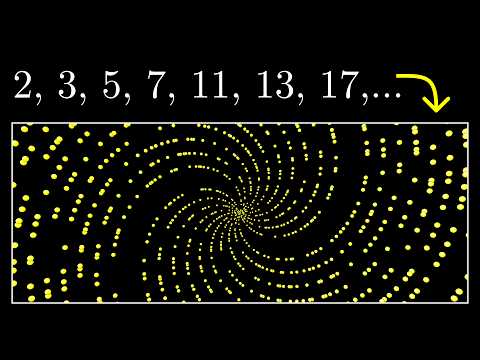
 3Blue1Brown· 8 oct 2019Why a Polar Plot of Primes Forms Spirals and RaysA visualization connects approximations of π, residue classes and the distribution of prime numbers.
 1:25:01ENLex Fridman· 3 oct 2019Pódcast · 2 vocesGary Marcus: Deep Learning Imitates Intelligence. It Does Not Understand.Invitado: Gary Marcus · Presenta: Lex FridmanOn Lex Fridman's podcast, the NYU emeritus and Rebooting AI co-author argues that perception and reasoning need different tools — and that trustworthy AI is impossible until machines can represent harm, bottles, and intent.
 1:03:13ENLex Fridman· 30 sept 2019Pódcast · 2 vocesYou Can't Have Both Kinds of Fairness, Says Peter NorvigInvitado: Peter Norvig · Presenta: Lex FridmanThe co-author of Artificial Intelligence: A Modern Approach walks Lex Fridman through recidivism scores, utility functions, Lisp, MOOCs, and why human-level intelligence should not be the goal.
 6:13ENLex Fridman· 28 sept 2019Pódcast · 2 vocesLeonard Susskind on Quantum Computers as SimulatorsInvitado: Leonard Susskind · Presenta: Lex FridmanA 2019 conversation considers quantum simulation and computational limits.
 3:00ENLex Fridman· 27 sept 2019Pódcast · 2 vocesLeonard Susskind on the First Black Hole ImageInvitado: Leonard Susskind · Presenta: Lex FridmanA 2019 reflection on observation, relativity and precision instruments.
 1:05:59ENJane Street· 27 sept 2019Derek Dreyer: Proving the Safety of Rust with RustBelt and IrisDerek Dreyer · Max Planck Institute for Software SystemsRust combines safe interfaces with libraries that use unsafe code internally. Derek Dreyer explains how RustBelt verifies those libraries and why its proof needs an expressive logic for concurrency.
 57:30ENLex Fridman· 26 sept 2019Pódcast · 2 voces400 Spins in a Pocket, and a Universe Too Small to Store ThemInvitado: Leonard Susskind · Presenta: Lex FridmanLeonard Susskind tells Lex Fridman why quantum computers are not faster laptops, why string theory is a tool rather than a citizenship, and why nobody should claim to have found the bottom of the well.
 5:57ENLex Fridman· 24 sept 2019Pódcast · 2 vocesFrançois Chollet Questions the Intelligence-Explosion HypothesisInvitado: François Chollet · Presenta: Lex FridmanA 2019 discussion of intelligence, environment and opportunity.
 1:17:29ENLex Fridman· 23 sept 2019Pódcast · 2 vocesThe Algorithm Is Already Better. The Clinic Still Uses 1967.Invitado: Regina Barzilay · Presenta: Lex FridmanMIT's Regina Barzilay on why deep learning already beats the breast-cancer 'density' score — and why data, liability, and incentives still will not move.
 37:38ENLex Fridman· 19 sept 2019Pódcast · 2 vocesThe Best-Selling Vacuum in America Is a RobotInvitado: Colin Angle · Presenta: Lex FridmaniRobot CEO Colin Angle on why most robotics companies die, why a Roomba is costed by weight, and why printing privacy promises on the box would hurt sales.
 1:59:49ENLex Fridman· 14 sept 2019Pódcast · 2 vocesIntelligence is not the height of a building: François Chollet on Keras, deep learning, and why AGI will not explodeInvitado: François Chollet · Presenta: Lex FridmanThe Keras creator tells Lex Fridman that intelligence lives in a brain, a body, and a problem, that science already is a recursively self-improving superhuman system with linear output, and that the real near-term danger is the newsfeed.
 4:39ENLex Fridman· 10 sept 2019Pódcast · 2 vocesJeremy Howard on Practical Deep-Learning ResearchInvitado: Jeremy Howard · Presenta: Lex FridmanThe fast.ai co-founder discusses incentives, transfer learning and active learning.
 29:04EN
 GOTO Conferences· 10 sept 2019Helping Children Explore Coding Through ProjectsSeth ThomsonSeth Thomson shares family experiences, mentorship and robotics lessons from 2019.
 5:29ENLex Fridman· 9 sept 2019Pódcast · 2 vocesSean Carroll on Intelligent Life and the Limits of Our SearchInvitado: Sean Carroll · Presenta: Lex FridmanA conversation about the Fermi question, unfamiliar forms of intelligence and possible ways civilizations might be detected.
 56:47ENLex Fridman· 8 sept 2019Pódcast · 2 vocesWhy Vijay Kumar Refuses to Call Them DronesInvitado: Vijay Kumar · Presenta: Lex FridmanThe Penn roboticist on swarm design, true autonomy, and why batteries — not algorithms — still limit the sky.
 1:15:58ENLex Fridman· 31 ago 2019Pódcast · 2 vocesHuman Intelligence Is a Ridiculously Narrow SliverInvitado: Yann Lecun · Presenta: Lex FridmanYann LeCun tells Lex Fridman why giant nets plus gradient descent broke the textbooks, why "AGI" is the wrong word, and why the next leap is a world model learned like a baby.
 5:00ENLex Fridman· 28 ago 2019Pódcast · 2 vocesJeremy Howard on Getting Started with Deep LearningInvitado: Jeremy Howard · Presenta: Lex FridmanA 2019 conversation emphasizes training models, inspecting data and solving real problems.
 1:44:11ENLex Fridman· 27 ago 2019Pódcast · 2 vocesA Single GPU Is Enough: Jeremy Howard on Teaching Deep LearningInvitado: Jeremy Howard · Presenta: Lex FridmanThe fast.ai founder tells Lex Fridman why domain experts, not more papers or more TPUs, will decide whether deep learning actually helps people.
 1:00:06ENLex Fridman· 23 ago 2019Pódcast · 2 vocesPamela McCorduck: AI Began With the Ancient Wish to Forge the GodsInvitado: Pamela McCorduck · Presenta: Lex FridmanThe novelist who wrote the first popular history of artificial intelligence talks with Lex Fridman about Dartmouth, AI winters, and why existential panic looks like the male gaze.
Cargar másMostrando 24 de 4484