In 30 seconds
Peter Yang asks four models to build a 3D castle, create a game, tell an animated story and redesign a homepage, then compares three on a newsletter draft. His judgments differ by task: he prefers Opus for the castle and game, Muse’s story for its ending, Astra’s simpler homepage and Gemini’s writing in an AI-graded comparison with his final copy. These are individual examples and subjective assessments; Muse was not included in the writing test.
- 1Opus renders Yang’s favorite castle, followed by GeminiHe asks the models for a Blender scene of Himeji Castle. He prefers Opus’s architecture and shots, while noting Gemini’s varied angles.
- 2The feature-rich Gemini game is less polished than Opus in his viewYang likes Opus’s playable level and sees Gemini as runner-up after testing extra controls. He finds Astra more basic and Muse weaker for this task.
- 3Muse’s simpler animation delivers his favorite emotional endingThe story of an older man tending a flower for a grave surprises Yang, despite graphics he considers less sophisticated.
- 4Astra’s homepage wins for clarity and visualsYang favors its simple call to action and generated illustrations. He finds Gemini’s page crowded and Muse’s too text-heavy.
- 5Gemini leads one newsletter-writing comparison judged by OpusYang compares three drafts to his final edited version using an Opus reviewer. The reviewer favors Gemini’s voice; Muse is absent from this test.
Takeaways
- Yang’s preferred model changes with the task rather than producing one overall winner.
- Gemini’s game included more features in his test, while he preferred Opus’s polish.
- Muse’s animated story moved him most despite simpler graphics.
- An Opus reviewer ranked Gemini’s newsletter draft closest to Yang’s voice in this one comparison; Muse was not tested.
- He separates his personal medical-research experience from the five creative comparisons.
Read the edited text by chapter
A 3D castle made with code
Yang asks four models to render Himeji Castle. He ranks Opus first and Gemini second in his test.
I compare Opus 5.5, GPT-6 Astra, Gemini 4 and Muse Wonder across 3D rendering, games, animated storytelling, website design and writing. I had early access to all but Muse. My results are based on these examples and my preferences.
For the first test I ask each model to build Himeji Castle in Blender and render a 30-second cherry-blossom scene with music, using code. Its distinctive walls and roofs make it a useful test of whether the result resembles a real place.

I prefer Opus’s castle, camera shots and overall presentation. Gemini is my runner-up: its castle also resembles Himeji and it uses varied angles. Astra produces appealing water reflections and birdsong, but its castle looks too flat to me and its shots are less interesting.
Muse’s 3D result is the weakest in my view. I note that Meta has said the model was not trained on 3D models. My ranking for this example is Opus, Gemini, Astra and Muse.
A rail-shooter game
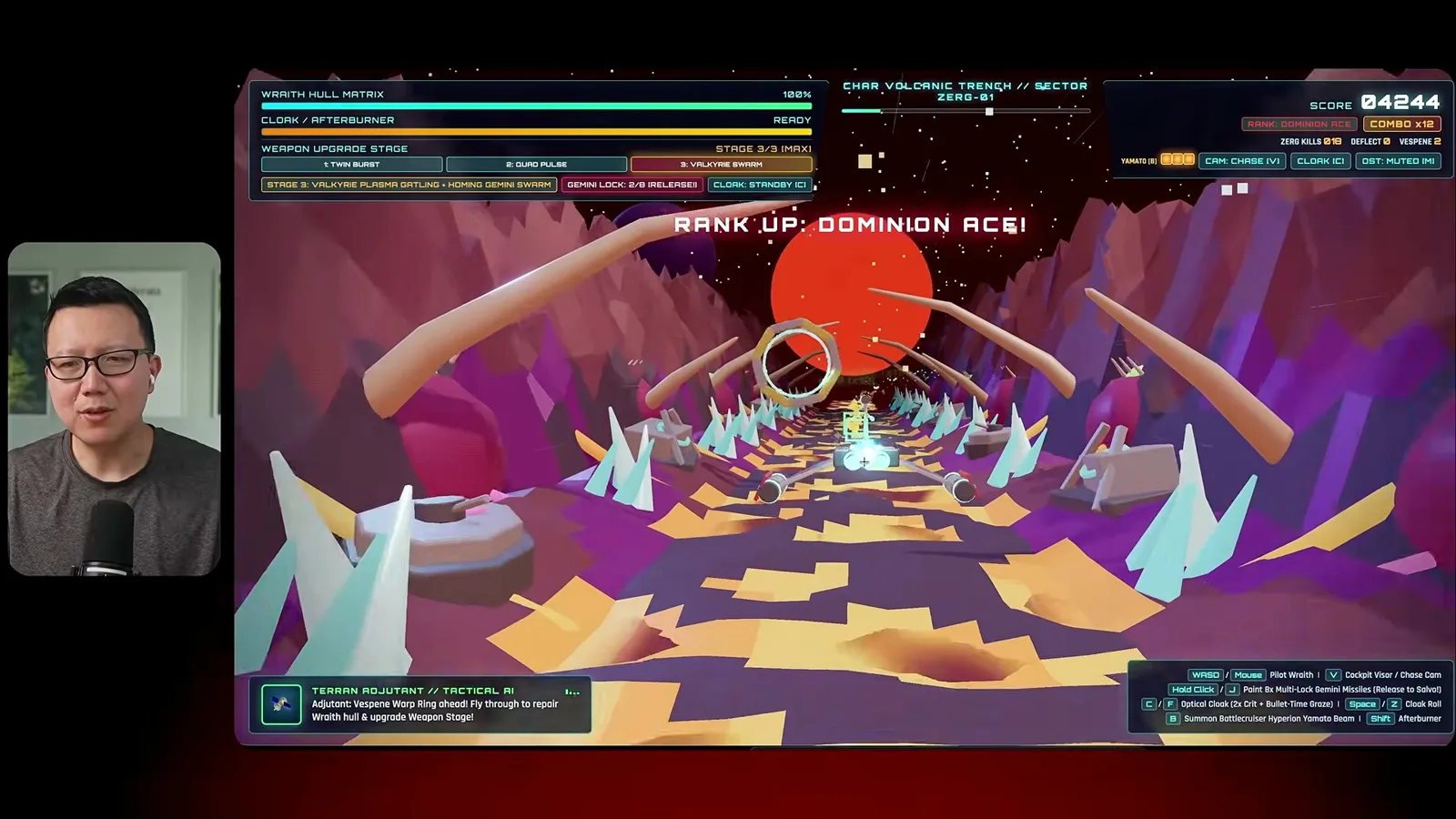
The models build a game from the same premise. Yang prefers Opus’s polish and Gemini’s broader feature set.
For the game test, I ask for a Star Fox-style rail shooter using a StarCraft-inspired setting. Opus produces my favorite playable level, with a boss, wingman chatter and sound, although I find the lens flare excessive.
Gemini’s game adds controls such as a first-person view, a battlecruiser and barrel rolls. It is crowded and less polished than Opus’s version, but I am impressed by the number of features. Astra has the atmosphere I wanted but looks more basic, while Muse again produces a weaker 3D game in this test.
An animated story and a homepage
Muse’s story is Yang’s emotional favorite, while he chooses Astra’s homepage for its simplicity and visuals.
For an emotional animated short, each model must create frames and sound using code. I find Opus’s graphics and animation strongest; its story appears to show a wife waiting for her husband. Gemini produces an artistic sequence that I interpret as someone neglecting loved ones while working.
Astra creates a story involving a robot and a plant, though one animation is unclear to me. Muse’s simpler-looking story moves me most: an older man tends a flower that is eventually placed at a grave. The ending surprises me, so I choose Muse for this particular storytelling task.
For a website test, I ask each model to redesign the brand and homepage for Behind the Craft without looking at the existing site. Opus creates an interesting interaction but the rest feels plain to me. Gemini supplies a design system and many details, yet I find the page too crowded.
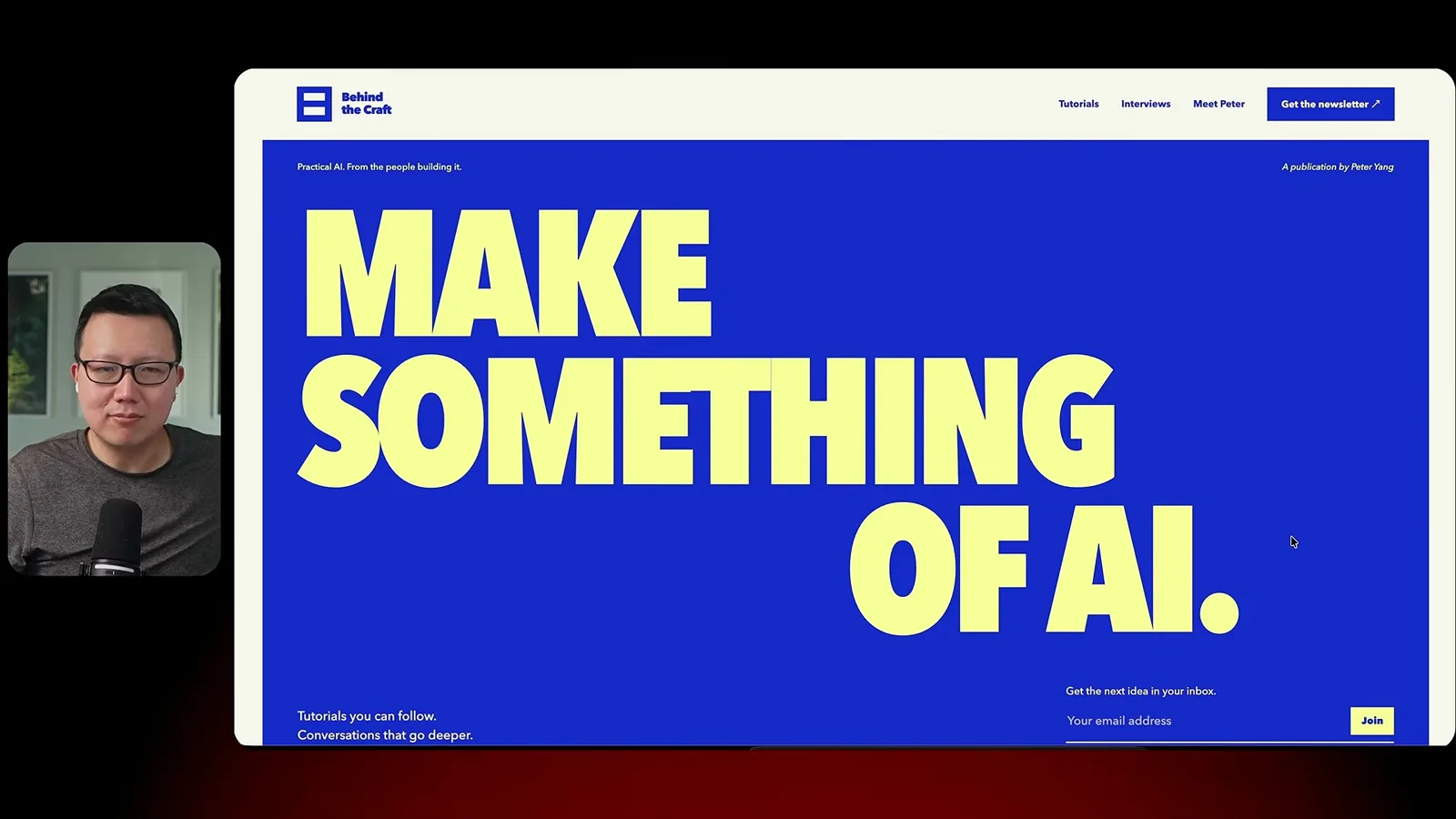
I prefer Astra’s clean page, clear email call to action and generated illustrations. Muse’s result is too text-heavy for my taste. My winner for this example is Astra, followed by Opus; I place Gemini and Muse behind them for different reasons.
Newsletter writing and research
An Opus reviewer compares three drafts against Yang’s edited newsletter. Yang also describes his own experience researching medical questions.
For writing, I ask three models to turn an interview transcript into newsletter takeaways, then use an Opus reviewer to compare their drafts with my own edited final version. I did not test Muse. The reviewer ranks Gemini first for sounding most like me and including a personal example; it calls Opus more insightful and Astra accurate but less personal.
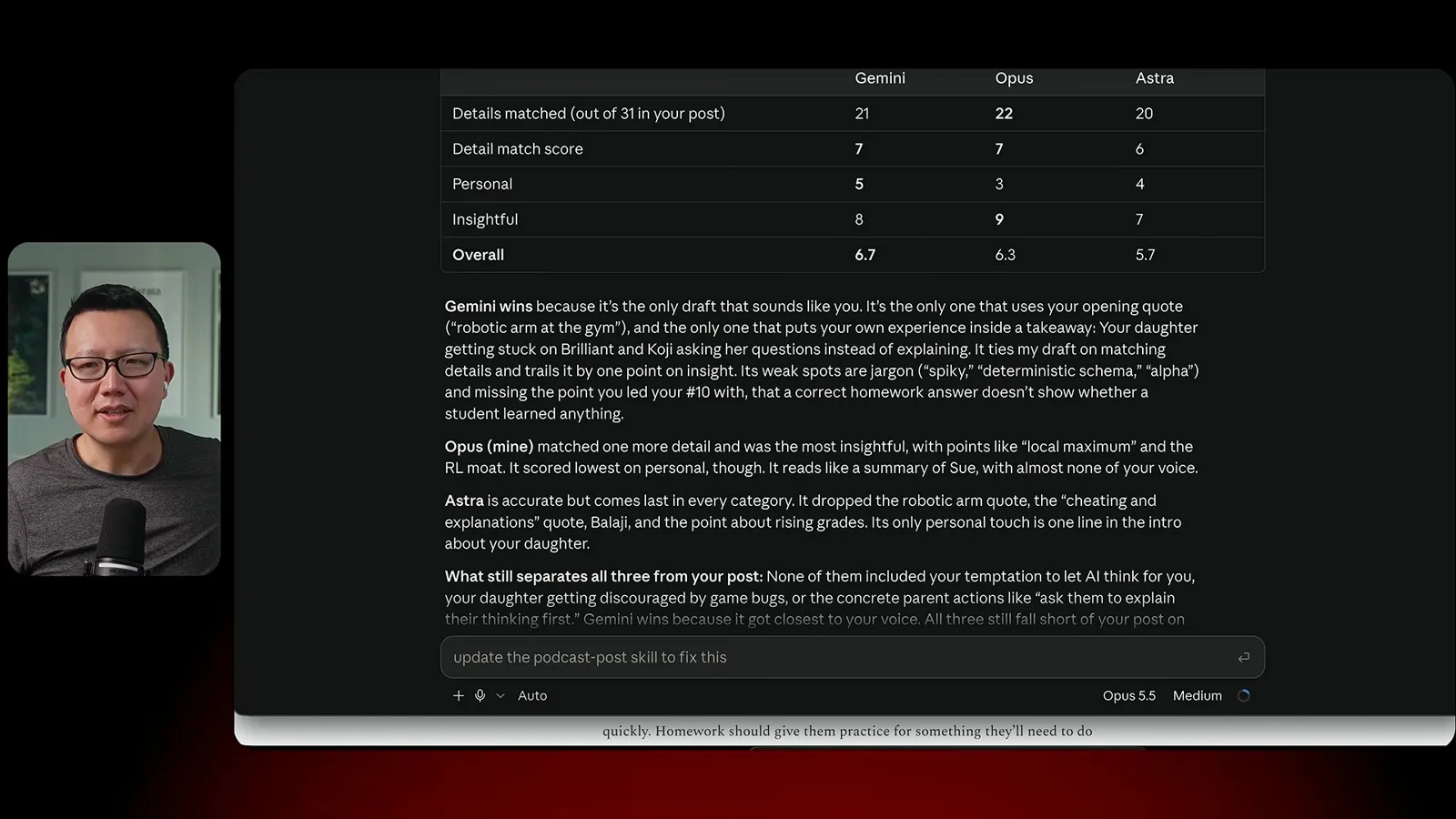
I am surprised by Gemini’s improvement in this writing example. Separately, I have used it to research medical questions for my family and found its detailed answers useful. I give an example that is not my mother’s actual condition, and treat this as my own experience rather than one of the same five comparisons.
My conclusion depends on the use case: I prefer Opus for the 3D and game examples, Astra for this homepage, Gemini for this writing and research experience, and Muse for the emotional story. I plan to examine Muse as a personal agent separately.
More from this channel
 46:40EN
 Peter Yang· Nov 8, 2026Podcast · 2 speakersAshley Alexander: How AI Helps Me Care for My Parents With CancerGuest Ashley Alexander · Host Peter YangA caregiver uses AI to prepare for appointments, organize records and ask better questions—while keeping doctors at the center of treatment.
 17:50ENPeter Yang· Nov 4, 2026PodcastPeter Yang’s Five Steps for Using AI to Help Care for His MotherYang uses a shared care brief and organized records to navigate appointments, while making time for family.
 15:03ENPeter Yang· Nov 3, 2026PodcastHow Peter Yang Used an AI Phone Agent to Negotiate His Internet BillAn AI call negotiated a lower price and faster service, but Yang still had to approve the change himself.
 33:09ENPeter Yang· Nov 1, 2026Podcast · 2 speakersJaclyn Konzelmann: When AI Can Build More, Choose What Deserves to ExistGuest Jaclyn Konzelmann · Host Peter YangGoogle Labs pairs short strategy documents with prototypes, user co-creation and lessons from experiments that end.
 13:05ENPeter Yang· Oct 28, 2026PodcastPeter Yang Tests Genie 4: Convincing Worlds, Unfinished GameplayFive live demonstrations show scenes that respond to prompts and sound, alongside inconsistent actions and limited game mechanics.
 1:06ENPeter Yang· Oct 26, 2026PodcastPeter Yang on Setting Up Payroll for a One-Person BusinessIn a paid partnership, Yang describes the paperwork he encountered and a payroll product integrated with a business account.