In 30 seconds
Peter Yang tests ChatGPT dots over several days as an assistant for his one-person business. His agent researches audiences, coordinates app work and flags possible sponsorship billing issues, but a newsletter task fails and a generated product concept needs substantial refinement. Yang compares the experience with Grok Bot and Muse and raises concerns about interface complexity.
- 1Integration is the differentiatorYang values the ability to use existing ChatGPT context and connected apps, while noting that Grok Bot supports multiple collaborating bots.
- 2Research can produce actionable leadsThe agent suggests improvements for a Slack community and YouTube channel; displayed reports describe sampled or partial coverage.
- 3A sponsorship audit surfaced questionsYang says the agent flagged a possible missing invoice and billing discrepancy, both requiring verification.
- 4A polished site is not a finished productThe proposed $99 PM kit had attractive visuals but copy Yang considered weak.
- 5Failures can get lost in the threadOne newsletter task failed because of tool availability, and Yang found its status hard to see.
- 6Orchestration adds a design challengeA central agent can coordinate work, but Yang worries a growing number of ChatGPT features and threads make navigation confusing.
Takeaways
- Existing ChatGPT context and connected apps made onboarding useful in Yang’s test; his comparison is based on personal experience.
- Community and channel analyses produced suggestions, but the shown reports sampled or partially covered their source material.
- A sponsorship audit surfaced a possible missed invoice and discrepancy that still needed verification.
- A generated product site looked promising, but its copy and commercial value needed human review.
- An unsuccessful task and a crowded conversation exposed a weakness in tracking work across multiple threads.
Read the edited text by chapter
Meet Zoe and compare assistants
Yang introduces his dot and compares it with Muse and Grok Bot.
Peter Yang tests dots, an always-on ChatGPT agent, on tasks in his one-person business. He reports useful research and a sponsorship issue he had missed, but also finds failures and a confusing interface. His comparison reflects a few days of personal testing, not a controlled benchmark.
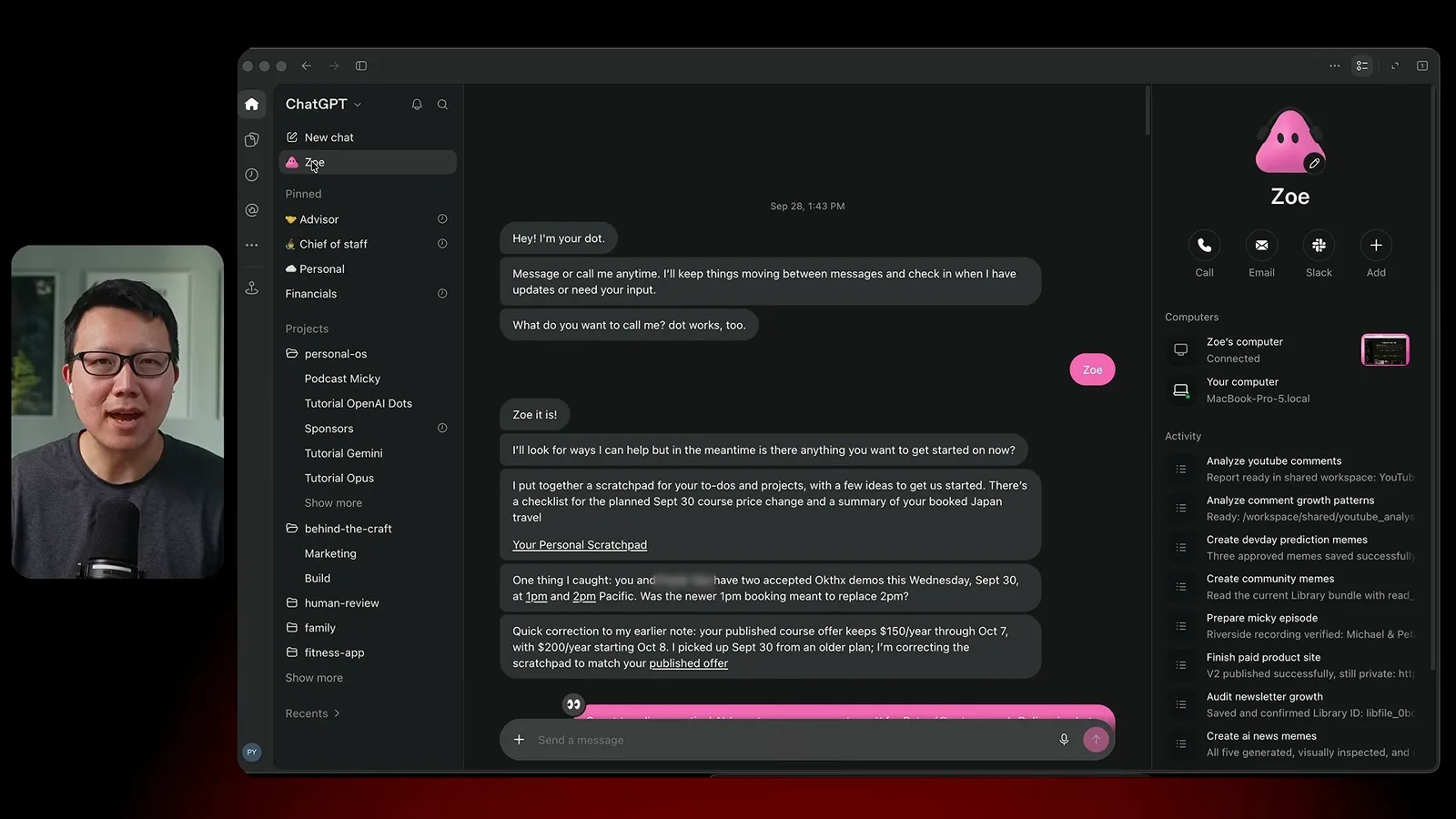
In the version he shows, a pinned thread hosts his dot, named Zoe. He can customize its appearance, use voice and connect Slack; email is unavailable in his demonstration. He shows a cloud computer and a connection to his laptop, plus an activity list for tasks.
Yang sees Muse as more consumer-focused and Grok Bot as a more direct comparison for work. He values Grok Bot’s multiple collaborating bots; he says dots initially gives him one agent, with ChatGPT integration as its main advantage. Existing memory, conversations and connected apps make setup easier in his account.
Research, community feedback and memes
The agent researches posts and courses, assesses a community and creates images.
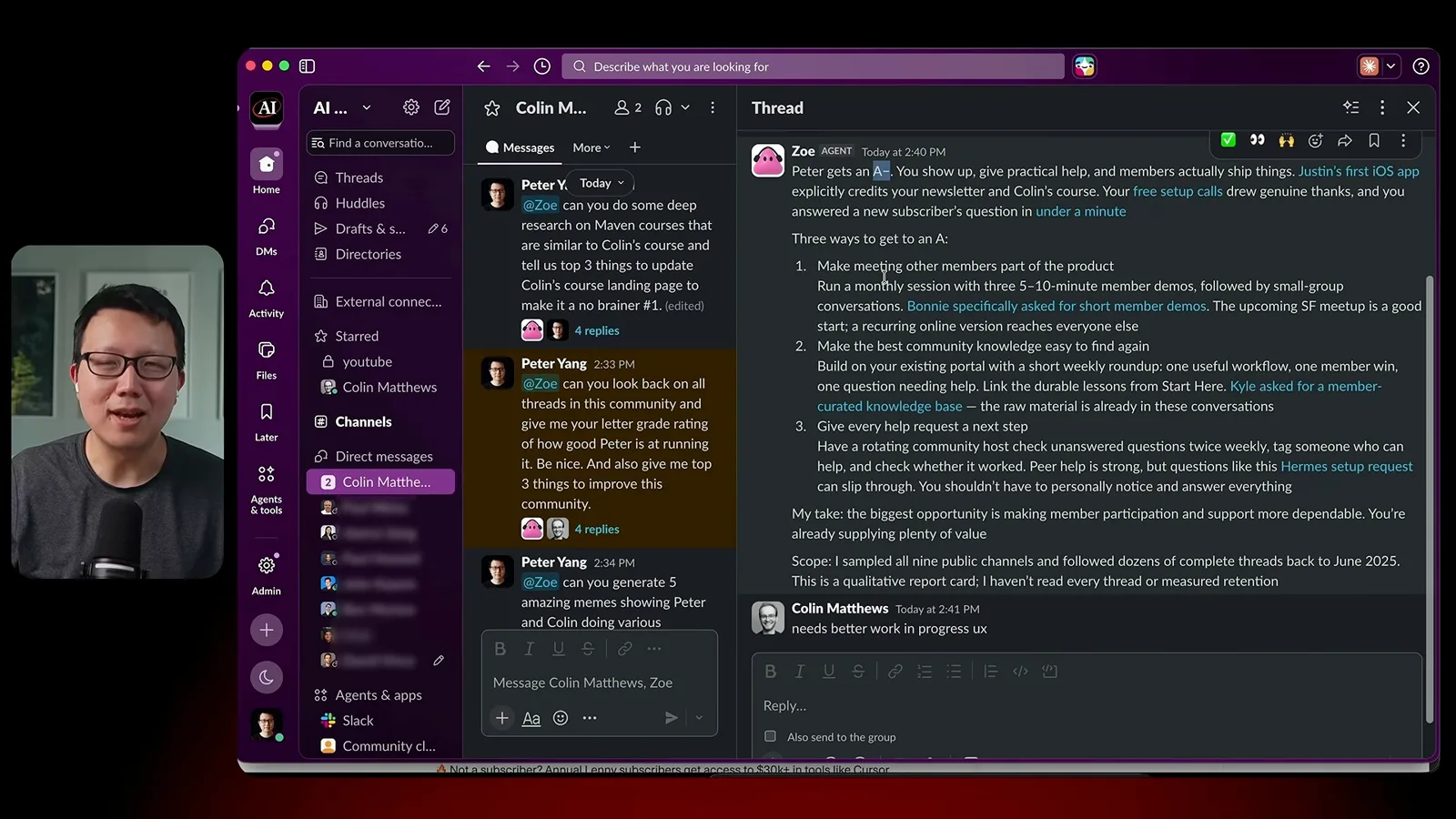
For an X research task, Zoe and a Grok Bot scout return different posts. Yang cannot say which set is better. In Slack, Zoe researches comparable Maven courses and suggests changes to a friend’s course landing page.
Yang asks Zoe to assess his community and suggest improvements: organize member introductions, preserve useful knowledge and give help requests a next step. The displayed response says it sampled public channels and followed dozens of threads, rather than reading every thread. He also has it make memes, finding the personalized ones funnier than generic AI-news jokes.
Channel research and app launch
Yang reviews a comment analysis and delegates fitness-app preparation.
For channel research, Yang asks for themes from six months of YouTube comments. He says the process took about half an hour and recommends showing workflow costs, starting tutorials from a blank setup and explaining what happens after a demo. The on-screen report describes a partial audit of 267 of 301 videos and Shorts and 1,862 comments or replies within its time window, not complete coverage.
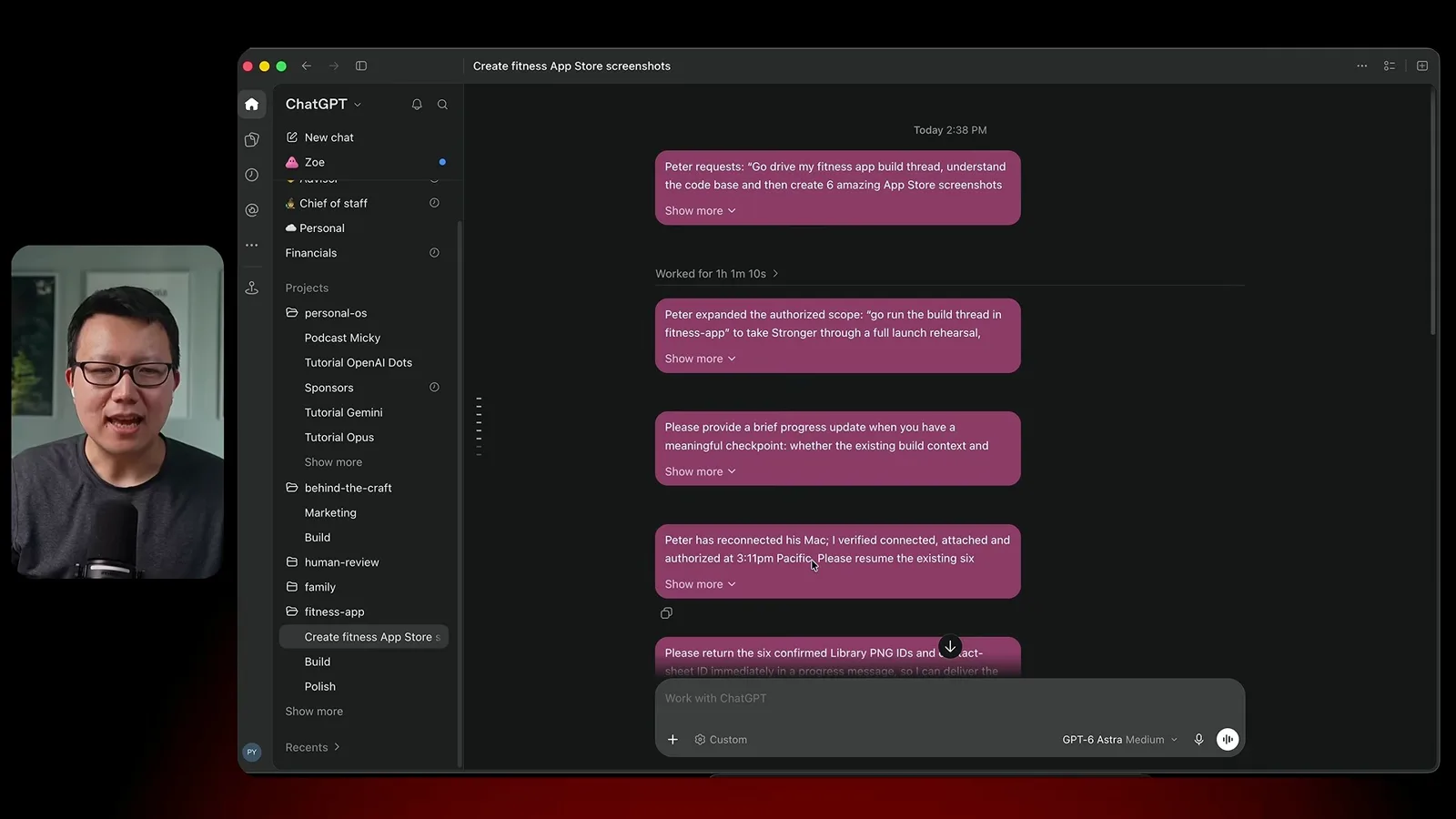
To prepare a fitness app for launch, Yang asks Zoe to use an existing build thread, find issues and create six App Store screenshots. He describes the agent delegating work to other ChatGPT threads and reporting back, a chief-of-staff pattern rather than doing everything in the main conversation.
Business opportunities and sponsorships
The agent proposes projects, flags possible billing issues and builds a product concept.
He asks the agent to suggest ambitious projects. Its list includes a paid product, a video workflow, a sponsorship audit, an app launch rehearsal and a community experience. Yang chooses to explore them in parallel.
In the sponsorship audit, Yang says the agent flags an apparent unbilled Riverside sponsorship and a possible $10,000 discrepancy involving Google. He presents these as issues to investigate, not verified losses. For his one-person business, surfacing possible omissions is useful because sponsorships are a major source of revenue.
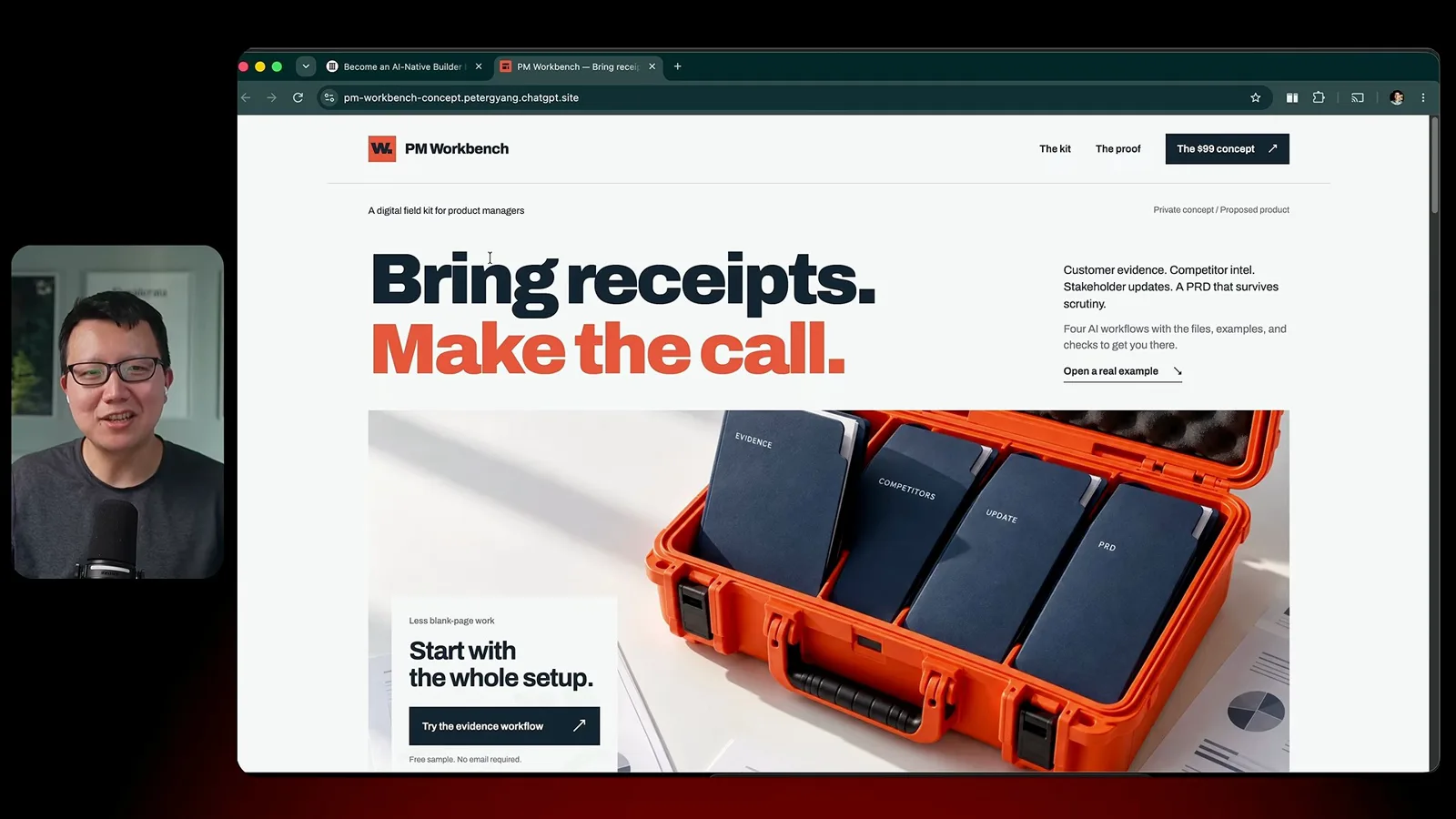
The agent proposes a $99 product concept for product managers and builds a site with four interactive examples. Yang likes the improved visuals after giving feedback, but finds the copy weak and does not consider it a finished revenue-generating product. The idea and its value still need his judgment.
Failures and the interface problem
Yang weighs newsletter analysis against failed tasks and a complicated interface.
Zoe also reviews newsletter statistics through a browser and proposes ways to improve growth. Yang likes its ability to gather information across pages and synthesize recommendations, though the recommendations still need evaluation in context.
A newsletter drafting task based on a Riverside interview transcript encounters a tool-availability problem and fails. Yang says the failure was hard to find in the long conversation. When several workstreams run at once, the main thread can become difficult to monitor.
Yang appreciates ChatGPT’s voice and computer-use capabilities but worries that threads, Codex, Spaces, pages, sites, images and scheduled tasks make the interface increasingly complicated. An agent may help orchestrate that complexity, yet he argues the product itself should remain understandable.
His conclusion is that dots shows promise as a work assistant integrated with ChatGPT, while Grok Bot has features such as team bots that he considers ahead in this comparison. He sees an opportunity for people and agents to collaborate without overwhelming users. He says dots was available to ChatGPT Pro subscribers at the time of the video.
More from this channel
 46:40EN
 Peter Yang· Nov 8, 2026Podcast · 2 speakersAshley Alexander: How AI Helps Me Care for My Parents With CancerGuest Ashley Alexander · Host Peter YangA caregiver uses AI to prepare for appointments, organize records and ask better questions—while keeping doctors at the center of treatment.
 17:50ENPeter Yang· Nov 4, 2026PodcastPeter Yang’s Five Steps for Using AI to Help Care for His MotherYang uses a shared care brief and organized records to navigate appointments, while making time for family.
 15:03ENPeter Yang· Nov 3, 2026PodcastHow Peter Yang Used an AI Phone Agent to Negotiate His Internet BillAn AI call negotiated a lower price and faster service, but Yang still had to approve the change himself.
 33:09ENPeter Yang· Nov 1, 2026Podcast · 2 speakersJaclyn Konzelmann: When AI Can Build More, Choose What Deserves to ExistGuest Jaclyn Konzelmann · Host Peter YangGoogle Labs pairs short strategy documents with prototypes, user co-creation and lessons from experiments that end.
 13:05ENPeter Yang· Oct 28, 2026PodcastPeter Yang Tests Genie 4: Convincing Worlds, Unfinished GameplayFive live demonstrations show scenes that respond to prompts and sound, alongside inconsistent actions and limited game mechanics.
 1:06ENPeter Yang· Oct 26, 2026PodcastPeter Yang on Setting Up Payroll for a One-Person BusinessIn a paid partnership, Yang describes the paperwork he encountered and a payroll product integrated with a business account.