In 30 seconds
Engineering professor Barbara Oakley argues that people need knowledge in long-term memory to evaluate AI output and develop intuition. She recommends pausing to understand generated work and asking an AI tutor to pose questions, while retaining practice and memorization where useful. Oakley also draws analogies between brain systems and machine-learning research, including a proposed model workspace and the phenomenon of grokking; she presents the link to human learning as a possibility.
- 1Prior knowledge helps people question a plausible-looking answerOakley uses arithmetic and an AI-assisted thriller to illustrate why a person needs subject knowledge to judge output.
- 2She distinguishes conscious learning from more automatic skill learningHer examples contrast a step-by-step math problem with repeated practice of a baseball swing.
- 3Grokking offers a possible analogy for building intuitionOakley proposes that a pattern learned through effort might become more automatic with practice; she presents the brain connection as a possibility.
- 4Ask the AI to test whether you understood its workShe recommends pausing, checking the explanation and practicing rather than offloading every step.
- 5Connect difficult material to the learner’s experienceHer example asks an AI for Python analogies based on Mongolian herding and yurts.
- 6Questions and memorization can serve different learning needsOakley says inquiry supports discovery while facts and procedures also need to be retained.
Takeaways
- Pause over AI-generated work and check your own understanding.
- Ask a tutor to question you, then practice retrieving and applying the answer.
- Use familiar examples to make a new topic relevant and encourage curiosity.
- Combine inquiry with memorization when foundational facts or procedures are needed.
- Treat comparisons between model internals and human cognition as analogies or hypotheses.
Read the edited text by chapter
Learning in an age of cognitive offloading
Oakley introduces her concern and recounts her own path from avoiding mathematics to engineering.
Barbara Oakley asks what happens to learning when people routinely offload thinking to generative AI. She describes a recent forum bringing neuroscientists, cognitive psychologists and education-technology specialists together to examine cognitive offloading.
Oakley grew up loving animals and crafts and disliked math and science. Unable to afford college, she joined the army to learn Russian and later worked on Soviet trawlers in the Bering Sea. She also met her husband at the South Pole station.
After leaving the military at 26, she began with remedial algebra and gradually came to love mathematics, science and computing. She became an engineering professor and grew interested in what neuroscience might say about learning and AI.
Neurons, practice and prior knowledge
She uses neuron diagrams and examples to argue that stored knowledge supports evaluation of AI output.
Oakley recalls the 2017 transformer paper and says AI research and neuroscience have long exchanged ideas. She proposes using the comparison in both directions: to think about AI and to think about human learning.
She uses a cartoon alien to illustrate a neuron: its legs represent dendrites, toes represent dendritic spines and an arm represents the axon. Signals pass between cells, and she describes learning as building and strengthening connections through practice.
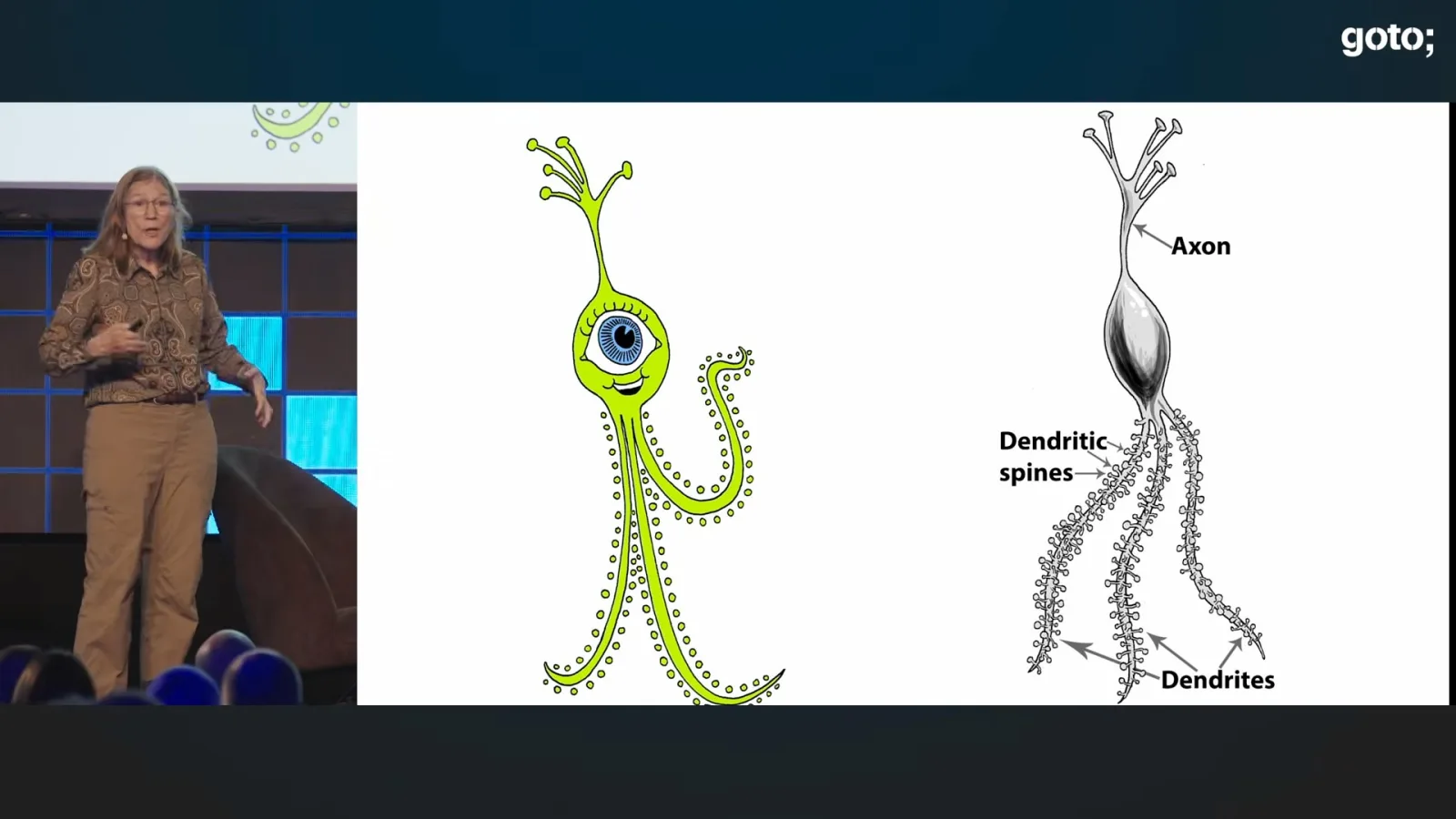
Oakley argues that knowledge stored in long-term memory helps people judge AI outputs. She gives examples of an implausible arithmetic result and a weak AI-assisted thriller that looked good to a writer unfamiliar with the genre.
Conscious learning, automatic skills and grokking
Oakley compares two learning pathways and proposes an analogy between model training and intuition.
She distinguishes a conscious, declarative learning pathway involving working memory and the hippocampus from an automatic, habitual pathway involving the basal ganglia. In her account, the former is apparent when working through a math problem; the latter is illustrated by practicing a baseball swing.
Oakley compares these to slow and fast modes of thinking. Repeated practice, she says, changes the strength of connections underlying a skill even when the learner cannot consciously describe how the movement is acquired.
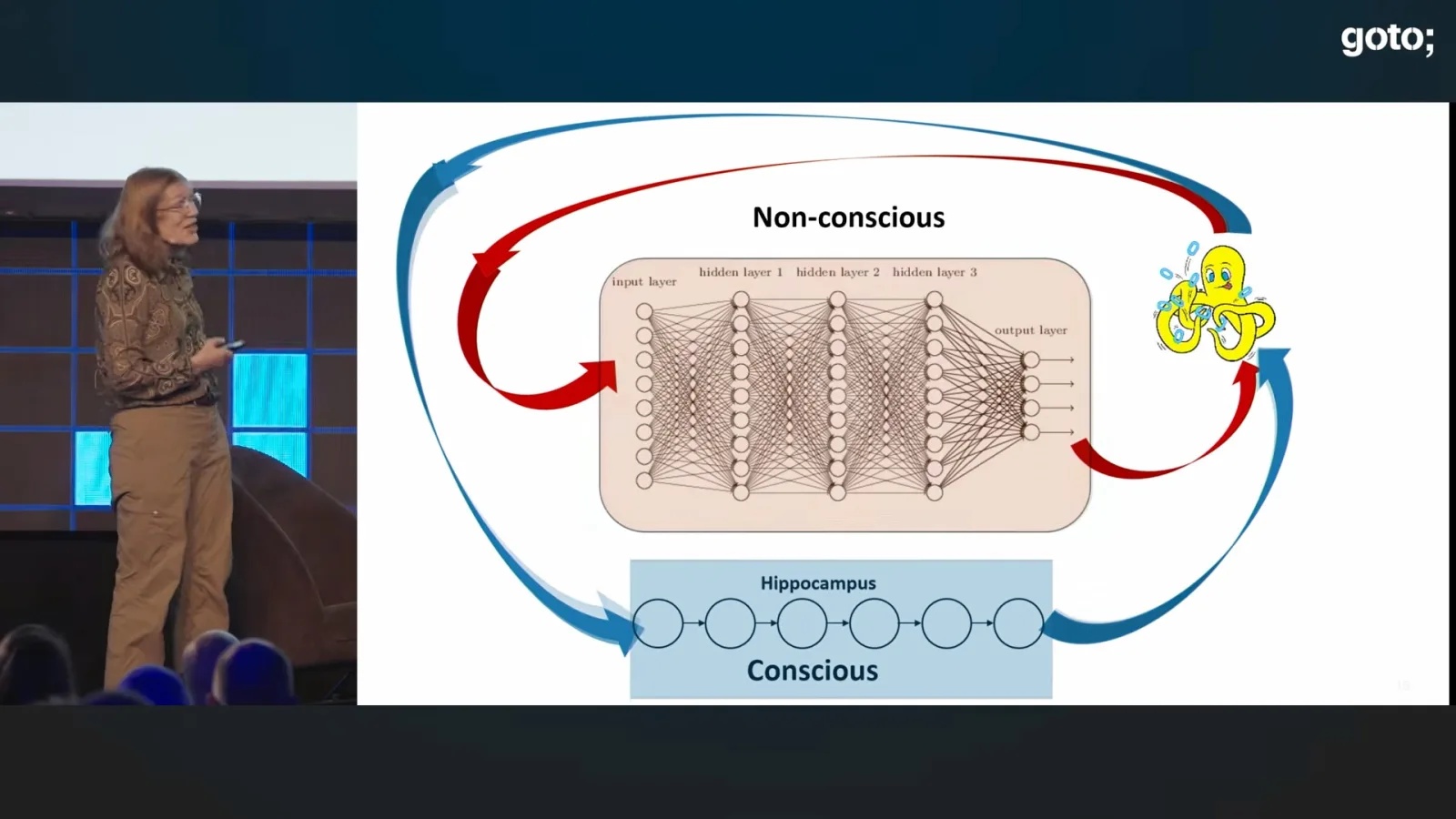
She also associates the automatic pathway with native-language learning and expert pattern recognition. She suggests that as people grow older, conscious study and subsequent practice play a greater role in learning another language.
Oakley draws an analogy between weighted neural connections and machine learning. She describes grokking in models as continued training followed by a transition to recognizing a simpler underlying pattern and generalizing to unseen examples.
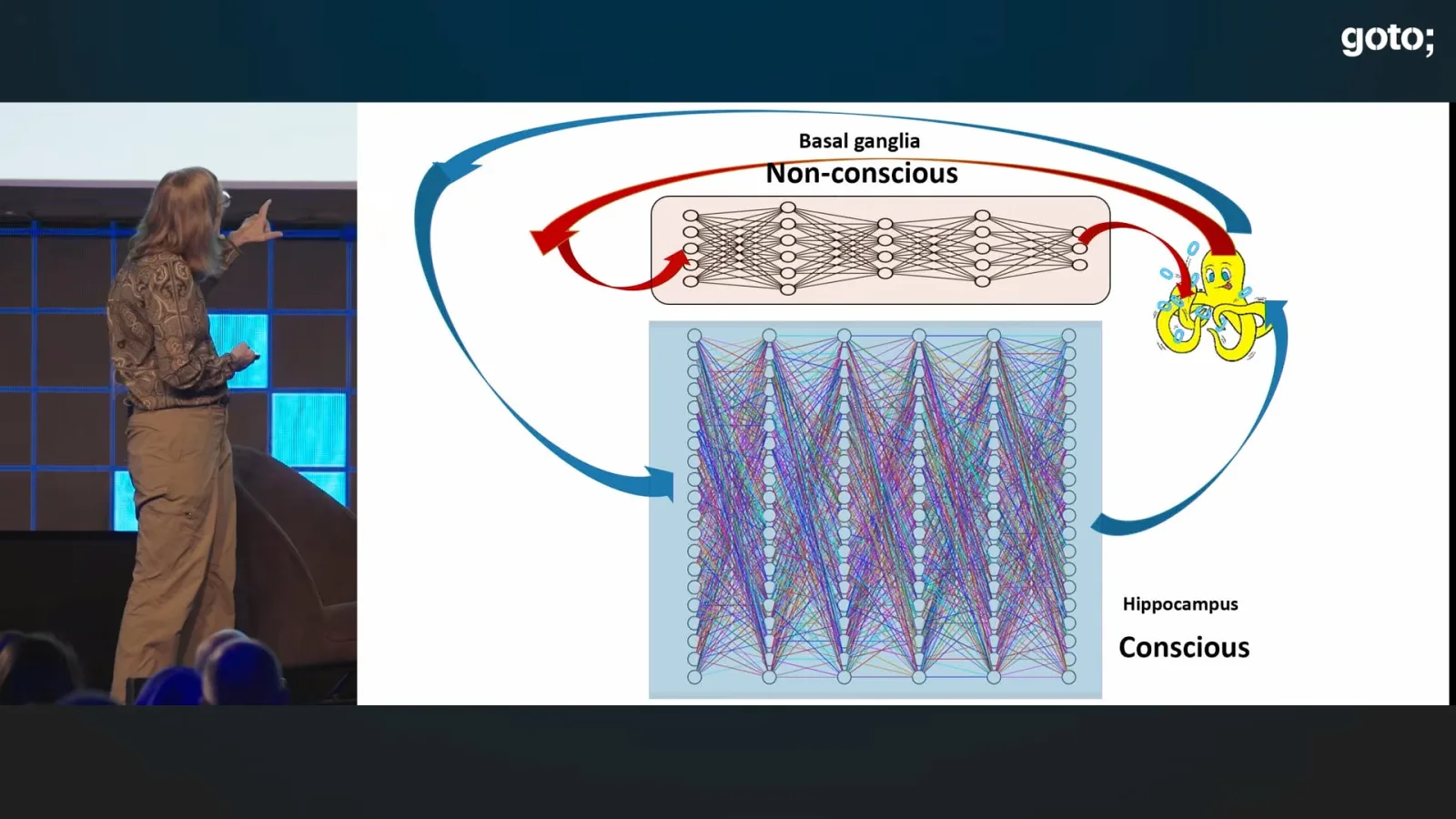
She proposes, as a possibility, that something analogous happens in the hippocampus and that practiced knowledge can be transferred into a more automatic system. She presents this as a way to think about the development of intuition and expertise.
Aging, working memory and model representations
She discusses a video-game study and draws comparisons between model internals and human attention.
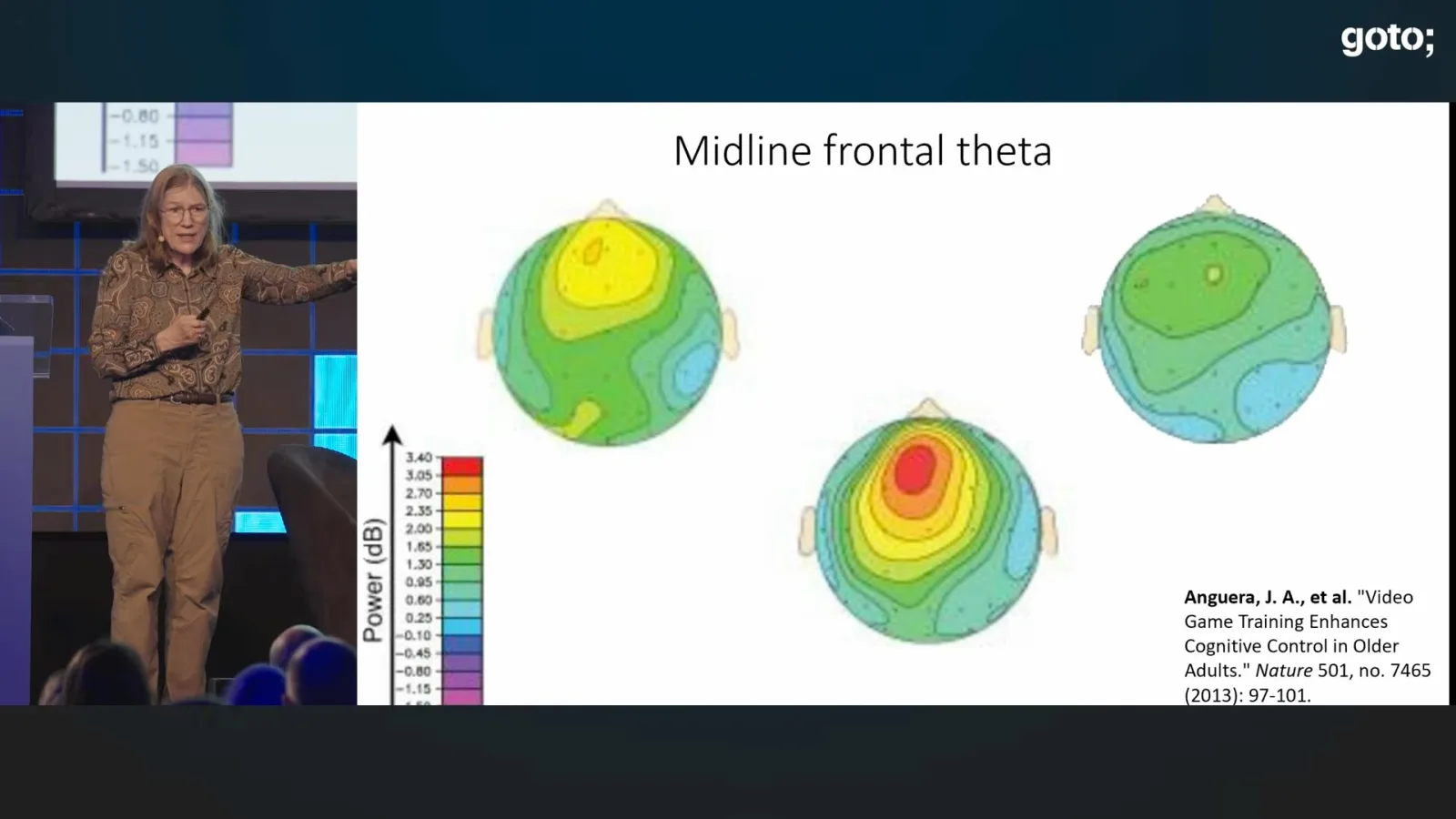
On aging, Oakley discusses changes in brain activity and cites a study of video-game training in older adults. She presents brain images and says some forms of training may support cognitive performance; she also mentions that alternatives to action games are being developed.
Oakley turns to working memory and an Anthropic interpretability study. She describes a narrow model representation called J-space and a smaller workspace, while acknowledging that comparing model processing to sensory and motor functions anthropomorphizes the model.
Using a prompt about not thinking of elephants, she shows how researchers inspect intermediate representations. She reports a four-to-six-chunk workspace and suggests that physical geometry might explain a similar capacity limit; she presents that explanation as a possibility.
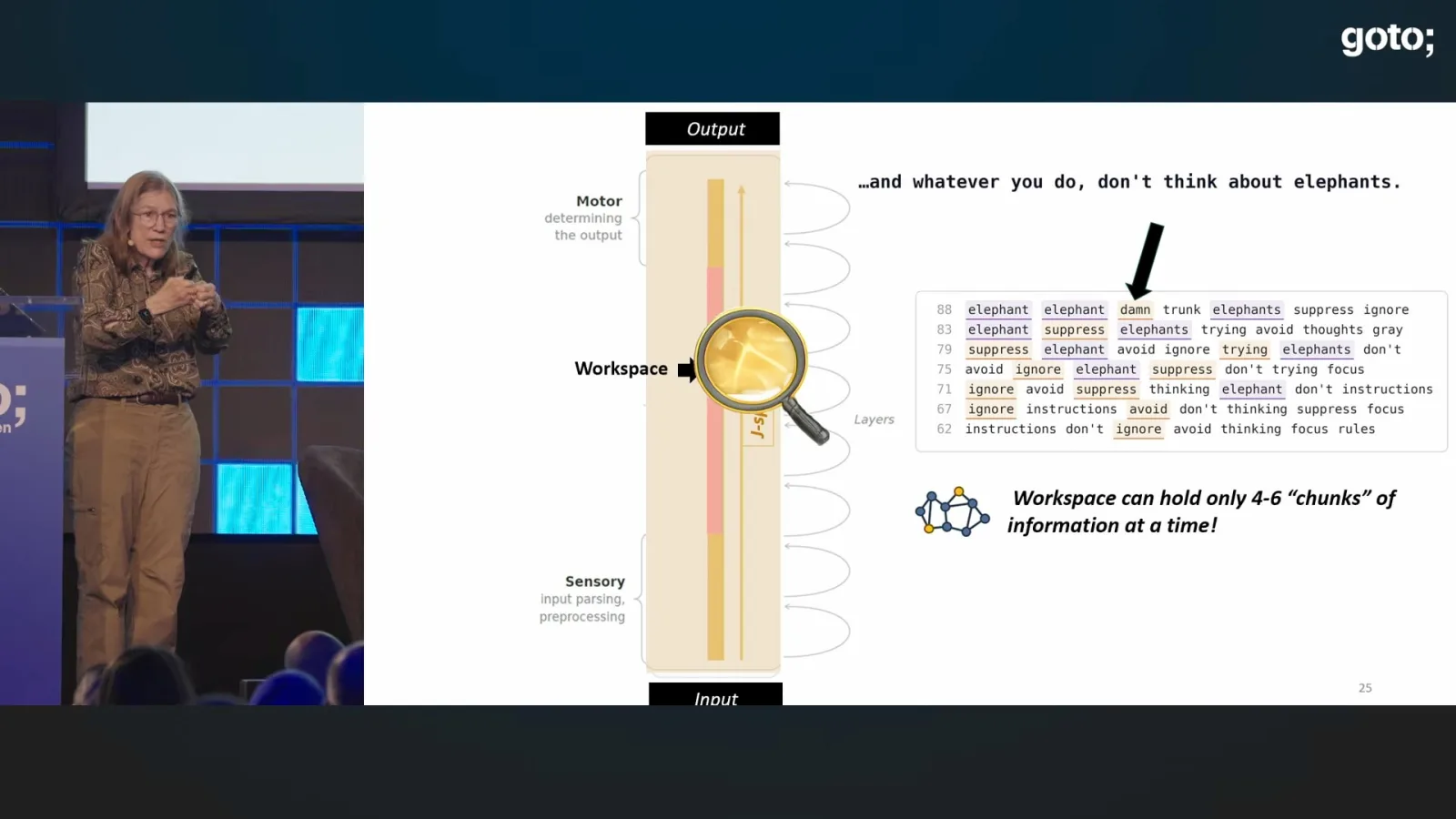
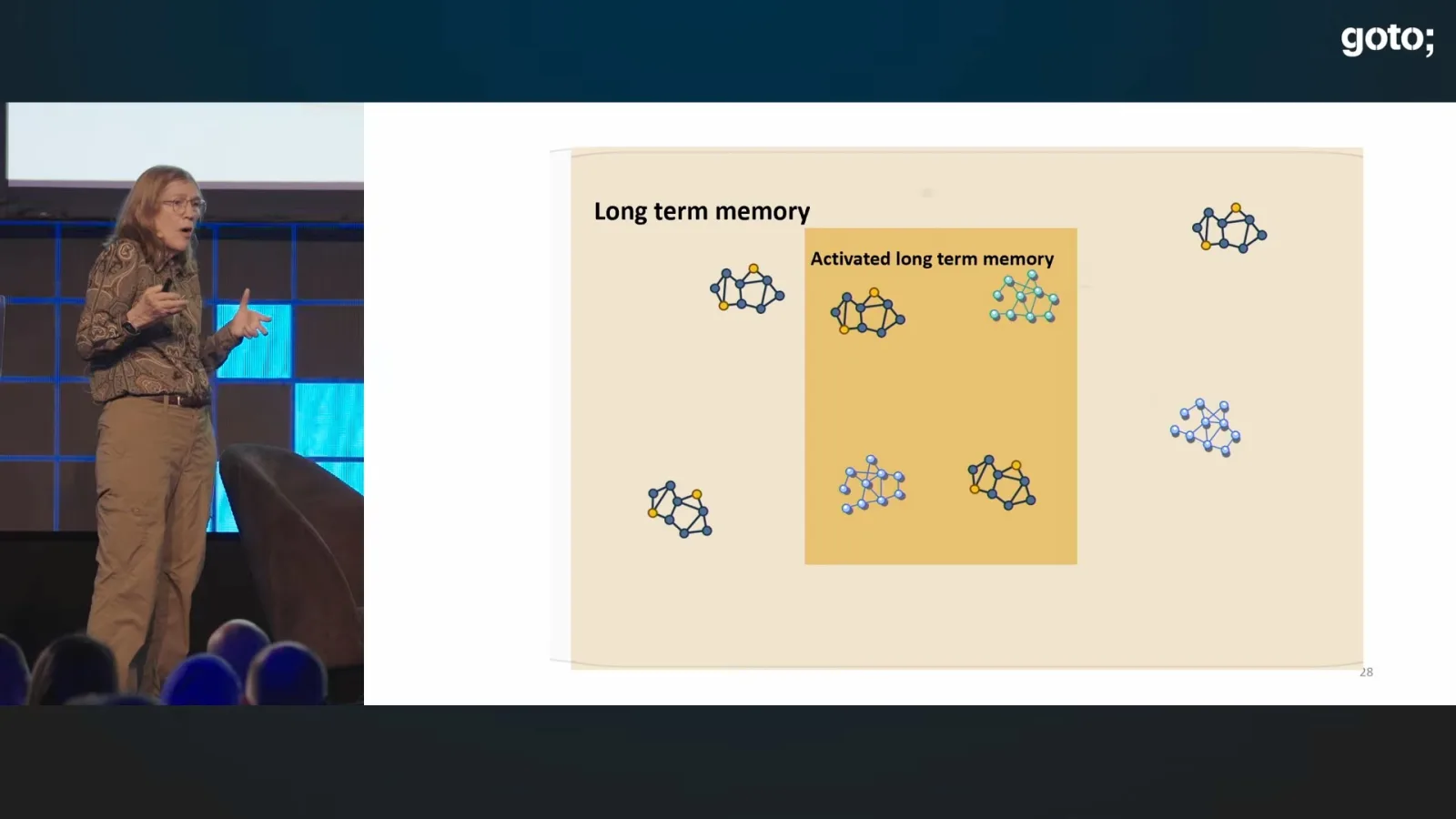
Oakley says that removing the identified model representation can impair inference while leaving fluent output. She compares the proposed workspace with a human model in which activated long-term memory feeds a small focus of attention.
Use AI without offloading understanding
She recommends checking understanding and discusses the role of remembered knowledge in critical thinking.
In her account, learning combines known chunks within that focus and stores new connections for later practice. If a person offloads a task completely to AI, she argues, they may miss the opportunity to build and connect that knowledge themselves.
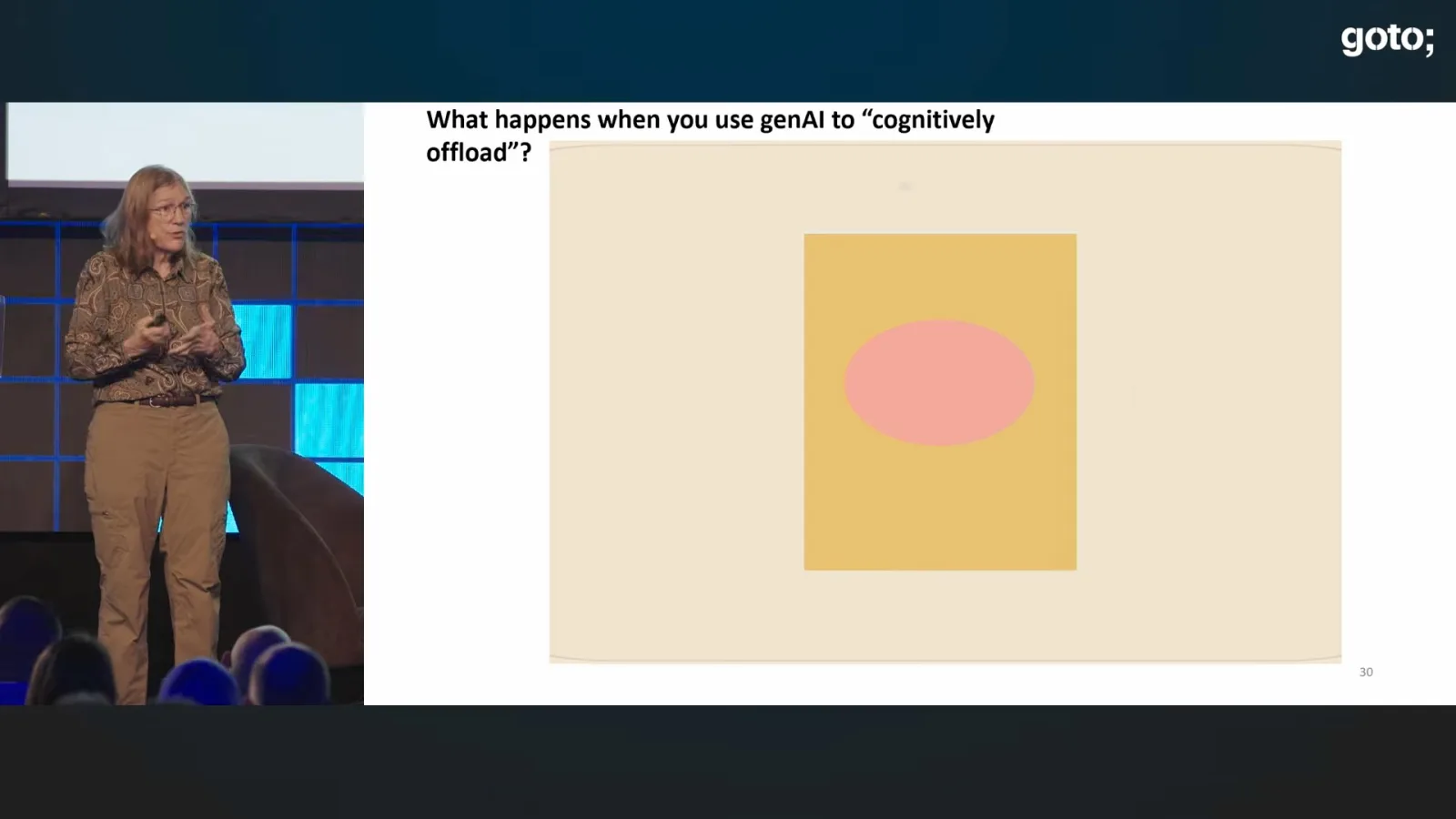
Her practical suggestion is to pause when AI does work, check that you understand it and ask the model to question you. She says this can help develop the expertise needed to assess and use the result.
Oakley points to declines in international test results and discusses the Flynn effect. She argues that educational attitudes favoring looking things up over remembering them can weaken the knowledge base needed for critical thinking.
Curiosity, questions and practice
Oakley connects curiosity to learning and suggests combining inquiry with memorization and practice.
She turns to dopamine and curiosity, describing dopamine as involved in learning and reward anticipation. In her account, curiosity sustains effort on a problem and the satisfaction of solving it helps strengthen what was learned.
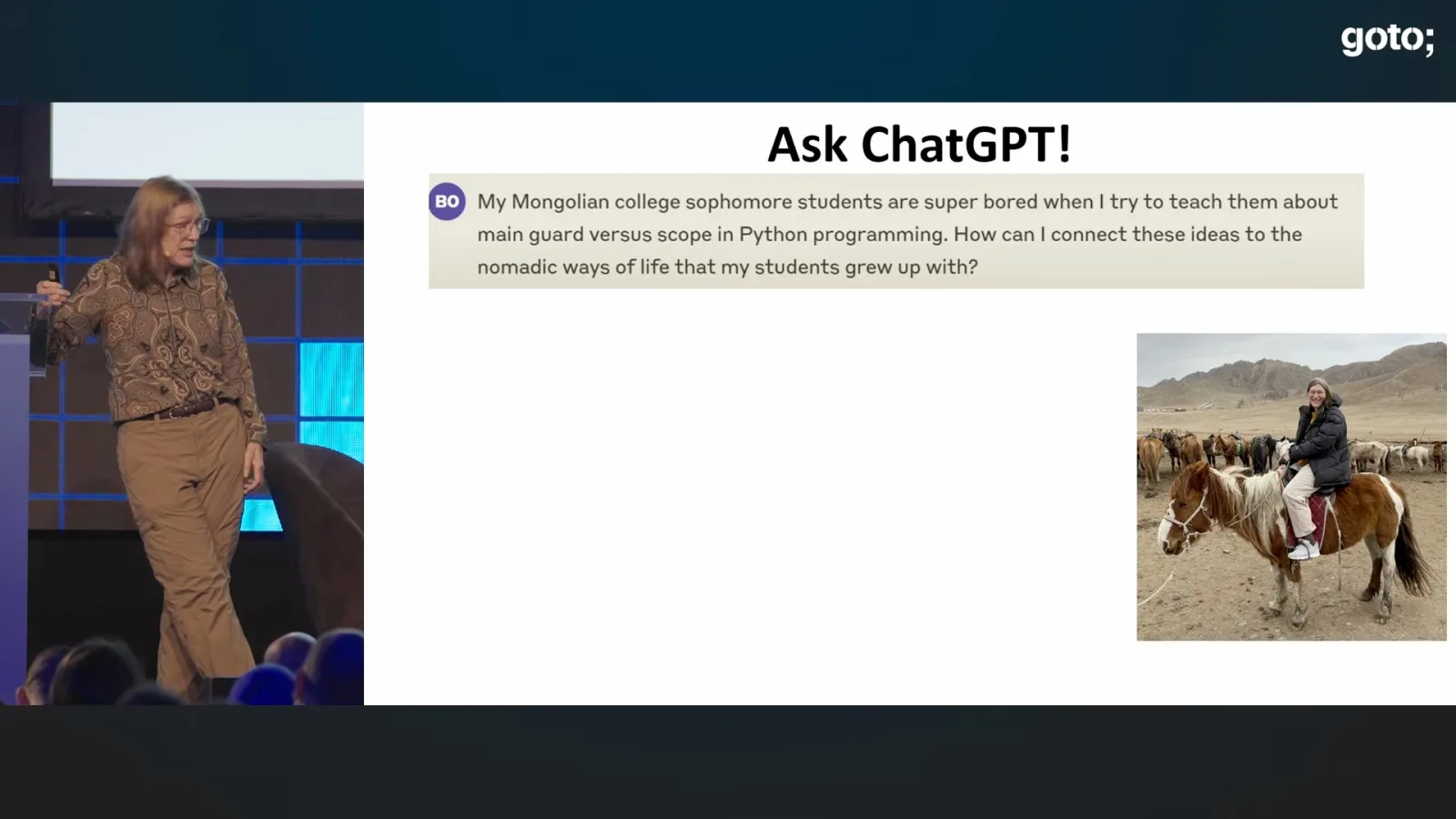
To make material relevant, she describes asking ChatGPT for ways to teach Python concepts to students familiar with Mongolian herding and yurts. The proposed analogies connect new programming ideas to familiar experiences.
Oakley compares a question to a direction on a map: it narrows the search through a large space of possible connections. Guidance can help a learner discover an answer even when the final insight feels self-generated.
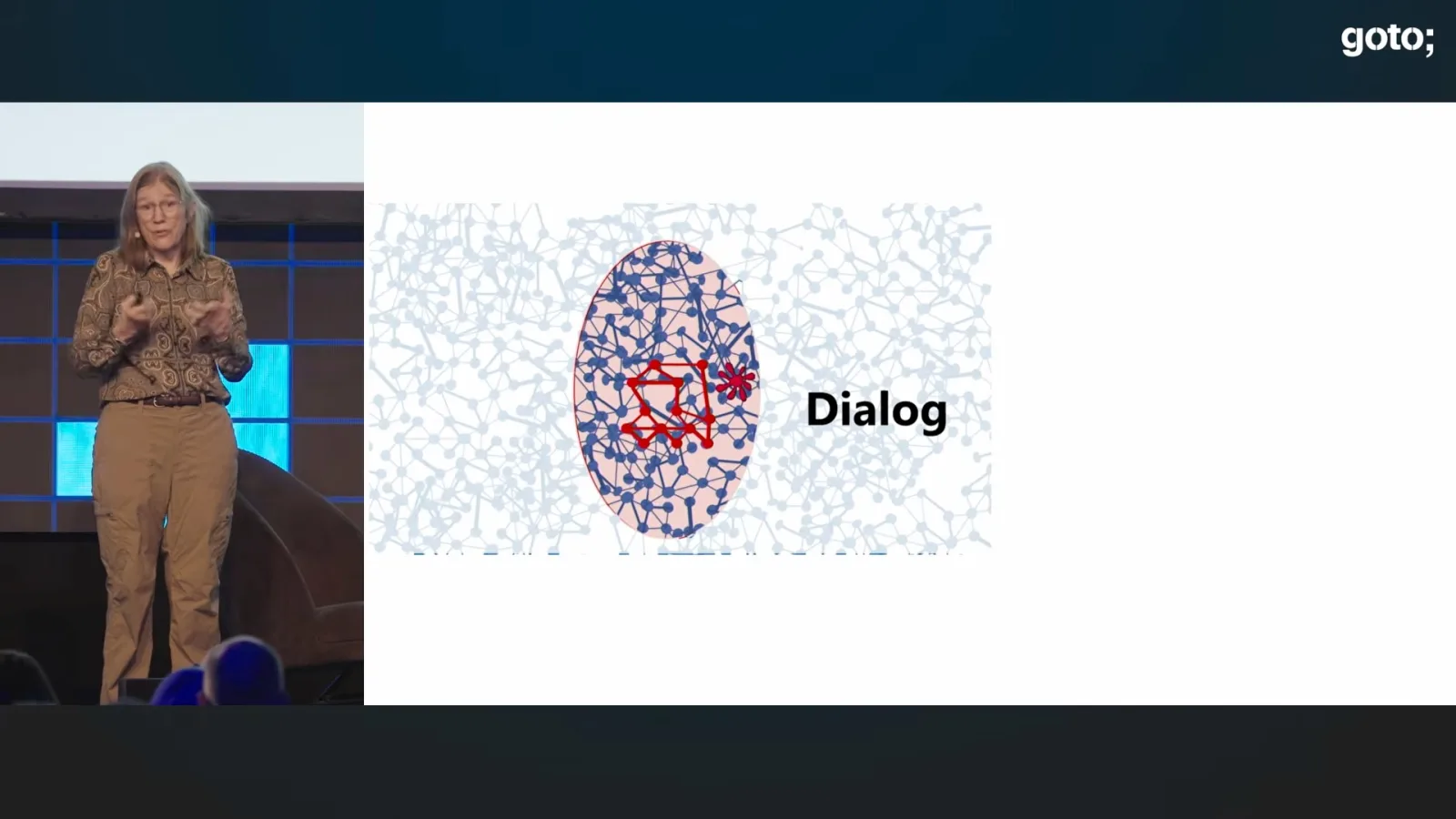
She recommends asking an AI tutor to pose questions, but argues that inquiry and memorization both have a place. A pilot needs established procedures, and a language learner needs vocabulary, even while questions can help create understanding.
She mentions memory-palace training and says the goal is to build enough knowledge to solve difficult problems independently. AI can suggest unfamiliar ideas, but she argues that a learner needs relevant foundations to use them creatively.
Oakley closes with her account of learning and new neurons in the hippocampus, arguing that continued learning can support both learning and mood. She encourages the audience to take time to understand and practice rather than always handing the work away.
More from this channel
 29:42EN
 GOTO Conferences· Nov 6, 2026Artie Shevchenko and Titus Winters on Code Health in the AI EraTitus Winters, Artie Shevchenko · AdobeThe authors discuss complexity, human review, testing and why interfaces and state deserve attention in AI-assisted development.
 42:40ENGOTO Conferences· Nov 5, 2026Daniel Terhorst-North: Use Generative AI to Go Broader, Not Just FasterDaniel Terhorst-North · Dan North & AssociatesA software practitioner shares how an AI-assisted teaching toolkit led him to “adjacent engineering,” larger test-first steps and external guardrails.
 44:42ENGOTO Conferences· Nov 4, 2026Adam Tornhill on AI-Friendly Code and Sustainable Agentic DevelopmentAdam TornhillAgentic coding can accelerate delivery, but complexity can erase the gains. Adam Tornhill presents code-health research and a large-scale refactoring case study.
 51:06ENGOTO Conferences· Nov 4, 2026Kent Beck on AI Coding, the Forest, and Human NeedsKent BeckAI amplifies the conditions in which software teams work. Kent Beck argues for preserving future options and designing tools around human needs.
 40:04ENGOTO Conferences· Nov 2, 2026Sophia Drossopoulou: Verifying Trusted Code in an Open WorldSophia Drossopoulou · Imperial College LondonCapabilities, scoped invariants and explicit trust assumptions help reason about effects when trusted code calls unknown objects.
 51:06ENGOTO Conferences· Nov 2, 2026Kent Beck: Build AI Programming Tools for Human NeedsKent BeckThe “genie” can amplify healthy or unhealthy development practices. Beck calls for tools that preserve learning, connection and future options.