In 30 seconds
In the question-and-answer portion of Tesla’s August 2022 shareholder meeting, Elon Musk said capital spending and research were priorities and that a buyback was possible but not promised. He expected Cybertruck pricing and specifications to change, offered a speculative economic outlook and discussed a future robotaxi network, succession and Twitter. His product and economic forecasts reflect the 2022 discussion; Tesla’s supervised driving features require an attentive driver.
- 1A buyback was possible but not committedMusk tied any decision to cash flow and financial stability.
- 2Cybertruck pricing and specifications were expected to changeMusk cited inflation and targeted volume production in 2023.
- 3The recession prediction was explicitly speculativeMusk described his 2022 macroeconomic outlook as a guess.
- 4A shared robotaxi fleet was a future conceptMusk imagined owners choosing when to make cars available, subject to future capability and regulation.
- 5Musk acknowledged the succession questionHe said he intended to remain while useful and did not offer an easy answer.
Takeaways
- Musk prioritized capital spending and research and said a buyback was possible, not promised.
- He expected Cybertruck specifications and price to differ from the 2019 announcement.
- He explicitly described his recession outlook as speculation.
- His robotaxi and factory figures were future ambitions, not demonstrated outcomes.
- He acknowledged having no easy answer on succession.
Read the edited text by chapter
Cash, factories and Cybertruck
Musk answers questions about spending, buybacks and production.
Asked about the use of cash, Musk says Tesla favors investing in capital expenditure and research and development. He says acquisitions are possible when they fit, but historically most growth has been organic.
A share buyback is possible, he says, but he declines to commit and conditions it on financial strength, future cash flow and broader stability.
Asked how many factories might support 20 million vehicles annually, Musk estimates roughly a dozen large sites. This is an illustrative production ambition, not a guarantee.
On Cybertruck, he says inflation and other changes mean specifications and pricing will differ from the 2019 announcement. He targets volume production around the middle of 2023.
Charging, batteries and the economy
He discusses charging locations, cell production and inflation.
Musk says charging locations are prioritized by demand and suggests a public poll on future sites. He describes an idea for a themed Los Angeles charging location with food and screens.
He says 4680 battery-cell production was increasing but its ramp remained difficult to predict. He says supplier cells were sufficient for the company’s stated 2022 vehicle output target.
Asked about inflation, Musk says some component prices appeared to be trending down in forward purchasing. He speculates about a mild recession and explicitly labels his macroeconomic view a guess.
Autonomy and shareholder feedback
Musk describes a possible robotaxi model and answers audience questions.
An audience member asks how autonomous vehicles might change ownership. Musk imagines owners deciding when to use their cars or make them available to a shared fleet, comparing the model to ride-hailing and short-term rentals.
He argues that a driverless vehicle might be used more hours per week than a conventional privately owned car. The utilization and financial benefits depend on future autonomous operation and are not demonstrated by the presentation.
Shareholders offer product suggestions, including steering controls and clearer information about skills needed for space exploration. Musk thanks them for the feedback.
Asked what people overlook, Musk praises engaged retail investors and argues that understanding a company’s products is important. He advises looking beyond short-term supply disruptions when considering a business.
An attendee asks whether factory waste heat could be reused. Musk agrees it could be a future improvement and describes how Tesla manages thermal energy among vehicle components.
Succession, Twitter and infrastructure
The audience asks about autonomous deployment, leadership and tunnels.
Asked about a pilot city for a robotaxi network, Musk says the company was aiming for a general driving solution rather than one specific city, while acknowledging local regulatory differences.
An investor raises succession and Musk’s other commitments. Musk says he intends to remain at Tesla while useful, praises the team and acknowledges that he has no easy succession answer.
Discussing Twitter amid litigation over the acquisition, Musk says the service could accelerate a broader X product vision. He avoids detailing the legal dispute.
An audience question turns to the Boring Company. Musk describes a vision of tunnels, underground transport and high-speed intercity travel, while noting the existing Las Vegas tunnel.
Asked about cars communicating with one another and Dojo coordinating traffic, Musk says Dojo’s first goal was neural-network training. He sees possible value in sharing road closures and other traffic information.
Musk closes by encouraging support for sustainable energy and transport. He thanks customers, shareholders and the team for helping the company progress.
More from this channel
 3:35:00EN
 CNET Highlights· Mar 2, 2023Tesla’s 2023 Investor Day: the plan to scale clean energy and carsElon Musk, Zach Kirkhorn, Drew Baglino, Franz von Holzhausen, Lars Moravy, Colin Campbell, Pete Bannon, David Lau, Ashok Elluswamy, Rebecca Tinucci, Karn Budhiraj, Roshan Thomas, Tom Zhu, Mike Snyder, Laurie Shelby, Brandon Ehrhart · TeslaTesla leaders outline a global electrification scenario, a lower-cost vehicle platform and the factories and supply chains needed to scale.
 41:04ENCNET Highlights· Mar 2, 2023Tesla’s 2023 investor Q&A puts battery supply and costs in focusElon Musk · TeslaExecutives explain refining, factory localization and dry-electrode scaling, while Musk discusses affordability and a future autonomous fleet.
 8:15ENCNET Highlights· Mar 1, 2023Tesla’s 2023 plan estimates the scale of a fully electrified energy systemElon Musk, Drew Baglino · TeslaMusk and Drew Baglino describe a proposed energy transition requiring batteries, renewable generation and manufacturing investment.
 53:25ENCNET Highlights· Dec 1, 2022Neuralink researchers on implant durability, safety and wireless dataElon Musk · NeuralinkAt a 2022 Q&A, the team explained animal results, device-removal concerns and ways to compress brain signals.
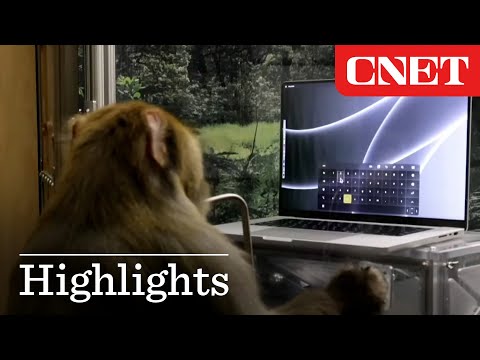 7:20ENCNET Highlights· Dec 1, 2022Neuralink’s 2022 monkey demo selected highlighted keysElon Musk · NeuralinkMusk showed cursor control with an implant, while stressing the monkey was following prompts rather than spelling independently.
 3:39:05ENCNET Highlights· Dec 1, 2022Neuralink’s 2022 update: from neural signals to a working interfaceElon Musk, DJ Seo · NeuralinkEngineers explain cursor decoding, implants and robot-assisted insertion, while separating animal demonstrations from clinical ambitions.