In 30 seconds
Tesla engineers said in 2022 that Optimus used cables and springs to reduce hand parts, while driving-model candidates were tested against curated histories of failure and in silent shadow mode. The team also described large offline models producing labels for smaller in-car networks. Musk offered rollout and robot-delivery forecasts, and an audience member challenged the panel on driving safety and transparency.
- 1A cable-and-spring hand reduces mechanical partsAn engineer says tendons close the fingers while springs extend them.
- 2Driving models are tested against a growing failure setEngineers describe curated cases and silent shadow-mode evaluation.
- 3Large offline models can label data for smaller in-car networksThe team describes this as a teacher-student approach.
- 4International beta readiness was a 2022 forecastMusk noted that regulatory approval would still be needed.
- 5An audience member pressed the panel on safety transparencyMusk described his deployment rationale; Tesla’s supervised feature still requires driver attention.
Takeaways
- A cable can close a robot finger while a spring extends it.
- A large generic test set may miss specific failure modes.
- Offline models can generate labels for smaller deployed models.
- Tesla’s supervised driving feature requires an attentive driver.
- The robot and rollout timelines were forecasts made in 2022.
Read the edited text by chapter
Optimus hands, intervention and safety
Engineers explain the hand’s cable-and-spring design and discuss human intervention.
At Tesla AI Day 2022, Musk invites engineers to answer questions about the company’s AI hardware, software and robotics.
Asked why the Optimus hand uses tendons, an engineer says metal cables can reduce the number of small parts. The team also says the design can reduce looseness and uneven motion.
The engineer explains that a tendon closes the fingers while springs extend them, avoiding a separate actuator for each direction. Musk says the architecture is not fixed and could change as the team learns.
Musk says Tesla intends to test the robot on simple factory tasks and use the results to judge whether it is useful. He expects the hand and other components to go through further versions.
Asked whether the robot could have a personality, Musk imagines conversational and companion-like capabilities. These are ideas about a future product rather than capabilities demonstrated in this question session.
An audience member asks whether human interventions could help train the robot. An engineer says remote operation, stopping unsafe motion and simulation could supply examples of actions to avoid.
Musk imagines eventually giving the robot high-level instructions that it breaks into smaller actions. He describes this as a long-term goal for a system that could learn from interaction.
Asked how Optimus relates to Tesla’s sustainable-energy mission, Musk says the project broadens the company’s ambitions. He predicts substantial progress over five to ten years.
Musk says he expects conversational capabilities and discusses safety features such as a local stop control. He says the control should not be alterable over the internet.
Dojo and testing driving models
The panel discusses computing service ideas, lane prediction and regression testing.
A questioner asks whether Tesla would sell Dojo hardware or offer computing as a service. Musk says a remotely accessible service might make more sense because a large computer needs substantial power and cooling.
An engineer explains why the driving team uses a generative, language-model-like approach for lanes: intersections can have crossing connections and incomplete visual information, making a coherent graph useful.
Asked how neural networks are tested, the team describes curated sets for particular failure modes. An engineer says new models are checked against a growing history of examples where earlier versions failed.
The team also describes shadow mode, in which a model runs silently in vehicles to collect evidence about its behavior before a customer-facing release, along with further quality-assurance checks.
Asked about large foundation models, an engineer says Tesla uses large offline models to produce labels for smaller networks that run in the car. The team describes this as one form of teacher-student training.
Another engineer says larger datasets and pretraining on related tasks improved model performance in the team’s experience. The speakers describe their own development results rather than a guarantee for every task.
AI oversight and driving-system development
Musk and engineers address general AI safety, vehicle sensing and beta rollout plans.
Asked about general AI safety, Musk says he supports public oversight and would invest in safety expertise if Tesla made a significant contribution to general AI.
A questioner asks whether a heavy truck needs different sensing from a car. Musk argues that cameras and neural networks could in principle drive different vehicle types, drawing an analogy with human vision.
Asked about expanding the Full Self-Driving beta internationally, Musk predicts technical readiness by the end of 2022 while noting that regulatory approvals would differ by country. This was a forecast at the event.
Engineers say the production driver-assistance system and the beta were sharing more of the same vision system, while lane modeling and highway behavior still needed integration and testing.
The panel says testing should cover different weather and road environments. Musk names distance between necessary safety interventions as one metric the team monitored.
Asked what advice he would give his younger self, Musk recommends learning from capable people and reading, while also making time to enjoy the present.
Factory tasks and robot development
Musk forecasts possible customer deliveries and describes starting with simple tasks.
An audience member asks why humanoid robotics might advance faster than earlier driving forecasts suggested. Musk points to progress in AI and to Tesla’s experience with motors, electronics, batteries and sensors.
Musk says early Optimus tests would focus on moving or loading parts in a factory. In 2022 he estimates customers might receive a robot within three to five years; this is a forecast.
Asked about open research on humanoids, he raises concern about harmful use and says safety constraints would be needed. The questioner had proposed wider access to simulation and hardware.
An engineer says the controller speed required for a robot depends on its intended task. Musk adds that better dexterity and lower delay are goals for later versions.
Musk describes Tesla as a collection of teams that developed expertise for electric cars and driving systems. He says his role includes creating an environment where engineers can do demanding work.
Difficult examples, risk and future designs
Engineers describe data collection while the audience asks about safety and robot form.
Engineers discuss finding difficult driving examples, including identifying disagreements between system signals and comparing a model’s expected action with customer behavior in shadow mode.
Asked how Tesla defines general AI, Musk says the company was not directly focused on that problem. He speculates that broader capabilities might emerge from work on vehicles, robots and real-world data.
He compares the internet to a communication network that widened access to information. The point is part of his broader discussion of people, machines and collective knowledge.
Musk says neural networks had gradually taken over more tasks in the driving stack. He describes direct learning from video and driver controls as a possible direction while saying the system was not there yet.
An audience member asks how Tesla evaluates driving risk and whether outside transparency or regulation is needed. Musk discusses safety statistics and argues for deployment when he believes it reduces overall harm.
His safety assessment is a company view, not a comparative result established by this session. Tesla’s current [FSD (Supervised) guidance](https://www.tesla.com/support/fsd) requires an attentive driver and says the feature does not make the car autonomous.
The last audience question asks why a humanoid must be symmetric and suggests more unusual designs. Musk says the immediate goal is a basic useful robot, with possible attachments or different forms later.
He says shipping a useful physical product at a viable cost is difficult and thanks the team.
More from this channel
 3:35:00EN
 CNET Highlights· Mar 2, 2023Tesla’s 2023 Investor Day: the plan to scale clean energy and carsElon Musk, Zach Kirkhorn, Drew Baglino, Franz von Holzhausen, Lars Moravy, Colin Campbell, Pete Bannon, David Lau, Ashok Elluswamy, Rebecca Tinucci, Karn Budhiraj, Roshan Thomas, Tom Zhu, Mike Snyder, Laurie Shelby, Brandon Ehrhart · TeslaTesla leaders outline a global electrification scenario, a lower-cost vehicle platform and the factories and supply chains needed to scale.
 41:04ENCNET Highlights· Mar 2, 2023Tesla’s 2023 investor Q&A puts battery supply and costs in focusElon Musk · TeslaExecutives explain refining, factory localization and dry-electrode scaling, while Musk discusses affordability and a future autonomous fleet.
 8:15ENCNET Highlights· Mar 1, 2023Tesla’s 2023 plan estimates the scale of a fully electrified energy systemElon Musk, Drew Baglino · TeslaMusk and Drew Baglino describe a proposed energy transition requiring batteries, renewable generation and manufacturing investment.
 53:25ENCNET Highlights· Dec 1, 2022Neuralink researchers on implant durability, safety and wireless dataElon Musk · NeuralinkAt a 2022 Q&A, the team explained animal results, device-removal concerns and ways to compress brain signals.
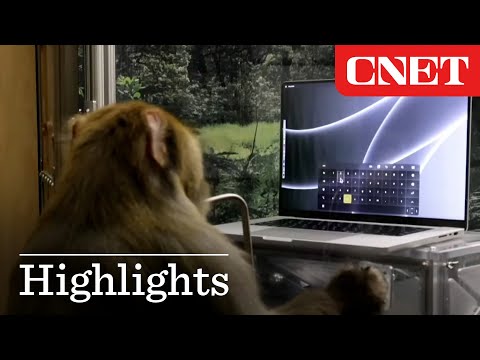 7:20ENCNET Highlights· Dec 1, 2022Neuralink’s 2022 monkey demo selected highlighted keysElon Musk · NeuralinkMusk showed cursor control with an implant, while stressing the monkey was following prompts rather than spelling independently.
 3:39:05ENCNET Highlights· Dec 1, 2022Neuralink’s 2022 update: from neural signals to a working interfaceElon Musk, DJ Seo · NeuralinkEngineers explain cursor decoding, implants and robot-assisted insertion, while separating animal demonstrations from clinical ambitions.