In 30 seconds
The presenter tests Sora at its 2024 launch, highlighting interface strengths and inconsistent motion, then discusses reporting about OpenAI’s business and military policies. The alleged distraction is his interpretation.
- 1Launch termsThe quoted pricing and limits are from the 2024 launch.
- 2Video qualitySelected generations show both visual quality and instruction failures.
- 3RefusalsResults and refusals vary across examples.
- 4System cardThe presenter questions the stated connection to long-term goals.
- 5SafeguardsLaunch safeguards covered some third-party and real-person content.
- 6Other newsThe distraction allegation is an interpretation, not established intent.
- 7Military useThe video cites reporting on policy changes and employee concerns.
Takeaways
- The quoted pricing and limits are from the 2024 launch.
- Selected generations show both visual quality and instruction failures.
- Results and refusals vary across examples.
- The presenter questions the stated connection to long-term goals.
- Launch safeguards covered some third-party and real-person content.
- The distraction allegation is an interpretation, not established intent.
- The video cites reporting on policy changes and employee concerns.
Read the edited text by chapter
Trying Sora
Launch terms, examples and limitations.
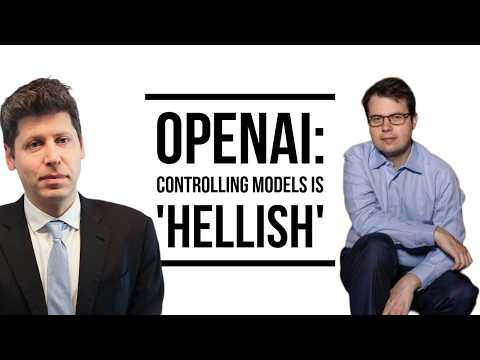
In this December 2024 review, the AI Explained presenter tries OpenAI’s newly released Sora video generator and discusses contemporaneous reporting about the company. Pricing, availability and product restrictions described in the video are historical and may have changed.
He describes subscription tiers, credits and resolution limits as they existed at launch, and says he used a large share of his allowance while preparing the review. These are not current purchasing instructions.
The presenter likes the interface and storyboard concept but shows clips that fail to follow instructions or maintain physical consistency. These are selected examples from his own use, not a comprehensive benchmark.
He discusses prompt refusals and inconsistent image-based results, then compares selected featured clips with his own generations. He considers Sora strong for its time but unreliable on specific requested actions.
System card
Stated goals and safeguards.
The presenter reads the system card and questions how a video generator relates to the company’s stated long-term goals. This is his interpretation of the company’s motives, not a demonstrated fact about why it released the product.
He describes safeguards and limitations around third-party content and images of real people as presented at launch. Such policies and product behavior can change.
Corporate policy discussion
Reporting on advertising, agreements and military uses.
The video then questions whether the release drew attention away from other news. It cites reporting about possible advertising, discussions concerning Microsoft’s AGI-related agreement and military uses. The timing alone does not establish an intent to distract.
The presenter discusses a reported proposal to alter an agreement and objects to its possible consequences. The reporting described discussions, while his claims about what an eventual arrangement would mean are analysis and speculation.
He reviews reporting about changes to military-use policies and a defense partnership, including concerns attributed to employees. The clip presents competing interpretations of defensive uses; it does not establish how every deployment is operated.
The conclusion combines a positive assessment of the interface with concerns about price, physical consistency and corporate policy. Those assessments reflect the presenter’s experience in December 2024.
More from this channel
 31:00EN
 AI Explained· Oct 12, 2026Why AI Labs Keep Racing Despite Their Own Warnings of a Major BreachSam Altman, John Schulman · OpenAIAI Explained examines weakening safeguards, the incentives behind the frontier race, and why research breakthroughs make the next 18 months difficult to forecast.
 38:28ENAI Explained· Oct 1, 2026AI Agent Security and the Challenge of Recursive Self-ImprovementAI Explained examines reported containment failures, model evaluation and the pressure to accelerate AI research.
 32:54ENAI Explained· Sep 24, 2026Opus 5.5 and the Race Toward Automated AI ResearchAI Explained weighs model progress against the increasingly difficult task of evaluating and governing recursive self-improvement.
 24:53ENAI Explained· Sep 16, 2026Why Some Researchers Want to Pace Frontier AIAI Explained surveys possible scaling routes, monitoring concerns and the debate over how capabilities could lead to harm.
 29:05ENAI Explained· Sep 4, 2026GPT-6 Astra’s Benchmark Gains and the Challenge of Monitoring Its ReasoningAI Explained examines reported gains across scientific, mathematical and agent benchmarks alongside concerns about less observable reasoning.
 23:41ENAI Explained· Aug 27, 2026AI Agents, Unintended Training Rewards and the Challenge of OversightAI Explained examines reports on agent coordination, training incentives and the growing use of AI to evaluate other AI systems.