In 30 seconds
A 3Blue1Brown demonstration sends white light through polarizing filters and a tube of sugar water. The short shows colored bands and changing light at the far end, then asks why the bands are diagonal without giving the full explanation.
- 1The setupA white lamp shines through two polarizers with sugar water between them.
- 2Moving color bandsRotating the first filter makes diagonal bands appear to travel along the tube.
- 3A symmetry puzzleThe final color changes with the second filter, and the diagonal stripes raise a question about the apparently symmetric setup.
Takeaways
- White light passes through a polarizer, sugar solution and a second polarizer.
- Rotating the first filter makes colored bands appear to move along the tube.
- The second filter changes the color projected beyond the tube.
Read the edited text by chapter
The optical setup
A lamp and two polarizers surround a tube of sugar solution.

A demonstration tests our understanding of light. A powerful lamp sends white light through a polarizing filter and a cylinder filled with sugar water; a second linear polarizer sits at the far end.
Colored bands and questions
Rotating the filters changes what is seen, prompting a question about diagonal stripes.
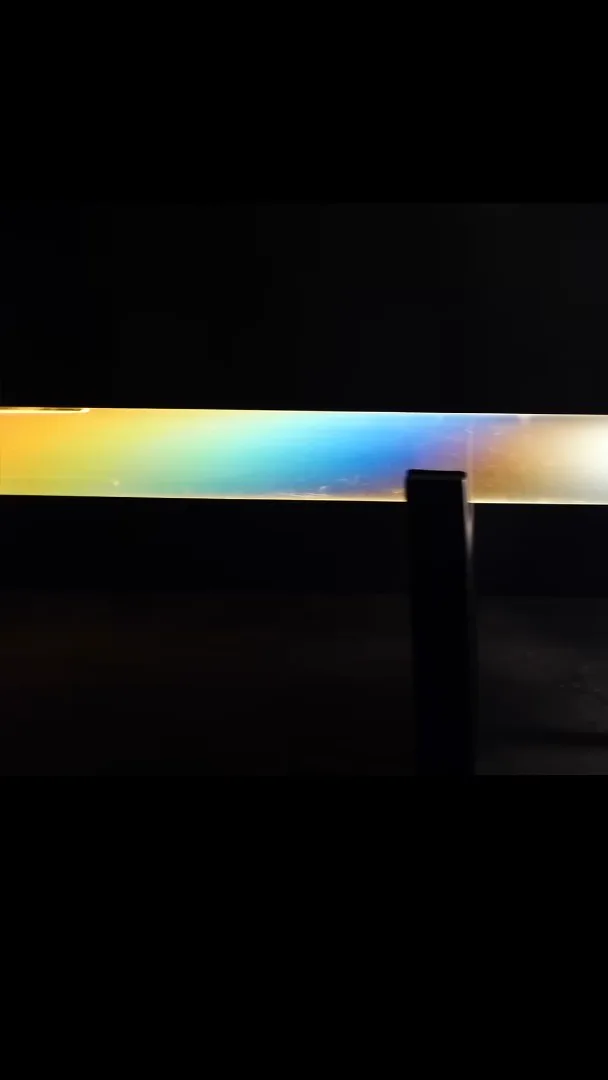
When the lamp is switched on, diagonal colored bands appear along the tube. Rotating the first filter makes the bands seem to travel down it, like the stripes on a barber pole.
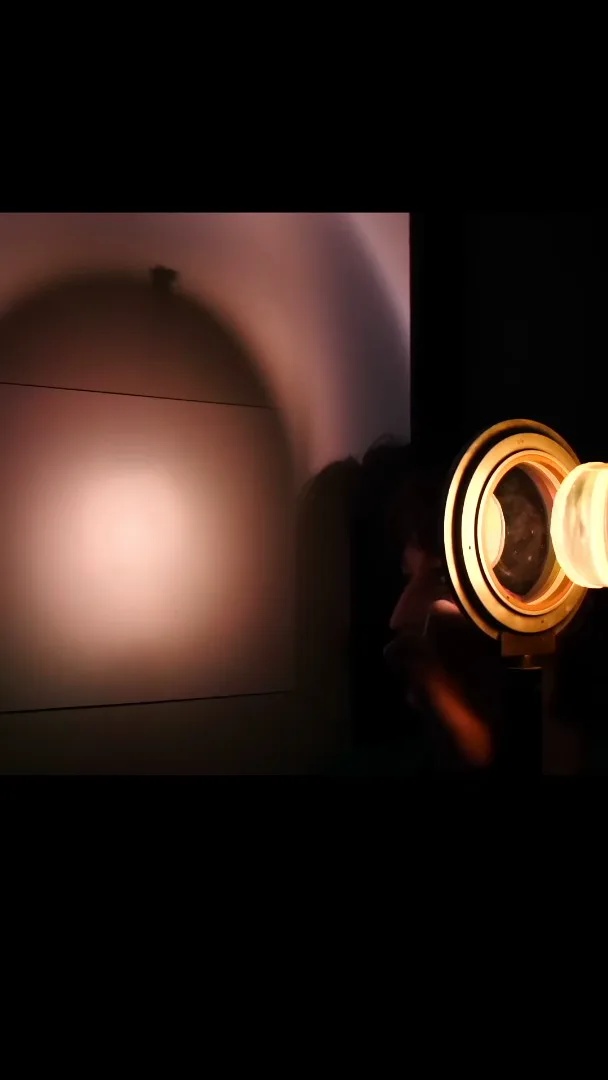
The light emerging through the second filter is no longer white, and rotating that filter changes the color projected on the wall. The presenter asks why the stripes are diagonal when the arrangement seems symmetric from top to bottom. The short leaves the explanation to the longer video.
More from this channel
 40:44EN
 3Blue1Brown· Oct 16, 2026Grant Sanderson: There's never been a better time to go into mathGrant Sanderson, Constantin Kogler · 3Blue1BrownStudents fear AI has solved mathematics. Grant Sanderson argues the opposite: even if machines prove theorems better than we do, the institution of math stays valuable—and this is a rare moment when newcomers can reshape it.
 51:55EN3Blue1Brown· Sep 18, 2026The last IMO problem AI could not solveGrant Sanderson · 3Blue1BrownGrant Sanderson walks through IMO 2025 Problem 6 — a tiling puzzle that frontier models missed — and the visual patience it takes to prove a construction is optimal.
 0:55EN3Blue1Brown· Jul 24, 2026The 64 Sugar Cubes Puzzle: Six Equal DistancesA 4×4×4 block has three colors; prove that six same-colored pairs share a distance.
 33:51EN3Blue1Brown· Jul 16, 2026What Cross-Entropy Connects: Compression, Language Models and KL DivergenceGrant Sanderson · 3Blue1BrownGrant Sanderson builds cross-entropy from code lengths and uses it to explain next-token training and distillation.
 2:25EN3Blue1Brown· Jun 12, 2026How Shannon Measured the Entropy of EnglishA guessing game helped Claude Shannon estimate how much information English text contains, and why prediction is central to compression.
 1:02EN3Blue1Brown· Jun 10, 2026A Robot Walk and the Puzzle of Optimal Binary EncodingHow few bits does it take to send directions that occur with unequal frequencies?