In 30 Sekunden
Theo Browne reviews the merger of the Codex desktop app into a unified ChatGPT application with Work and Codex modes. He welcomes improvements in plugins, computer use and developer tools, but argues that the transition confuses users and weakens a growing developer brand. He explains why he built the open-source T3 Code alternative.
- 1One app, different modesThe release puts Work and Codex in a shared desktop application, with chat accessed separately in the interface Theo shows.
- 2Useful additionsTheo highlights unified plugins, browser improvements, file editing and task handoffs.
- 3Developer identityHe argues that a dedicated developer surface contributed to Codex’s appeal.
- 4An open-source alternativeT3 Code grew from a desire to fix, modify or replace the desktop client when needed.
Das Wichtigste
- Work and Codex share agent capabilities while presenting different interfaces in the release shown.
- Theo welcomes plugins, computer-use improvements and handoffs between chat and coding tasks.
- He argues that Codex’s distinct identity mattered to its developer community.
- An open-source client can provide an alternative when a proprietary interface changes.
- His predictions about internal decisions and future developer sentiment are opinions, not established outcomes.
Den bearbeiteten Text nach Kapiteln lesen
A favorite app changes
Theo introduces the Codex rebrand and his reaction. He explains why the name had already been ambiguous.
I loved the Codex desktop app, although the name Codex has referred to a model, a CLI, an app and a website at different times. I liked the app enough to build an open-source alternative, both to protect myself against regressions and to use other agent harnesses and models.
OpenAI has announced ChatGPT Work and a new unified desktop experience. When I updated the Codex app, it became the ChatGPT app, with Codex as a mode. Some additions are impressive, but I am frustrated by the rebrand and the way the transition feels to existing users.
Work modes and new capabilities
He compares the approach with Claude Cowork and examines the unified app. He discusses plugins, computer use, browser and developer improvements.
To understand the idea, look at Claude's desktop interface. Claude Cowork takes the agent capabilities associated with Claude Code and makes them useful for non-development work. The interface has changed over time, but the idea is that an agent can work with files, a browser and presentations, not just write software.
My own non-developer colleagues have used those capabilities heavily. Access to a computer and the ability to run tools can be useful for many work tasks. OpenAI appears to be pursuing a similar expansion by bringing Codex and Work into one ChatGPT application.
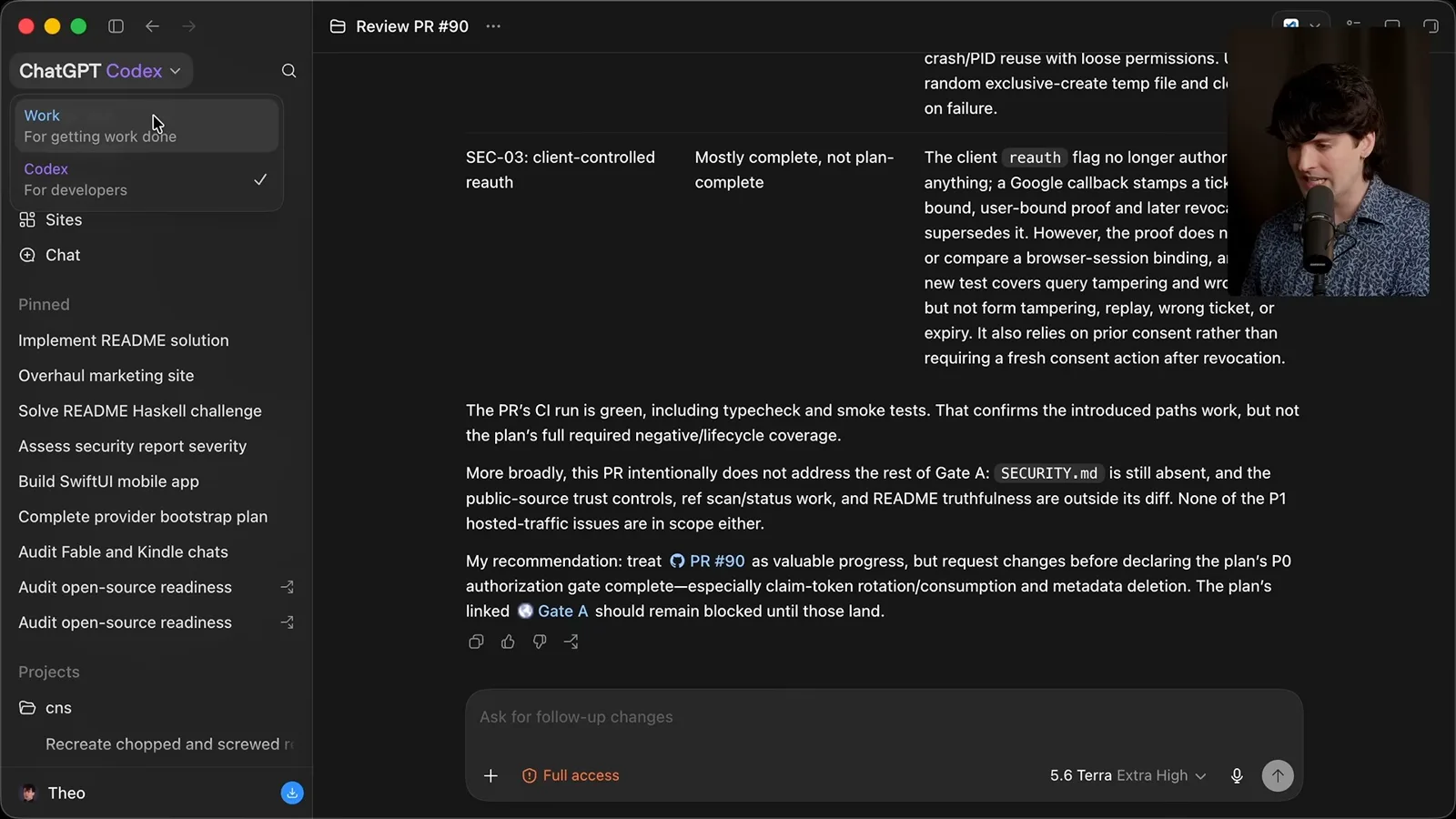
In the version I am showing, Work and Codex are separate modes, and I found the distinction confusing at first. Chat itself is accessed through a separate popup. I think that arrangement will frustrate people who previously opened the ChatGPT app primarily to chat as well as developers who expected the old Codex app.
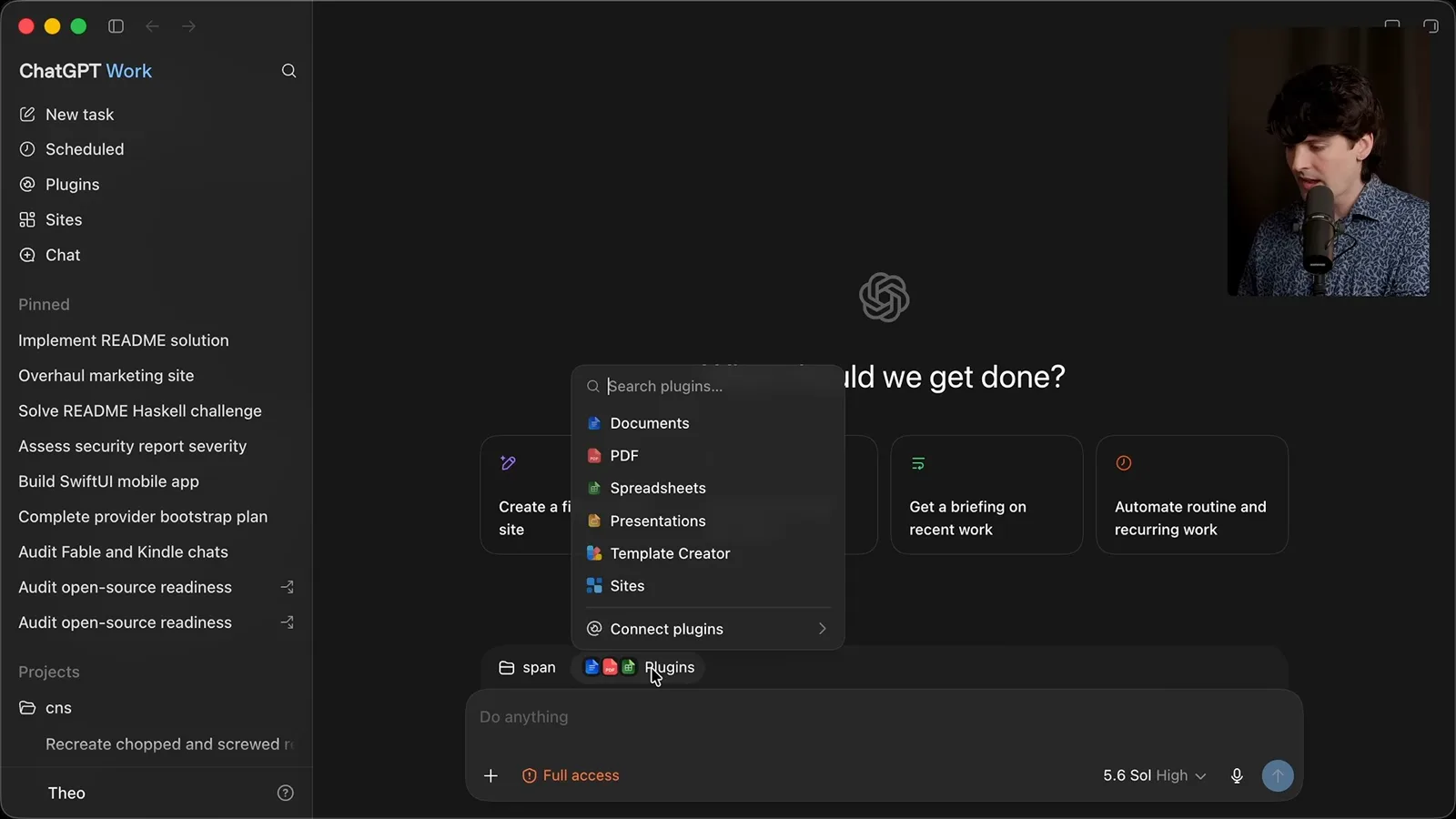
There are valuable additions. The app shows plugins for documents, PDFs, spreadsheets, presentations and Sites, as well as connections to services such as Gmail, Slack and Google Drive. Projects can give an agent access to local work, although I found the project and folder interface had changed since my earlier testing.
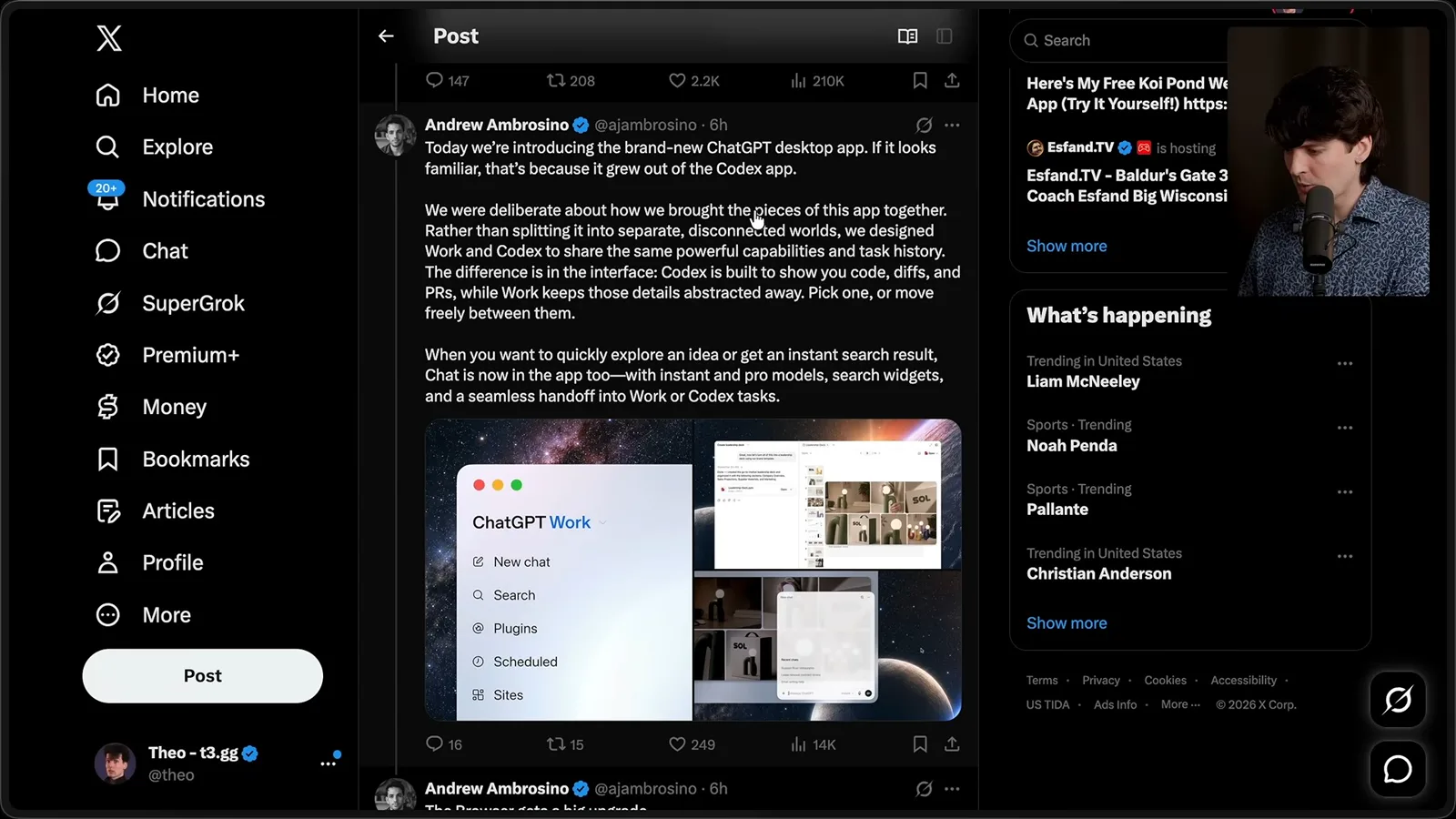
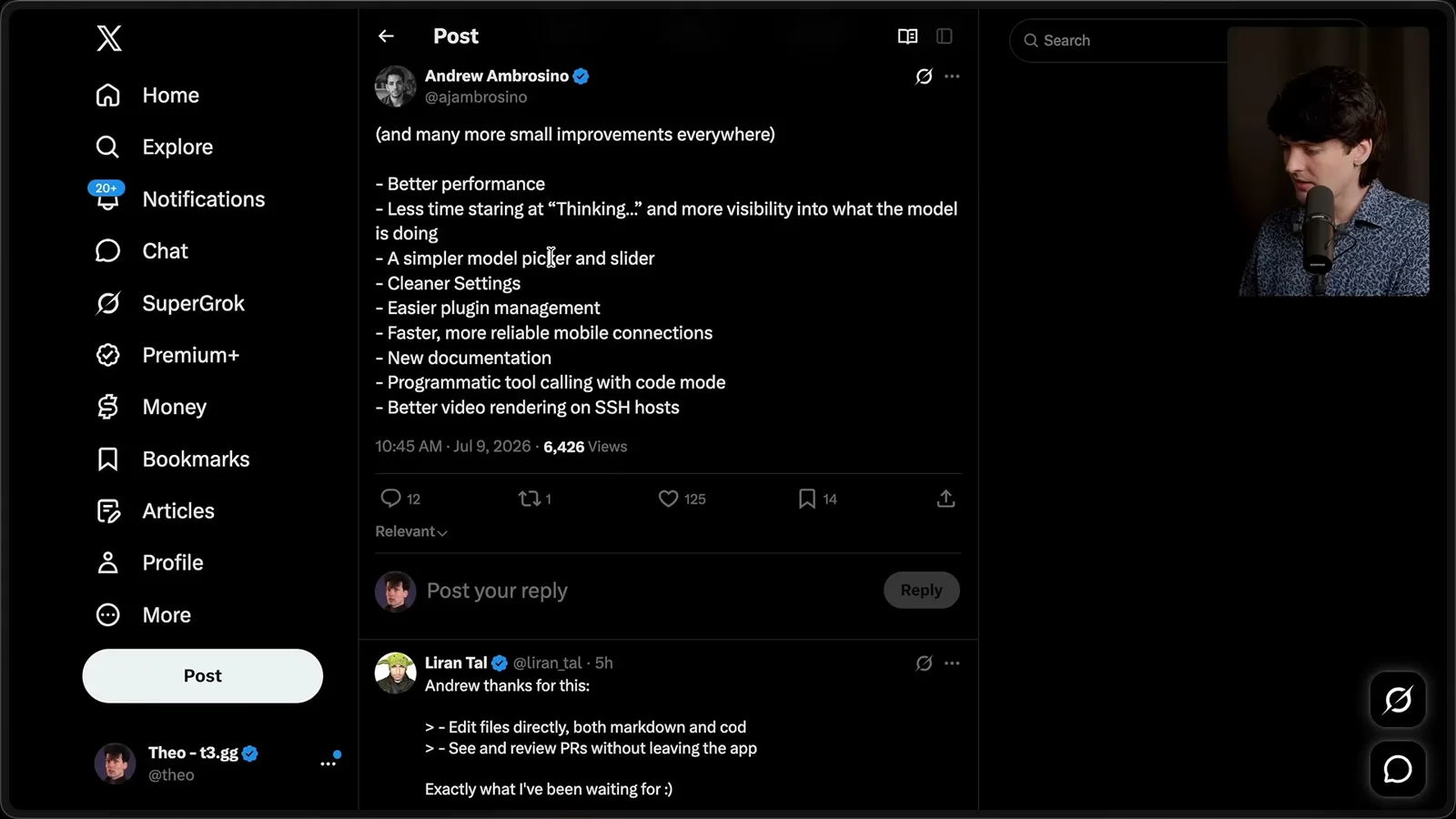
The release also unifies the plugin layer and promises faster computer use, browser tabs and enterprise authentication. According to OpenAI's Andrew Ambrosino, Work and Codex share capabilities and task history; Codex exposes code, diffs and pull requests, while Work abstracts those details away.
The integrated browser is described as supporting authenticated sites, persistent tabs and downloads. Atlas was sunset as part of this transition, with the in-app browser offered instead. Combined with the improved computer-use behavior I see in GPT-5.6, this is a genuinely interesting direction.
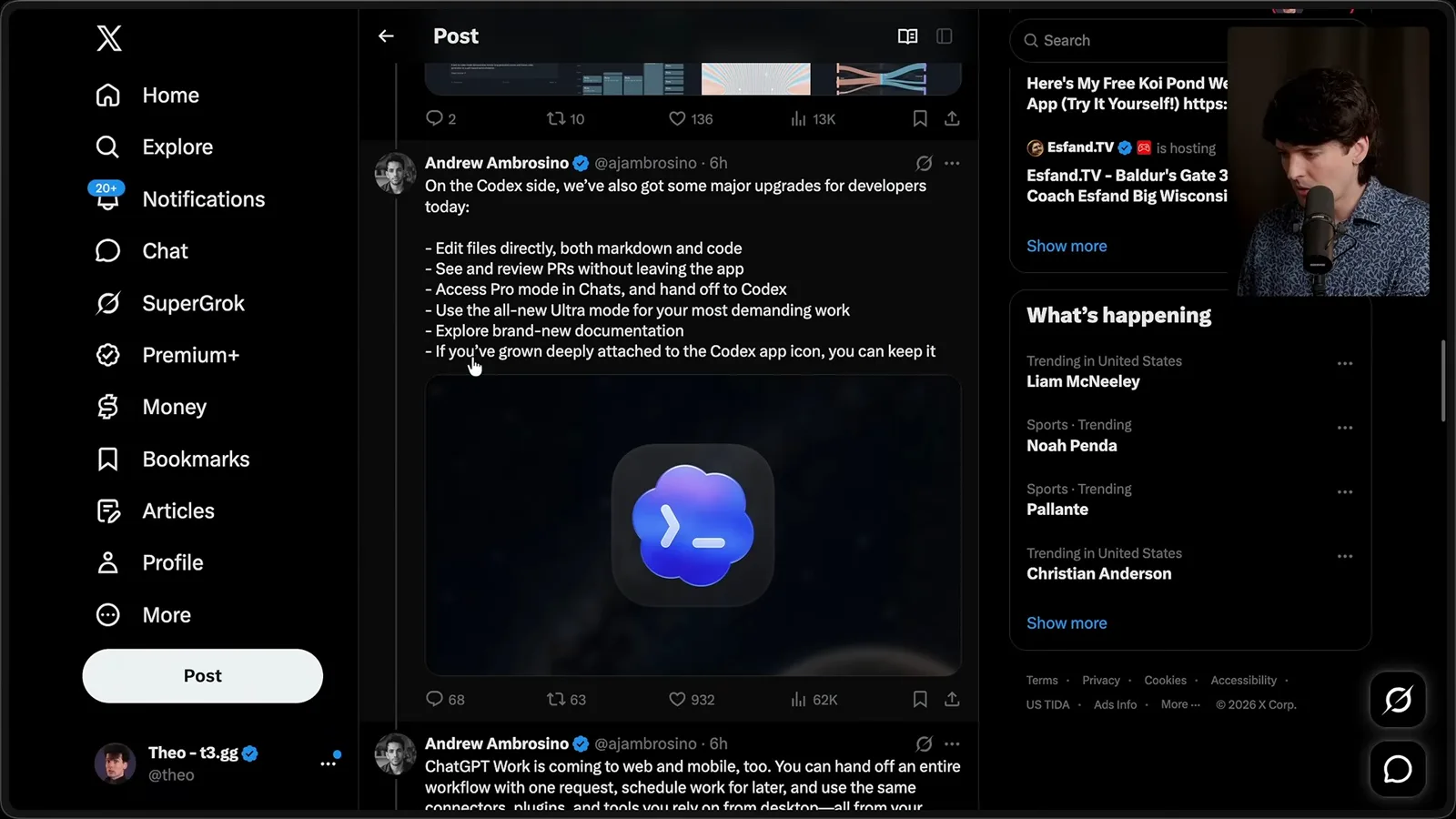
Codex mode adds direct file editing and pull-request review in the app, along with a way to hand a Chat conversation to a Codex task. I often discuss an idea before implementing it, so not having to copy the context manually is useful. The old Codex icon can also be selected in appearance settings.
I have noticed better performance: the older app had recently made my computer hot, and this version seems lighter in my testing. My guess about the internal reason is only speculation. Other listed improvements include a clearer model picker, better mobile connections, documentation, programmatic tool calling and video rendering over SSH.
Codex as a brand
Theo traces the name across models, CLI and app. He explains why he thinks the app helped build a developer community.
The branding problem predates this announcement. If someone says they use Codex, they might mean a model, the CLI or the desktop app. By comparison, when I say Claude Code, people generally understand that I mean the CLI. A single name applied to many different products makes the conversation harder.
In my reading, OpenAI had begun to resolve that confusion by folding the coding-specific model work into its general models, then investing more heavily in the app. I expect fewer separately named Codex models, though that is my interpretation of the direction, not a promise about future releases.
The CLI has had frustrating interface problems, including a model command failing when entered too quickly while other initialization was happening. I wish the open-source CLI received more attention. I am nevertheless glad the app server remains available, because the official interface and alternatives such as T3 Code can connect to it.
The app itself improved over time, especially with computer-use capabilities. Alongside subscriptions and stronger coding models, that helped make the Codex name resonate with developers. I saw a real community forming around it, despite the ambiguity in the name.
The rationale and the risk
He considers why OpenAI might extend agent capabilities to more users. He separates his speculation about internal organization from his criticism of the product decision.
I can understand the incentive to merge the experiences. Long-running agent work and computer access are valuable beyond coding, while ChatGPT reaches a much broader audience. From a company perspective, bringing the stronger agent experience to that audience is an obvious opportunity.
I also speculate that combining teams and talent may have played a role, but I do not have evidence for the internal decision. I discuss OpenAI's application leadership and a leadership transition in the video; the reported health reasons deserve to be kept distinct from my criticism of product decisions.
What the organizational logic misses, in my view, is that many people wanted Codex partly because it was a separate developer-focused surface. Its functionality mattered, but so did the sense that the product was designed around developers' workflows and needs.
The labs are expanding beyond software developers: agent tools now emphasize spreadsheets, presentations and other kinds of work. That broader audience is valuable, but I worry that the developer experience gets crowded out when every use case must share the same prominent interface.
T3 Code and developer identity
Theo explains his open-source alternative and the control it offers. He closes with concerns about the new interface and the Codex brand.
Codex had become a recognizable alternative to Claude Code, with people wearing merchandise, discussing it and organizing meetups. A brand is more than a model name: it can give a community a shared way to describe a tool and the experience they value.
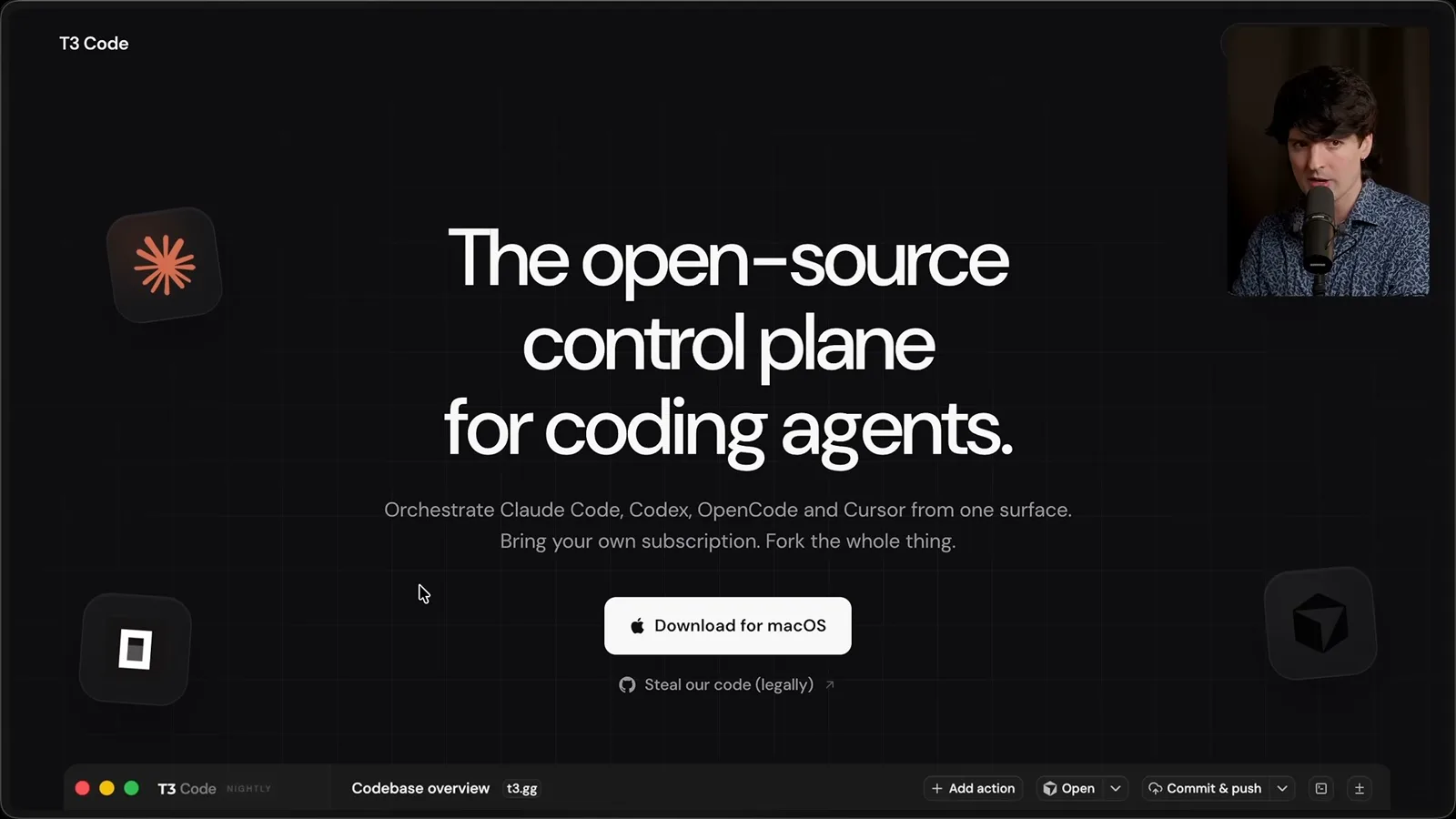
That attachment led me to start T3 Code. During early Codex app testing I liked it, but performance regressions made me want a way to fix problems myself. OpenAI did not intend to open-source the desktop app, while the CLI and its app server provided a foundation for an alternative.
An open-source client can be modified, fixed or pinned to an earlier version. I wanted that option in case of performance problems, a model change or a UI decision I disliked. Other users have also made forks and patched versions, which is exactly the kind of flexibility I hoped to support.
In the new interface, buttons I do not use and pinned chats push projects farther down the sidebar, especially on a small screen. I do not want Sites occupying a prominent slot or chat appearing as a popup while I am trying to code. Those are my workflow preferences, but they explain my reaction to the change.
My larger concern is the erosion of the Codex identity. Telling someone to try Codex is simpler than explaining that it is a mode in a new ChatGPT desktop app. I think that distinction affects the enthusiasm with which users and the people building the product talk about it.
A change that makes sense inside an organization can be confusing from the outside. Some ChatGPT users opened an app that looked more like a work environment, while some Codex users installed an update and found a different app name and icon. A hidden icon setting does not fully address that transition.
For now, the app server still lets other tools provide a developer-focused experience. I worry that developers' needs could be deprioritized as the shared app accumulates broader features, and that is why I am grateful to have an open-source alternative.
I shared my objections with OpenAI ahead of the change, and I remain disappointed that a brand and app I liked have been folded into this new experience. I expect the change may affect developer sentiment, even if the underlying model and many of the new capabilities are strong.
Mehr aus diesem Kanal
 38:47EN
 Theo - t3․gg· 28. Okt. 2026Theo’s Long-Running Agent Experiments: Verification, Compute and CostTheo Browne · Ping LabsA skateboard game and two compiler projects show how repeated checks and flexible compute can sustain agent work—and how expensive those loops can become.
 36:07ENTheo - t3․gg· 27. Okt. 2026Theo on Token Costs, Coding Agents, and the Price of AI CapabilityTheo Browne · Ping LabsA viral estimate of Lauren's AI spending prompts a closer look at cache pricing, benchmarks, and the changing work of coding agents.
 30:37ENTheo - t3․gg· 26. Okt. 2026Theo’s Three Skills for Reviewing and Shipping with Coding AgentsTheo Browne · Ping LabsHow sol-loop, full-send and full-stop encode review, verification and different levels of merge authority.
 0:43ENTheo - t3․gg· 23. Okt. 2026Theo Distinguishes Security Vulnerabilities from Active AttacksTheo Browne · Ping LabsA short explanation of why disclosed software flaws and reported attacks are different kinds of security news.
 29:22ENTheo - t3․gg· 22. Okt. 2026Theo on Security Vulnerabilities, Stolen API Keys and AITheo Browne · Ping LabsA look at the gap between vulnerability disclosure and patching, and a speculative account of why stolen inference keys may be valuable.
 31:13ENTheo - t3․gg· 20. Okt. 2026Theo on Why Smarter Models Help More Than DevelopersTheo Browne · Ping LabsFrom game modifications to compiler experiments, Theo revisits his assumptions about who benefits from more capable AI.