In 30 Sekunden
In this January 2026 roundup, Matthew Berman discusses LTX-2 model weights and creative tools, NVIDIA’s Rubin data-center platform, OpenAI’s ChatGPT Health announcement, and NVIDIA’s Alpamayo autonomous-driving research resources. He also considers unconfirmed GPU-price reports and reported Anthropic fundraising. The article distinguishes vendor projections and demonstrations from independently established results. Product availability, pricing and fundraising reports describe the time of the video.
- 1LTX-2 tools and weightsThe release included model weights, LoRA examples and a training framework for local experimentation.
- 2Rubin platform claimsNVIDIA compared its next-generation data-center platform with Blackwell and gave upper-bound cost and training figures.
- 3ChatGPT HealthOpenAI introduced a separate health space with optional data connections and stated that it supports rather than replaces care.
- 4Unconfirmed GPU pricesA reported $5,000 RTX 5090 scenario was not an official NVIDIA or AMD price announcement.
- 5Alpamayo resourcesNVIDIA introduced a research-oriented driving model family, simulation tools and open datasets.
- 6Reported fundraisingBerman cites a report that Anthropic was seeking $10 billion at a $350 billion valuation.
Das Wichtigste
- LTX-2 released model weights and tools; its output and hardware claims depend on configuration.
- NVIDIA’s Rubin cost and training comparisons were vendor claims made against Blackwell.
- ChatGPT Health was described as supporting medical care, not replacing diagnosis or treatment.
- The proposed $5,000 RTX 5090 price increase had not been confirmed by NVIDIA or AMD in the report shown.
- NVIDIA’s 1,700-plus hours refers to an open driving dataset and does not establish the model’s total training data.
- Anthropic’s $10 billion raise at a $350 billion valuation was reported as a plan at the time.
Den bearbeiteten Text nach Kapiteln lesen
LTX-2 weights and creative tools
Berman reviews the model release, generation controls and selected demonstrations. The quality and performance claims are specific to the provider and configuration.
In this January 2026 AI news roundup, Matthew Berman starts with LTX-2, an audio-video generation model whose weights and development tools were released for local use. The release includes full and distilled weights, LoRA adapters and a training framework with multimodal pipelines and multi-GPU support. Availability and performance depend on the particular files, license, hardware and configuration.
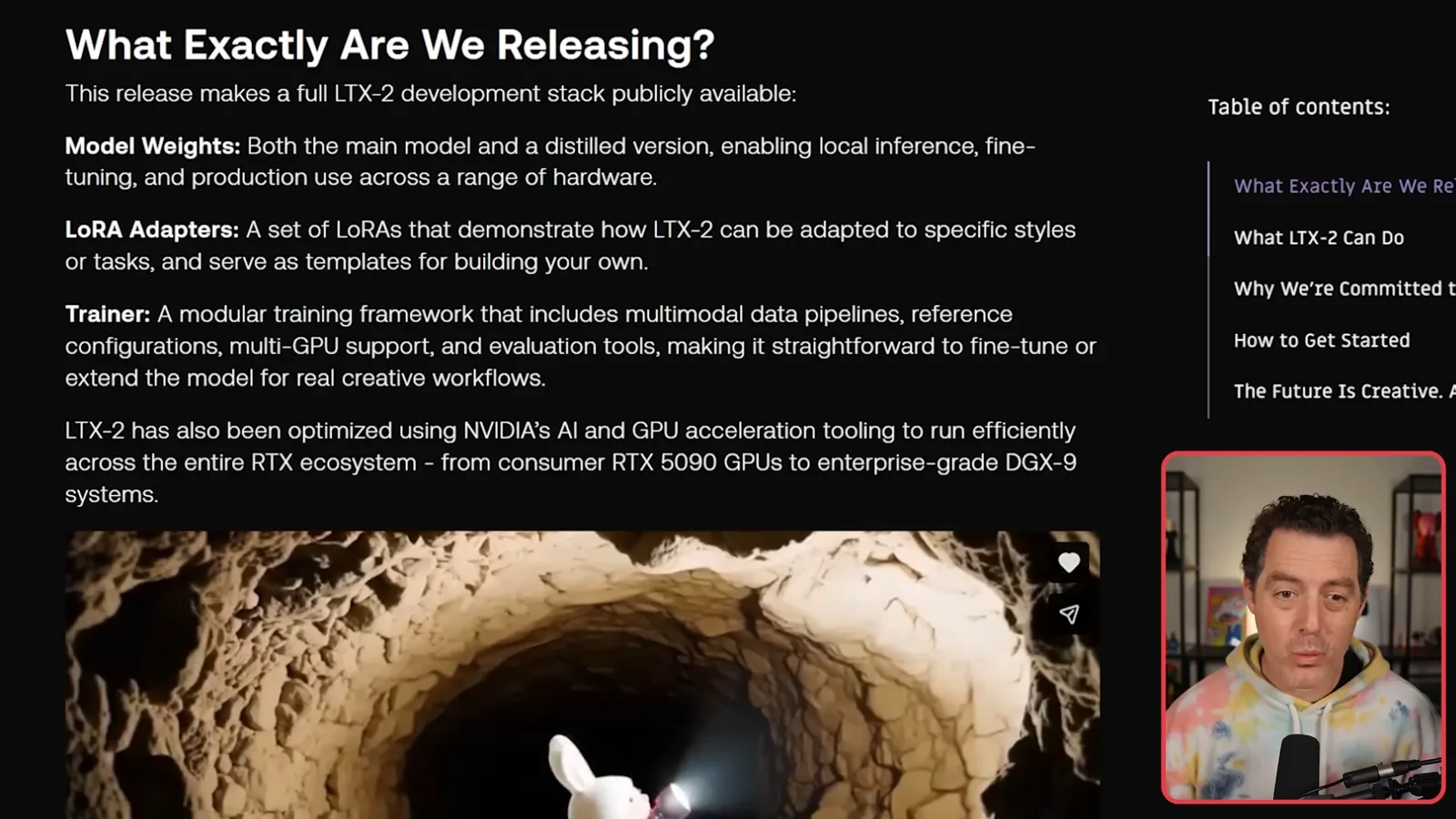
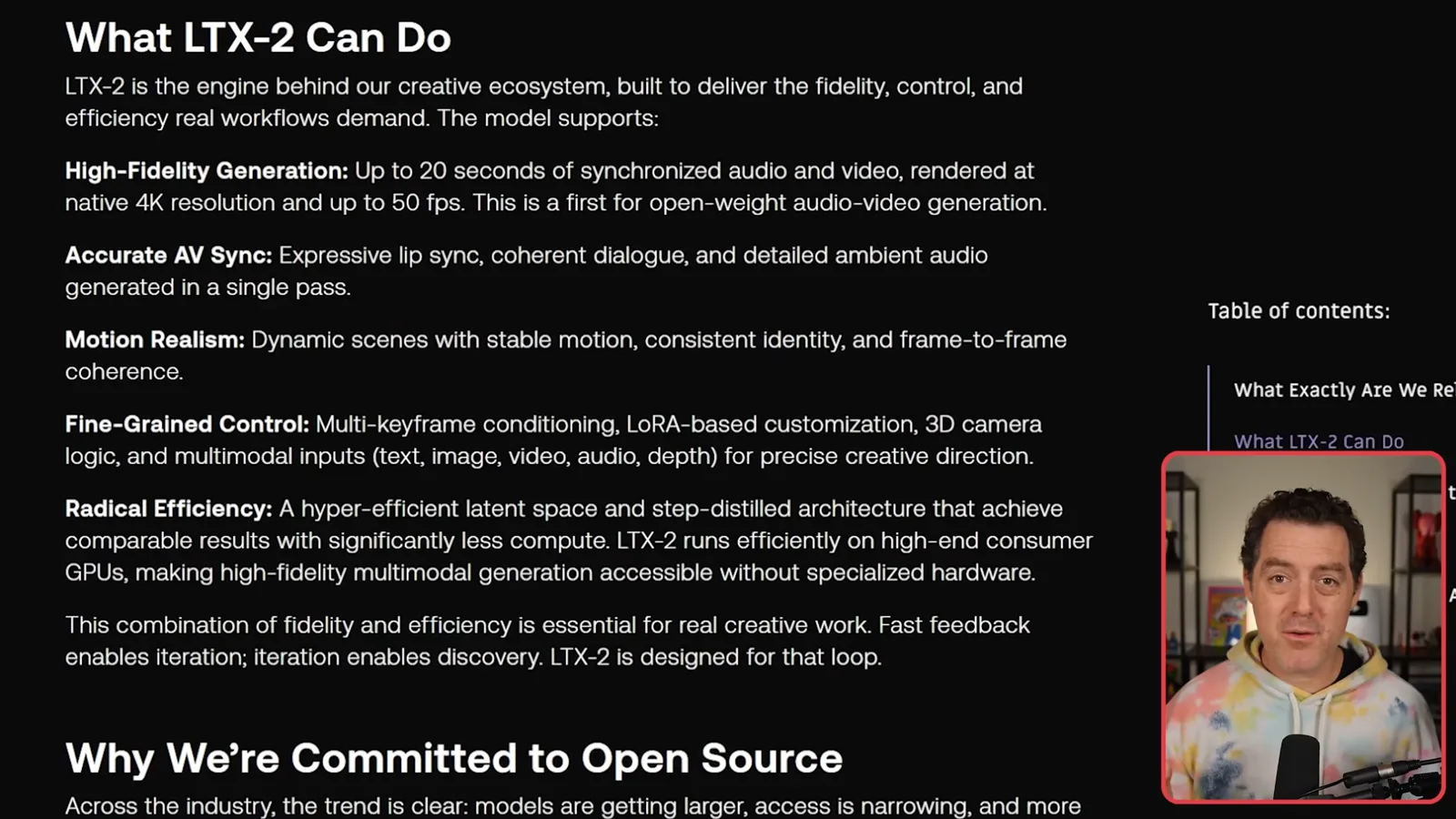
Berman says the model is optimized for NVIDIA hardware, including the RTX 5090. He highlights controls for starting and ending frames, keyframes and camera movement, and Lightricks' claim of clips up to 20 seconds with synchronized audio, 4K output and up to 50 frames per second. These are provider-stated capabilities, not proof that every setting runs at those maxima on every consumer GPU.
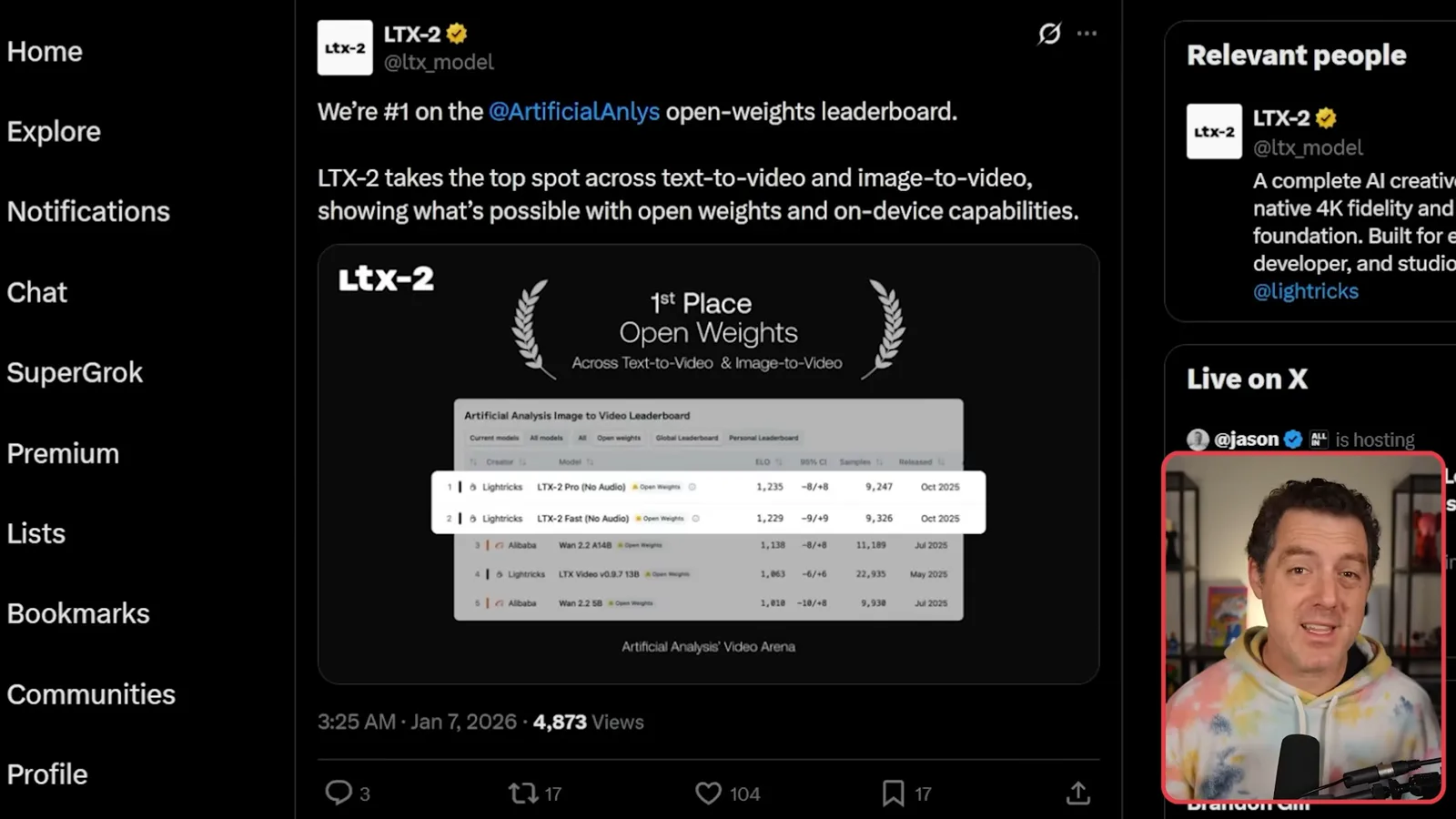
He points to an Artificial Analysis open-weight leaderboard shown in a January 7 post and selected video demos. Rankings are snapshots of a particular evaluation, and polished examples do not establish performance on every prompt. The model weights and related code were made available through the developer's repositories, subject to their respective terms.
NVIDIA Rubin at CES
NVIDIA announces a data-center platform and compares it with Blackwell. Huang describes warm-water cooling.
At CES, NVIDIA announced its Rubin platform for data centers rather than consumer PCs. NVIDIA claimed up to a tenfold reduction in inference token cost and fourfold fewer GPUs for training mixture-of-experts models compared with Blackwell. Those are NVIDIA's upper-bound comparisons under its assumptions, not independent guarantees for all workloads.
In a keynote excerpt, NVIDIA CEO Jensen Huang says the system can use 45°C inlet water without data-center water chillers. Berman describes a 16-rack configuration containing 1,152 GPUs and says NVIDIA reported Rubin in production, with partner products expected in the second half of 2026. Chiller-free cooling still uses a cooling system; it does not mean the hardware requires no water or heat rejection.
ChatGPT Health
Berman discusses health data connections, privacy and rollout. OpenAI says the feature supports medical care rather than diagnosis or treatment.
Berman next discusses OpenAI's announcement of ChatGPT Health, a dedicated space for health and wellness conversations with optional connections to health records and apps. He says he already uses ChatGPT to help understand test results before speaking with his doctor and is interested in adding personal data. OpenAI described the feature as supporting medical care, not diagnosing or treating patients.
He recognizes that people may be uncomfortable sharing health information with a third party. He imagines an alternative in which Apple could use health data already held on a device for local AI assistance, keeping the information on the device. This is his proposed possibility, not an announced Apple feature in the video.
At launch, OpenAI described a waitlist and initial eligibility for Free, Go, Plus and Pro users outside the European Economic Area, Switzerland and the UK; some health-record and app integrations were US-only. OpenAI said Health conversations were separate and not used to train its foundation models. Berman had not yet tried the feature, and availability and privacy terms were presented as a January 2026 snapshot.

GPU price rumors
He reviews an unconfirmed price claim and Huang’s response to a question about potential supply options.
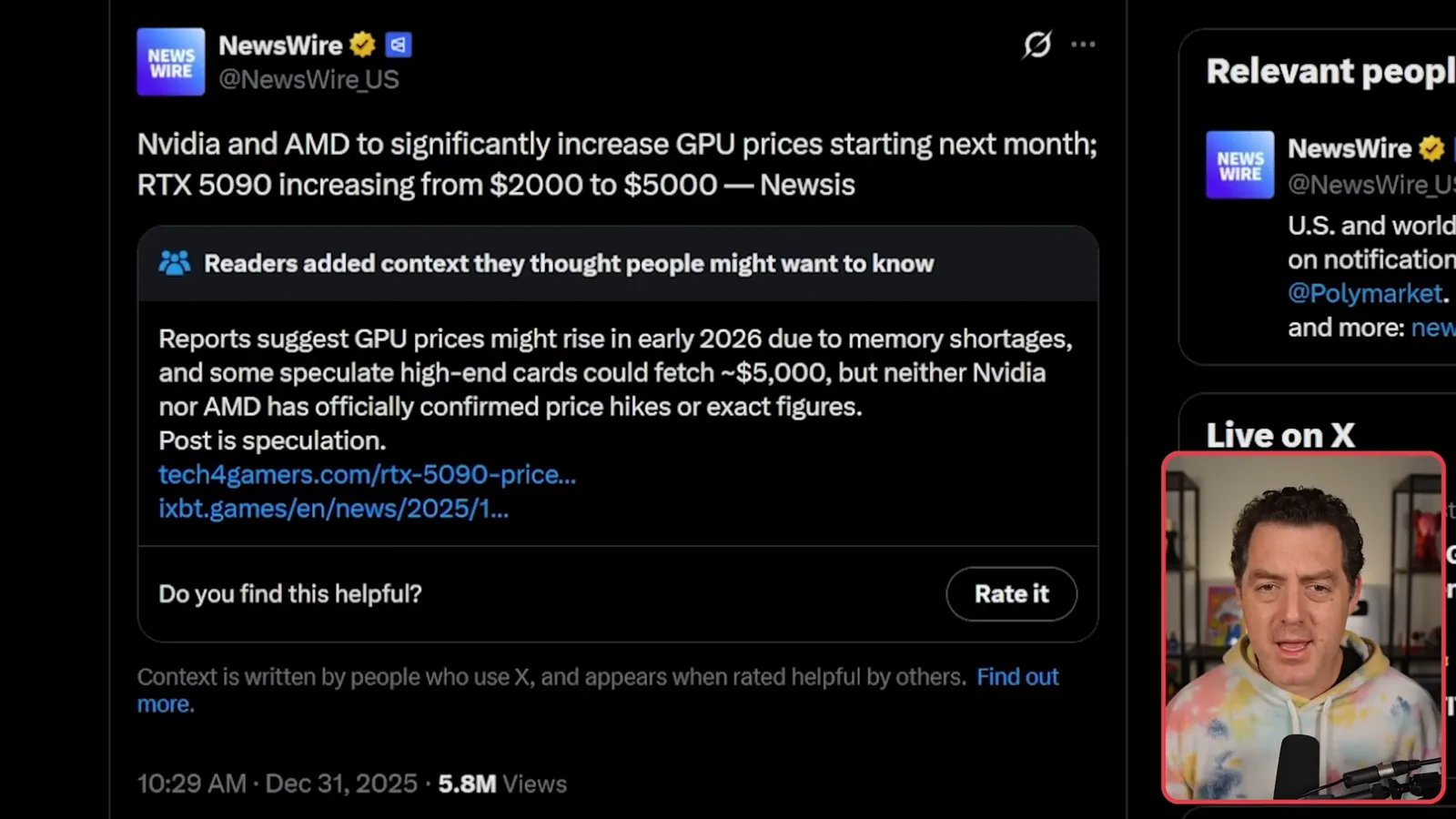
Berman discusses a social-media claim that memory shortages could push an RTX 5090 from $2,000 to $5,000. He also reads the accompanying note that neither NVIDIA nor AMD had confirmed those specific increases. The amount is speculation from the time, not an announced price or a reliable current shopping recommendation.
A reporter at CES asked Huang whether older GPU production or lower-memory configurations might ease supply pressures. Berman recounts Huang saying it was possible and worth investigating, including the engineering work required to bring newer AI features to previous GPUs. That response was not a commitment to restart production or a confirmed price change.
Alpamayo and driving research
Berman reviews NVIDIA’s models, simulation and datasets and discusses autonomous-driving demonstrations. The cited dataset size is not the model’s proven total training set.
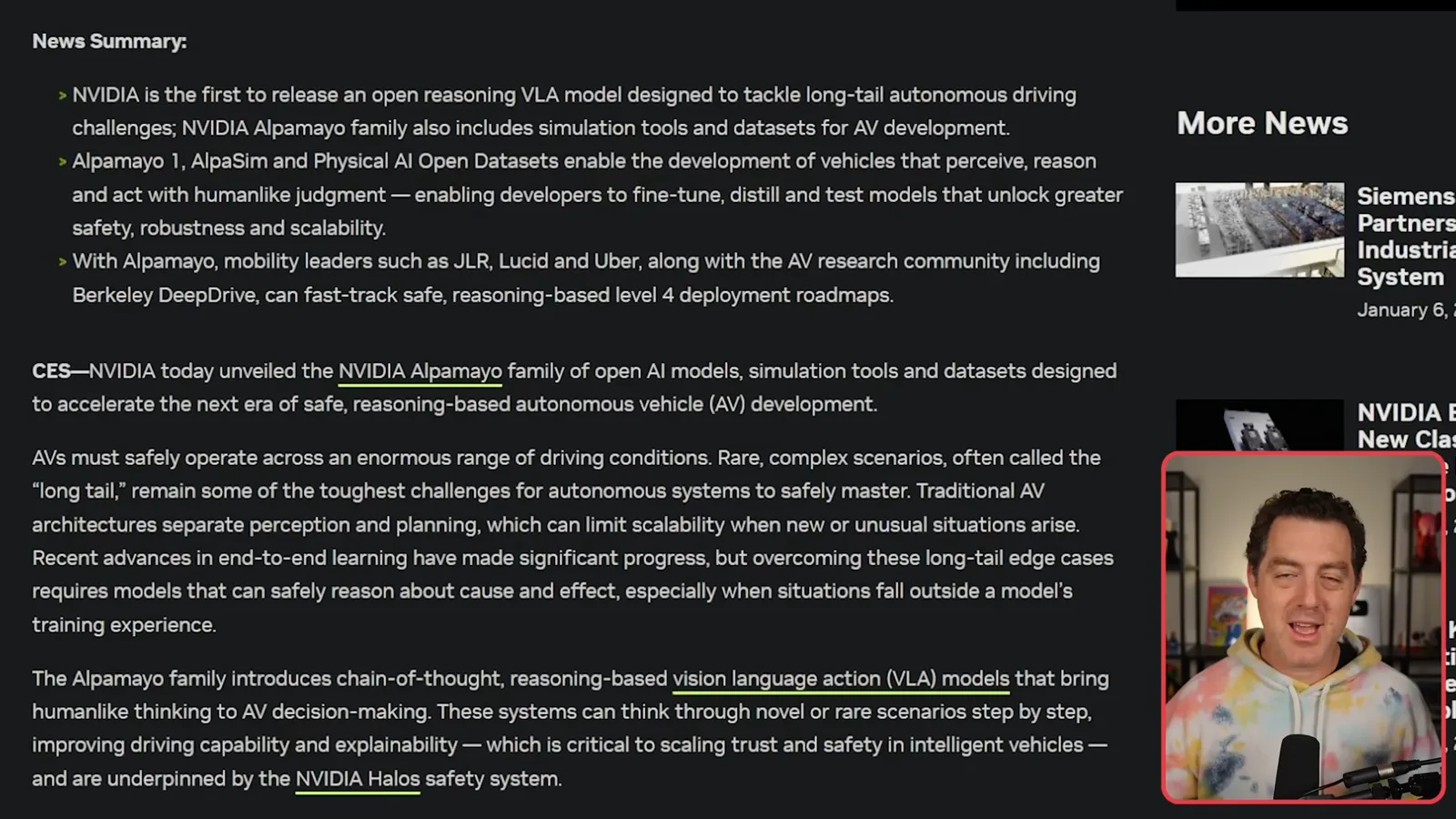
Berman moves to NVIDIA's Alpamayo family of models, simulation tools and datasets for autonomous-vehicle research. He describes vision-language-action reasoning and a Mercedes demonstration, and sees the approach as potentially useful for carmakers. NVIDIA's claims about reasoning and long-tail driving situations are research and product claims, not proof of safe deployment in every condition.
He says synthetic driving scenes can support training and simulation and contrasts the approach with systems built using extensive real-world driving data. His suggestion that synthetic data eliminated the need for real driving data is too broad: NVIDIA also released real-world driving data. Its January announcement describes an open dataset with more than 1,700 hours, not evidence that the model was trained exclusively on that amount.
NVIDIA described Alpamayo 1, AlpaSim and its Physical AI Open Datasets as resources for developing systems that perceive and act in challenging scenarios. Berman says the models and tools can be downloaded and adapted, while predicting that incumbent manufacturers may struggle to implement them. The announcement and a selected demonstration do not establish that a complete, validated autonomous vehicle can simply be installed by any car company.
Berman describes the demonstration as using camera input to produce driving actions and compares the sensor approaches of Tesla and Waymo. He mentions his own Tesla ride without disengagements, which is an anecdote rather than a safety comparison. Sensor configurations, operational domains and safety performance cannot be inferred from this brief demo alone.
Anthropic funding report
The video ends with a report of a proposed fundraising round. The report does not itself establish that the round had closed.
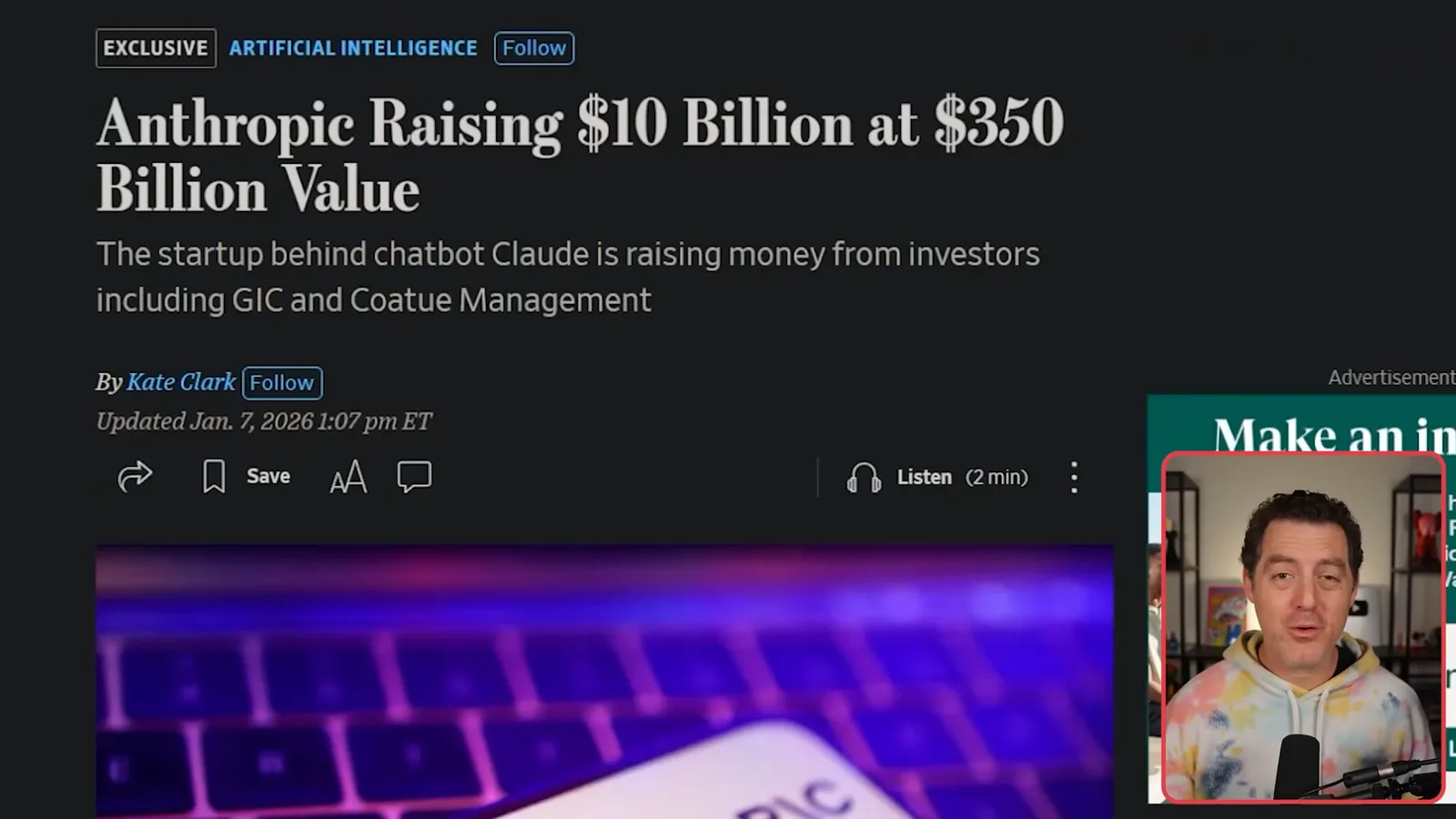
Finally, Berman cites a January 7 Wall Street Journal report that Anthropic was seeking to raise $10 billion at a $350 billion valuation. This was a reported fundraising plan at the time, not a confirmed completed round. His claim that Anthropic was nearly profitable is his assessment and is not established by the quoted fundraising report.
Mehr aus diesem Kanal
 34:21EN
 Matthew Berman· 27. Okt. 2026Matthew Berman Examines Anthropic’s IPO Filing, AI Growth and GovernanceMatthew Berman, Sam Altman · Forward FutureThe presenter reviews the S-1’s financial metrics, compute strategy and voting structure while questioning the tension between rapid AI development and safety.
 0:36ENMatthew Berman· 25. Okt. 2026Kimi K3.1 and a Rubik’s Cube Solver DemonstrationMatthew Berman · Forward FutureMatthew Berman shows a scrambled virtual cube being solved and gives the Kimi K3.1 test a favorable assessment.
 25:50ENMatthew Berman· 24. Okt. 2026Kimi K3.1 Pro Tested: Strong 3D Demos, Uneven Results and Competitive PricingMatthew Berman · Forward FutureMatthew Berman tests the open-weight model on coding, 3D rendering and visual explanations, then compares benchmark results and prices.
 32:20ENMatthew Berman· 23. Okt. 2026Who Is Local AI For? The Costs, Trade-offs and a Hybrid FutureMatthew Berman · Forward FutureMatthew Berman weighs data control and independence against hardware cost, setup complexity and inference speed.
 1:03:37ENMatthew Berman· 23. Okt. 2026Matthew Berman’s Team Tests Kimi K3.1 on Animation, Games, and ChartsMatthew Berman, Alex, Brian · Forward FutureA live team AMA turns into an informal test of Kimi K3.1, from personal-agent workflows to motion graphics, a browser game, and a benchmark chart.
 0:53ENMatthew Berman· 22. Okt. 2026Sam Altman on AI and the Discovery of New KnowledgeSam Altman · OpenAIAltman expects progress in mathematical discovery to extend to biology, materials and energy.