In 30 Sekunden
In this October 2023 roundup, Matthew Berman discusses Disney’s expressive robot, Adobe’s generative tools, ElevenLabs dubbing, Amazon’s satellite prototypes, OpenAI developer plans, chip reports, Meta watermarking and stickers, Show-1, disputed AI training data and Wayve’s GAIA-1. The video mixes announcements, reported plans, speculation and opinion. Adobe’s proposed acquisition of Figma had not closed at the time and was later terminated; research demonstrations and historical performance claims should not be read as guarantees.
- 1Disney’s robotThe research team combines modular hardware, animation and reinforcement learning to produce expressive movement.
- 2Adobe’s generative toolsBerman discusses Firefly, Illustrator and the Project Stardust demonstration; the proposed Figma deal had not closed.
- 3Voice dubbingElevenLabs introduced a tool for multilingual dubbing with voice preservation and multiple speakers.
- 4OpenAI developer plansBerman discusses reports of lower API costs and vision tools as well as his own AutoGen costs.
- 5Watermarks and stickersMeta’s research aims to trace generated images, while reporting on its sticker tool raised concerns about problematic outputs.
- 6Show-1 and Books3Berman reviews text-to-video research and disputed use of books in AI training.
- 7Synthetic driving dataWayve’s GAIA-1 proposes generating driving scenes; Berman weighs its promise against questions about synthetic data.
Das Wichtigste
- Disney’s research robot combined expressive animation with a reinforcement-learning-based movement pipeline.
- Adobe showed generative image, vector and photo-editing tools, while ElevenLabs introduced multilingual voice dubbing.
- OpenAI pricing and chip plans, NVIDIA hardware and Amazon’s satellite rollout were discussed as 2023 reports or future plans.
- Meta’s Stable Signature was designed to help trace generated images, but watermark detection is not guaranteed after every transformation.
- The Show-1 team’s memory comparison was against a specified pixel-based model, not every competing video generator.
- Copyright disputes over Books3 and the value of synthetic driving data remained open questions.
Den bearbeiteten Text nach Kapiteln lesen
Disney robotics and Adobe tools
Berman reviews a characterful research robot and Adobe’s generative features. He discusses a proposed Figma acquisition and Project Stardust.
This October 2023 roundup covers an expressive Disney robot, Adobe’s AI products, voice dubbing, developer costs, image provenance, satellite internet and synthetic driving data. Some items are reports or future plans as of the video, not completed launches or current product guidance.
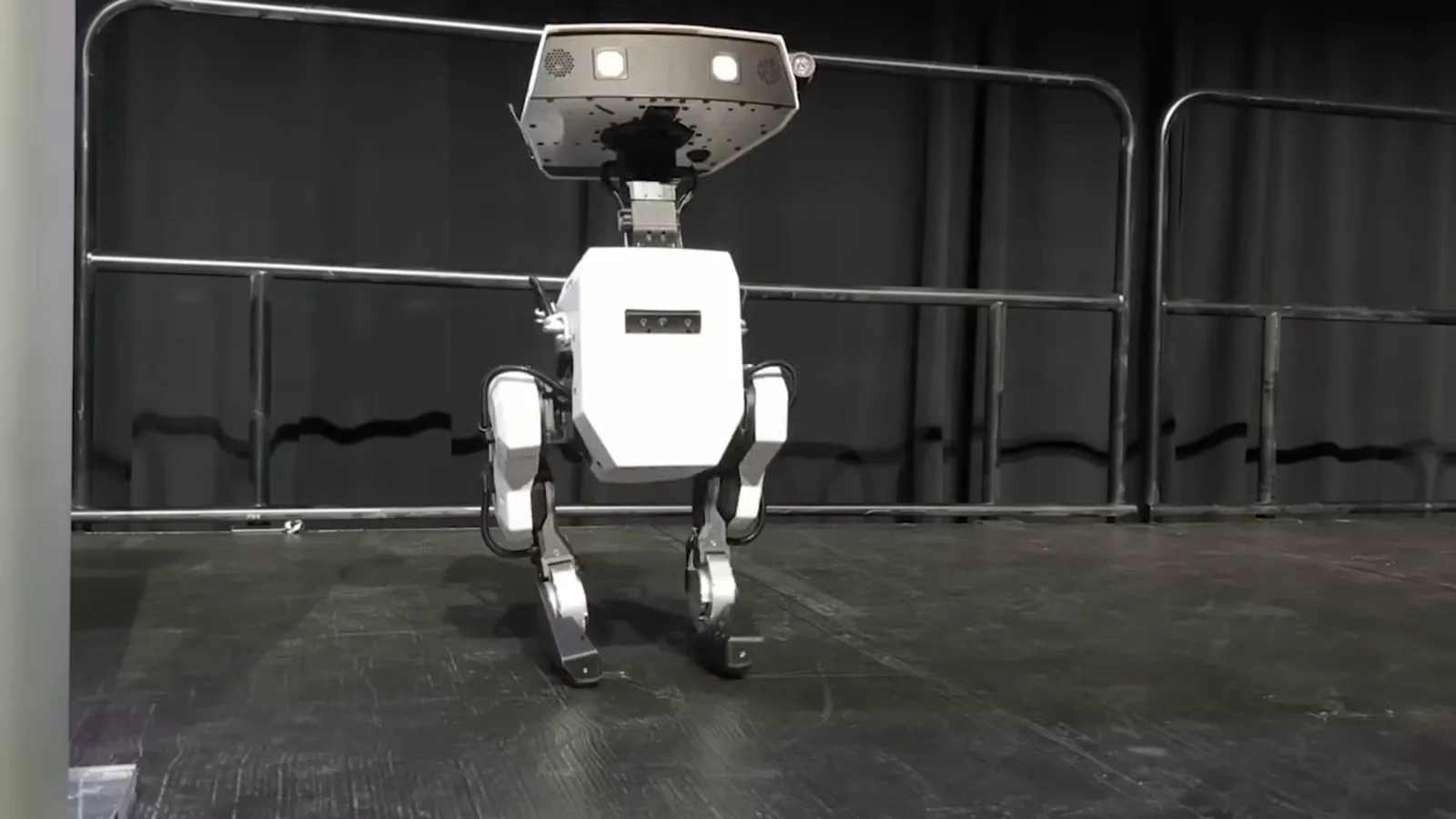
Disney Research in Zurich created a small robot designed to move with personality. I like how its expressive motion recalls WALL-E. The team used mostly 3D-printed modular hardware and actuators, with engineers, designers and animators contributing to its development.
Disney used a reinforcement-learning-based pipeline to balance an animator’s intended expression with robust movement. I can imagine such robots entertaining visitors at Disney parks and perhaps becoming smaller toys someday. Those are my possibilities, not announced product plans.
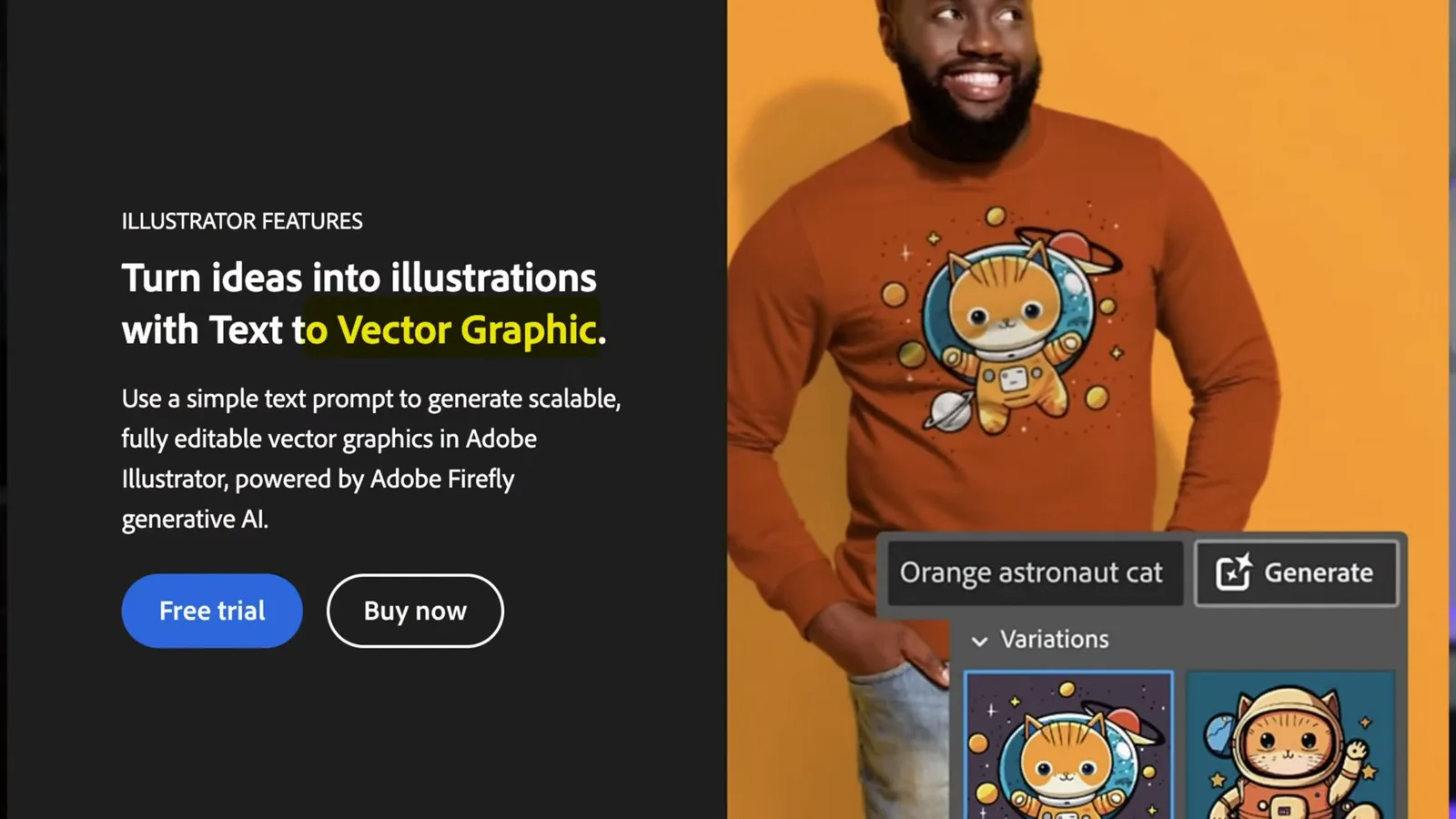
Adobe announced updates to Firefly, including additional training data and controls such as referencing an image’s style. It also showed text-to-vector generation in Illustrator and AI features for Express. These are the capabilities described in 2023; availability and features can change.
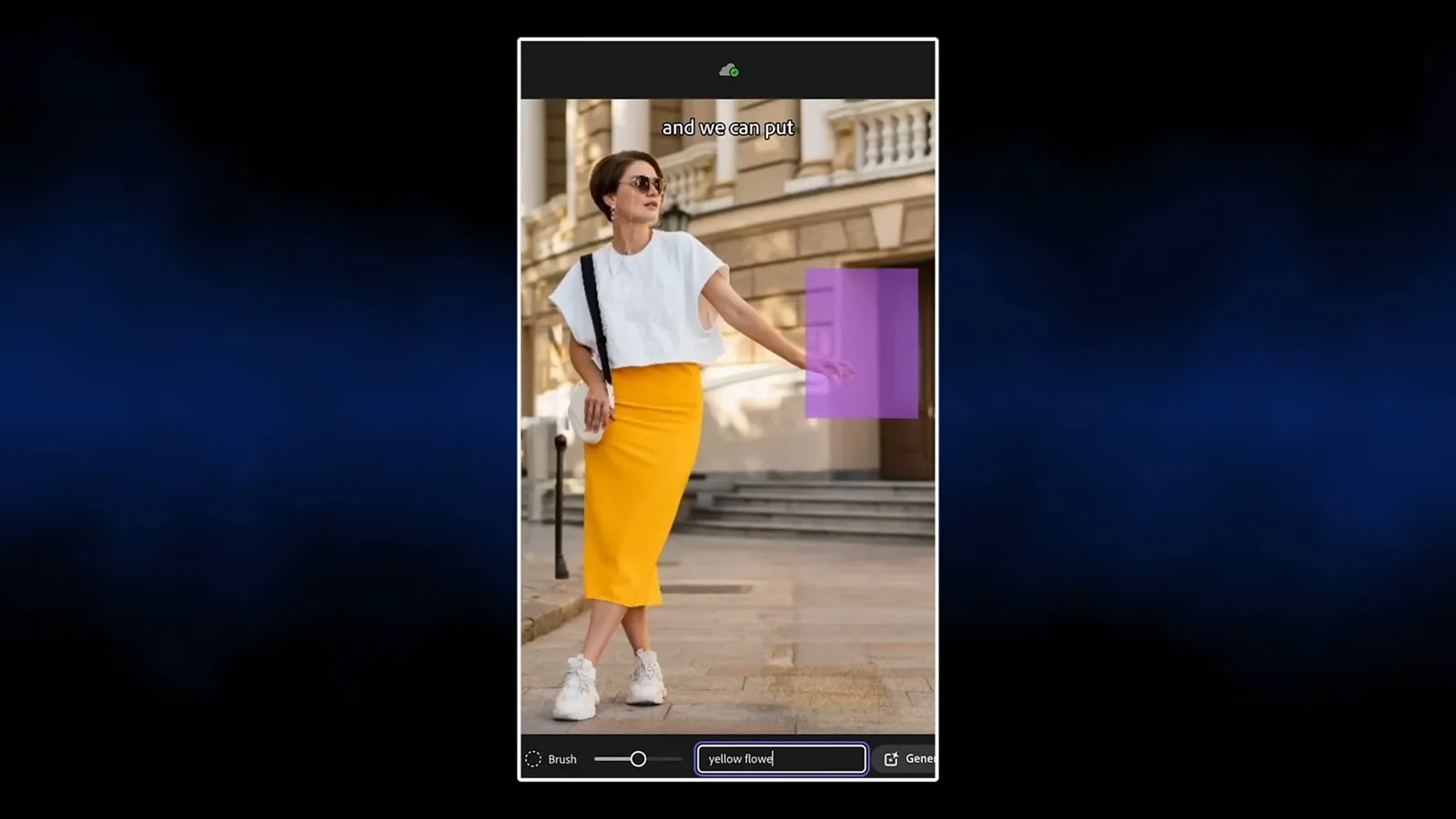
Adobe previewed Project Stardust, showing objects and shadows selected, moved or removed with the background filled in. I welcome tools that make photo editing easier. I describe Firefly content as copyright-approved, but neither a training-data policy nor a product claim guarantees that every output is free of rights issues.
I say Adobe acquired Figma, but that was incorrect: at the time the roughly $20 billion transaction was proposed and had not closed. Adobe and Figma mutually terminated the agreement in December 2023. Figma is a collaborative design platform, and my speculation about future integration was not an announcement.
Dubbing and satellite internet
ElevenLabs demonstrates multilingual voice dubbing. Amazon launches prototype internet satellites and outlines plans for its network.
ElevenLabs introduced AI dubbing that it said could translate content into 29 languages while retaining voice characteristics and handling multiple speakers. I think this could help creators reach audiences beyond their original language. A generated voice is a synthetic imitation, not the original person actually speaking the translated words.
I compare the approach with human dubbing used by creators such as MrBeast and speculate about cost and the effect on voice-acting jobs. Those outcomes are predictions, and the actual quality and suitability of a dub would need to be assessed for each use.
Amazon launched its first Project Kuiper internet-satellite prototypes, entering a field where SpaceX’s Starlink already had a large constellation. At the time Amazon planned a network of 3,236 low-Earth-orbit satellites, production launches in the first half of 2024 and customer beta testing by the end of that year. Those were 2023 plans, not proof of coverage or deployment.
OpenAI plans and chip reports
Berman discusses developer pricing, reported chip exploration and then-current NVIDIA and Samsung hardware news.
Reports said OpenAI planned developer updates intended to reduce costs and add vision capabilities. As an AutoGen user, I had found GPT-4 agent experiments expensive and encountered rate limits; I say a few iterations could reach $10. That is my experience with a particular setup, not a general price for all agent workflows.
Reuters also reported that OpenAI was exploring its own AI chips and evaluating a potential acquisition. I discuss GPU scarcity, possible benefits of custom silicon and the time needed to develop chips. These were reported possibilities, not a completed acquisition or a guaranteed price reduction.
I discuss then-rumored NVIDIA RTX 4080 variants and possible pricing, as well as Samsung’s announced next-generation mobile processor. Samsung claimed 1.7 times faster data processing and 14.7 times the AI performance of its predecessor. These figures and the phone integration were claims or expectations from 2023, not independent measurements here.
Image provenance and moderation
Meta’s Stable Signature aims to help identify AI-generated images. Berman also discusses troubling outputs from its sticker generator.
Meta researchers introduced Stable Signature to embed an invisible watermark into a generative model’s decoder so that outputs can be traced to a model version. I support provenance tools because synthetic images can mislead people. The researchers evaluated robustness against particular modifications; this does not guarantee the watermark survives every edit or attack, or that detection is infallible.
Reports also described Meta’s AI sticker generator producing objectionable images despite keyword filters. I compare this with moderation in other image-generation systems and worry about exposure in messaging products used by children. No filtering method demonstrated in this segment should be assumed to prevent every problematic output.
Video generation and copyright
Show-1 researchers present text-to-video results, while reporting on Books3 highlights contested training data.
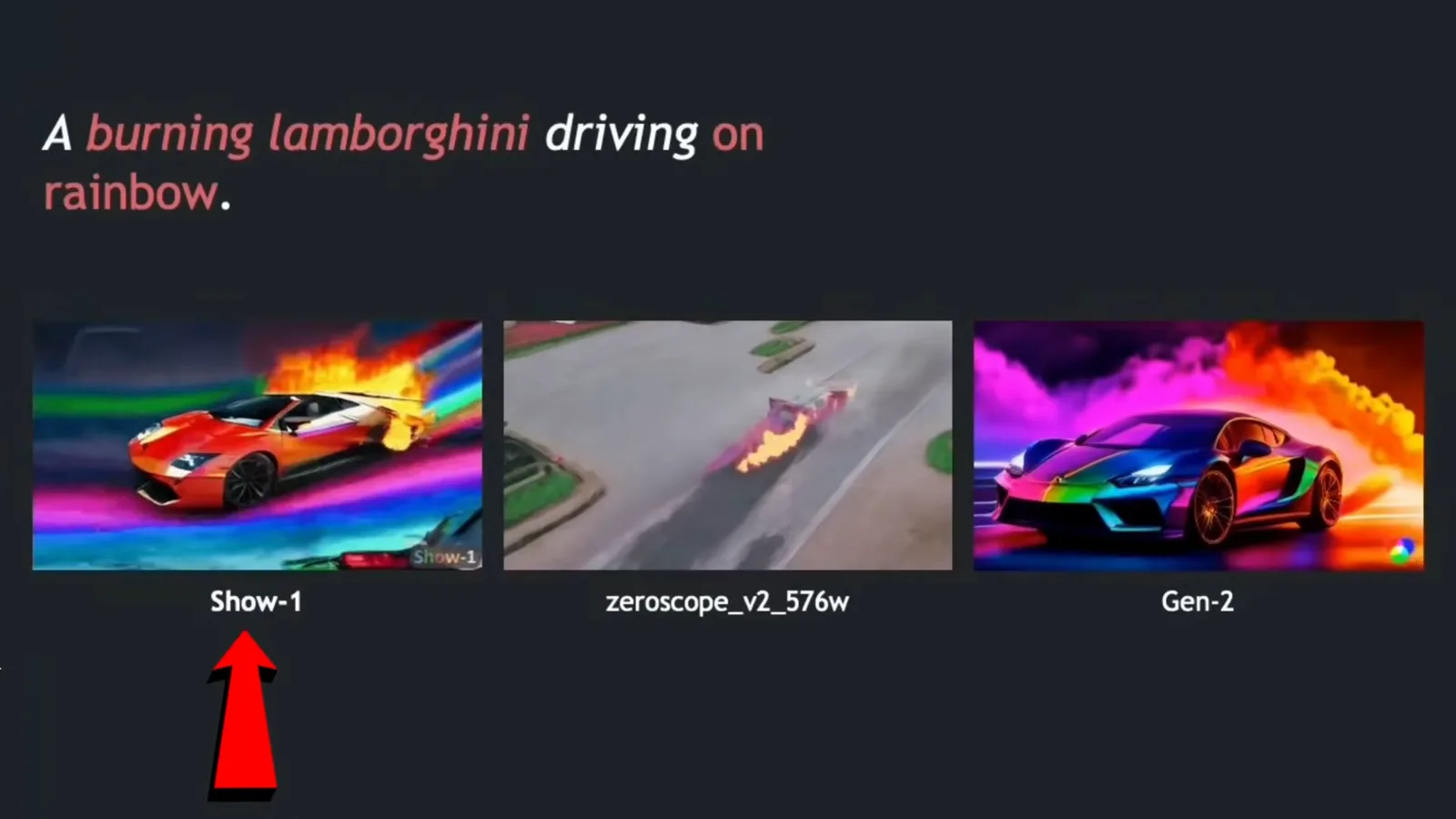
Researchers from the National University of Singapore presented Show-1, a text-to-video system combining pixel and latent diffusion. The team reported competitive results and a 15 GB versus 72 GB inference-memory comparison with a pixel-based model. That comparison is specific to the tested models and conditions, not a general claim about every commercial generator.
Reporting on Books3 raised authors’ concerns that books included in a dataset were used to train AI without authorization. Lawsuits included allegations about training data; a court order requiring models to be destroyed was my speculation, not a stated outcome. I also worry that valuable datasets may become less accessible as their owners restrict access.
Synthetic data for autonomous driving
Berman discusses Wayve GAIA-1 and compares approaches to driving data. He offers an uncertain prediction about synthetic training data.
Wayve introduced GAIA-1, a generative model for driving scenes that could help create synthetic training data. I compare approaches to real-world driving data and mapped robotaxi service areas, and express my preference for Tesla’s approach. The video does not establish that any system can safely handle every unfamiliar road, or that other automakers cannot compete.
Synthetic driving scenes could expand the range of situations available for training, but I am unsure how well generated data will transfer to real driving. I worry that repeatedly generating derivative data may have limits, while recognizing the potential to augment real-world data. Its safety and effectiveness require testing.
Mehr aus diesem Kanal
 34:21EN
 Matthew Berman· 27. Okt. 2026Matthew Berman Examines Anthropic’s IPO Filing, AI Growth and GovernanceMatthew Berman, Sam Altman · Forward FutureThe presenter reviews the S-1’s financial metrics, compute strategy and voting structure while questioning the tension between rapid AI development and safety.
 0:36ENMatthew Berman· 25. Okt. 2026Kimi K3.1 and a Rubik’s Cube Solver DemonstrationMatthew Berman · Forward FutureMatthew Berman shows a scrambled virtual cube being solved and gives the Kimi K3.1 test a favorable assessment.
 25:50ENMatthew Berman· 24. Okt. 2026Kimi K3.1 Pro Tested: Strong 3D Demos, Uneven Results and Competitive PricingMatthew Berman · Forward FutureMatthew Berman tests the open-weight model on coding, 3D rendering and visual explanations, then compares benchmark results and prices.
 32:20ENMatthew Berman· 23. Okt. 2026Who Is Local AI For? The Costs, Trade-offs and a Hybrid FutureMatthew Berman · Forward FutureMatthew Berman weighs data control and independence against hardware cost, setup complexity and inference speed.
 1:03:37ENMatthew Berman· 23. Okt. 2026Matthew Berman’s Team Tests Kimi K3.1 on Animation, Games, and ChartsMatthew Berman, Alex, Brian · Forward FutureA live team AMA turns into an informal test of Kimi K3.1, from personal-agent workflows to motion graphics, a browser game, and a benchmark chart.
 0:53ENMatthew Berman· 22. Okt. 2026Sam Altman on AI and the Discovery of New KnowledgeSam Altman · OpenAIAltman expects progress in mathematical discovery to extend to biology, materials and energy.