In 30 Sekunden
In this November 2025 roundup, Matthew Berman discusses Google’s Project Suncatcher research, OpenAI’s compute partnerships and reporting on a possible Apple–Google arrangement for Siri. He also reviews a ChatGPT workflow update, Microsoft’s MAI-Image-1, Vidu Q2, a Perplexity–Amazon dispute and Sora character cameos. Company performance claims, reported deals and Berman’s forecasts are identified as such. Project Suncatcher is a research and systems-design proposal, not an operational space data center.
- 1Computing in spaceGoogle’s Suncatcher proposal studies a constellation of solar-powered computing satellites and the engineering challenges involved.
- 2Compute partnershipsBerman discusses reported OpenAI infrastructure deals and a changing Microsoft relationship; the figures and IPO remarks are attributed to reports, not verified totals.
- 3A reported Siri dealA report described a possible custom Gemini model for Apple Intelligence at about $1 billion a year; Berman discusses it as reported news.
- 4Microsoft’s image modelMAI-Image-1 is presented as an internally developed image model, with a leaderboard position and quality claims from the period.
- 5Vidu Q2 examplesBerman compares generated clips and cites the leaderboard and pricing reported at the time.
- 6Agents and AmazonBerman discusses Perplexity’s account of Amazon’s legal threat and offers his interpretation of the incentives.
Das Wichtigste
- Google’s Project Suncatcher explores solar-powered orbital AI infrastructure, with formation flying, radiation and launch costs among the challenges.
- Projected launch prices and orbital solar output are assumptions or estimates in a research proposal, not demonstrated economics for an operating fleet.
- The reported Apple–Google Siri arrangement was described as a plan rather than an announced deployment in the video.
- Berman highlights an update allowing added context during long-running ChatGPT tasks and new image and video generation releases.
- Perplexity’s account of its dispute with Amazon is one side of a disagreement over AI agents shopping on a platform.
Den bearbeiteten Text nach Kapiteln lesen
Project Suncatcher and orbital data centers
Berman outlines Google’s study of solar-powered satellites, networking, radiation and launch economics. The proposed system remains a research concept.
Google is studying a proposed space-based AI infrastructure system called Project Suncatcher. The concept combines solar-powered computing satellites and links between them. This is an engineering study of a possible future system, not a deployed orbital data center.
The research suggests a solar panel in a suitable orbit could be up to eight times as productive as one on Earth. I see abundant solar energy as appealing because power availability is a constraint on terrestrial data centers, though the comparison depends on the conditions and design.
Training and inference also require rapid communication between chips. A distributed space system cannot simply connect distant satellites with conventional cables, so Google proposes tightly coordinated satellites communicating through high-bandwidth links.
I compare the proposal with earlier long-term bets such as Waymo, while acknowledging that Suncatcher could face many obstacles. The team has begun using mathematical and physical models to study whether a constellation can maintain the necessary formation.
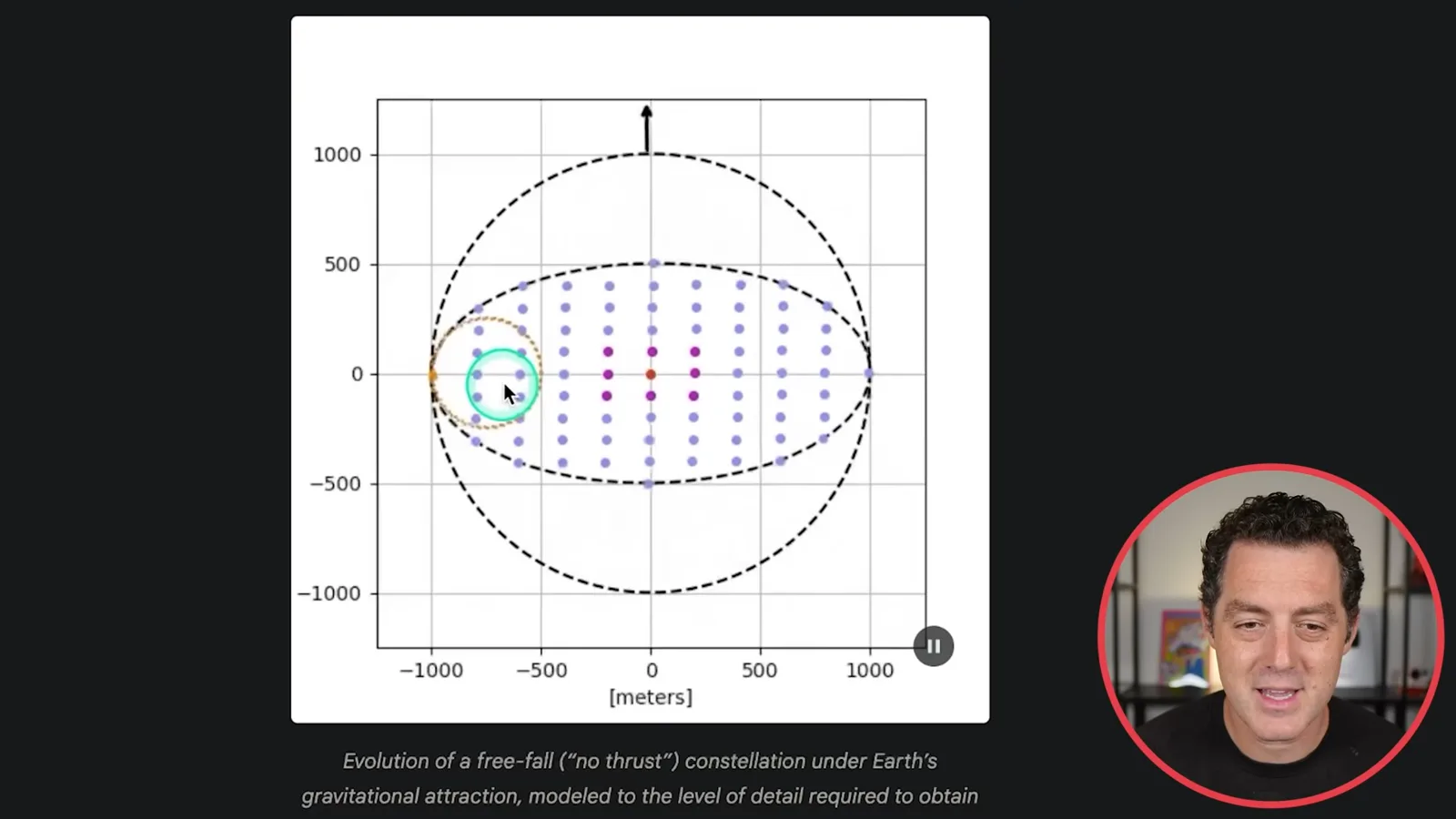
The concept calls for satellites separated by only hundreds of meters, a demanding formation for fast-moving spacecraft. Google’s illustration models how a free-fall satellite formation evolves under Earth’s gravity; it is a simulation, not a photograph of hardware in orbit.
Radiation is another challenge. Google tested its Trillium TPU using a proton beam to study ionizing dose and single-event effects, and reported promising results. A laboratory test does not by itself prove the lifetime or reliability of a complete orbiting data center.
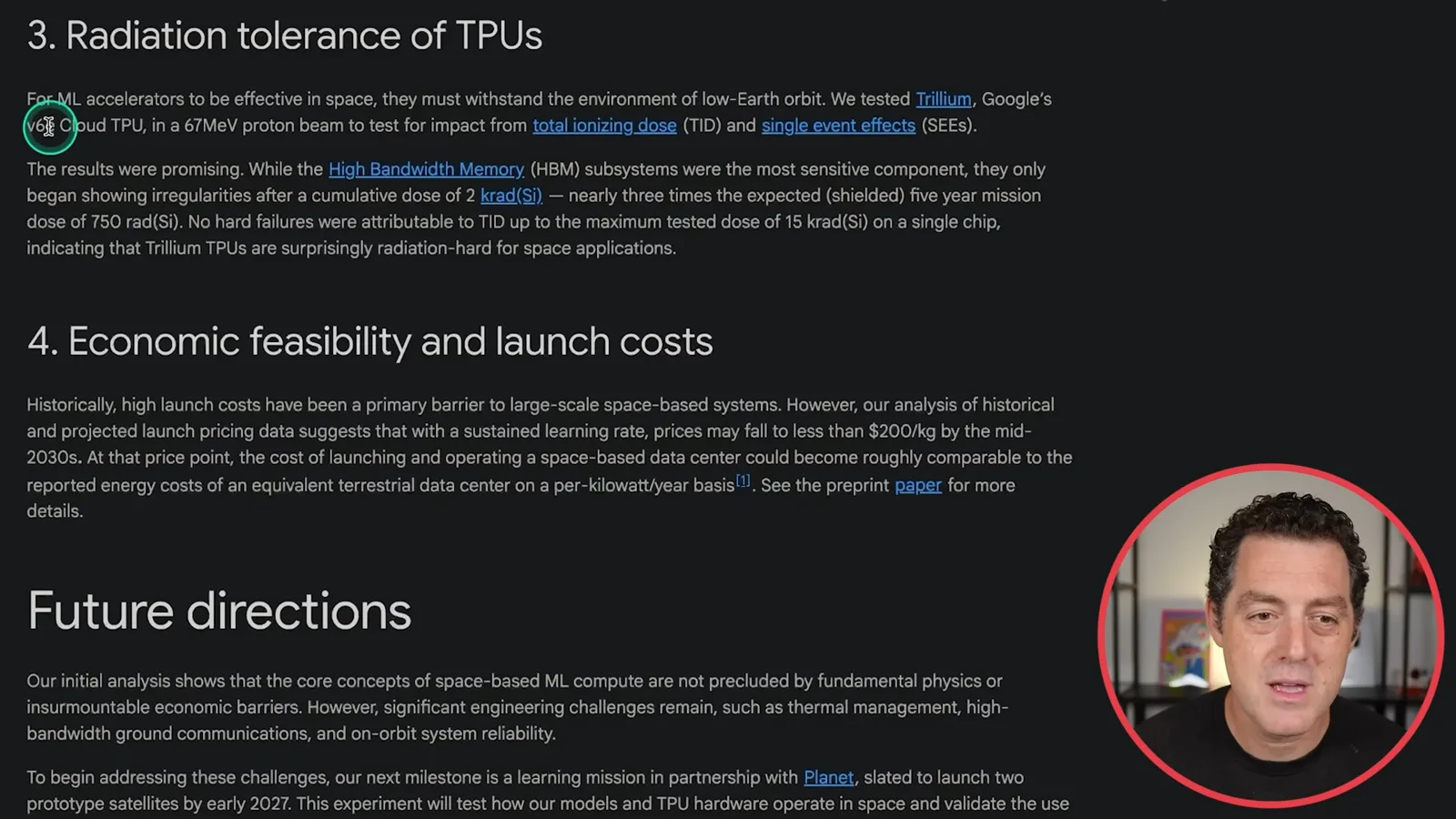
Launch cost may determine whether the concept is economic. Google’s analysis projects that a sustained learning rate could bring launch prices below $200 per kilogram by the mid-2030s. I discuss reusable rockets and possible further reductions, but those numbers are projections, not current prices or a guaranteed outcome.
OpenAI infrastructure and reported Apple–Google talks
He discusses reported computing agreements and a possible Gemini arrangement for Apple Intelligence. Amounts and outcomes are attributed to contemporary reports.
Turning to infrastructure on Earth, I discuss a social-media compilation of OpenAI-related compute deals and proposed investments, including figures associated with Stargate, NVIDIA and AMD. The headline amounts are presented as reported claims; different commitments, ambitions and proposed investments should not be added together as if all were completed spending.
The post also raises a possible trillion-dollar IPO, and I compare the scale of these plans with earlier reports of a much larger fundraising ambition. An IPO and future financing are speculative in this discussion, not confirmed transactions.
I discuss OpenAI’s corporate restructuring and its changed Microsoft arrangement. I describe the end of a prior right-of-first-refusal arrangement and a subsequent AWS partnership as part of a broader effort to secure compute. The reported terms and timing should be understood in their 2025 context.
The Verge reported that Apple was planning to use a custom Google Gemini model for Apple Intelligence, with an estimated payment of about $1 billion per year. The report described the model running on Apple’s private cloud infrastructure for tasks such as summarization and planning; this is a reported plan, not a confirmed launch in the video.
I note that Apple had reportedly considered other model providers and already worked with Google and OpenAI in different ways. I welcome the idea of a more integrated Siri experience; the report says Tim Cook had indicated a new Siri was planned for the following spring, a schedule described at the time.
ChatGPT workflow and Microsoft image generation
Berman describes adding context during long tasks and Microsoft’s MAI-Image-1. His quality impressions and ranking reflect the 2025 release.
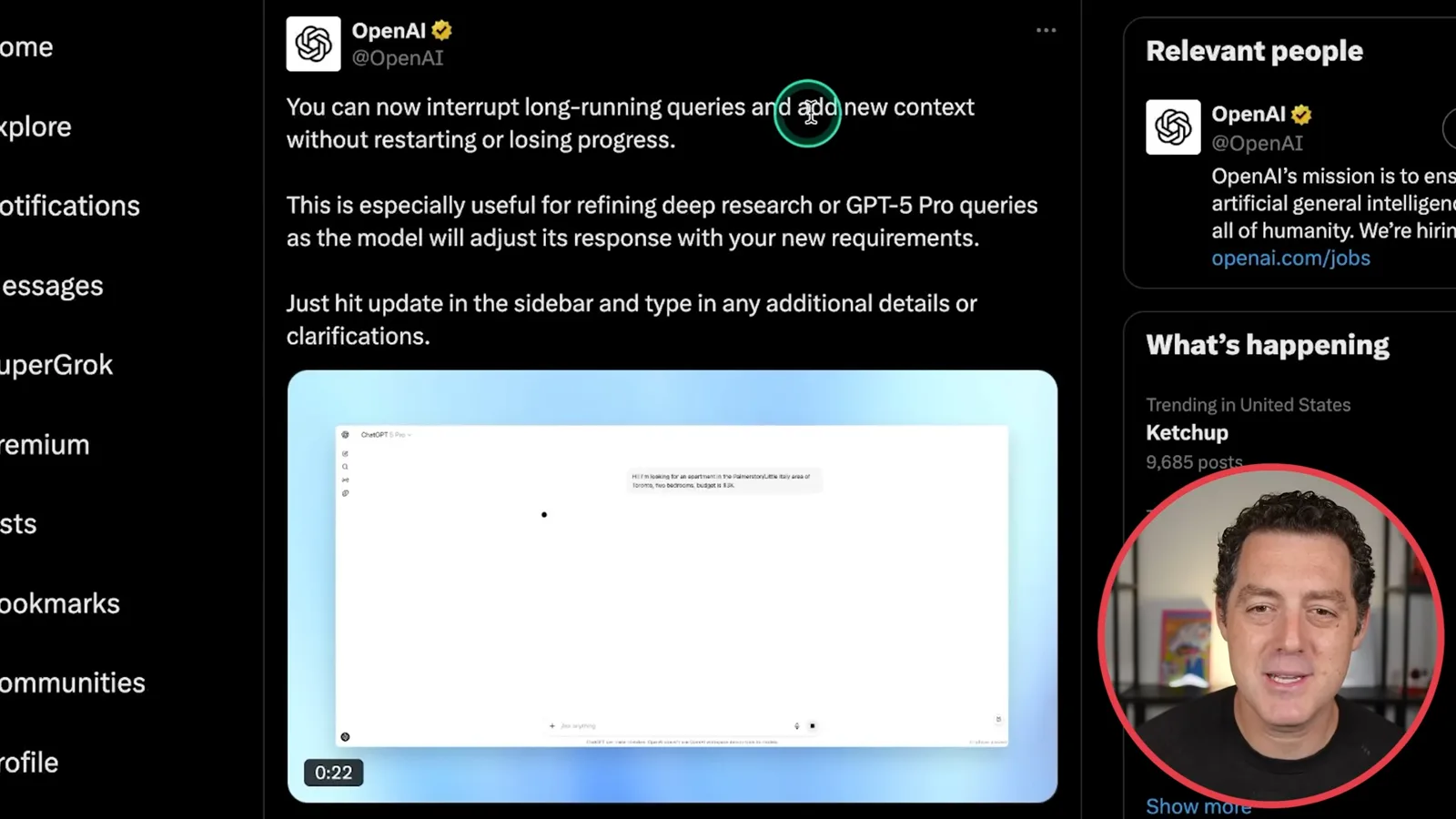
OpenAI announces a quality-of-life update for long-running ChatGPT requests: a user can add context while the task is running rather than start over. I see particular value for long research or reasoning tasks where restarting can waste considerable time.
Microsoft releases MAI-Image-1, an image generation model it describes as developed in-house and not open-weight. At the time, Microsoft says it entered the top ten for text-to-image on LM Arena and describes efforts to avoid repetitive, generic styles.
The company highlights data selection, evaluation and feedback from creative professionals. I welcome its focus on more distinctive results and mention photorealistic imagery as a stated strength. These are company claims and my impressions, not an independent assessment of all use cases.
Vidu Q2 and video comparisons
He reviews a reported leaderboard ranking, costs and sample clips. His visual preferences are subjective.
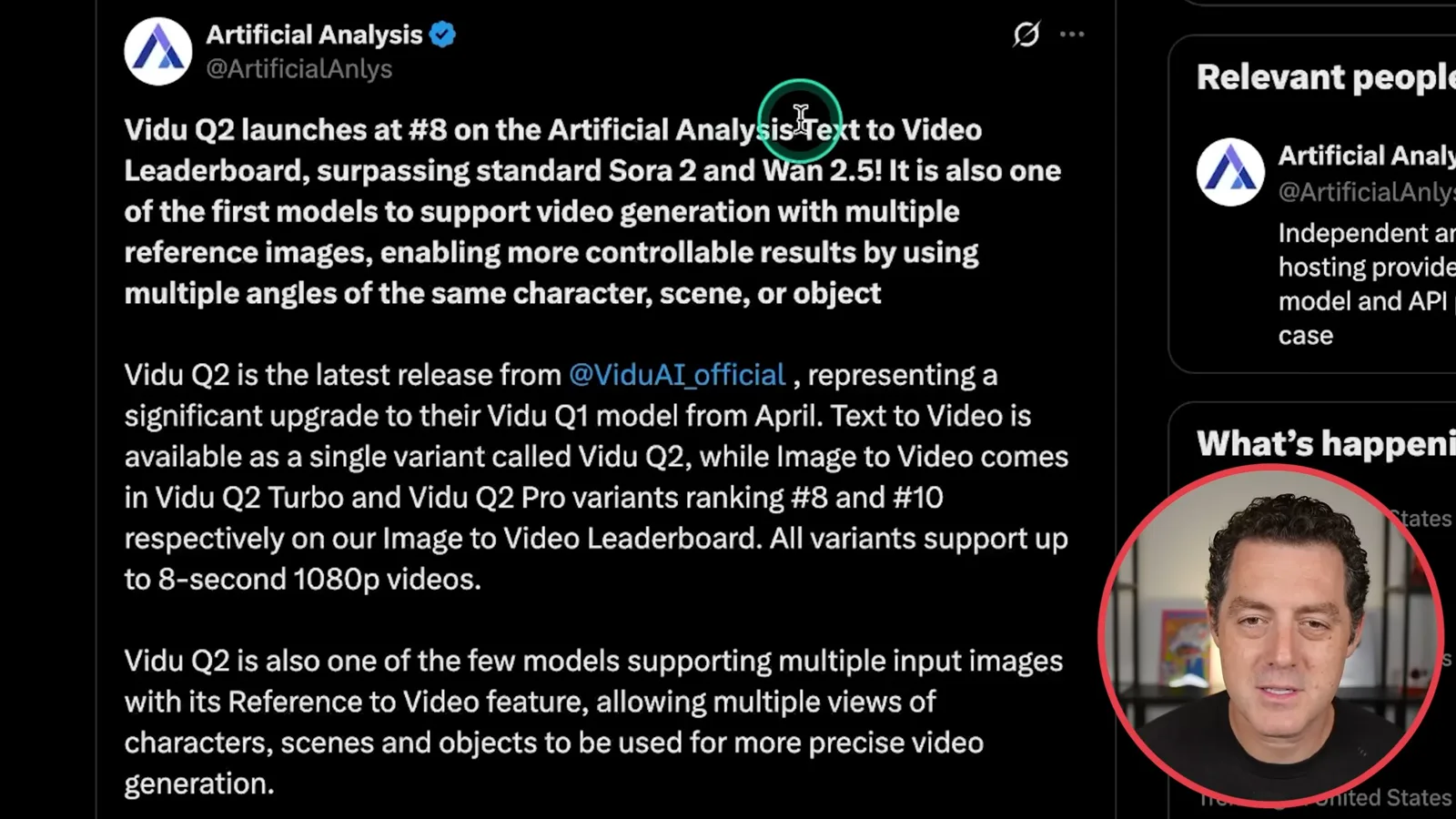
Vidu Q2 appears on Artificial Analysis’s text-to-video leaderboard, with the source reporting a number-eight position at the time. It supports multiple reference images and variants producing clips up to eight seconds at 1080p, according to the information shown.
I cite prices of $4 per generated minute for Turbo and $6.10 for Pro as reported then; pricing and leaderboard placement can change. I compare the models using sample clips, starting with an animated elf riding a unicorn through a forest.
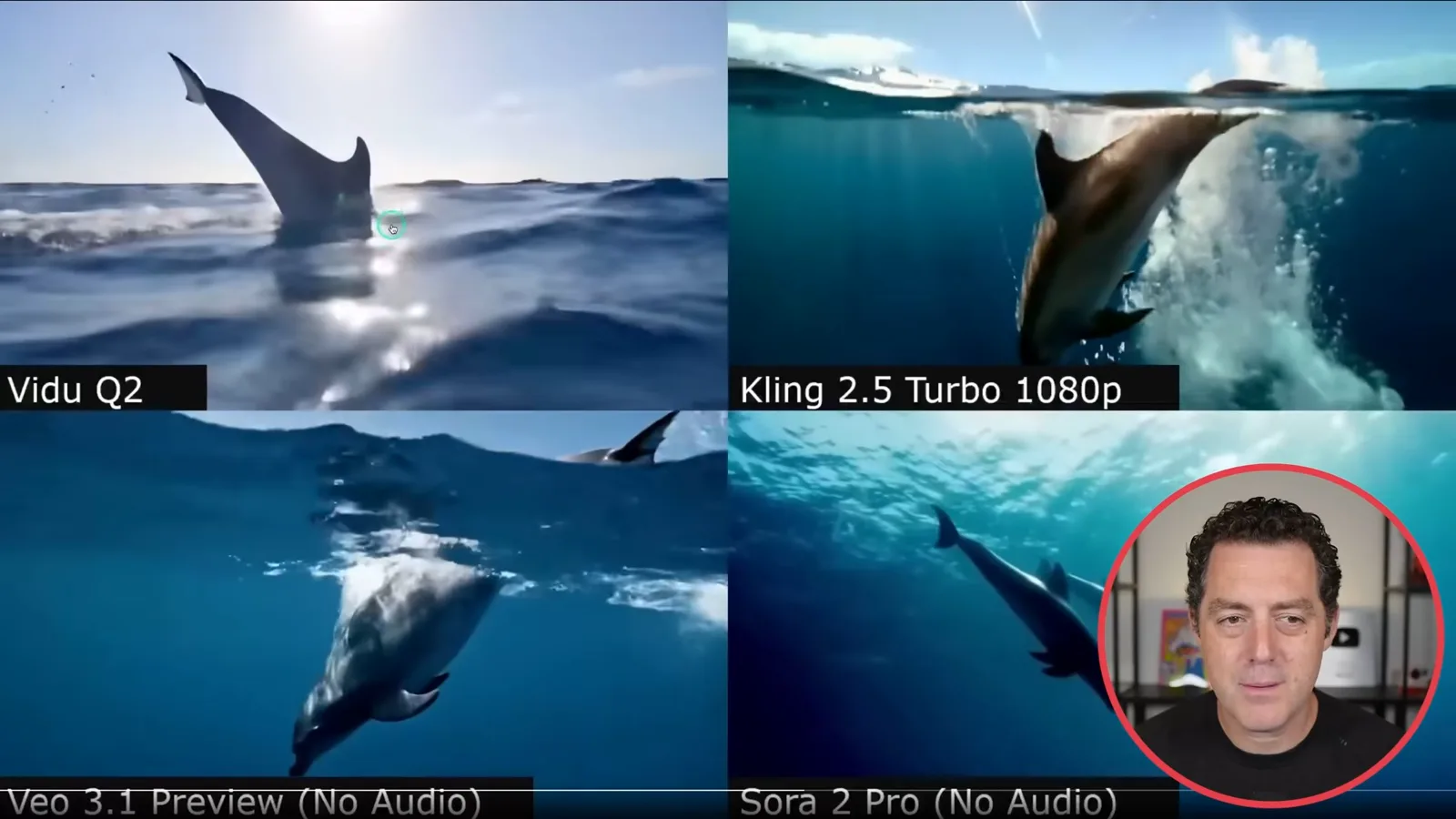
A second comparison shows a dolphin moving above and below the water. I prefer aspects of Vidu Q2’s lighting and water to one competing sample, while also praising Sora 2 Pro. These judgments are subjective observations of selected examples rather than a systematic evaluation.
Amazon, Perplexity and Sora cameos
Berman discusses Perplexity’s account of a dispute with Amazon over shopping agents. He closes with Sora’s character cameo feature.
Perplexity says it received a legal threat from Amazon concerning the use of the Comet assistant on Amazon’s site. Its statement argues users should be able to ask an agent to compare and purchase products while logged in. That is Perplexity’s account of the dispute, not a finding about Amazon’s legal position.
I speculate that advertising incentives help explain why platforms may resist agents browsing and buying on users’ behalf. Amazon has an advertising business, but the video does not establish that advertising was the reason for its action. I argue that users should be able to delegate tasks to an agent.
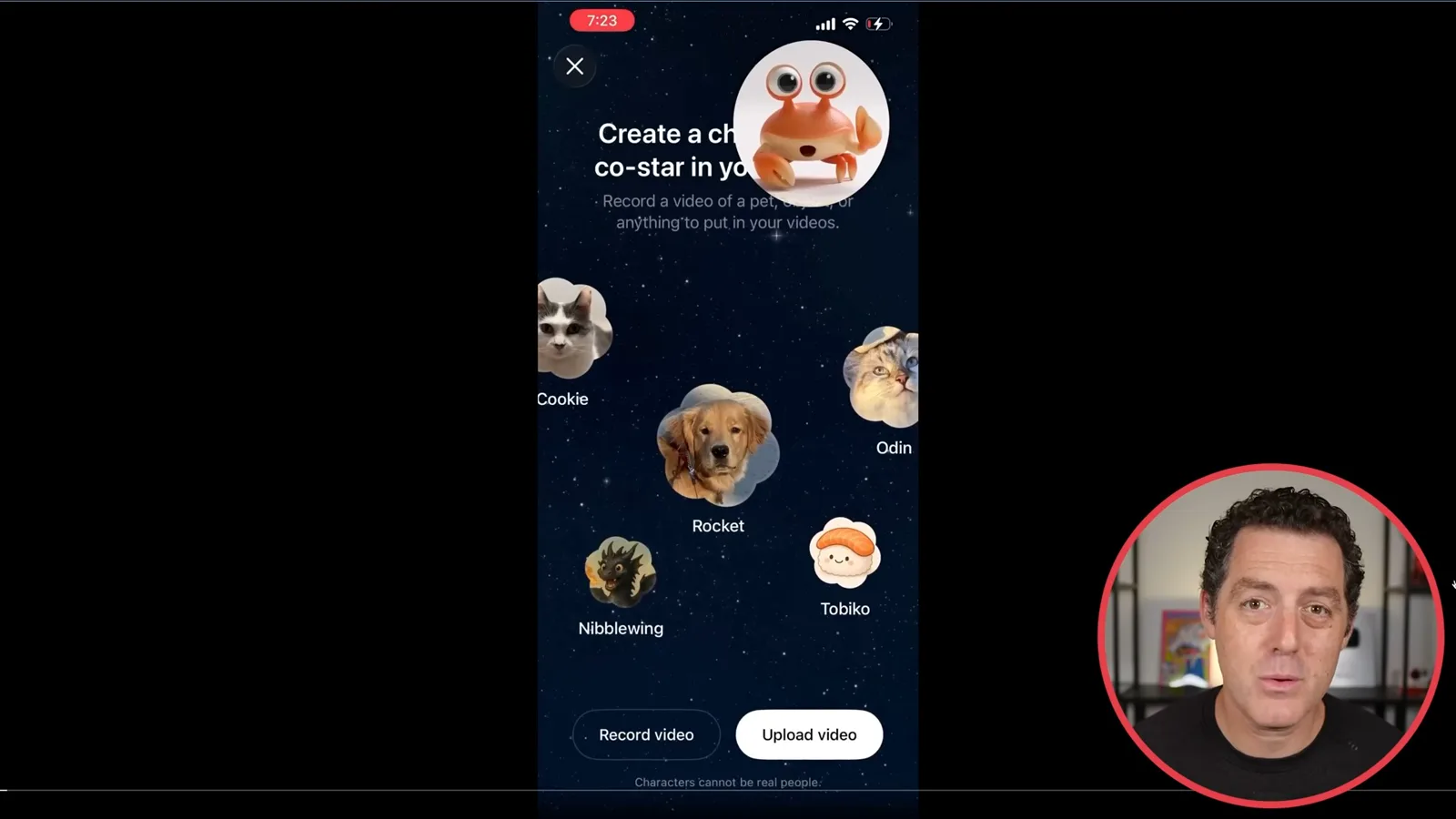
Finally, I mention Sora character cameos: users can upload a picture or design, including a pet or an original character, for use in generated videos. I present this as a new feature in the November 2025 update.
Mehr aus diesem Kanal
 34:21EN
 Matthew Berman· 27. Okt. 2026Matthew Berman Examines Anthropic’s IPO Filing, AI Growth and GovernanceMatthew Berman, Sam Altman · Forward FutureThe presenter reviews the S-1’s financial metrics, compute strategy and voting structure while questioning the tension between rapid AI development and safety.
 25:50ENMatthew Berman· 24. Okt. 2026Kimi K3.1 Pro Tested: Strong 3D Demos, Uneven Results and Competitive PricingMatthew Berman · Forward FutureMatthew Berman tests the open-weight model on coding, 3D rendering and visual explanations, then compares benchmark results and prices.
 32:20ENMatthew Berman· 23. Okt. 2026Who Is Local AI For? The Costs, Trade-offs and a Hybrid FutureMatthew Berman · Forward FutureMatthew Berman weighs data control and independence against hardware cost, setup complexity and inference speed.
 1:03:37ENMatthew Berman· 23. Okt. 2026Matthew Berman’s Team Tests Kimi K3.1 on Animation, Games, and ChartsMatthew Berman, Alex, Brian · Forward FutureA live team AMA turns into an informal test of Kimi K3.1, from personal-agent workflows to motion graphics, a browser game, and a benchmark chart.
 0:53ENMatthew Berman· 22. Okt. 2026Sam Altman on AI and the Discovery of New KnowledgeSam Altman · OpenAIAltman expects progress in mathematical discovery to extend to biology, materials and energy.
 0:22ENMatthew Berman· 21. Okt. 2026A Robot Bodyguard Video Shows Dramatic Rescue ScenariosMatthew Berman · Forward FutureMatthew Berman reacts to a short robot demonstration depicting fighting and vehicle-rescue scenarios.