In 30 Sekunden
In this July 2023 roundup, Matthew Berman discusses Sergey Brin’s involvement in Google’s Gemini effort, Stability AI’s FreeWilly and SDXL releases, Twitter’s rebrand to X, and ChatGPT custom instructions. He also reviews Worldcoin, Runway’s image-to-video feature, and a reported experiment involving cultured brain cells. Berman welcomes the pace of development while questioning the X rebrand and the collection of biometric data. The biological-computing result is an experimental finding, not proof of sentience or a demonstrated replacement for silicon hardware.
- 1Google and GeminiBerman discusses Sergey Brin’s reported return to more active work at Google amid competition in generative AI.
- 2FreeWilly and SDXLThe roundup covers Llama-based FreeWilly models and the SDXL 1.0 image model, including Berman’s opinions on their historical performance.
- 3Twitter becomes XBerman questions the loss of the Twitter brand while discussing X’s stated ambition to become a broad services platform.
- 4Custom instructionsChatGPT introduced a way to save preferences and context for future conversations.
- 5Worldcoin and biometricsThe identity project used an Orb to scan irises; Berman questions whether he would provide his biometric data.
- 6Cultured cells on a chipBerman cites reporting on a cell-based Pong experiment and military funding. The experiment does not establish sentience.
Das Wichtigste
- In July 2023 Berman saw renewed involvement by Sergey Brin as a possible response to competitive pressure on Google.
- Stability AI released FreeWilly language models and Stable Diffusion XL 1.0, which Berman compared favorably with leading alternatives at the time.
- ChatGPT custom instructions allowed users to provide persistent preferences for conversations.
- Worldcoin proposed iris-based proof of personhood and raised biometric privacy questions; it is a separate project associated with Sam Altman, not an OpenAI product.
- Runway Gen-2 introduced an image-to-video feature, while biological computing remained experimental.
Den bearbeiteten Text nach Kapiteln lesen
Google’s AI response
Berman introduces the week’s stories and discusses reported renewed involvement by Sergey Brin. He considers whether Gemini could help Google respond to competition.
In this July 2023 roundup, I look at another eventful week in AI: Google’s Gemini work, new Stability AI models, Twitter’s rebrand, ChatGPT updates, biometric identity, image-to-video generation, and a biological computing experiment. The products and comparisons discussed here reflect that moment in time.
Google co-founder Sergey Brin has reportedly returned to more active work at the company, with a focus on Gemini, Google’s response to OpenAI’s GPT-4. The reporting describes concern that Google was falling behind OpenAI and Microsoft. Brin had previously been skeptical about whether Google could crack AI, but his view reportedly shifted as the technology advanced.
I wonder whether Brin’s return could give Google a push, as Steve Jobs’s return once did for Apple. I see the moment as an existential challenge for Google and believe the company is trying to move faster, including by changing its approach to AI safeguards. Whether those changes help it catch up is an open question.
Stability AI’s language and image models
The roundup covers FreeWilly models based on Llama and the release of Stable Diffusion XL 1.0. Berman gives his contemporaneous assessment of their performance.
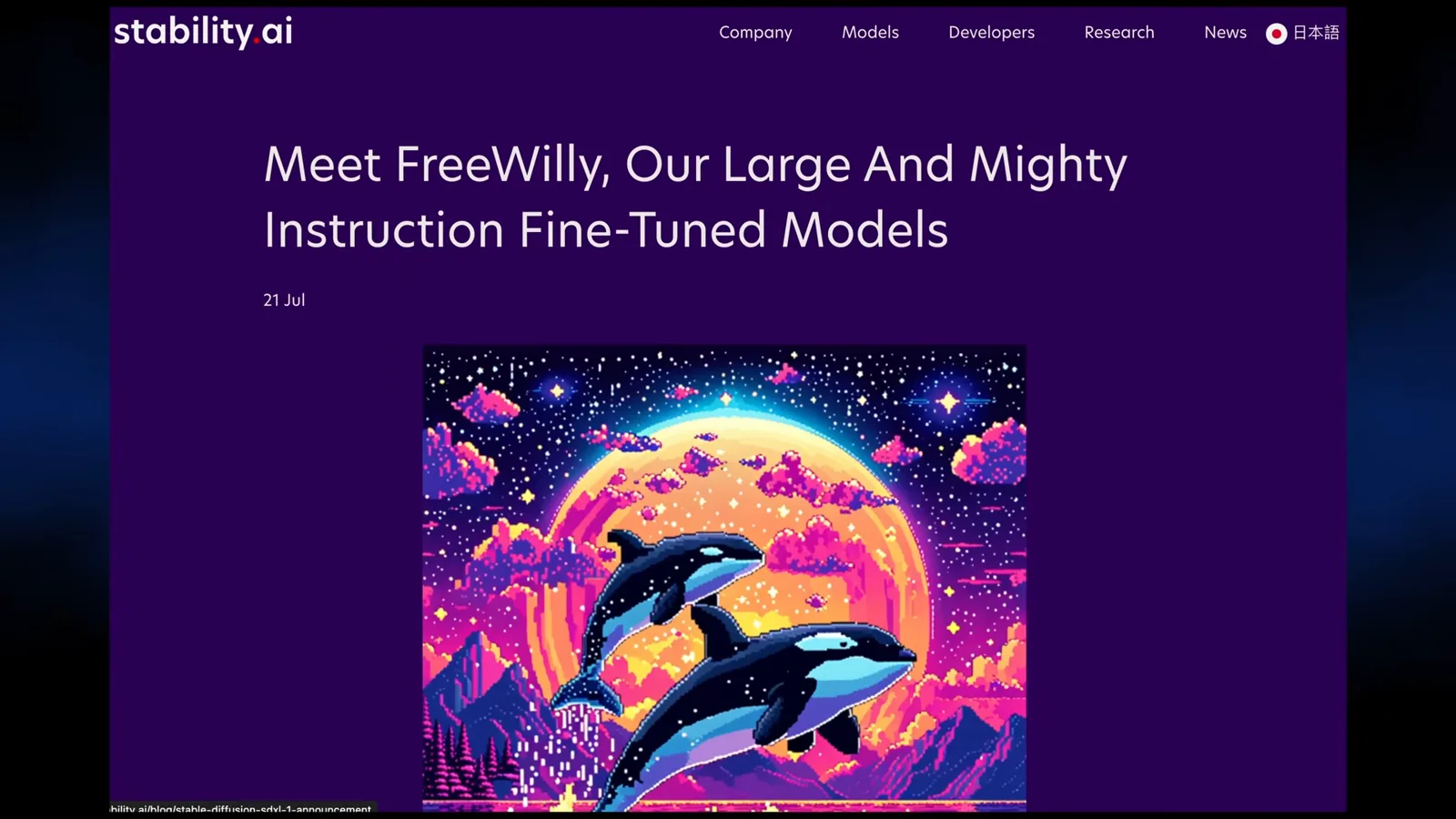
Stability AI had two major releases. FreeWilly 1 is based on Llama 1, while FreeWilly 2 uses Llama 2. At the time, I said FreeWilly 2 had reached the top of an open-model leaderboard and performed strongly on some measures against ChatGPT; those historical benchmark comparisons depend on the tests and versions used.
Stability AI also released Stable Diffusion XL 1.0, or SDXL, an openly available image-generation model. In my judgment at the time, the quality of images from models like SDXL was approaching Midjourney’s. That is a subjective comparison, not a guarantee that the models perform equally on every prompt.
X, ChatGPT, and Worldcoin
Berman reacts to Twitter’s rebrand and describes custom instructions for ChatGPT. He then discusses Worldcoin’s identity ambitions and biometric privacy.
Twitter has been renamed X, replacing the familiar bird and leaving me puzzled about what happens to the word “tweet.” The company’s stated ambition is an everything app, comparable in breadth to WeChat, spanning audio, video, messaging, payments, and other services. I am skeptical of the pitch and of abandoning such a strong brand.
Elon Musk had also recently launched xAI and has a long association with the X name and the x.com domain. Given the $44 billion Twitter acquisition and the strength of its old identity, I find the rebrand hard to understand. I am curious whether others see a compelling reason for the change.
ChatGPT received custom instructions, a feature for giving it persistent context and preferences instead of starting each conversation entirely from scratch. Users can specify how they want it to respond. Sam Altman has said he wants it to be less excessively nice; I would also like fewer apologies when it makes mistakes.
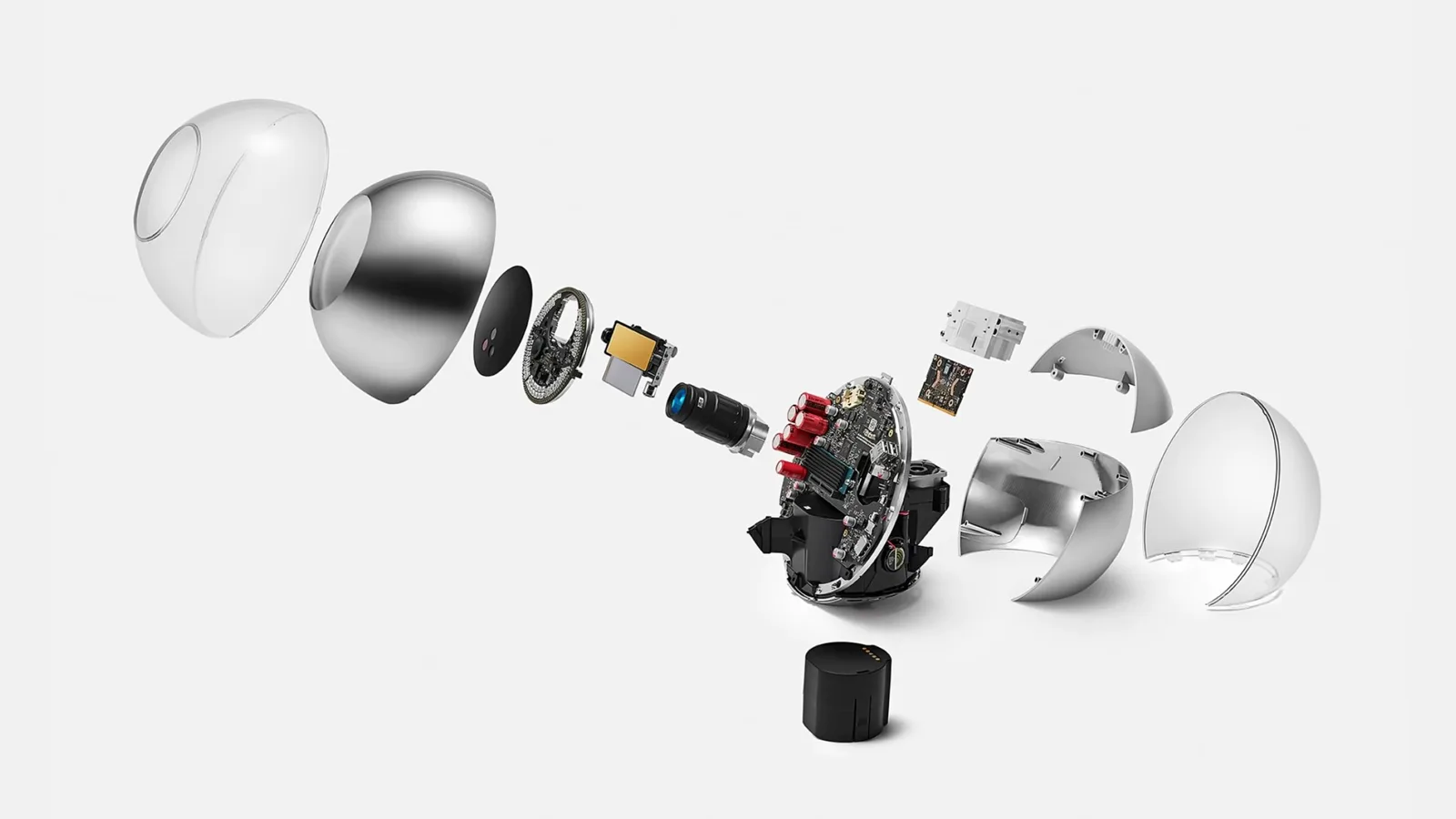
Worldcoin, a separate project associated with Sam Altman, aims to provide proof of personhood. Its Orb device scans a person’s irises to support a digital identity, an idea meant to help distinguish people in a world with increasingly capable AI. I am not sure I would be comfortable giving the project my biometric data.
Worldcoin’s white paper presents wider ambitions for a global identity and financial network, including increased economic opportunity and the possibility of AI-funded universal basic income. These are the project’s goals rather than outcomes established by the launch. The trade-off between identity verification and biometric privacy is what stands out to me.
Image-to-video and biological computing
Runway’s Gen-2 feature turns a still image into a video. A separate report on cultured brain cells and Pong prompts questions about future computing and AI.
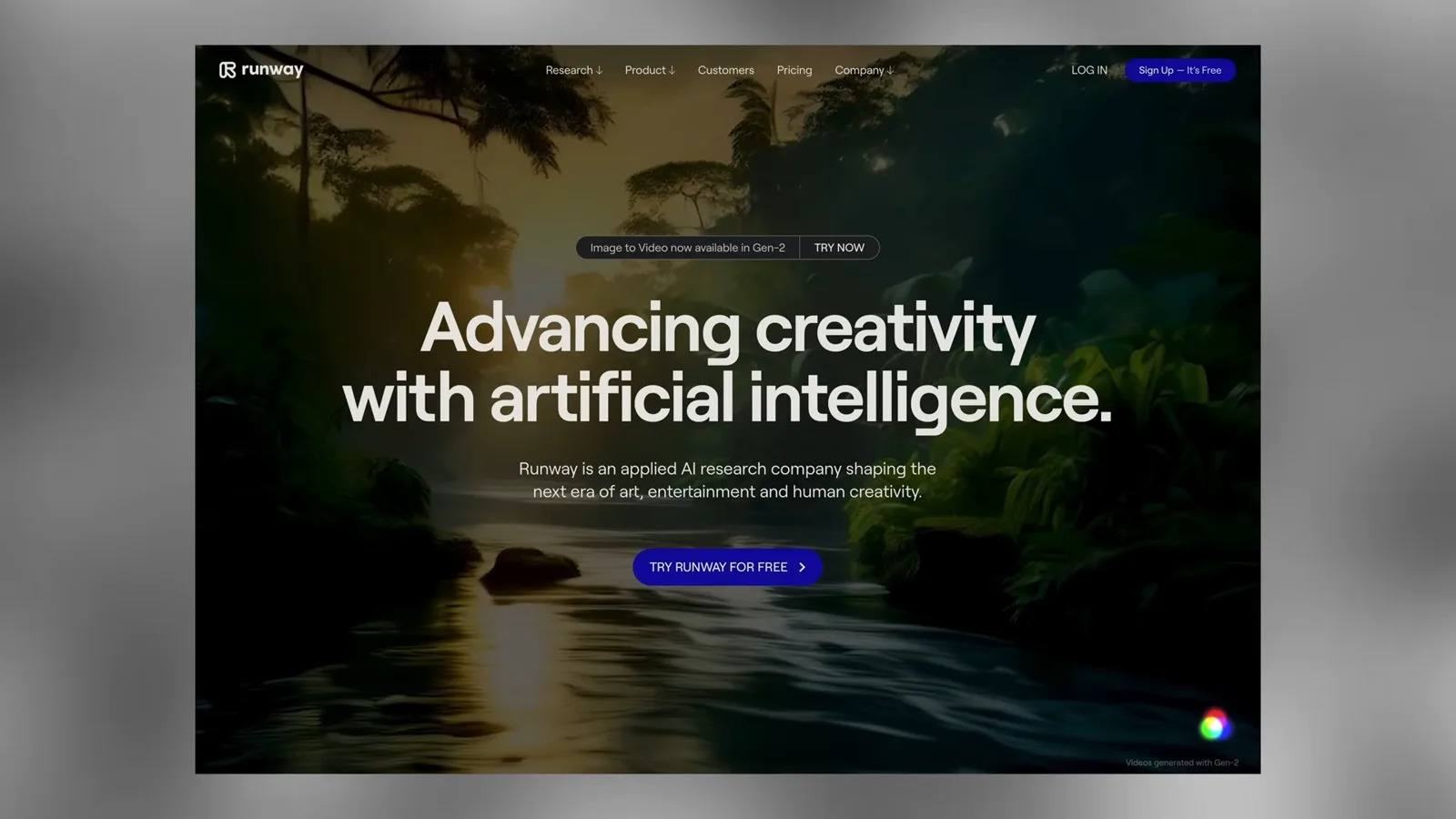
Runway, known for text-to-video generation, introduced an image-to-video feature in Gen-2. The idea is to upload a still image and generate a moving video from it. I show examples and find the results impressive; availability and capabilities described here are those of the product in July 2023.

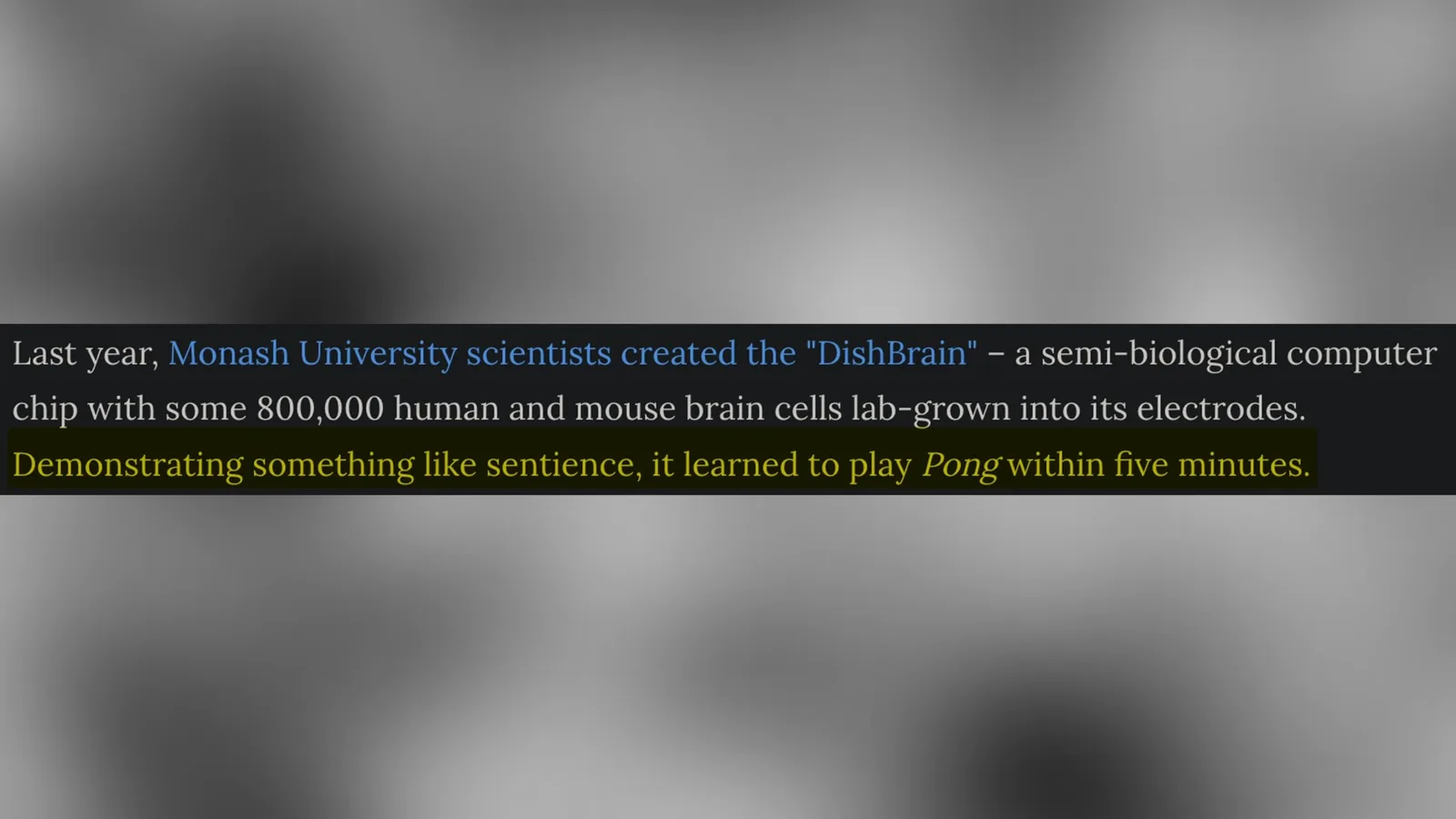
The last story concerns a biological computing experiment and military funding. Berman cites reporting on DishBrain, a system using roughly 800,000 cultured human and mouse brain cells interfaced with electrodes, which researchers reported adapted to a simplified Pong-like task within minutes. The article describes this as “something like sentience,” but the observed response does not establish consciousness or sentience.
The possibility that biological cells and AI could someday contribute to computing is fascinating, although surpassing conventional silicon hardware remains speculation. I feel both excited and a little frightened by so many technologies advancing at once. Will AI help create abundance, or could it lead to our downfall? That is the question I leave with viewers.
Mehr aus diesem Kanal
 34:21EN
 Matthew Berman· 27. Okt. 2026Matthew Berman Examines Anthropic’s IPO Filing, AI Growth and GovernanceMatthew Berman, Sam Altman · Forward FutureThe presenter reviews the S-1’s financial metrics, compute strategy and voting structure while questioning the tension between rapid AI development and safety.
 25:50ENMatthew Berman· 24. Okt. 2026Kimi K3.1 Pro Tested: Strong 3D Demos, Uneven Results and Competitive PricingMatthew Berman · Forward FutureMatthew Berman tests the open-weight model on coding, 3D rendering and visual explanations, then compares benchmark results and prices.
 32:20ENMatthew Berman· 23. Okt. 2026Who Is Local AI For? The Costs, Trade-offs and a Hybrid FutureMatthew Berman · Forward FutureMatthew Berman weighs data control and independence against hardware cost, setup complexity and inference speed.
 1:03:37ENMatthew Berman· 23. Okt. 2026Matthew Berman’s Team Tests Kimi K3.1 on Animation, Games, and ChartsMatthew Berman, Alex, Brian · Forward FutureA live team AMA turns into an informal test of Kimi K3.1, from personal-agent workflows to motion graphics, a browser game, and a benchmark chart.
 0:53ENMatthew Berman· 22. Okt. 2026Sam Altman on AI and the Discovery of New KnowledgeSam Altman · OpenAIAltman expects progress in mathematical discovery to extend to biology, materials and energy.
 0:22ENMatthew Berman· 21. Okt. 2026A Robot Bodyguard Video Shows Dramatic Rescue ScenariosMatthew Berman · Forward FutureMatthew Berman reacts to a short robot demonstration depicting fighting and vehicle-rescue scenarios.