In 30 Sekunden
Musk argues for public AI safety oversight and discusses the risks of delay and regulatory capture.
- 1AlternativesFridman offers three approaches.
- 2OversightMusk proposes an AI safety regulator.
- 3DelayHe worries that regulation often follows harm.
- 4UncertaintyHe says outcomes are hard to predict.
Das Wichtigste
- Musk proposes public oversight.
- He worries about delayed regulation.
- He calls future outcomes uncertain.
Den bearbeiteten Text nach Kapiteln lesen
Paths for AI safety
Lex Fridman asks Elon Musk about several possible responses to AI risk, including safety research, becoming multiplanetary and integrating with AI.
Lex Fridman asks Elon Musk about several possible responses to AI risk, including safety research, becoming multiplanetary and integrating with AI.
A regulator
Musk argues that AI safety receives too little investment and proposes public oversight.
Musk argues that AI safety receives too little investment and proposes public oversight.
He compares the idea of an AI regulator to agencies responsible for safety in other sectors and argues for an independent public-interest referee.
Slow response and capture
Musk worries that government often reacts slowly, with regulation following a harmful event and public pressure.
Musk worries that government often reacts slowly, with regulation following a harmful event and public pressure.
He cites historical disputes over seat belts and tobacco as examples of industry resistance and regulatory capture. These are examples used in his argument.
An uncertain future
Musk describes a possible technological singularity as difficult to predict and says its consequences could be good or bad.
Musk describes a possible technological singularity as difficult to predict and says its consequences could be good or bad.
Mehr aus diesem Kanal
 3:34:27EN
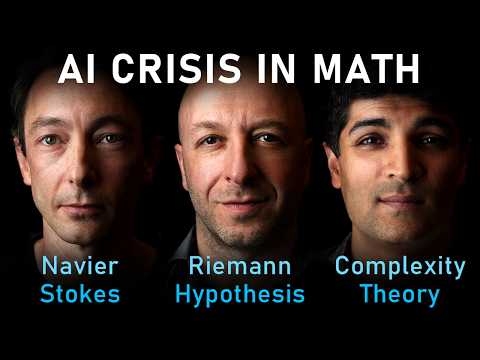
 Lex Fridman· 26. Okt. 2026Podcast · 4 StimmenAI, Mathematics, and the Meaning of a ProofGast: Steven Brunton, Ankur Moitra, Alex Kontorovich · Moderation: Lex FridmanLex Fridman and three mathematicians discuss recent AI-generated research, hard open problems and what human understanding contributes.
 3:36:56ENLex Fridman· 16. Sept. 2026PodcastPsychiatry Has Never Found Its PenicillinModeration: Lex FridmanHistorian Andrew Scull tells Lex Fridman why the field can ease symptoms, has never cured a major mental illness, and keeps paying for overconfidence with patients' lives.
 5:15:51ENLex Fridman· 26. Aug. 2026Podcast · 2 StimmenDHH Did Not Write a Line of Omarchy QuattroGast: DHH · Moderation: Lex FridmanThirteen months after a skeptical conversation with Lex Fridman, the Rails creator describes how Opus 4.5, a swarm of coding agents, and a one-minute Linux installer ended his era of hand-chiseled Ruby.
 3:12:58ENLex Fridman· 12. Aug. 2026Podcast · 2 StimmenOne Cold Shower, Twenty Champions: How Khabib Nurmagomedov Was ForgedGast: Khabib Nurmagomedov · Moderation: Lex FridmanIn a Makhachkala school gym, seventy men shared one shower, and the water was only cold.
 3:46:18ENLex Fridman· 28. Juli 2026Podcast · 2 StimmenIf You Take Slavery Out of the Picture, There Is No Civil WarGast: Gary Gallagher · Moderation: Lex FridmanIn 1860, enslaved people were worth more than every railroad and factory in the United States combined.
 3:51:47ENLex Fridman· 30. Juni 2026Podcast · 2 StimmenForty-Six Percent of Emperors Were Overthrown. The Empire Lasted AnywayGast: Anthony Kaldellis · Moderation: Lex FridmanHistorian Anthony Kaldellis walks Lex Fridman through 2,200 years of Roman history and argues that what we call Byzantium was Rome itself.