In 30 Sekunden
In this March 21, 2025 roundup, Matthew Berman discusses Vibe Jam, Mistral Small 3.1, Claude web search, OpenAI audio models, Windsurf and several visual-generation releases. He also highlights Gemini Canvas and LG’s EXAONE Deep. Benchmark and availability claims describe the announcements at the time, not current product standings.
- 1Vibe Jam gamesThe game jam prompted multiplayer and other browser-game experiments.
- 2Mistral Small 3.1Mistral presents a 24B multimodal model and a vendor benchmark comparison.
- 3Audio transcription and speechOpenAI announced two transcription models and a text-to-speech model that accepts delivery instructions.
- 4Creative toolsKrea video training and NotebookLM mind maps lead a series of creative updates.
- 5EXAONE DeepLG introduced three model sizes and reported performance on reasoning benchmarks.
Das Wichtigste
- Vibe Jam showcased a range of browser games built with AI-assisted coding.
- Mistral Small 3.1 combined multimodal capabilities with a 24B-parameter open-weight release.
- Claude web search and Gemini Canvas extended assistants into current information and browser-based editing.
- OpenAI introduced speech recognition models and instruction-guided text-to-speech.
- New creative tools included video training, mind maps, 3D generation and camera-controlled video.
- Model benchmark comparisons are tied to the vendors’ chosen tests and release dates.
Den bearbeiteten Text nach Kapiteln lesen
Vibe Jam and AI-assisted games
Berman presents several game jam submissions and their diverse gameplay.
In this March 21, 2025 AI news roundup, I start with vibe coding. After Levels.io demonstrated an AI-assisted flight simulator, he announced Vibe Jam, a competition for web-based multiplayer games made with this approach. The submissions show how quickly people are experimenting with playable projects.
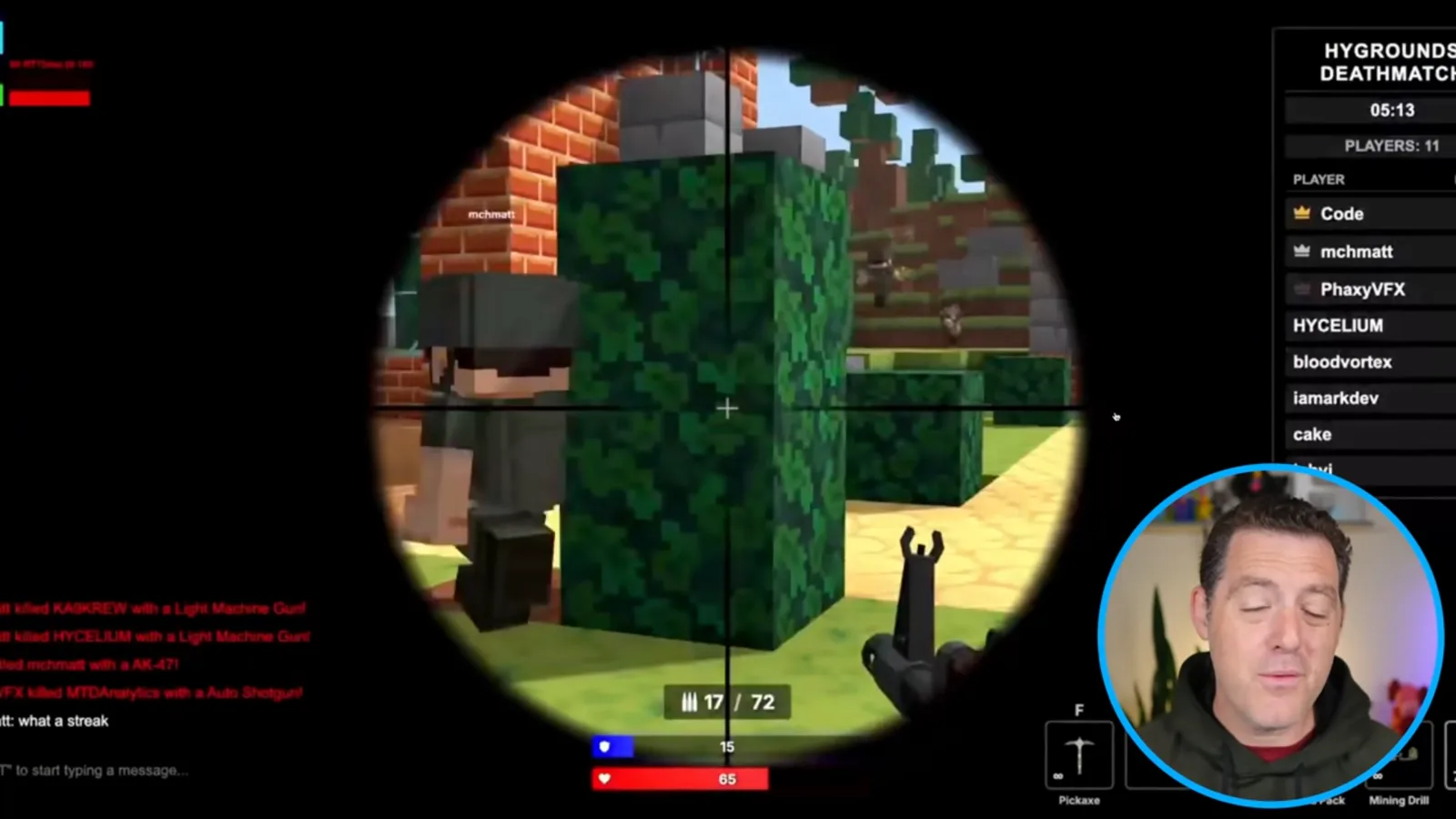
One multiplayer entry combines a Fortnite-style shooter with Minecraft-like visuals and is already being play-tested. Other examples include a safari driving game, a line-rider-style game, a puzzle reportedly built in hours, Vibe Tanks, a food fight simulator, and an air-traffic-control game that evolves from a simple 2D view into a fuller 3D map.
Mistral Small and Claude search
He reviews Mistral’s small multimodal model and Claude’s web-search feature.
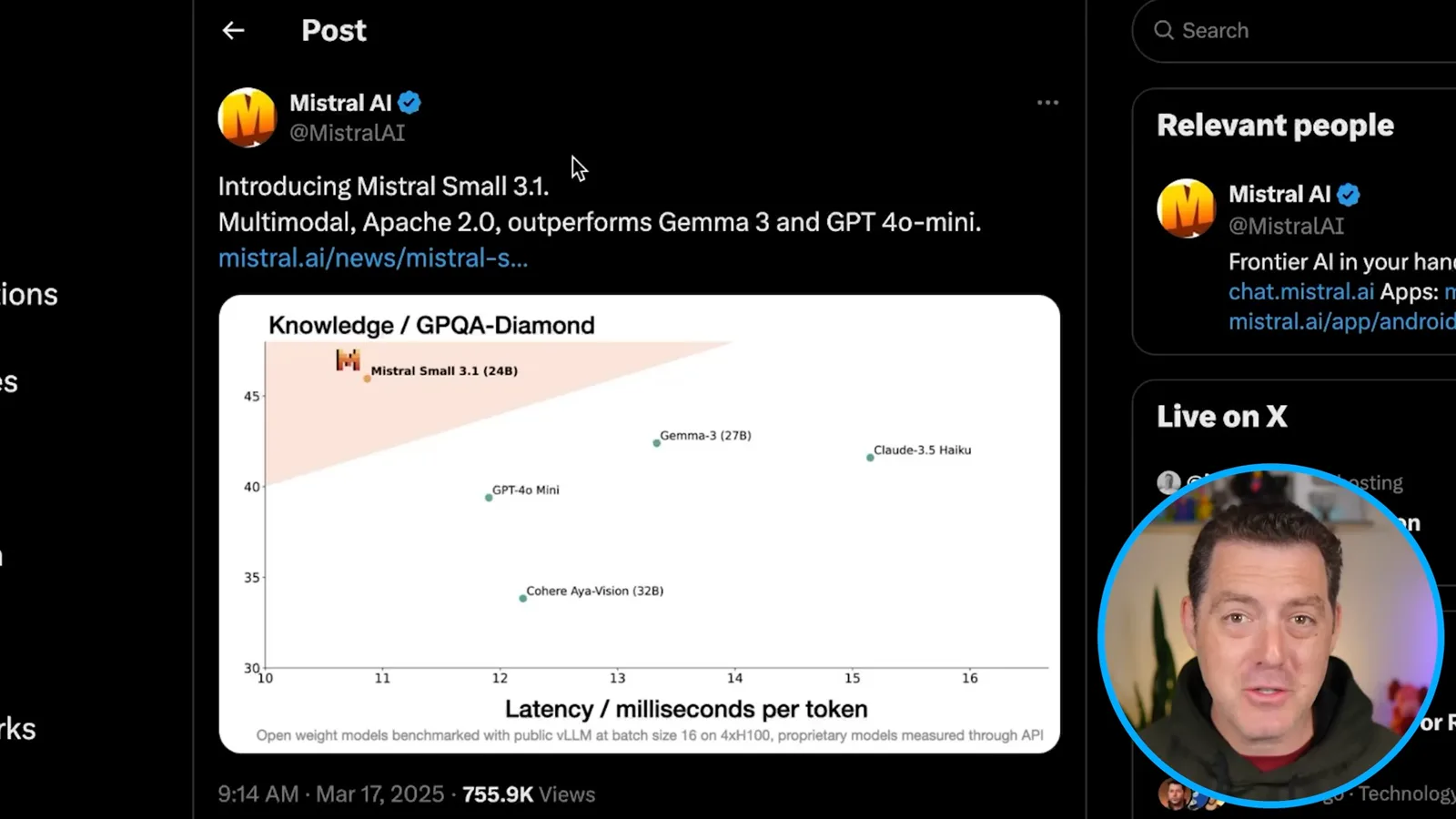
Mistral released Mistral Small 3.1, a 24-billion-parameter multimodal open-weight model. The company's displayed GPQA Diamond chart puts it ahead of several named models on that test while showing low per-token latency. This is a vendor comparison on one benchmark, not evidence that it leads every task.
Mistral says the model can run on a single RTX 4090 or a Mac with 32 GB of RAM, making local inference interesting, and lists a 128,000-token context window. I see it as a foundation that could be trained further for reasoning; actual performance and hardware requirements depend on the setup.
Claude gained web search. I see that as useful for coding in particular: the assistant can look for current API documentation, library information and recent bugs rather than relying only on what it already knows. My view that Claude was a leading coding model is an opinion from the time of this video.
OpenAI audio and Windsurf Tab
The roundup covers transcription, expressive speech generation and coding completion.
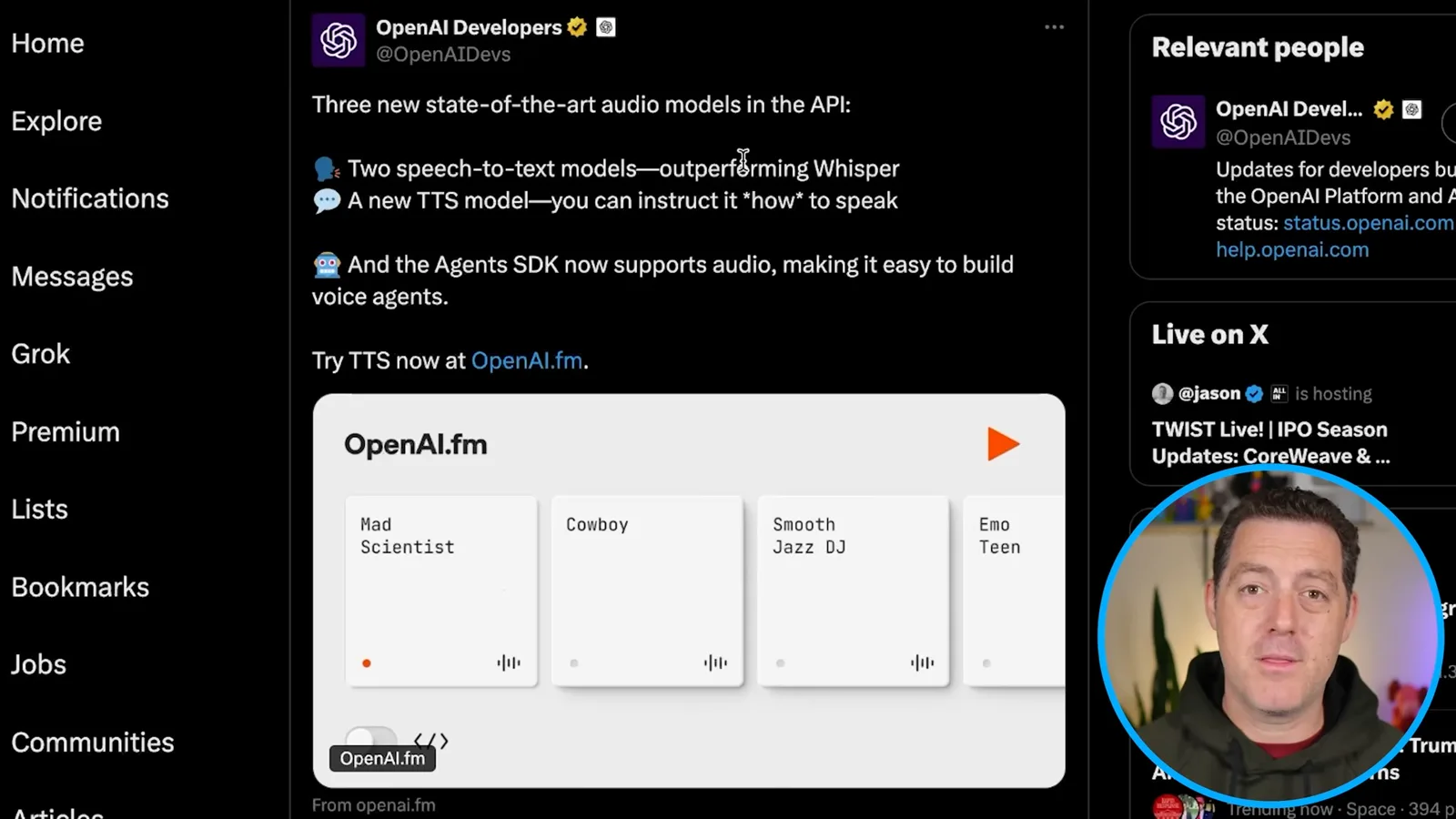
OpenAI announced two speech-to-text models, GPT-4o Transcribe and GPT-4o mini Transcribe, alongside a new text-to-speech model. The company says the transcription models improve on Whisper in its evaluations; benchmark results and language coverage should be read in the context of those tests.
The text-to-speech demo at OpenAI.fm lets users specify not only the words but how they should be spoken, including voice, tone, pacing and emotion. I play a dramatic example and note that the interface can also display code for incorporating the feature into an application.
OpenAI and Teenage Engineering also promoted a creative text-to-speech competition, with OB-4 devices as prizes. This was an announcement from the March 2025 news cycle, so the contest details should be understood in that historical context.
Windsurf's Wave 5 focuses on Windsurf Tab. In a company clip, its representative says the feature combines autocomplete, multi-line edits, navigation and imports in one tool. The announcement says free users also receive unlimited tab completion; those are the terms presented at the time.
Video, mind maps and 3D tools
Berman highlights Krea, NotebookLM, Hunyuan3D and Stable Virtual Camera.
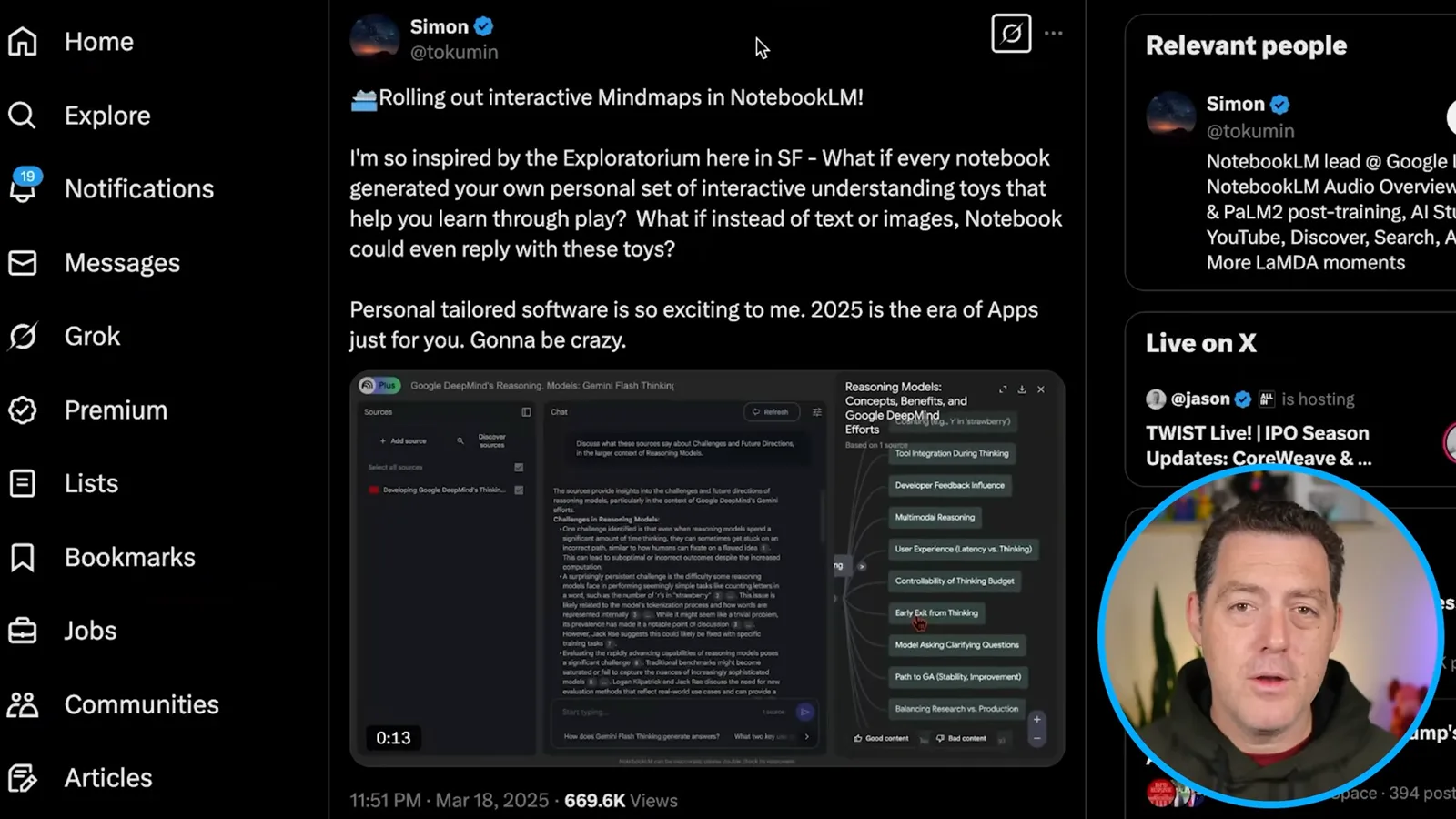
Krea AI introduced video training for Wan 2.1. The idea is to train on your own videos so generated clips can reflect particular styles, objects or movements. Separately, NotebookLM added interactive mind maps derived from supplied documents, offering another way to explore the material alongside audio overviews.
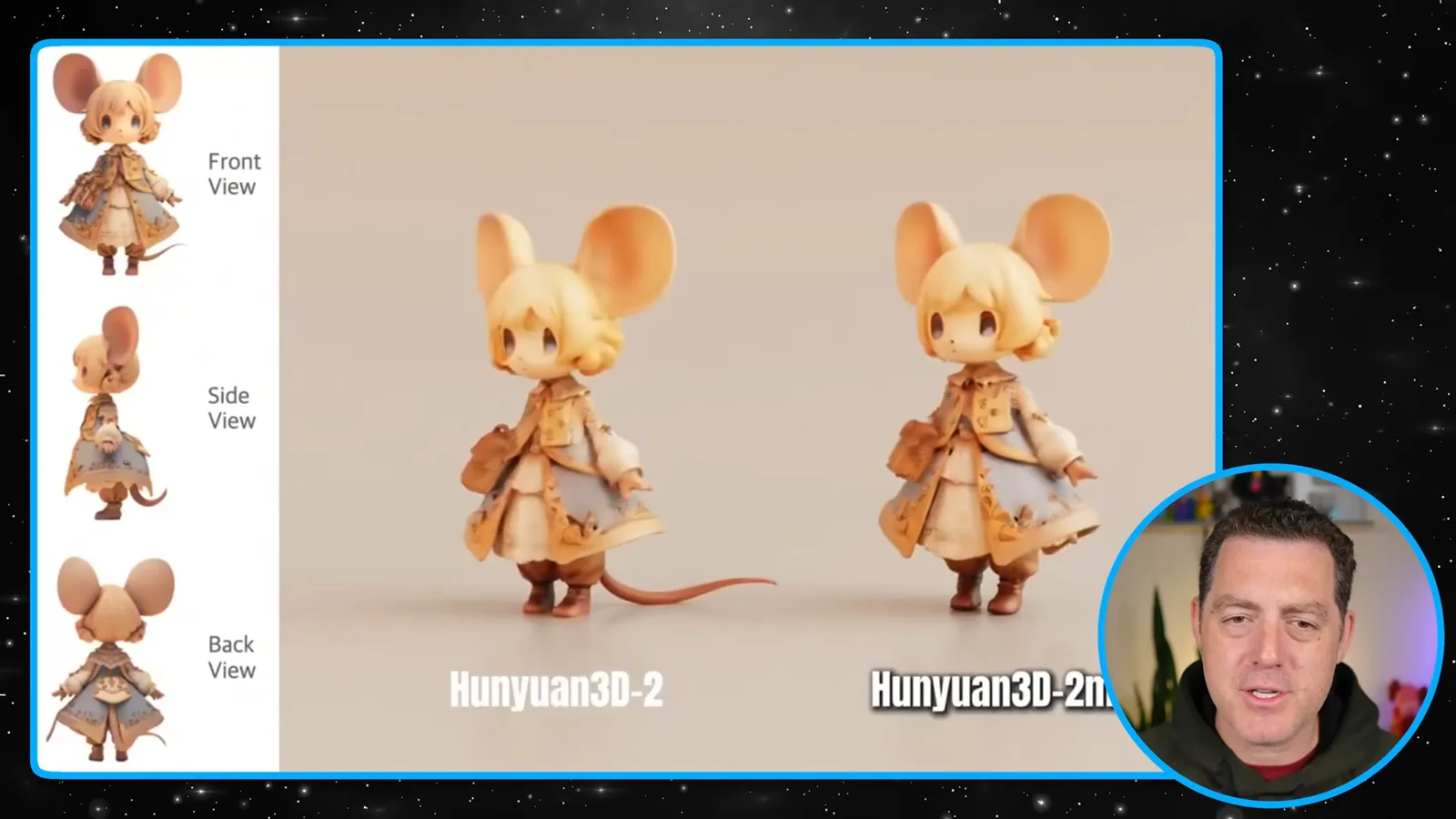
Tencent's Hunyuan team announced Hunyuan3D 2.0 MV for multi-view generation and Hunyuan3D 2.0 Mini. I point to their potential for creating 3D characters for games, motion graphics and videos; the models shown were made available for download.
Stability AI introduced Stable Virtual Camera, which generates a video with camera movement from 2D image inputs. The demo shows moves such as zooming and changing viewpoint. I see it as a step toward more accessible AI filmmaking, though a demonstration is not a finished film production system; the stated release was for non-commercial use.
Gemini Canvas and EXAONE Deep
The episode closes with browser-based editing and LG’s reasoning model family.
Gemini added Canvas for writing, editing and running code in the browser. I compare the experience to similar capabilities already available in Claude and ChatGPT, and suggest using it to iterate on HTML or JavaScript projects.
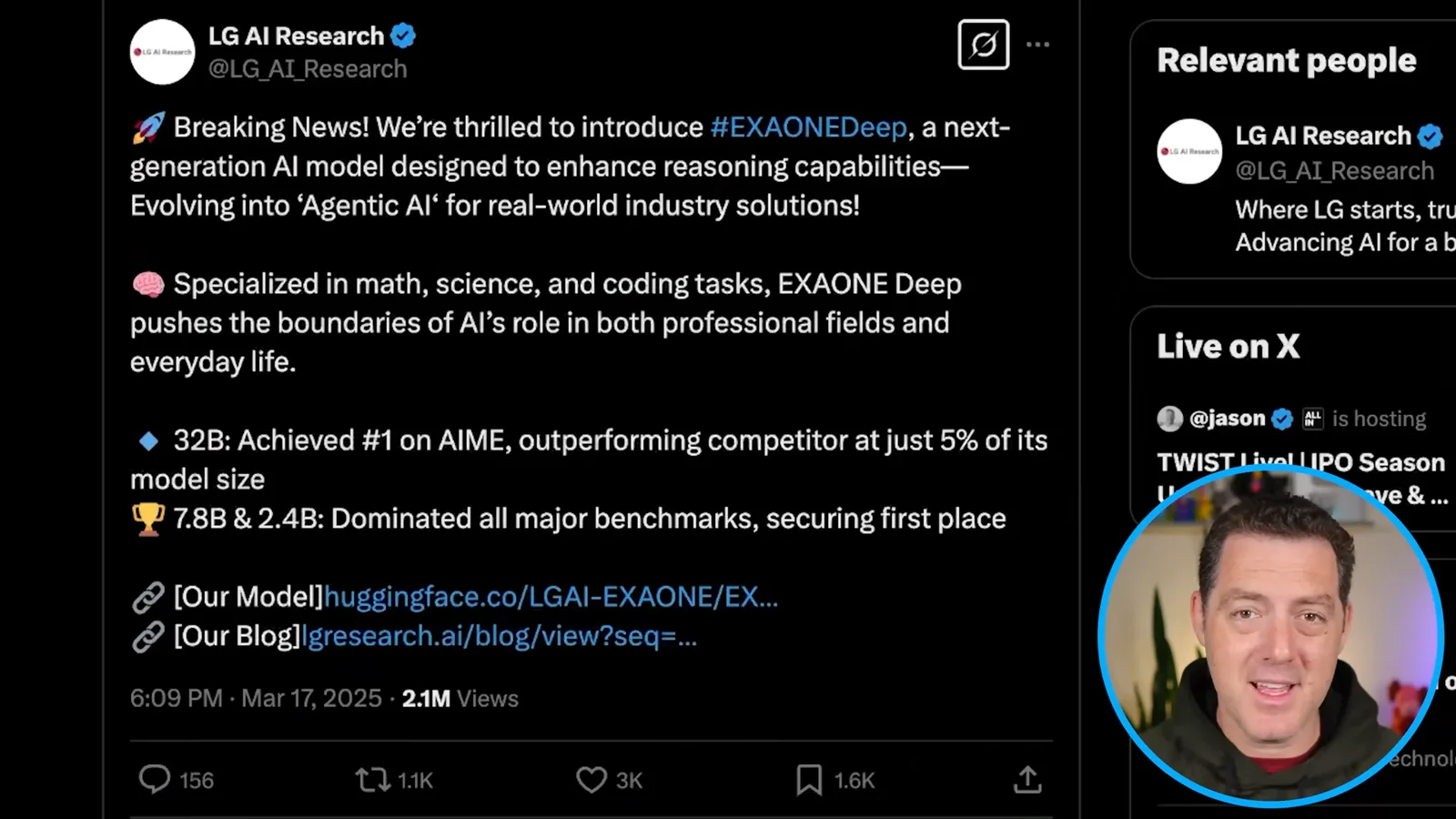
LG AI Research announced EXAONE Deep, a reasoning model family in 32B, 7.8B and 2.4B sizes. LG's announcement claims the 32B model led its AIME comparison while using a fraction of a competitor's parameters; the smaller models are more suitable for local use. These are historical vendor-reported benchmark claims, not a general ranking of model capability.
Mehr aus diesem Kanal
 34:21EN
 Matthew Berman· 27. Okt. 2026Matthew Berman Examines Anthropic’s IPO Filing, AI Growth and GovernanceMatthew Berman, Sam Altman · Forward FutureThe presenter reviews the S-1’s financial metrics, compute strategy and voting structure while questioning the tension between rapid AI development and safety.
 0:36ENMatthew Berman· 25. Okt. 2026Kimi K3.1 and a Rubik’s Cube Solver DemonstrationMatthew Berman · Forward FutureMatthew Berman shows a scrambled virtual cube being solved and gives the Kimi K3.1 test a favorable assessment.
 25:50ENMatthew Berman· 24. Okt. 2026Kimi K3.1 Pro Tested: Strong 3D Demos, Uneven Results and Competitive PricingMatthew Berman · Forward FutureMatthew Berman tests the open-weight model on coding, 3D rendering and visual explanations, then compares benchmark results and prices.
 32:20ENMatthew Berman· 23. Okt. 2026Who Is Local AI For? The Costs, Trade-offs and a Hybrid FutureMatthew Berman · Forward FutureMatthew Berman weighs data control and independence against hardware cost, setup complexity and inference speed.
 1:03:37ENMatthew Berman· 23. Okt. 2026Matthew Berman’s Team Tests Kimi K3.1 on Animation, Games, and ChartsMatthew Berman, Alex, Brian · Forward FutureA live team AMA turns into an informal test of Kimi K3.1, from personal-agent workflows to motion graphics, a browser game, and a benchmark chart.
 0:53ENMatthew Berman· 22. Okt. 2026Sam Altman on AI and the Discovery of New KnowledgeSam Altman · OpenAIAltman expects progress in mathematical discovery to extend to biology, materials and energy.